Designing a Stunning Flower Garden: A Step-by-Step Guide
Designing a stunning flower garden can feel overwhelming, especially if you’re not sure where to start. You’re not alone—many people struggle with choosing the right plants, planning layouts, and keeping their garden healthy throughout the year. But with the right guidance, creating a vibrant and flourishing garden is totally achievable.
To design a stunning flower garden, start by choosing plants that thrive in your climate and prepare soil with compost for healthy growth.
Plan your garden’s layout using colors and bloom times for continuous appeal.
Use mulch and borders to support plants, water consistently, and manage pests naturally.
Don’t forget to prune and deadhead to encourage blooms and adjust care throughout the seasons.
With these basics, you’ll create a vibrant garden that flourishes beautifully year-round.
Key Takeaways
- Choose flowers suited to your local climate and soil for sustainable, low-maintenance growth and vibrant blooms.
- Prepare soil by testing pH and nutrients, then amend with compost to ensure healthy plant development.
- Design your garden layout using color theory and stagger bloom times to keep things interesting from spring to fall.
- Support plants with appropriate mulch, borders, consistent watering, and regular pruning to keep them healthy and looking great.
- Adjust seasonal care by changing watering habits, protecting from frost, and sheltering vulnerable plants during cold weather.
Choose Flowers That Thrive in Your Climate
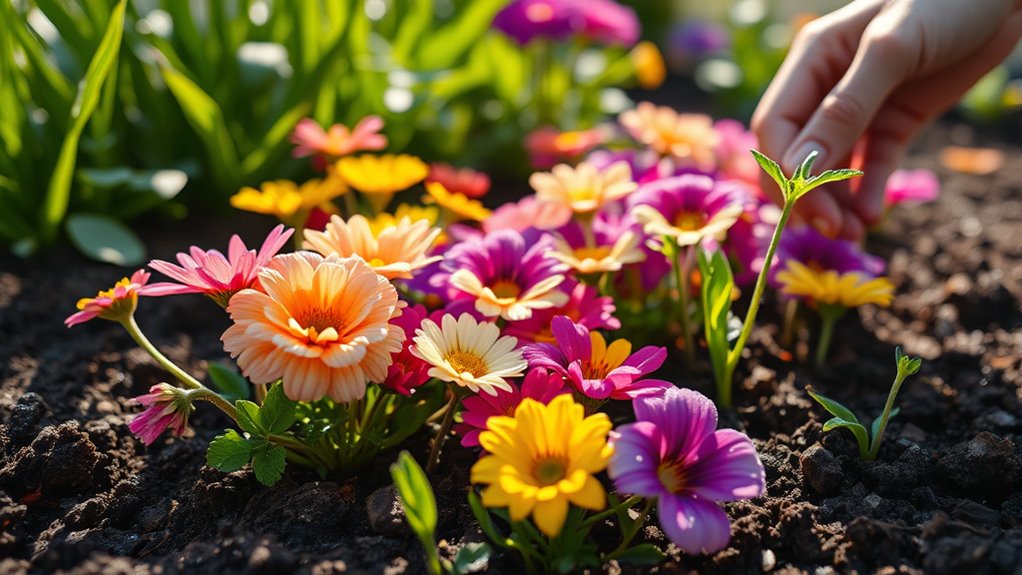
Because your garden’s success depends on it, choose flowers that thrive in your local climate. Understanding your region’s temperature, rainfall, and soil conditions will help you pick plants that flourish naturally, reducing maintenance and boosting bloom vitality.
When using planting containers, select hardy flowers suited for container life and your area’s weather extremes. This guarantees your container garden stays vibrant and healthy throughout the seasons.
Also, consider placing garden sculptures strategically to complement your flower choices. These sculptures can create focal points that highlight your plants’ natural beauty without overshadowing them.
Select the Right Colors and Bloom Times
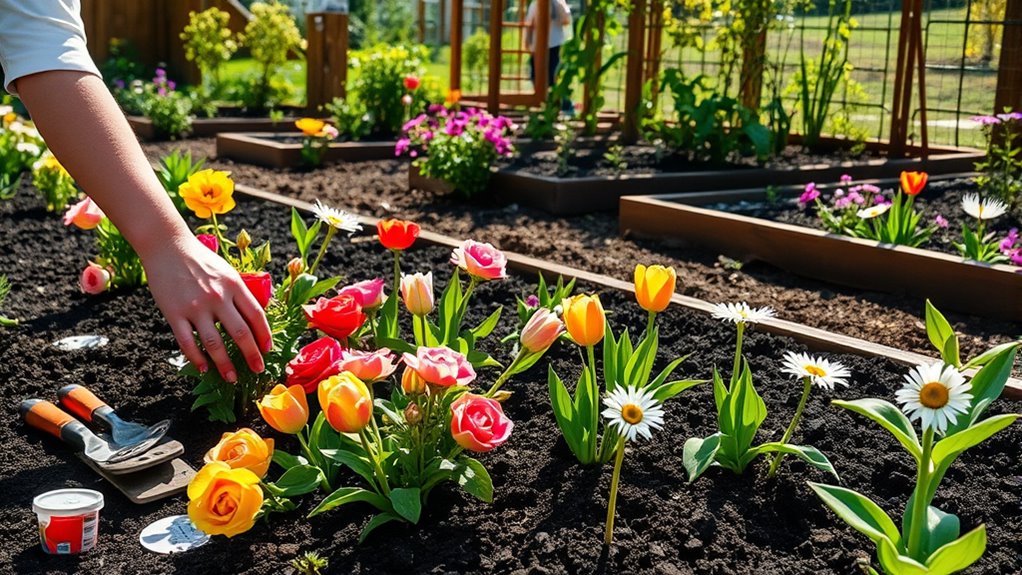
How do you create a flower garden that stays vibrant from spring to fall? Start by selecting flowers with staggered bloom timing. Choose early bloomers like tulips and daffodils for spring, midsummer favorites such as coneflowers, and late bloomers like asters to keep your garden alive with color throughout the seasons.
Next, focus on color harmony to make sure your garden looks cohesive and appealing. Use a color wheel to combine complementary or analogous colors, balancing bold hues with softer tones. For instance, pair purples with yellows or pinks with reds to create visual interest without overwhelming the senses.
Also, consider the foliage color to improve your design. By thoughtfully selecting plants based on bloom timing and color harmony, you’ll enjoy a dynamic and stunning flower garden that evolves beautifully over time. This approach guarantees continuous charm and prevents dull periods in your garden’s display.
Plan Your Flower Garden Layout for Visual Impact
You’ll want to pick garden shapes that fit your space just right and help guide the eye naturally. Balancing colors and mixing up plant heights adds depth and keeps things interesting. So, let’s take a closer look at how to arrange these elements for the best visual impact.
Choosing Garden Shapes
When planning your flower garden layout, selecting the right garden shape plays a crucial role in creating visual impact. You’ll want to decide if you prefer garden symmetry, which offers a balanced, formal look, or a more natural, freeform design.
Symmetrical shapes like circles or rectangles create harmony and order, making your garden feel structured and elegant. On the other hand, incorporating pathway curves softens the space, guiding visitors gently through your blooms while adding a dynamic, organic flow.
Curved paths break up rigid lines and invite exploration, enhancing the garden’s charm. Think about how these shapes and pathways work together to highlight focal points and allow easy access. Choosing the right shape sets the foundation for a stunning, inviting flower garden.
Balancing Colors And Heights
Although selecting the right shapes forms your garden’s framework, balancing colors and heights brings it to life. To create a visually striking flower garden, focus on color harmony by choosing flowers whose colors complement each other.
Use a mix of analogous and contrasting colors to add depth without overwhelming the eye. Height variation is just as important; plant taller flowers like delphiniums or sunflowers at the back or center, and shorter blooms like pansies or marigolds in front.
This layering guides the viewer’s gaze smoothly across your garden, adding dimension and interest. Remember, balancing color harmony with height variation ensures your garden feels cohesive yet dynamic.
Prepare Your Soil for Healthy Flower Growth
Since healthy flowers depend on nutrient-rich soil, you should start by testing your garden’s soil to determine its pH and nutrient levels. Soil testing kits are easy to use and provide valuable insights into what your soil lacks or has in excess.
Once you know your soil’s condition, you can amend it accordingly to create the perfect environment for your flowers.
Next, focus on compost mixing. Incorporate well-decomposed compost into your soil to improve its texture, drainage, and fertility. Compost adds essential organic matter that supports beneficial microorganisms, helping your flowers thrive.
Make sure to mix the compost thoroughly with your garden soil to ensure even nutrient distribution. Avoid compacting the soil, as flowers need loose, airy soil for their roots to grow properly.
Plant Flowers With Proper Spacing and Depth
Proper spacing and planting depth are essential to giving your flowers the best chance to grow strong and healthy. When planting, pay close attention to root spacing to avoid overcrowding, which can stunt growth and increase competition for nutrients. Check each flower’s recommended root spacing on seed packets or plant tags, then measure the distance between holes accordingly.
Next, dig planting holes that match the right planting depth for your flowers. Planting too deep can suffocate roots, while planting too shallow leaves them exposed and vulnerable. As a rule, place each flower at the same depth it was growing in its nursery container.
After positioning the plants, gently firm the soil around the roots to eliminate air pockets. Proper root spacing and planting depth guarantee your flowers establish well, develop healthy root systems, and bloom beautifully throughout the season.
Use Mulch and Borders to Support Your Flowers
You’ll want to use mulch to keep your flowers healthy because it helps retain moisture and suppress weeds. Plus, choosing the right garden borders can really define your space and protect your plants from encroaching grass.
If you maintain your mulch and edges regularly, your garden will stay neat and your flowers will grow strong. It’s a simple way to support your garden and keep everything looking great!
Benefits of Using Mulch
Although many gardeners overlook it, mulch plays a crucial role in supporting your flower garden’s health and appearance. Using organic mulch helps retain soil moisture, reducing how often you need to water. It also suppresses weeds, giving your flowers room to thrive without competition.
Plus, as organic mulch breaks down, it enriches your soil with essential nutrients. Choosing the right mulch color can improve your garden’s visual appeal; darker shades often make blooms pop, while lighter tones brighten shady spots.
Mulch also regulates soil temperature, protecting roots from extreme heat or cold. By adding a layer of mulch around your flowers, you create a healthier environment that supports growth and reduces maintenance, making your garden both beautiful and resilient.
Choosing Effective Garden Borders
Three key elements can transform your flower garden’s edges: garden borders, mulch, and thoughtful placement. Choosing effective garden borders improves your garden’s structure and keeps mulch in place, supporting healthy flowers. When selecting garden edging and border materials, consider these tips:
- Define your style Pick border materials like stone, metal, or wood that complement your garden’s look.
- Consider durability Choose materials that withstand weather and resist shifting.
- Think about height Use edging that’s high enough to contain mulch but low enough to avoid tripping hazards.
- Plan placement carefully Position borders to clearly separate flower beds from paths or lawn, preventing mulch from spilling.
Maintaining Mulch and Edges
While garden borders set the stage, maintaining mulch and edges guarantees your flowers thrive by retaining moisture and preventing weeds. You’ll want to regularly replenish mulch to support weed control and keep soil temperature stable.
Choose mulch types like bark, straw, or compost depending on your garden’s needs. Keep edges sharp and defined to stop grass invasion and create a clean look. Here’s a quick guide to mulch types and their benefits:
| Mulch Type | Benefit |
|---|---|
| Bark | Long-lasting, decorative |
| Straw | Lightweight, good for moisture retention |
| Compost | Nutrient-rich, improves soil |
| Rubber | Durable, weed control |
| Pine Needles | Acidic, good for specific plants |
Regular upkeep keeps your garden neat and flowers flourishing.
Water and Fertilize Your Flower Garden Effectively
To keep your flower garden thriving, you need to water and fertilize it properly. Water scheduling is key. Too much or too little water can stress your plants. Early morning watering reduces evaporation and fungal risks. Choosing the right fertilizer types matters too. Organic options improve soil health, while synthetic ones offer quick nutrient boosts.
Follow these steps to water and fertilize effectively:
- Set a consistent water schedule, adjusting based on weather and soil moisture.
- Use drip irrigation or soaker hoses to deliver water directly to roots.
- Apply fertilizer according to plant needs and label instructions to avoid overfeeding.
- Alternate between slow-release and liquid fertilizers for steady nutrient supply.
Keep Pests and Diseases Away From Your Flowers
Even the healthiest flower garden can fall victim to pests and diseases, but you can take simple steps to protect your plants. Start with pest prevention by regularly inspecting your flowers for signs of insects or damage. Remove any affected leaves or flowers promptly to stop pests from spreading.
Regularly inspect and promptly remove damaged leaves to prevent pests from spreading in your flower garden.
Introduce beneficial insects like ladybugs, which naturally keep harmful pests in check. Use organic insecticides only when necessary to avoid harming pollinators.
For effective disease management, ensure proper spacing between plants to improve air circulation and reduce moisture. This helps prevent fungal infections. Water your garden at the base of plants early in the day to minimize dampness on leaves.
Rotate your flowers yearly to avoid soil-borne diseases. Also, keep your tools clean to prevent spreading infections. By combining these pest prevention and disease management strategies, you’ll maintain a vibrant, healthy flower garden that thrives season after season.
Prune and Deadhead to Boost Flower Blooms
Protecting your flowers from pests and diseases sets the stage for healthy growth, but keeping them beautiful takes ongoing care. One key step is pruning and deadheading. This helps boost flower blooms by encouraging new growth and stopping your plants from wasting energy on spent flowers.
Here are some simple pruning tips to keep your garden thriving:
- Deadhead regularly Remove faded flowers to encourage more blooms and make the flowering period last longer.
- Prune at the right time Cut back after flowering or during dormancy, depending on the plant, to help healthy regrowth.
- Use clean, sharp tools This prevents damage and lowers the chance of spreading disease.
- Cut back leggy stems Trim excessive growth to encourage bushier plants and more concentrated flower production.
Maintain Your Flower Garden Throughout the Seasons
To keep your flower garden thriving all year long, you’ll want to change up your watering habits as the seasons come and go. It’s not just about watering more or less—timing and method matter too. Plus, make sure you’re pruning and deadheading regularly to keep things looking fresh and encourage new blooms.
When the temperature starts to drop, don’t forget to protect your plants from frost. A little extra care during those chilly nights can make a big difference. These simple steps really help your garden stay healthy and vibrant, no matter what the weather throws at you. Let’s take a closer look at how to handle each task the right way.
Seasonal Watering Tips
How should you adjust your watering routine as the seasons change? To keep your flower garden thriving year-round, you need to adapt your watering habits. Here’s how:
- Spring: Increase watering gradually as plants grow. Use rainwater harvesting to collect natural water, reducing reliance on taps.
- Summer: Water deeply but less frequently early in the morning or late evening to minimize evaporation. Focus on drought-resistant plants to save water.
- Fall: Cut back watering as temperatures drop, allowing plants to prepare for dormancy.
- Winter: Water sparingly, only during dry spells, to prevent root damage.
Pruning and Deadheading
Although it might seem tedious, pruning and deadheading are essential tasks that keep your flower garden healthy and vibrant throughout the seasons. When you prune, focus on cutting back overgrown or damaged flower stems to encourage new growth and improve air circulation.
Deadheading involves removing spent flower heads promptly. Snip just above the first set of healthy leaves or buds. This practice redirects the plant’s energy from seed production to producing more blooms, prolonging your garden’s display.
Always use clean, sharp tools to make precise cuts, reducing the risk of disease. By regularly pruning and deadheading, you prevent overcrowding and promote a tidier garden. These simple maintenance steps guarantee your flowers stay lush and continue blooming beautifully all season long.
Protecting Plants From Frost
When should you start safeguarding your flower garden from frost? Begin as soon as temperatures dip near freezing, usually in late fall. Effective frost protection ensures your plants survive cold snaps without damage.
For winter shielding, try these four steps:
- Cover plants with frost cloths or old sheets overnight to trap heat.
- Mulch around roots with straw or bark to insulate soil and retain warmth.
- Water plants during the day; moist soil holds heat better than dry soil.
- Move potted plants indoors or to sheltered spots to avoid exposure.
Frequently Asked Questions
What Tools Are Essential for Beginner Gardeners?
You’ll need a few essential tools to get started, like a hand trowel and pruners for planting and trimming. Don’t forget gloves to protect your hands while working with garden soil.
A garden fork helps aerate the soil, and a watering can or hose keeps your plants hydrated. Plus, a garden planner or notebook is great for garden planning, so you can track your plants and schedule care efficiently.
How Do I Attract Pollinators to My Flower Garden?
To attract pollinators, plant native plants that thrive in your area. They provide familiar nectar sources. Choose a variety of flowers that bloom at different times to keep pollinators coming all season.
Avoid pesticides because they can harm bees and butterflies. Add shallow water sources and sunny spots for resting. By creating a welcoming environment with plenty of nectar sources, you’ll encourage pollinators to visit and help your garden flourish.
Can I Grow a Flower Garden in Containers or Pots?
You can definitely grow a flower garden in containers or pots. Did you know container gardening has grown by over 20% in popularity recently?
When choosing container placement, pick spots with enough sunlight for your flowers. Make sure your pots have excellent soil drainage to prevent root rot. Using lightweight containers helps you move plants as needed.
With the right care, your container flower garden will thrive beautifully, even in small spaces.
What Are the Best Flowers for Cutting and Indoor Arrangements?
For cutting and indoor arrangements, you’ll want flowers with strong fragrance and vibrant seasonal blooms. Think roses, lilies, and peonies. They offer lovely flower fragrance and long-lasting blooms.
Sunflowers and dahlias add bold seasonal color, while snapdragons and tulips bring variety and texture. You’ll enjoy a fresh, fragrant bouquet by choosing flowers that thrive in your climate and bloom during the season.
Don’t forget to harvest them early in the day!
How Do I Deal With Wildlife Eating My Flowers?
To protect your flowers from wildlife, start by installing garden fencing. Choose a sturdy, tall option to keep out deer and rabbits.
You can also use wildlife protection sprays or plant deterrents like strong-smelling herbs around your garden’s edges. Regularly check for holes or weak spots in your fencing.
Consider motion-activated sprinklers to scare animals away. Taking these steps helps guarantee your flowers stay safe and vibrant throughout the season.
Conclusion
By following these steps, you’ll create a vibrant flower garden that thrives year-round. Imagine Sarah, who transformed her dull backyard into a colorful oasis by choosing native flowers and planning bloom times carefully.
She prepared her soil well, spaced her plants perfectly, and stayed on top of watering and pruning. Just like Sarah, you can enjoy a stunning, healthy garden that brings joy and beauty to your home every season.
With a little effort and planning, your flower garden will become a beautiful retreat. So start designing your stunning flower garden today and watch it flourish all year long!