10 Best Tips for Successful Vegetable Gardening
If you’ve ever tried vegetable gardening, you know it can be frustrating when your plants don’t thrive or pests take over. You’re not alone—many people struggle with getting their vegetable gardens to flourish despite their best efforts.
The good news is, with the right tips and techniques, you can overcome these common challenges and enjoy a bountiful harvest.
To succeed in vegetable gardening, choose plants suited to your climate and use companion planting to boost growth and deter pests. Prepare your soil with organic matter and test nutrients early.
Plant at the right time and space vegetables properly, supporting tall plants as needed.
Water deeply and consistently, ideally with drip systems, and manage weeds naturally with mulches.
Control pests organically and rotate crops each season to maintain soil health.
With these basics, you’ll be ready to investigate smart gardening strategies for even better harvests.
Key Takeaways
- Choose vegetable varieties suited to your climate and plant at the right season to ensure healthy growth and optimal yields.
- Prepare soil with organic compost, test pH, and maintain fertility using natural fertilizers to boost plant health.
- Water deeply and consistently in the early morning using drip irrigation and mulch to retain moisture and prevent disease.
- Control pests organically by companion planting, using natural repellents, and encouraging beneficial insects for a balanced ecosystem.
- Space plants properly, use supports for tall varieties, rotate crops annually, and harvest at peak maturity for best results.
Choose Vegetables That Thrive in Your Garden
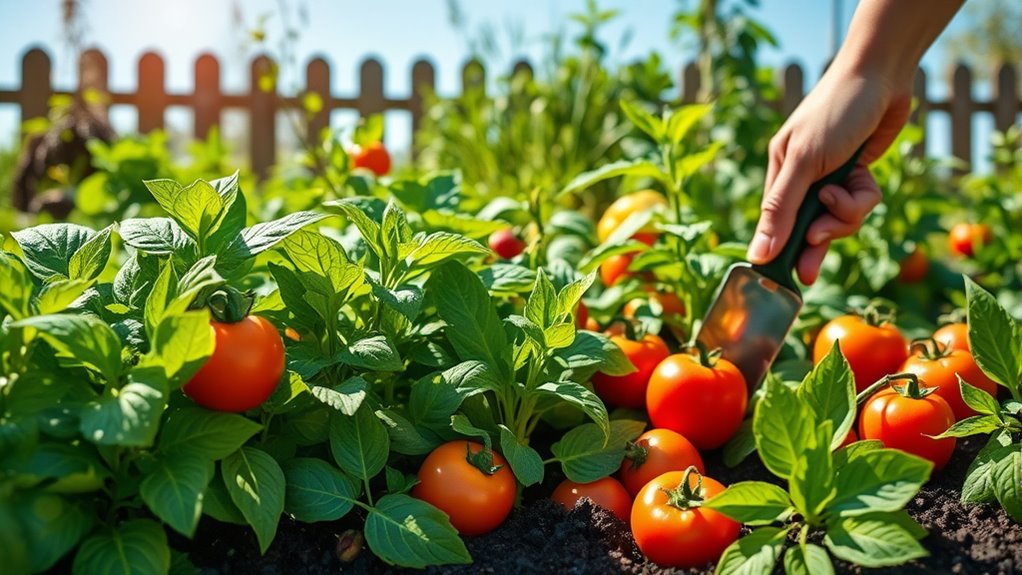
Choosing the right vegetables for your garden is key to a successful harvest. Start by selecting varieties that thrive in your local climate and soil conditions. You’ll want to choose pest resistant varieties whenever possible to reduce the need for chemical treatments and keep your plants healthy. These varieties naturally fend off common garden pests, saving you time and effort.
Next, consider companion planting to boost growth and protect your crops. Certain vegetables grow better together like tomatoes and basil because they deter pests and improve flavor. Planning your garden with companion planting in mind helps you maximize space and minimize damage from insects.
Prepare Your Soil for Healthy Vegetable Growth
To grow healthy vegetables, you’ll want to start by testing your soil to see what nutrients it has and check its pH level. Then, adding organic matter like compost really helps improve the soil’s structure and boosts fertility. Doing this prep work sets a solid foundation for strong, productive plants.
Soil Testing Importance
Although many gardeners overlook it, testing your soil is essential for growing healthy vegetables. When you test your soil, you learn about its composition and nutrient balance, which directly affect plant growth.
Without this information, you might add too much or too little fertilizer, harming your plants or wasting resources. Soil tests reveal pH levels, nutrient deficiencies, and possible contaminants, helping you adjust your approach precisely.
Organic Matter Benefits
When you enrich your soil with organic matter, you boost its ability to retain moisture and nutrients, which directly supports healthy vegetable growth. Adding compost is one of the best soil amendments you can make.
The composting benefits include improving soil structure, increasing microbial activity, and supplying essential nutrients in a natural, slow-release form. This not only improves fertility but also helps your garden resist drought and erosion.
Organic matter also promotes better root development by loosening compacted soil, allowing roots to access air and water easily. Incorporating well-decomposed compost or other organic materials into your garden beds regularly ensures your soil stays fertile and vibrant.
Plant Seeds and Seedlings at the Best Time
You’ll want to plant your seeds and seedlings during their ideal seasons to guarantee strong growth. It’s a good idea to keep an eye on the temperature and local frost dates so you don’t accidentally expose them to damage. Also, timing your soil preparation just before planting really helps give your vegetables the best start.
Ideal Planting Seasons
Timing your planting is crucial to guarantee your vegetables thrive and produce a bountiful harvest. Planting during the ideal season ensures seeds and seedlings establish strong roots and grow healthily.
You’ll want to plan your garden layouts carefully, grouping plants with similar water and sunlight needs. Incorporate companion planting by placing mutually beneficial plants near each other to improve growth and reduce pests. For example, tomatoes and basil grow well together and can boost each other’s flavor.
Pay attention to your local climate’s natural cycles so you can plant cool-season crops like lettuce in early spring or fall, and warm-season crops like peppers when the soil’s ready. By aligning your planting schedule with these ideal seasons, you set your garden up for success from the start.
Temperature and Frost Dates
Understanding the right temperature and frost dates helps you plant seeds and seedlings at the most favorable time. First, identify your climate zone to determine when your area typically experiences its last spring frost and first fall frost.
These dates guide you in scheduling your planting to avoid frost damage. You’ll want to start seeds indoors or buy seedlings if the outdoor temperature is still too cold.
When frost is likely, use frost protection methods like row covers or cloches to shield young plants. Remember, some vegetables tolerate light frost, but most thrive when temperatures stay consistently warm.
Soil Preparation Timing
Before planting seeds or seedlings, prepare your soil at the right moment to guarantee ideal growth. Timing your soil preparation is crucial for making the most of your planting schedule.
Start by conducting soil testing early in the season to check nutrient levels and pH balance. This helps you amend the soil effectively before planting. Pay attention to your local frost dates and temperature trends to avoid premature planting.
To ensure success, remember to:
- Test soil about 4-6 weeks before planting
- Amend soil promptly based on test results
- Follow a planting schedule suited to your region
- Prepare soil when it’s dry enough to avoid compaction
Space Your Plants Properly and Use Stakes for Support
When you space your plants properly, you give each one enough room to grow strong and healthy without competing for sunlight, water, or nutrients. Proper plant spacing helps prevent crowding, which reduces the risk of disease and allows air to circulate around your vegetables. Check seed packets or gardening guides for the recommended distance between each plant, as spacing varies by vegetable type.
Using stake support is essential, especially for tall or vining plants like tomatoes, peppers, and beans. Stakes keep your plants upright, preventing them from sprawling on the ground where they’re more vulnerable to pests and rot. Secure plants gently with garden ties or soft twine to avoid damaging stems.
Proper staking not only improves air circulation but also makes harvesting easier and encourages healthier growth. By combining proper plant spacing with stake support, you set up your vegetable garden for a bountiful, thriving season.
Water Your Vegetable Garden Effectively
You’ll want to water your vegetable garden just enough to keep the soil consistently moist without overdoing it. It’s all about finding that sweet spot. The best time to water is early in the morning because it helps reduce evaporation and can prevent disease. Also, using efficient irrigation methods like drip lines is a smart move—they save water and deliver moisture right where your plants need it most, at their roots.
Optimal Watering Frequency
Although watering needs vary by plant type and weather, maintaining a suitable watering frequency is key to keeping your vegetable garden healthy and productive. You’ll want to tailor your watering schedule to support growth without overwatering, which can harm roots.
For drought tolerant plants, less frequent watering helps develop resilience, while thirsty vegetables need more consistent moisture. To optimize frequency:
- Check soil moisture before watering to avoid excess.
- Water deeply to encourage strong root systems.
- Adjust frequency based on rainfall and temperature.
- Group plants with similar watering needs together.
Best Time To Water
Adjusting your watering schedule isn’t just about how often you water, but also when you do it. The best time to water your vegetable garden is early in the morning. This timing helps reduce evaporation and allows plants to absorb moisture before the heat of the day sets in.
Evening watering can leave plants damp overnight, increasing disease risk. To maximize efficiency, combine rain collection with mulching techniques. Using collected rainwater supports sustainable watering, while mulching helps retain soil moisture longer, reducing how often you need to water.
Efficient Irrigation Methods
When you want to water your vegetable garden effectively, choosing the right irrigation method makes all the difference. Efficient watering conserves water and promotes healthy plant growth. Consider these strategies:
Use drip irrigation to deliver water directly to the roots. This reduces evaporation and runoff, making your watering more efficient.
Collect rainwater with rain harvesting systems to supply your garden sustainably. It’s a great way to save water and help the environment.
Water early in the morning or late in the evening to minimize water loss. These times are cooler, so less water evaporates.
Mulch around plants to retain moisture and reduce the frequency of watering. It also helps keep the soil temperature stable.
Feed Your Vegetable Garden With Organic Fertilizers
Because organic fertilizers improve soil health naturally, you’ll find your vegetable garden thrives with their use. They enrich the soil with essential nutrients while promoting beneficial microbial activity. To get started, investigate various organic fertilizer types like compost, manure, bone meal, and fish emulsion. Each offers unique benefits, so choose based on your garden’s needs.
Implementing effective composting techniques is key. You can recycle kitchen scraps, yard waste, and plant residues into nutrient-rich compost. Regularly adding this compost improves soil structure, moisture retention, and fertility. Applying organic fertilizers also reduces chemical runoff and supports sustainable gardening.
Feed your vegetable garden during planting and throughout the growing season, but avoid over-fertilizing to prevent nutrient imbalances. By consistently nurturing your soil with organic matter, you’ll encourage robust plant growth and bountiful harvests, ensuring a healthy and productive vegetable garden without relying on synthetic chemicals.
Manage Weeds in Your Vegetable Garden Naturally
Although weeds can quickly take over your vegetable garden, you can manage them effectively without harmful chemicals. Start by improving your soil with composting techniques. Healthy soil encourages strong plants that outcompete weeds.
Mulch application is another key strategy. It blocks light, preventing weed seeds from sprouting while retaining moisture for your vegetables.
To keep weeds in check naturally, follow these tips:
- Pull weeds early before they set seeds.
- Use organic mulch like straw or wood chips around plants.
- Regularly cultivate the soil surface to disrupt weed growth.
- Add well-composted organic matter to improve soil health.
Control Pests in Your Vegetable Garden Organically
If you want to protect your vegetables without harmful chemicals, organic pest control offers effective solutions. Start by using companion planting, which involves growing certain plants together to naturally repel pests. For example, marigolds deter aphids, while basil keeps mosquitoes away. This strategy not only reduces pests but also promotes plant health.
You can also apply natural repellents like neem oil, garlic spray, or insecticidal soap to keep bugs at bay. These options are safe for your veggies and beneficial insects. Regularly inspect your plants for signs of pests, and remove affected leaves promptly to prevent infestations from spreading.
Encouraging beneficial insects like ladybugs and lacewings can also control harmful pests naturally. By combining companion planting with natural repellents, you’ll create a balanced ecosystem in your garden that minimizes damage and supports healthy growth, all without relying on synthetic chemicals.
Rotate Crops to Keep Your Soil Healthy
To maintain nutrient-rich soil and reduce pest buildup, you should rotate your crops each season. Crop rotation prevents soil depletion by alternating plants with different nutrient needs. This helps keep your soil balanced and healthy.
It also interrupts the lifecycle of pests and diseases that target specific crops. Incorporating soil amendments, like compost or manure, after each rotation further boosts soil fertility and structure.
Here’s how you can effectively rotate crops:
- Group plants by family to avoid planting the same family consecutively.
- Alternate heavy feeders, like tomatoes, with nitrogen-fixing plants such as beans.
- Follow root-depth patterns by rotating shallow-rooted with deep-rooted crops.
- Use cover crops during off-seasons to enrich soil and prevent erosion.
Harvest Vegetables at Their Peak Flavor
When you harvest vegetables at their peak flavor, you’ll enjoy the freshest, most vibrant taste possible. To achieve this, pay close attention to harvest timing. Each vegetable has a specific window when its flavor is at its best. Too early or too late, and you risk dull taste or reduced texture.
For example, pick tomatoes when they’re fully colored but still firm, and harvest beans before seeds swell too much. This practice guarantees flavor improvement, making your homegrown veggies truly shine.
Use a garden calendar or notes to track when each crop typically reaches maturity. Also, harvest in the morning when vegetables are crisp and full of moisture, which boosts flavor and shelf life.
Frequently Asked Questions
How Do I Start a Vegetable Garden in a Small Urban Space?
Start your urban container garden by choosing pots with good drainage and filling them with quality soil preparation mix rich in nutrients. Pick compact or dwarf vegetable varieties that thrive in small spaces.
Place containers where they’ll get at least six hours of sunlight daily. Water consistently and add compost regularly to keep plants healthy. You’ll enjoy fresh veggies even in tight spots by managing soil well and selecting the right containers.
What Are the Best Tools for Beginner Vegetable Gardeners?
Think of your garden as a blank canvas, and the right tools as your brushes. You’ll want a sturdy trowel for soil preparation, helping you turn earth into fertile ground.
A hand fork can loosen soil and remove weeds, while gloves protect your hands during pest control. Don’t forget a watering can to nurture your plants gently. With these tools, you’ll craft a thriving garden that feels like your personal masterpiece.
Can Companion Planting Improve Vegetable Garden Yields?
Yes, companion planting can improve your vegetable garden yields by maximizing space and enhancing plant growth. The benefits include natural pest control methods, as certain plants repel harmful insects while attracting beneficial ones.
How Do I Extend the Growing Season for My Vegetables?
To extend your growing season, you can use row covers or cold frames for effective season extension and crop protection. These tools shield your vegetables from frost and pests, letting you plant earlier in spring and harvest later in fall.
You might also try using cloches or greenhouses to create a warmer microclimate. By taking these steps, you’ll protect your crops and enjoy fresh veggies well beyond the typical growing months.
What Are Common Mistakes to Avoid in Vegetable Gardening?
Don’t worry if you think gardening is too tricky; you’ll get the hang of it! Common mistakes include poor soil preparation. Neglecting to enrich your soil can stunt growth.
Also, skipping pest management lets bugs take over your veggies. Avoid overwatering or planting too close because that causes diseases. You’ll want to rotate crops yearly to keep soil healthy.
Conclusion
By choosing the right veggies, preparing rich soil, and watering with care, you’ll watch your garden burst to life with vibrant colors and fresh scents. Picture plump tomatoes glistening in the sun and crisp leaves swaying in the breeze.
With natural pest control and thoughtful crop rotation, your garden stays healthy and thriving. Harvesting at peak flavor means every bite tastes like summer’s sweetest gift.
Your hard work blooming into pure joy is what successful vegetable gardening is all about.