Essential Tips for Lawn Mower Maintenance for Longevity
If you’ve ever struggled with a lawn mower that just won’t start or seems to break down too quickly, you’re not alone. Many people find maintaining their mower confusing or time-consuming. But with a few simple steps, you can keep your mower running smoothly and extend its life, saving yourself frustration and money.
To keep your lawn mower running longer, regularly change the oil and replace or clean the air filter to guarantee proper engine function. Check and maintain spark plugs for smooth starts.
Inspect belts and cables for wear, and sharpen blades for a clean cut.
Store your mower in a dry place, clean off debris, and prevent rust with light oiling. Following these basic steps boosts mower lifespan, and exploring more tips can help you master full maintenance.
Key Takeaways
- Regularly change the oil and replace air filters to keep the engine running smoothly and efficiently. This simple step helps your mower last longer and perform better.
- Inspect, clean, and replace spark plugs to ensure reliable starting and optimal performance. A healthy spark plug means less hassle when you fire up your mower.
- Sharpen and balance blades frequently to maintain clean cuts and prevent engine strain. Dull blades can tear grass and make your mower work harder than it needs to.
- Store the mower in a dry, sheltered area and apply rust-preventive spray to protect metal parts. Keeping it safe from moisture goes a long way in preventing corrosion.
- Drain old fuel or add stabilizer before long-term storage to prevent engine damage and fuel degradation. This step helps your mower start smoothly after a break.
How to Change Your Lawn Mower Oil
Before you start your lawn mower, make sure the engine is cool to avoid burns. Practicing lawn mower safety is vital when changing your oil.
Always ensure the engine is cool before changing oil to prevent burns and promote safety.
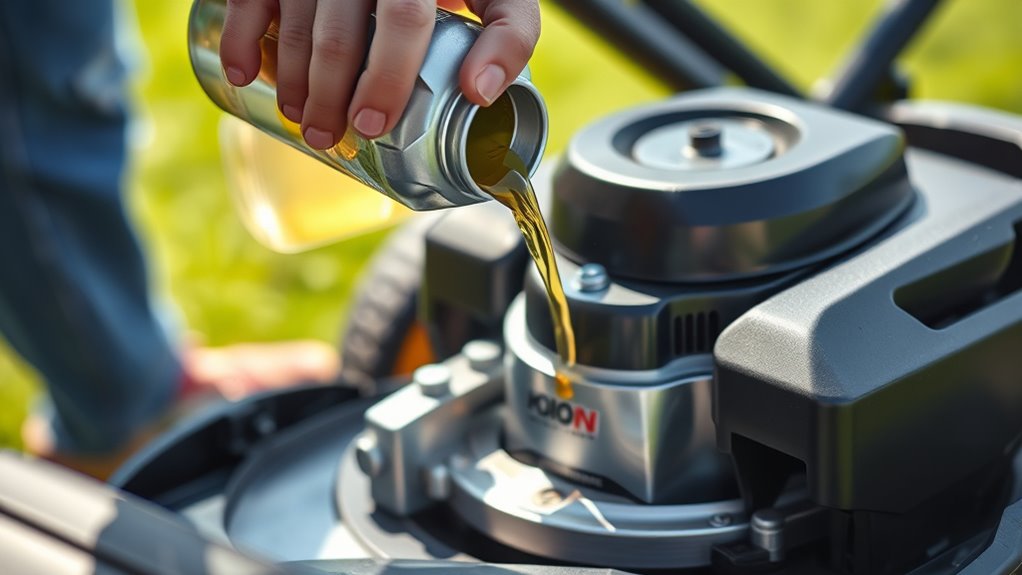
First, position your mower on a flat surface to prevent spills. Next, locate the oil drain plug or remove the oil cap to drain the old oil into a suitable container. Avoid tipping the mower excessively, as that can cause fuel leaks or damage.
Once drained, replace the drain plug securely. Then, refill with the recommended oil type and amount specified in your manual.
Proper oil maintenance guarantees smooth operation and complements your grass cutting techniques by keeping the mower running efficiently. Remember to dispose of the used oil responsibly at a recycling center.
Regular oil changes reduce engine wear, prevent breakdowns, and improve overall mower performance. By following these steps carefully, you’ll maintain lawn mower safety and enjoy a healthier, well-cut lawn every time.
How to Replace Your Lawn Mower’s Air Filter
Since a clean air filter guarantees your lawn mower’s engine runs efficiently, replacing it regularly is essential. Start your air filter replacement by locating the air filter cover, usually secured with clips or screws.
Remove the cover and carefully take out the old filter. If your filter is foam, wash it with warm soapy water, let it dry completely, then lightly oil it before reinstalling. For paper filters, replace them entirely when dirty or clogged.
How to Maintain Your Spark Plug for Longer Mower Life
To keep your mower running smoothly, you’ll want to regularly check the spark plug’s condition. It’s a simple step but makes a big difference. Make sure to clean the spark plug tips to get rid of any buildup that might cause misfires. And, of course, don’t forget to replace the spark plug whenever you notice signs of wear. Doing this will help guarantee a longer life for your mower.
Checking Spark Plug Condition
Although the spark plug is small, it plays an essential role in your lawn mower’s performance. To keep your mower running smoothly, regularly check the spark plug condition.
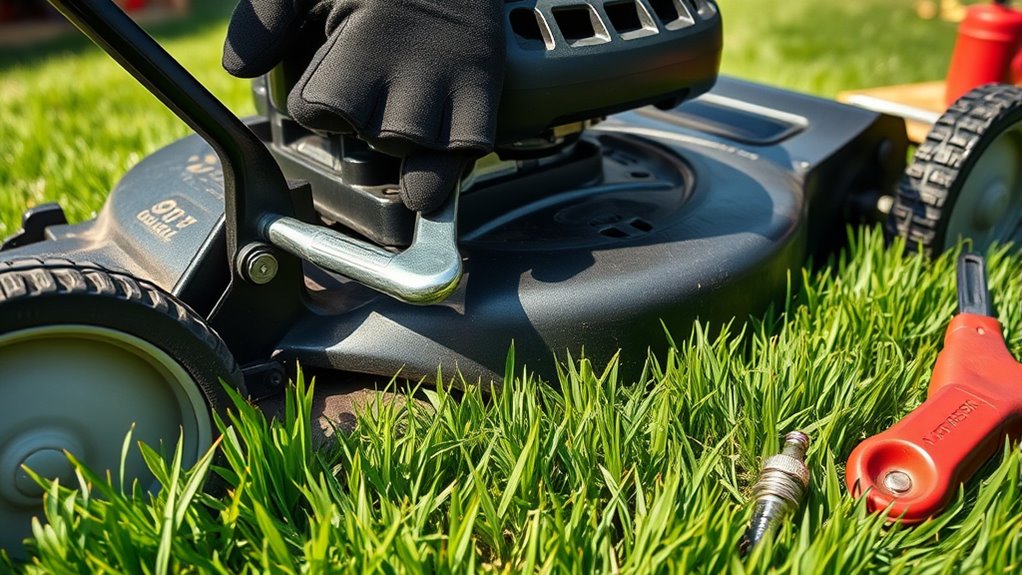
Start by removing the spark plug and inspecting it for signs of wear, such as carbon buildup, cracks, or corrosion. A worn or damaged spark plug can disrupt the ignition system, causing poor engine performance or difficulty starting.
If you notice any issues, don’t hesitate to schedule a spark plug replacement. Using a healthy spark plug guarantees a strong spark for efficient combustion, extending your mower’s life.
Regularly checking the spark plug condition helps prevent unexpected breakdowns and keeps your lawn mower reliable throughout the mowing season.
Cleaning Spark Plug Tips
When you clean your spark plug regularly, you can extend its lifespan and keep your mower running efficiently. Start by removing the spark plug carefully, then inspect the tip for carbon buildup or debris.
Use a wire brush or spark plug cleaner to gently remove any deposits without damaging the electrode. Avoid harsh abrasives that could alter the spark plug’s gap.
After cleaning, check the gap with a feeler gauge to ensure it meets your mower’s specifications. Proper cleaning prevents misfires and ensures a strong spark, improving engine performance.
Incorporating this into your regular maintenance tips will save you time and money by reducing wear and tear. Remember, a clean spark plug is essential for reliable mower starts and smooth operation.
Replacing Spark Plug Timely
Keeping your spark plug clean helps it perform well, but replacing it at the right time guarantees your mower stays reliable over the long haul. You should check your spark plug every season and replace it if it shows signs of wear, corrosion, or buildup.
Timely spark plug replacement ensures your ignition system functions efficiently, preventing hard starts and engine misfires. When you swap out the old plug, select one that matches your mower’s specifications to maintain peak performance.
Using the correct gap and torque during installation is essential to avoid damage and ensure a strong spark. By staying on top of spark plug replacement, you extend your mower’s life and keep it running smoothly throughout every mowing season.
Don’t overlook this simple step; it’s key to long-term mower care.
Checking and Adjusting Your Mower’s Belts and Cables
You should regularly inspect your mower’s belts for signs of wear, like cracks or fraying. If a belt looks worn, it’s definitely time to replace it to prevent any breakdowns. Also, don’t forget to check the cable tension. Adjusting it just right will help ensure smooth operation and keep things from slipping.
Inspecting Belt Wear
Although belts and cables often go unnoticed, they play a crucial role in your mower’s performance. Regularly inspecting your mower’s belts for wear is essential to keep everything running smoothly. Look for cracks, fraying, or glazing on the belt surface, as these signs indicate it’s time for a replacement.
While inspecting, check the belt alignment to ensure it’s properly seated on the pulleys. Misalignment can cause premature wear and reduce efficiency. Also, pay attention to the tension adjustment. Belts that are too loose may slip, while overly tight belts can stress components.
Adjusting Cable Tension
Since cables control essential functions like throttle and blade engagement, adjusting their tension correctly guarantees your mower responds precisely when you need it. Begin cable adjustment by locating the tension points, usually near the throttle or blade control.
Check for slack. If it’s too loose, controls won’t respond quickly. If it’s too tight, cables may wear prematurely. Use tension regulation mechanisms, such as adjustment screws or nuts, to fine-tune the cable’s tightness.
Make small adjustments, then test the control’s responsiveness. Repeat until you achieve smooth, immediate reaction without binding. Regularly inspect cables for fraying or corrosion during maintenance sessions, replacing them if necessary.
Proper cable adjustment ensures safety, effective control, and extends your mower’s lifespan by preventing unnecessary strain on components.
How to Clean and Sharpen Lawn Mower Blades
When blades get dull or clogged with grass clippings, your mower won’t cut effectively and can damage your lawn. Start by disconnecting the spark plug for safety. Remove the blades using a wrench, then clean off grass, dirt, and debris using a stiff brush or putty knife.
You can soak stubborn residue in warm, soapy water to loosen it. After blade cleaning, inspect the edges for nicks or dullness. Use a file, sharpening stone, or a power grinder to perform blade sharpening, maintaining the original angle for ideal cutting.
Balance the blade by placing it on a nail or blade balancer. If one side dips, sharpen it more until balanced. Finally, reattach the blades securely before reconnecting the spark plug.
Regular blade cleaning and blade sharpening ensure a precise cut, promote lawn health, and extend your mower’s lifespan. Taking these simple steps keeps your mower working efficiently every season.
How to Store and Handle Lawn Mower Fuel
You want to keep your lawn mower fuel in a cool, dry spot, away from any direct sunlight or heat sources. It’s best to use approved containers for storing the fuel.
Also, be careful when handling it to avoid spills and any fire hazards. By following these simple steps, you’ll stay safe and help your mower run smoothly.
Proper Fuel Storage
| Tip | Explanation |
|---|---|
| Fuel Stabilization | Add stabilizer to fresh fuel to extend shelf life. |
| Container Safety | Use only certified, sealed fuel containers. |
| Storage Location | Store fuel in a cool, ventilated area. |
Safe Fuel Handling
How should you handle and store lawn mower fuel to keep both yourself and your equipment safe? Always use approved containers for storing fuel and keep them tightly sealed in a cool, well-ventilated area away from direct sunlight or heat sources. Avoid storing fuel indoors or near flames.
When filling your mower, turn off the engine and allow it to cool to prevent ignition. Use a funnel to minimize spills and wipe away any excess fuel immediately.
If you use fuel additives, follow the manufacturer’s instructions carefully to maintain fuel quality and engine performance. Remember, practicing proper fuel safety not only protects you but also extends your mower’s lifespan.
Handle fuel with care, and you’ll keep your equipment running smoothly and safely season after season.
How to Keep Your Lawn Mower Rust-Free
Although lawn mowers face constant exposure to moisture and dirt, you can prevent rust by taking a few simple steps. Start by cleaning your mower thoroughly after each use, removing grass clippings, dirt, and debris that can trap moisture and accelerate corrosion.
Dry the mower completely before storing it to minimize rust risk. Applying a light coat of oil or a rust-preventive spray on metal parts creates a protective barrier, enhancing rust prevention and corrosion control.
Inspect the mower regularly for any signs of rust or corrosion, addressing them promptly with rust remover or sandpaper to stop further damage. Store your lawn mower in a dry, covered area to shield it from rain and humidity.
Seasonal Lawn Mower Maintenance Checklist
Keeping rust at bay is just one part of maintaining your lawn mower. Each season, you should perform a thorough check to keep it running smoothly. Start by cleaning the mower deck and inspecting the blades for sharpness or damage. Replace or sharpen blades as needed to guarantee a clean cut.
Regularly clean and inspect your mower blades each season to ensure a sharp, efficient cut and prevent rust buildup.
Check the oil level and change it if it looks dirty or if you haven’t done so recently. Clean or replace the air filter to improve engine performance. Inspect the spark plug and replace it annually for easy starts.
As you prepare your lawn for new growth, remember to coordinate your mower maintenance with your lawn care routine. After mowing, apply lawn fertilizer evenly to promote healthy grass. If your lawn needs thickening, grass seeding right after mowing can boost growth.
This seasonal approach not only keeps your mower in top shape but also supports a lush, green lawn all year.
How to Store Your Lawn Mower for Winter and Long Periods
Before you tuck your lawn mower away for the winter or any extended period, it’s vital to prepare it properly to prevent damage and guarantee it starts easily next season. Start by cleaning the mower thoroughly, removing grass clippings and debris from the blades and undercarriage.
Next, drain the fuel or add a fuel stabilizer to avoid stale gasoline issues. Remove the battery if applicable and store it indoors. Check, clean, and lubricate lawn mower accessories like blades and air filters to protect them during storage.
Finally, store your mower in a dry, sheltered place to avoid rust and corrosion.
| Step | Action |
|---|---|
| Clean | Remove grass, dirt, and debris |
| Fuel | Drain or add stabilizer |
| Accessories | Clean and lubricate blades, filters |
| Storage Location | Keep in a dry, sheltered spot |
Following these gardening tips ensures your mower stays in top shape during off-seasons.
Troubleshooting Common Lawn Mower Maintenance Issues
If your lawn mower won’t start or runs poorly, you’re not alone. These issues are common but usually easy to fix. Start by checking basic parts and using proper grass cutting techniques to reduce strain. Also, make sure you’re using the right lawn mower accessories to keep your machine efficient.
Lawn mower troubles are common but fixable—check parts, use proper techniques, and the right accessories for smooth mowing.
Here’s how to troubleshoot common problems:
- Inspect and replace a dirty air filter to improve airflow.
- Check the spark plug for wear or damage and clean or replace it.
- Drain old fuel and refill with fresh gasoline to avoid clogging.
- Sharpen or replace blades to maintain cutting quality and prevent engine strain.
- Clear clogged grass clippings from under the deck to avoid overheating.
Frequently Asked Questions
What Safety Gear Should I Wear While Maintaining My Lawn Mower?
You should always wear protective gloves to keep your hands safe from sharp blades and hot parts while maintaining your lawn mower. Safety goggles are a must too, as they protect your eyes from debris, dirt, and any flying particles.
Don’t forget closed-toe shoes to protect your feet and long sleeves to shield your arms. Taking these precautions helps you stay safe and avoid injuries during maintenance.
How Often Should I Schedule Professional Lawn Mower Servicing?
You should schedule professional lawn mower servicing at least once a year, ideally before mowing season starts. This helps guarantee mower blade sharpening is done correctly and the fuel system cleaning is thorough, preventing clogs and performance issues.
If you use your mower heavily, consider servicing it twice a year. Regular professional check-ups keep your mower running smoothly and extend its lifespan, saving you from costly repairs down the road.
Can Electric Lawn Mowers Be Maintained the Same Way as Gas Mowers?
You might think maintaining electric mowers is just like caring for gas ones, but they’re different beasts. While both need blade sharpening for a clean cut, electric mowers demand extra battery care to keep them humming smoothly.
You’ll want to charge the battery properly and avoid letting it drain completely. So, treat your electric mower with a bit of extra love, and it’ll reward you with long-lasting performance.
What Are Signs My Lawn Mower Needs a Complete Engine Overhaul?
You’ll know your lawn mower needs a complete engine overhaul if you notice persistent engine trouble like rough idling, excessive smoke, or a sudden drop in power. During engine troubleshooting, if cleaning or replacing spark plugs and air filters doesn’t help, it signals deeper issues.
For performance optimization, listen for unusual noises and check for oil contamination. Ignoring these signs can lead to costly repairs, so act promptly to keep your mower running smoothly.
How Do I Dispose of Old Lawn Mower Oil and Filters Responsibly?
Wondering what to do with old lawn mower oil and filters? Don’t just toss them in the trash! You should take used oil to an oil recycling center or a local auto shop that accepts it.
For filter disposal, seal the filters in a plastic bag and bring them to the same facility. Proper oil recycling and filter disposal protect the environment and keep harmful chemicals out of landfills.
Conclusion
Your lawn mower is more than just a machine; it’s your trusty partner in creating a beautiful yard. By regularly changing oil, replacing filters, and sharpening blades, you’re not just maintaining equipment; you’re investing in years of reliable service.
Think of your mower like a well-tuned instrument. Neglect it, and the music fades. So, keep it sharp, clean, and ready, and you’ll enjoy a vibrant lawn season after season with ease and pride.
Following these essential tips for lawn mower maintenance will help you get the most out of your mower and keep your yard looking great all year long.