Best Raised Garden Bed Ideas for Small Spaces
Struggling to grow a thriving garden in a small space? You’re not alone. Many people find it challenging to maximize limited areas while keeping plants healthy and pest-free. The good news is, with the right raised garden bed ideas for small spaces, you can create a productive and beautiful garden no matter how little room you have.
For small spaces, raised garden beds help you grow efficiently by improving soil quality and drainage while keeping pests at bay. Choose beds about 4 feet wide for easy access, and consider vertical or tiered designs to maximize space.
Use rot-resistant materials like cedar, and fill beds with nutrient-rich soil to boost plant health. Compact plants like herbs and cherry tomatoes work best.
Keep exploring to find clever ways to build and maintain your garden for great results.
Key Takeaways
- Choose compact, rectangular raised beds with 4-foot widths for easy access and efficient use of limited space.
- Use vertical or tiered garden designs to maximize growing area without expanding the footprint.
- Select rot-resistant, lightweight materials like cedar or composite for durability and ease of assembly.
- Incorporate multifunctional features such as built-in benches, storage, and integrated irrigation systems.
- Plant compact, high-yield varieties and optimize soil with compost and proper drainage for healthy growth.
Why Raised Garden Beds Are Ideal for Small Spaces
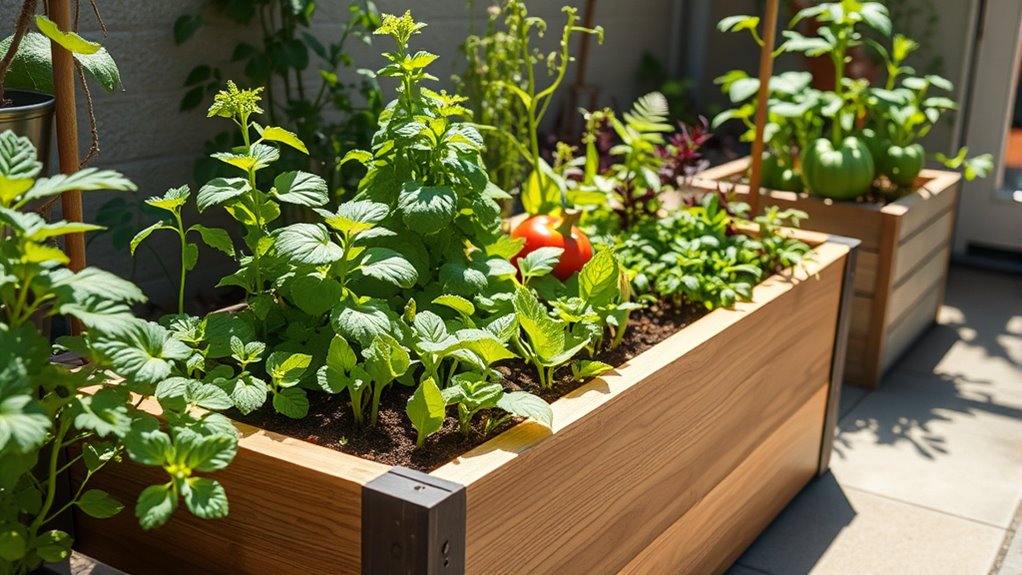
Because space is limited, raised garden beds let you make the most of your small area by organizing plants efficiently and improving soil quality. You’ll appreciate how these beds keep soil loose and well-drained, which helps your plants thrive.
Plus, you can control soil quality by adding rich compost, using smart composting tips to enrich nutrients and reduce waste. This setup discourages garden pests, too, since raised beds are easier to monitor and protect with barriers or natural repellents.
You can also rotate crops more effectively in a confined space, minimizing pest buildup and soil depletion. With raised beds, you’re creating a controlled environment that maximizes growth potential while minimizing hassle.
They’re perfect if you want to grow a variety of plants without worrying about poor soil or invasive pests taking over. Overall, raised beds help you turn a small outdoor space into a productive, manageable garden.
How to Choose the Right Size and Shape for Your Raised Bed
When selecting the size and shape of your raised bed, consider how much space you have and the types of plants you want to grow. Garden bed dimensions should fit comfortably within your available area while allowing enough room to access plants easily from all sides.
Choose raised bed size and shape based on space and plant needs for easy access and healthy growth.
A common width is 4 feet, which lets you reach the center without stepping inside, protecting the soil structure. Length can vary based on your space, but keeping it manageable is key.
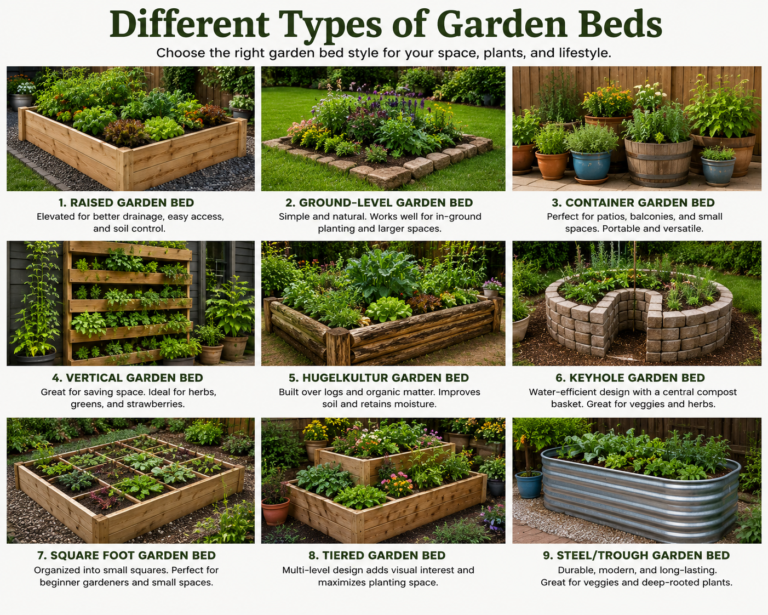
Shape considerations matter too. Rectangular beds are classic and efficient, but if your space is limited or oddly shaped, try square, circular, or even tiered beds. These shapes can maximize planting area and improve aesthetics.
Also, think about pathways around your bed to avoid overcrowding. By carefully planning garden bed dimensions and shape considerations, you’ll create a functional, space-smart raised bed that suits your small garden perfectly.
How to Choose Materials for Small Raised Garden Beds
Although selecting materials for your small raised garden bed might seem straightforward, choosing the right ones can greatly impact durability, appearance, and plant health. You want materials that not only last but also improve your garden’s aesthetic appeal.
Consider these key factors when picking materials:
- Material durability: Opt for rot-resistant woods like cedar or composite materials to guarantee your bed withstands weather without frequent replacement.
- Aesthetic appeal: Choose finishes and colors that complement your outdoor space to create a visually pleasing garden.
- Non-toxicity: Avoid materials treated with harmful chemicals that could leach into the soil and harm your plants.
- Ease of assembly: Select materials that are lightweight and easy to work with, especially if you plan to move or adjust your bed.
Creative Vertical Raised Garden Bed Ideas for Tiny Spaces
You can totally maximize your tiny space by using vertical raised garden beds like wall planters, tiered structures, and hanging containers. These options let you grow more without taking up valuable floor area.
Space-Saving Wall Planters
How can you maximize your gardening space without sacrificing style or accessibility? Space-saving wall planters are your go-to solution. They turn any vertical surface into a thriving garden, perfect for indoor herbs and container vegetables.
By mounting planters on walls, you free up floor space while keeping plants within easy reach.
Consider these ideas to get started:
- Use pocket planters for growing basil, parsley, or mint indoors
- Install modular wall-mounted containers for tomatoes or peppers
- Hang repurposed wooden pallets as rustic planter shelves
- Attach small pots with hooks to create a dynamic vertical herb garden
These options help you cultivate fresh produce even in the tiniest spaces, blending functionality with aesthetic charm.
Tiered Garden Structures
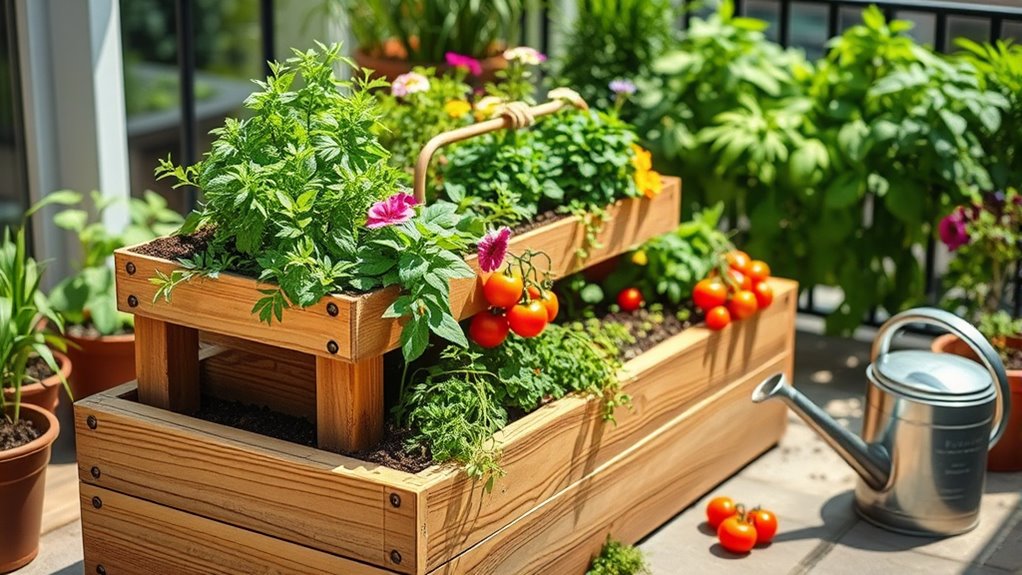
When space is limited, tiered garden structures let you grow more by stacking plants vertically. This raised bed design maximizes your tiny space, allowing you to cultivate a variety of herbs, vegetables, or flowers without sprawling out.
You can choose from materials like wood or metal to create levels that suit your style and needs. By incorporating tiered layers, you improve garden bed aesthetics, giving your small garden a dynamic, eye-catching look.
These structures also improve accessibility, making planting and harvesting easier since you don’t have to bend down as much. Plus, tiered garden beds promote better drainage and sunlight exposure for each plant.
If you want a creative, efficient way to boost your garden’s productivity and beauty, tiered garden structures are a perfect solution.
Hanging Container Gardens
Tiered garden structures make the most of limited space by stacking plants vertically, but hanging container gardens take vertical gardening a step further by utilizing overhead and wall areas. You can create a charming, space-saving garden by suspending decorative containers that hold your favorite indoor herbs or small flowers. These gardens add greenery without occupying precious floor space.
Try these ideas to get started:
- Hang small pots with indoor herbs like basil and mint near kitchen windows.
- Use macramé plant hangers for a boho look and flexibility.
- Attach vertical pocket planters on walls to maximize space.
- Repurpose decorative containers such as teacups or mason jars for a unique touch.
This approach brings freshness and style to tiny spaces, making gardening accessible anywhere.
Tiered Raised Beds to Maximize Growing Space
You can save a lot of space by using tiered raised beds—stacking levels to grow more in a small footprint. This vertical design lets you mix different plants that thrive at various heights and sunlight levels.
With a bit of careful planning, you’ll maximize your garden’s potential without needing any extra ground area. It’s a smart way to get the most out of limited space!
Space-Saving Vertical Design
Three levels of raised beds stacked vertically can transform even the smallest garden into a thriving green oasis. This space-saving vertical design lets you make the most of limited square footage through vertical gardening and compact planting. By building upward instead of outward, you’ll free up ground space while creating an eye-catching display.
To optimize your vertical raised bed, consider using sturdy, weather-resistant materials to support multiple tiers. Position beds so sunlight reaches each level evenly. Plant compact, shallow-rooted crops for efficient space use. And incorporate drip irrigation for easy watering across tiers.
This approach boosts your garden’s productivity without crowding your space, making it perfect for balconies, patios, or tiny yards.
Plant Variety Compatibility
Choosing compatible plant varieties is key to maximizing your growing space in tiered raised beds. When you focus on plant compatibility, you guarantee that each layer thrives without competing for nutrients, light, or water.
Companion planting is a smart strategy here. Pair plants that support each other’s growth, repel pests, or improve soil health. For example, placing deep-rooted plants like carrots on the lower tier and shallow-rooted herbs like basil above can optimize root space.
You can also combine tall sun-loving crops with shade-tolerant greens to make the most of sunlight. By carefully selecting which plants share your tiered beds, you create a harmonious environment that boosts productivity and reduces maintenance.
This thoughtful approach helps you grow more in less space effectively.
Raised Beds That Double as Seating and Storage
Although space might be limited, raised garden beds that double as seating and storage let you maximize every inch of your outdoor area. These multifunctional designs improve garden bed aesthetics while providing practical benefits.
You’ll enjoy easy access to your plants and keep tools neatly stored, all in one stylish setup. Plus, integrating watering systems into these beds guarantees your plants stay hydrated with minimal effort.
Consider these ideas to combine seating, storage, and gardening effectively:
- Built-in bench edges with storage compartments underneath
- Hinged lids on raised beds that open to reveal tool storage
- Modular units that stack seating and planting areas
- Incorporating drip irrigation or soaker hoses into the structure
Best Plants for Raised Garden Beds in Small Spaces
When you’re working with limited space, selecting the right plants for your raised garden beds is essential to maximize growth and yield. Focus on compact, high-yield varieties like cherry tomatoes, bush beans, lettuce, and herbs such as basil and parsley. These plants thrive in small areas and offer fresh produce throughout the growing season.
To further boost your garden’s productivity, use companion planting strategies. Pairing plants like tomatoes with basil not only improves flavor but also helps with natural pest control, reducing the need for chemicals. Marigolds are another excellent companion that deters pests like aphids and nematodes.
Also, consider vertical growers like pole beans or cucumbers to save horizontal space. Mixing flowers and herbs with vegetables can attract beneficial insects, enhancing pest control while promoting pollination. By carefully choosing plants that complement each other and fit your space, you’ll create a raised bed garden that’s both efficient and thriving.
Optimizing Soil Mix and Drainage for Raised Beds
To get the most from your raised bed, you’ll want to choose the right soil mix that drains well but still holds enough moisture. Good drainage is key because it stops water from pooling and harming your plants’ roots. At the same time, the soil needs to keep enough water so your plants stay hydrated.
Plus, balancing the nutrients in your soil is super important. It’s what helps your plants grow strong and produce vibrant blooms, even if your garden space is small. So, finding that perfect mix means healthier plants and a more successful garden overall.
Choosing the Right Soil
How do you create the perfect soil mix for your raised garden bed? Start by understanding the existing soil and adjusting it to meet your plants’ needs. Begin with pH testing to ensure the soil’s acidity suits your crops.
Then, use soil amendments to improve texture and nutrient content. Here’s what you should focus on:
Mix equal parts of compost, peat moss, and vermiculite or perlite for a balanced blend. Add organic matter like aged manure to boost fertility.
Use pH testing kits to monitor and adjust soil acidity. Incorporate soil amendments such as lime or sulfur to correct pH imbalances.
Enhancing Bed Drainage
Three key factors influence raised bed drainage: soil composition, bed height, and underlying materials. To improve drainage, mix coarse sand or perlite with your soil to prevent waterlogging. Keep your bed at least 12 inches high to allow excess water to drain freely.
Placing a layer of gravel or small rocks beneath the soil improves water flow and prevents root rot. Using efficient composting methods helps create a light, airy soil that drains well while providing nutrients.
Proper drainage also aids pest control by discouraging moisture-loving pests like slugs and fungus gnats. Avoid overly dense soil mixes that trap water, and check drainage regularly after heavy rain. By optimizing these elements, you guarantee your raised bed stays healthy and productive, even in small spaces.
Balancing Nutrients Effectively
Achieving the right balance of nutrients in your raised bed starts with crafting an ideal soil mix that complements proper drainage. You want soil that retains moisture yet drains excess water to prevent root rot.
Incorporate organic matter through composting techniques to boost nutrient content naturally. Regular fertilizer application ensures plants get what they need for growth. Focus on these key steps:
- Mix equal parts compost, peat moss, and vermiculite for a rich, well-draining soil base.
- Use composting techniques to recycle kitchen scraps into nutrient-rich amendments.
- Apply balanced, slow-release fertilizer every 4-6 weeks to maintain nutrient levels.
- Test soil pH periodically to adjust with lime or sulfur for optimal nutrient uptake.
Balancing nutrients effectively helps your plants thrive in small raised beds with limited space.
Simple DIY Raised Garden Bed Projects for Beginners
When you’re new to gardening, building a simple DIY raised garden bed can make the process less intimidating and more rewarding. Start with basic materials like untreated wood or recycled pallets for an easy frame. Keep your bed small to manage soil quality and moisture better.
To protect your plants, consider incorporating garden pest control measures such as installing mesh covers or using natural repellents. Wildlife deterrents like chicken wire or decorative garden stakes not only keep critters away but also add charm.
Elevate your bed slightly off the ground to improve drainage and reduce weed growth. Remember to fill it with nutrient-rich soil to support healthy plant growth.
With these beginner-friendly steps, you’ll create a functional garden space that’s easy to maintain and customize. This hands-on approach helps you learn essential gardening skills while protecting your plants from pests and wildlife effectively.
Space-Saving Maintenance Tips for Raised Garden Beds
Keeping your raised garden bed manageable goes beyond building it right. You’ll want to focus on maintenance strategies that save space and time. Efficient fertilizer application ensures your plants get nutrients without overcrowding or excess buildup.
Combine this with effective pest prevention to keep your garden healthy without wasting space on bulky treatments or damaged plants.
Here are four space-saving maintenance tips for your raised bed:
- Use targeted fertilizer application techniques like slow-release pellets or liquid feeds to avoid waste.
- Implement companion planting to naturally deter pests and maximize plant density.
- Regularly prune and harvest to maintain airflow and prevent overcrowding.
- Mulch with organic materials to retain moisture, suppress weeds, and reduce maintenance frequency.
Frequently Asked Questions
How Do Raised Garden Beds Affect Local Wildlife?
Raised garden beds can positively affect local wildlife by creating a wildlife habitat that supports native species. When you plant native flowers and shrubs, you provide food and shelter for pollinators, birds, and beneficial insects.
You’ll notice more butterflies and bees visiting your garden, helping the ecosystem thrive. Just avoid using harmful pesticides, and you’ll encourage a healthy balance of native wildlife right in your garden space.
Can Raised Beds Be Used Indoors With Grow Lights?
Yes, you can definitely use raised beds indoors with a grow light setup. Indoor cultivation thrives when you provide adequate light, temperature, and ventilation.
Setting up grow lights above your raised beds ensures your plants get the light they need to grow strong. Just make sure your grow lights match the plants’ requirements, and keep the area well-ventilated to prevent mold and pests.
This way, you’ll enjoy fresh greens year-round inside your home.
What Are the Environmental Impacts of Different Raised Bed Materials?
You should consider that raised bed materials impact the environment differently. Sustainable materials like cedar or recycled plastic support eco friendly construction by lasting long and reducing waste.
Untreated wood is biodegradable but may require frequent replacement, increasing resource use. Metal beds are durable but energy-intensive to produce.
Choosing eco friendly construction means picking materials with low environmental footprints, ensuring your garden benefits the planet while thriving.
How to Protect Raised Beds From Pests Without Chemicals?
Think of your raised bed as a fortress, where natural deterrents act like loyal guards and physical barriers form sturdy walls. You can protect your garden by using neem oil or garlic sprays to repel pests naturally.
Surround beds with mesh or row covers to block intruders. Companion planting with marigolds or herbs also confuses pests. These methods keep your garden safe without chemicals, letting your plants thrive in a healthy, eco-friendly environment.
Are Raised Garden Beds Suitable for Rooftop Gardens?
Yes, raised garden beds are suitable for rooftop gardens, but you’ll need to take into account rooftop drainage carefully to avoid water buildup. Make sure your roof can handle the structural stability requirements of the soil, plants, and bed materials.
Using lightweight soil mixes and sturdy, yet light, bed frames helps maintain stability without overloading the roof. Proper drainage systems will keep your plants healthy and protect your rooftop from water damage.
Conclusion
With these raised garden bed ideas, you’ll turn even the tiniest space into a green paradise bursting with life. You don’t need acres of land to grow your dream garden, just the right size, shape, and materials.
Get creative with vertical or tiered designs to squeeze every inch of growing space. Your small garden will thrive like it’s been kissed by a thousand gardening fairies.
Now, roll up your sleeves and start planting! With the best raised garden bed ideas for small spaces, your garden can flourish no matter the size.