7 Best Tips for Successful Exterior Painting
Struggling to achieve a flawless exterior paint job that lasts? You’re not alone. Many homeowners find it challenging to prep surfaces properly, choose the right paint, and get that professional finish that stands up to the elements.
Luckily, with the right approach, you can transform your home’s exterior and enjoy a fresh, vibrant look for years to come.
To get a durable, professional exterior paint job, start by thoroughly cleaning and prepping your surfaces, fixing any damage, and priming bare areas.
Choose paint that suits your climate, focusing on weather resistance like UV and moisture protection.
Pick the right tools for even application, and paint during dry, mild weather to guarantee proper drying.
Don’t forget regular maintenance like cleaning and touch-ups to keep your walls fresh.
Keep going to uncover more expert tips and techniques.
Key Takeaways
- Thoroughly clean and prep surfaces, including repairing damage and priming bare areas for better paint adhesion and durability.
- Choose exterior paint designed for your local climate with UV protection and mildew resistance. This helps ensure long-lasting results.
- Paint on dry, calm days with low humidity and mild temperatures. This way, the paint dries properly and you avoid defects.
- Use high-quality brushes and rollers. Apply paint evenly with consistent pressure and keep a proper technique for a smooth finish.
- Regularly inspect and clean painted surfaces. Perform touch-ups promptly and maintain exterior upkeep to extend the paint’s lifespan.
Prepare Exterior Surfaces Thoroughly Before Painting
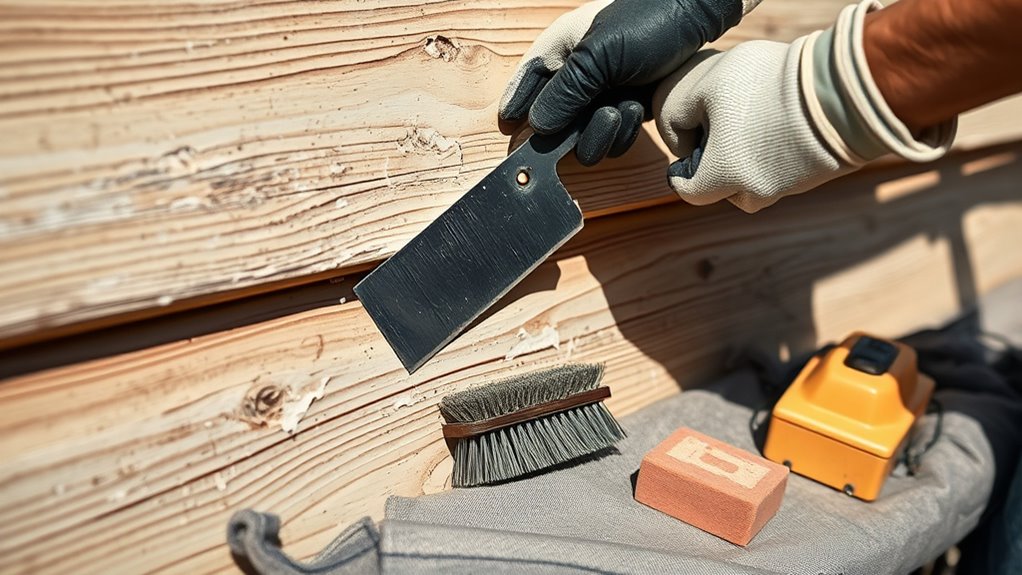
Before you start painting, make sure you thoroughly prepare the exterior surfaces. Begin with surface cleaning to remove dirt, mildew, and loose paint using a pressure washer or scrub brush with mild detergent. This step guarantees the new paint adheres well and lasts longer.
Once the surface is clean and dry, move on to damage inspection. Carefully examine the walls, trim, and siding for cracks, rot, or peeling paint. Address any issues by scraping loose paint, filling cracks with exterior filler, and replacing damaged wood or siding.
Skipping this step can lead to poor paint adhesion and premature peeling. Proper preparation saves you time and money in the long run by preventing costly repairs and repainting. Taking these steps seriously sets a solid foundation for your painting project and guarantees a professional-looking finish you’ll be proud of.
Choose Exterior Paint That Suits Your Climate
You’ll want to pick exterior paint that’s made to handle your local weather conditions. Whether you’re dealing with intense sun, heavy rain, or freezing temperatures, choosing the right paint really makes a difference. It helps your finish last longer and look better all year round.
And don’t forget to think about the best season for painting in your area. That way, you can make sure the paint dries properly and sticks well. It’s all about getting the timing right to keep your home looking great!
Weather Resistance Importance
Choosing the right exterior paint for your climate plays a crucial role in protecting your home from weather damage. You need paint that offers excellent humidity control to prevent moisture buildup, which can cause peeling, mold, and wood rot.
If you live in a windy area, selecting paint with strong wind protection ensures your walls resist chipping and wear from constant exposure. Weather-resistant paint forms a durable barrier against sun, rain, and temperature changes, maintaining your home’s appearance longer.
Seasonal Paint Selection
Four key factors determine the best exterior paint for your climate: temperature, humidity, sunlight, and precipitation. When selecting paint, consider color palettes that complement your environment while resisting fading.
Paint finishes also matter. Choose finishes that withstand your local weather conditions, like satin or semi-gloss for moisture resistance.
| Climate Factor | Ideal Paint Choice |
|---|---|
| High Humidity | Mildew-resistant finish |
| Intense Sunlight | UV-resistant pigments |
| Frequent Rain | Water-repellent finish |
Why Priming Your Exterior Paint Matters
Priming your exterior paint lays the essential foundation for a long-lasting finish. You can’t skip this vital step because it guarantees the priming importance in protecting and preparing your surfaces. Primers seal porous materials like wood or masonry, providing a smooth, uniform base that helps paint adhere better.
Without proper surface preparation, your paint may peel, crack, or fade faster, wasting time and money.
When you prime, you also block stains, tannins, and moisture from bleeding through your topcoat, which maintains the paint’s true color and durability. Skipping primer on bare or repaired areas risks uneven coverage and premature wear.
Get the Right Tools for Exterior Painting
To achieve a flawless exterior paint job, you’ll need the right set of tools at your disposal. Start with brush selection. Choose brushes designed specifically for exterior surfaces, like those with synthetic bristles that handle weather-resistant paints well. A good brush ensures smooth application and better coverage, especially in hard-to-reach corners.
Next, consider paint storage. Keep your paint in airtight containers to prevent it from drying out or thickening between uses. If you’re taking breaks, seal the can tightly and store it in a cool, dry place. Proper storage keeps your paint fresh and ready for touch-ups, saving you time and money.
Don’t forget other essential tools like rollers with appropriate nap length for rough exterior surfaces, painter’s tape, and drop cloths. Having the right tools not only improves your painting quality but also makes the process more efficient and enjoyable.
Pick the Best Weather and Time to Paint
Having the right tools at hand sets you up for success, but choosing when and under what conditions to paint can make just as big a difference. To guarantee your exterior paint adheres properly and dries evenly, pay attention to weather factors like humidity control and wind conditions.
Avoid painting on extremely humid days since moisture prevents paint from curing well. Strong winds can cause debris to stick to wet paint and lead to an uneven finish. Aim for mild temperatures and calm air to get the best results.
Here’s what to keep in mind when picking the best weather and time to paint:
- Choose a dry day with humidity below 60% for ideal drying.
- Avoid windy days to prevent dust and dirt from ruining the finish.
- Paint during cooler morning or late afternoon hours to reduce heat-related issues.
- Stay away from painting right before rain or dew forms.
- Check the forecast to ensure several consecutive clear days for proper curing.
Apply Exterior Paint Evenly for a Smooth Finish
To get a smooth finish, start by choosing quality paint that spreads easily. You’ll want to pick the right tools too, like a good brush or roller, to help you apply it evenly. Just keep your pressure consistent as you go—that way, you’ll avoid streaks and uneven patches.
Choose Quality Paint
One key factor in achieving a smooth, long-lasting exterior paint job is selecting high-quality paint. When you choose quality paint, you ensure better adhesion, durability, and a vibrant finish that withstands weather conditions.
Pay close attention to color selection and paint texture, as these impact the final look and how the paint applies.
Consider these tips when picking your exterior paint:
- Opt for paints with UV protection to prevent fading
- Choose a paint texture that matches your surface for even coverage
- Select colors that complement your home’s style and environment
- Prioritize paints with mildew and mold resistance
- Look for paints with strong adhesion to reduce peeling
Use Proper Tools
Although selecting the right paint is essential, using proper tools guarantees you apply it evenly for a smooth, professional finish. Start with high-quality brushes and rollers designed for exterior surfaces, as they hold paint better and reduce streaks.
Prioritize brush maintenance by cleaning your tools thoroughly after each use to keep bristles in top shape and avoid dried paint buildup. This helps you achieve consistent results with less effort.
Don’t overlook tool safety; always handle ladders and power washers carefully to prevent accidents while painting. Employing the right tools and maintaining them properly ensures your work is efficient and your finish flawless, saving time and frustration on your exterior painting project.
Maintain Consistent Pressure
Applying paint with consistent pressure is key to achieving a smooth, even finish on your exterior surfaces. Whether you’re using a brush or a sprayer, maintaining steady force prevents uneven layers and streaks. Your brush technique should involve gentle, uniform strokes, avoiding pressing too hard or too lightly.
For sprayers, controlling spray consistency ensures each pass deposits the right amount of paint.
To maintain consistent pressure effectively:
Keep your wrist relaxed and move your arm steadily. Avoid starting or stopping abruptly to prevent drips. Hold the sprayer at a fixed distance from the surface. Use slow, overlapping strokes for even coverage. Frequently check and adjust your grip and speed.
Sticking to these habits guarantees a professional-looking exterior finish every time.
Maintain Your Exterior Paint to Keep It Looking New
To keep your exterior paint looking fresh and vibrant, you need to perform regular maintenance throughout the year. Start by scheduling routine surface cleaning to remove dirt, mildew, and grime that can dull your paint’s finish. Use a gentle pressure wash or a soft brush with mild detergent to avoid damaging the paint.
After cleaning, inspect your walls for chips or cracks. When you spot imperfections, apply touch-ups using color blending techniques to seamlessly match the existing paint. This prevents unsightly patches and extends the lifespan of your work.
Furthermore, trim back plants that brush against your walls, as moisture and abrasion can cause paint to peel. Keep gutters clean to avoid water damage on painted surfaces.
Frequently Asked Questions
How Long Does Exterior Paint Typically Last Before Needing a New Coat?
Exterior paint typically lasts about 5 to 10 years before you need a new coat. How long it lasts depends on factors like weather, surface prep, and paint quality. Using a good paint primer helps paint adhere better and extends its life.
When it’s time to repaint, color matching can save you from repainting the entire surface, especially if you only touch up spots. Keep an eye out for peeling or fading to know when to act.
Can I Paint Over Old Lead-Based Exterior Paint Safely?
You shouldn’t paint directly over old lead-based exterior paint without proper precautions. To guarantee lead poisoning prevention, you need professional lead paint removal or seal the surface with a specialized encapsulating primer.
Disturbing lead paint can release harmful dust, so avoid sanding or scraping it yourself. Always consult experts to handle lead safely, protecting your health and your family’s.
Taking these steps keeps your home safe while updating its appearance.
What Safety Gear Should I Wear While Painting Outdoors?
You should wear protective clothing to shield your skin from paint splatters and harmful chemicals while painting outdoors. Don’t forget eye protection, like safety goggles, to keep debris and paint out of your eyes.
A respirator or mask is also essential to avoid inhaling fumes, especially if you’re working with oil-based paints or old layers. Gloves will protect your hands, and sturdy shoes will keep your feet safe during the job.
How Do I Deal With Peeling Paint on Exterior Surfaces?
You need to start by removing all the peeling paint with a scraper or wire brush to guarantee proper surface preparation. Then, sand the area smooth to promote paint adhesion.
Clean the surface thoroughly to remove dust and debris. Apply a high-quality primer designed for exterior use before repainting.
This process helps the new paint stick better and last longer, preventing future peeling and ensuring a smooth, durable finish.
Are There Eco-Friendly Exterior Paint Options Available?
Yes, you’ll find plenty of eco-friendly exterior paint options that use natural paint ingredients like clay, lime, and plant-based oils. These paints minimize harmful chemicals, reducing environmental impact and improving air quality around your home.
When choosing, look for low or zero-VOC labels to make sure you’re picking safe, sustainable products. Using natural paint options not only protects the planet but also keeps your family healthier while giving your home a fresh, vibrant look.
Conclusion
By following these tips, you’ll boost your chances of a flawless exterior paint job that lasts. Did you know that properly prepared surfaces can increase paint adhesion by up to 50%? That means your hard work upfront really pays off in durability and appearance.
So, take your time prepping, choosing the right paint, and maintaining your exterior. You’ll enjoy a beautiful, long-lasting finish that protects your home for years to come. Remember, successful exterior painting starts with the right preparation and care.