10 Essential Tips to Maintain Your HVAC System
Maintaining your HVAC system can feel overwhelming, especially when you’re juggling a busy schedule and unexpected repairs. You’re not alone—many people struggle with keeping their heating and cooling systems running smoothly.
The good news is, with a few simple steps, you can boost your system’s performance and save energy without breaking the bank.
You should regularly inspect and replace HVAC filters to keep air clean and airflow steady. Keep vents and registers clear of dust and obstacles, and clean your coils twice yearly to maintain efficiency.
Check and seal duct leaks to prevent energy loss, and clear debris around outdoor units to ensure good airflow. Don’t forget to lubricate moving parts and set your thermostat properly.
Watch for unusual noises or smells as early warning signs. Uncover how simple steps can boost comfort and save energy.
Key Takeaways
- Regularly inspect and replace HVAC filters every 1-3 months to ensure clean airflow and system efficiency. This simple step keeps your system running smoothly.
- Schedule annual professional tune-ups to check refrigerant levels, electrical connections, and clean coils. It’s a great way to catch issues early.
- Seal duct leaks and maintain at least two feet of clearance around outdoor units for optimal airflow. This helps your system work more efficiently.
- Calibrate and program thermostats to optimize temperature settings and reduce energy waste. Smart adjustments can save you money.
- Lubricate moving parts during maintenance to minimize wear, reduce noise, and extend system lifespan. Keeping everything running quietly is a bonus too.
Inspect and Replace HVAC Filters Regularly
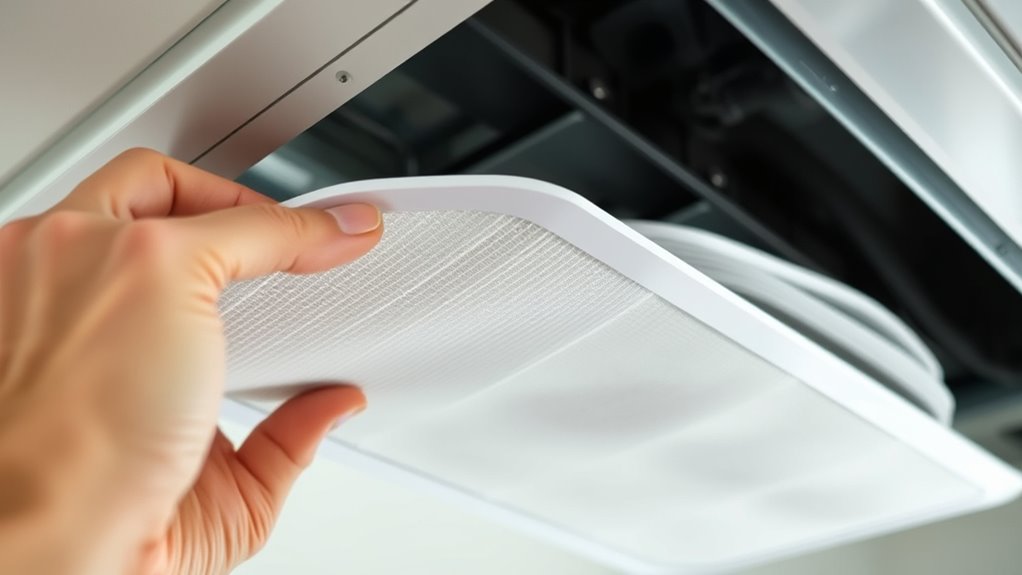
Although it’s easy to overlook, inspecting and replacing your HVAC filters regularly is vital for maintaining system efficiency. You’ll want to familiarize yourself with the different air filter types available, like fiberglass, pleated, or HEPA filters, since each offers varying levels of filtration and airflow. Knowing these differences helps you choose the right filter for your system’s needs.
Pay close attention to the filter replacement frequency recommended by the manufacturer or HVAC professional. Typically, filters should be changed every 1 to 3 months, but this can vary based on factors like indoor air quality, pets, and usage. Regularly checking your filters guarantees they’re not clogged with dust and debris, which can restrict airflow and force your system to work harder.
Keep HVAC Vents and Registers Clean and Clear
When you keep your HVAC vents and registers clean and clear, you guarantee proper airflow throughout your home. Dust accumulation on these components often leads to airflow restriction, making your system work harder and less efficiently.
You should regularly vacuum or wipe down vents and registers to remove dust and debris. Don’t forget to check for any obstructions like furniture or curtains blocking airflow, as these can reduce the system’s effectiveness.
Keeping vents clear not only improves air quality but also helps maintain consistent temperatures in every room. Simple upkeep like this prevents your HVAC from overworking, potentially extending its lifespan and lowering energy bills.
Clear vents enhance air quality, maintain steady temperatures, and help your HVAC last longer while saving energy.
Make it a habit to inspect and clean your vents monthly, especially during high-usage seasons. By staying on top of this task, you avoid airflow restriction caused by dust accumulation, ensuring your HVAC system runs smoothly and keeps your home comfortable year-round.
Clean HVAC Coils to Boost Efficiency
You’ll want to keep your HVAC coils clean to make sure your system runs efficiently and lasts longer. It’s pretty simple—regular cleaning can be done with gentle brushes or coil cleaner sprays, depending on your unit. Just try to check and clean your coils at least once or twice a year to keep everything running at its best.
Importance of Clean Coils
Because dirty coils reduce your HVAC system’s efficiency, keeping them clean is vital for peak performance. When coils accumulate dirt and debris, your system works harder, raising energy costs and causing uneven cooling or heating.
Additionally, dirty coils can lead to refrigerant leaks, which not only compromise system performance but also pose environmental hazards. You should also be aware that neglecting coil cleanliness increases the risk of coil corrosion, which damages the coils and shortens your HVAC system’s lifespan.
Cleaning Methods Overview
How do you guarantee your HVAC coils stay clean and efficient? Start by combining regular air filter maintenance with proper coil cleaning techniques. Clean air filters prevent dirt buildup on coils, making your system work smoother.
When it comes to coil cleaning, you can use gentle methods like brushing away debris or rinsing with water. For tougher grime, coil cleaner sprays are effective but be sure to follow the manufacturer’s instructions. Avoid harsh chemicals that might damage the coils.
Also, power off your system before cleaning to stay safe. By pairing consistent air filter upkeep with these coil cleaning techniques, you’ll improve airflow, reduce energy costs, and extend your HVAC system’s lifespan.
Keeping coils clean is a simple yet crucial step in maintaining peak performance.
Maintenance Frequency Tips
When should you clean your HVAC coils to keep your system running efficiently? Ideally, you should inspect and clean your coils at least twice a year, once in spring and once in fall. Regular cleaning prevents dirt buildup that can reduce airflow and strain your system.
By maintaining clean coils, you improve indoor air quality because contaminants won’t circulate through your home. This simple step also extends your HVAC system lifespan by reducing wear and tear.
If you live in a dusty area or have pets, you might need to clean coils more often. Don’t wait until you notice performance drops or higher energy bills. Proactive maintenance keeps your system running smoothly and efficiently year-round.
Check and Seal Air Ducts to Stop Leaks
Although your HVAC system may seem to run smoothly, unnoticed leaks in your air ducts can considerably reduce its efficiency. To keep your system working at its best, you need to check and seal these leaks regularly. Here’s how:
- Perform Air Leak Detection: Use smoke pencils or incense sticks near duct joints to spot escaping air.
- Inspect Duct Insulation: Ensure insulation is intact and covers all ducts, especially in unconditioned spaces.
- Seal Leaks with Mastic or Foil Tape: Avoid regular duct tape; mastic and UL 181-approved foil tape provide durable seals.
- Schedule Professional Duct Testing: For a thorough assessment, professionals can use specialized tools to detect hidden leaks.
Set Your Thermostat Right All Year Long
Sealing your air ducts improves airflow and system efficiency, but setting your thermostat correctly keeps your HVAC running efficiently throughout the year. To get the most from your system, focus on proper thermostat calibration. A miscalibrated thermostat can cause your HVAC to run longer than necessary, wasting energy and increasing costs. Check your thermostat’s accuracy by comparing it to a reliable thermometer and adjust it as needed.
Also, consider the temperature zones in your home. If your system supports zoning, set different temperatures for each area based on usage and comfort needs. This prevents overheating or overcooling unused spaces, saving energy while maintaining comfort. During winter, aim for a lower setting when you’re away or asleep, and warmer in summer during those times. By managing your thermostat thoughtfully and ensuring its calibration, you’ll maintain efficiency, reduce wear on your system, and enjoy consistent comfort all year long.
Schedule Annual Professional HVAC Tune-Ups
You should schedule an annual professional HVAC tune-up to keep your system running efficiently and prevent costly breakdowns. Technicians will inspect key components like filters, coils, and electrical connections to make sure everything is working smoothly.
It’s a good idea to set reminders to book these tune-ups before the peak seasons. That way, you can stay ahead of any potential issues and avoid unexpected problems when you need your system the most.
Benefits of Annual Tune-Ups
When you schedule annual professional HVAC tune-ups, you guarantee your system runs efficiently and reliably throughout the year. These tune-ups offer several key benefits that improve your comfort and save you money.
- Improve indoor air quality by ensuring filters and components are clean, reducing allergens and pollutants.
- Lower energy consumption, which minimizes your environmental impact and cuts utility bills.
- Prevent costly breakdowns by catching minor issues early before they become major repairs.
- Extend your system’s lifespan by keeping all parts in ideal condition.
What Technicians Inspect
Although annual HVAC tune-ups cover many tasks, technicians focus on key components to guarantee your system runs smoothly. They perform thorough HVAC system diagnostics to identify any hidden issues early.
Following strict technician safety protocols, they inspect electrical connections, refrigerant levels, and airflow systems to ensure ideal performance. Regular inspections prevent costly breakdowns and extend your unit’s lifespan.
| Component | Inspection Focus | Purpose |
|---|---|---|
| Electrical System | Check wiring & connections | Prevent electrical hazards |
| Refrigerant Lines | Measure refrigerant levels | Ensure efficient cooling |
| Air Filters | Assess cleanliness | Maintain indoor air quality |
| Blower Motor | Test operation | Optimize airflow and efficiency |
Scheduling Tips and Reminders
Since regular maintenance keeps your HVAC system running efficiently, scheduling annual professional tune-ups is essential. These tune-ups ensure your system receives thorough seasonal maintenance, reducing breakdown risks and improving performance.
To stay on track, follow these scheduling tips and reminders:
- Set annual appointments before peak seasons to avoid delays.
- Use a calendar or app to record tune-up dates and receive emergency reminders.
- Coordinate tune-ups with filter changes and thermostat checks.
- Keep a maintenance log to track service history and upcoming needs.
Clear Debris and Plants Around Outdoor Units
To keep your HVAC system running efficiently, you need to clear away any debris and plants around the outdoor units regularly. Overgrown vegetation and accumulated leaves can block airflow, forcing your system to work harder and reducing its lifespan.
When planning your garden landscaping, make sure to leave at least two feet of clearance around the unit. This space allows for ideal air circulation and easy access for maintenance.
Furthermore, removing debris helps with pest prevention, as piles of leaves or dense plants can attract insects and small animals that might damage wiring or insulation. Regularly inspect the area and trim back any shrubs or grass encroaching on the unit.
Clearing the space not only boosts performance but also prevents costly repairs. By integrating these simple habits into your routine, you’ll protect your HVAC system and maintain a comfortable home environment year-round.
Lubricate HVAC Moving Parts to Cut Noise and Wear
Keeping the area around your outdoor HVAC unit clear helps the system run smoothly, but maintaining the moving parts inside is just as important. Proper lubrication techniques can considerably reduce friction, cutting down wear and noise. Here’s how you can effectively lubricate your HVAC moving parts:
- Identify all moving components such as fan motors, bearings, and blower shafts.
- Use manufacturer-recommended lubricants to avoid damaging sensitive parts.
- Apply lubricant sparingly to prevent buildup that can attract dust and debris.
- Schedule lubrication during regular maintenance intervals to keep parts running quietly and efficiently.
These noise reduction strategies not only extend your system’s lifespan but also improve overall performance. By sticking to these simple steps, you’ll minimize mechanical noise and reduce costly repairs. Remember, well-lubricated parts mean less strain on your HVAC system, helping it operate smoothly throughout the year.
Spot HVAC Problems Early by Watching for Noises and Smells
When your HVAC system starts making unusual noises or emitting strange smells, it’s a clear sign that something might be wrong. You should listen carefully for grinding, squealing, or banging sounds, as they may indicate worn-out parts or loose components. Likewise, musty or burning odors can signal mold growth or electrical issues.
Catching these signs early helps you prevent costly repairs and maintain ideal indoor air quality. Pay close attention to how your system manages humidity control, too. If you notice increased dampness or dryness, it could mean your HVAC isn’t functioning efficiently.
Poor humidity control not only affects comfort but also impacts air quality, potentially causing respiratory problems. By regularly monitoring noises and smells, you’ll spot issues before they escalate, ensuring your system runs smoothly and keeps your indoor environment healthy. Don’t ignore subtle changes. They’re often the first clues of HVAC trouble.
Upgrade to a Programmable Thermostat to Save Energy
You can boost your HVAC’s energy efficiency by upgrading to a programmable thermostat. It lets you set easy schedules to match your daily routine. That way, your system only runs when it’s actually needed. This simple change can lead to noticeable cost savings on your energy bills.
Energy Efficiency Benefits
How much could you save by upgrading to a programmable thermostat? Quite a bit, especially when paired with smart energy practices. This upgrade not only reduces your energy bills but also improves your HVAC system’s efficiency. That way, you’re contributing to a greener home.
- It optimizes energy use by adjusting temperatures based on your schedule, which minimizes waste.
- It complements insulation techniques by maintaining stable indoor temperatures and reducing HVAC strain.
- It supports integration with renewable sources, allowing you to maximize clean energy use.
- Plus, it reduces wear and tear on your system, extending its lifespan and saving on repairs.
Easy Scheduling Features
Why settle for manual adjustments when a programmable thermostat can handle your schedule automatically? With scheduling flexibility, you can set different temperatures for specific times and days, matching your routine without lifting a finger.
This means your HVAC system runs only when needed, enhancing comfort and efficiency. Many modern thermostats offer calendar integration, allowing you to sync your device with your personal calendar.
This smart feature adjusts settings based on your appointments and activities, ensuring your home is always at the perfect temperature when you return. Upgrading to a programmable thermostat with these easy scheduling features simplifies managing your HVAC system and helps maintain consistent comfort effortlessly throughout the week.
It’s a smart step toward a more convenient and efficient home environment.
Cost Savings Potential
Wondering how much a programmable thermostat can cut your energy bills? A thorough cost analysis shows these devices offer significant utility savings by optimizing your HVAC system’s runtime based on your schedule. Here’s how you benefit:
- Automatically adjust temperatures during peak hours to reduce energy use.
- Avoid cooling or heating an empty house, minimizing waste.
- Lower monthly utility bills through smarter energy consumption.
- Extend your HVAC system’s life by preventing overuse.
Frequently Asked Questions
How Often Should I Replace My HVAC System Entirely?
You should consider replacing your HVAC system every 10 to 15 years. When thinking about a system upgrade, weigh the benefits against repair costs through a thorough cost analysis.
If your current system’s efficiency drops or repair expenses rise considerably, it’s a good time to upgrade. Don’t wait too long. Newer models save energy and money over time, so keeping an eye on performance helps you decide when to replace it entirely.
Can Indoor Plants Improve HVAC Air Quality?
Yes, indoor plants can improve indoor air quality by naturally filtering out pollutants and increasing oxygen levels. You’ll enjoy plant benefits like reduced airborne toxins and improved humidity, which helps your HVAC system work more efficiently.
While plants won’t replace your HVAC’s filtration, they complement it well by creating a fresher, healthier environment. Adding a few to your space can boost air quality and overall comfort.
What Is the Average Lifespan of an HVAC System?
You can expect your HVAC system to last about 10 to 15 years, depending on maintenance schedules and system efficiency. If you stick to regular tune-ups, replace filters timely, and address minor repairs quickly, you’ll extend its life.
Neglecting upkeep, ignoring signs of trouble, or running the system inefficiently can shorten its lifespan. So, stay proactive, keep a consistent maintenance routine, and enjoy reliable comfort for years to come.
Are There Energy Rebates for Upgrading HVAC Units?
Yes, you can often get energy rebates for upgrading HVAC units. Many utility companies and government programs offer energy incentives and rebate programs to encourage you to install energy-efficient systems. These rebates can considerably reduce your upfront costs.
To find out if you qualify, check with your local energy provider or visit government websites. Taking advantage of these rebate programs helps you save money while improving your home’s comfort and efficiency.
How Do HVAC Systems Impact Indoor Humidity Levels?
Your HVAC system plays a big role in indoor air quality by controlling humidity levels. When it runs, it removes excess moisture, helping prevent mold and mildew growth.
Proper humidity control keeps your home comfortable and healthy, reducing allergens and dust mites. If your system isn’t working well, indoor air can become too dry or too humid, causing discomfort and potential health issues.
Conclusion
By following these 10 essential HVAC tips, you’ll keep your system running smoothly and efficiently all year long. Regular care not only extends your unit’s life but also saves you money on energy bills and costly repairs.
Why wait for a breakdown when a little maintenance goes a long way? Take charge of your HVAC system today, and enjoy a comfortable, worry-free home no matter the season.
Remember, keeping up with these HVAC maintenance tips is the best way to ensure your system stays reliable and efficient for years to come.