Master Lawn Mower Maintenance With This Step-By-Step Best Guide 2026
Keeping your lawn mower in top shape can feel like a hassle, especially if you’re not sure where to start. You’re not alone—many people struggle with maintaining their mowers properly, which can lead to poor performance or costly repairs.
Luckily, with the right know-how, you can keep your mower running smoothly and enjoy a perfectly trimmed lawn all season long.
You can keep your lawn mower running smoothly by regularly inspecting parts, cleaning grass clippings from the blade and deck, and sharpening dull blades.
Don’t forget to check oil levels and change it as needed, clean or replace the air filter, and verify the belt is in good shape with proper tension.
Lubricate moving parts to prevent wear and store your mower properly to avoid damage.
Following these steps sets you up for hassle-free mowing all season long.
Key Takeaways
- Regularly inspect and prepare your mower by checking fuel, oil, blades, and safety features before each use.
- Clean grass clippings and debris from the blade and deck after every mowing session to prevent rust and clogging.
- Sharpen or replace damaged blades and change engine oil periodically to keep cutting performance sharp and your engine healthy.
- Replace spark plugs and clean or change air filters to help your engine run efficiently and save on fuel.
- Lubricate moving parts, check belts for wear, and store the mower properly with fuel management to extend its lifespan.
Why Regular Lawn Mower Maintenance Matters
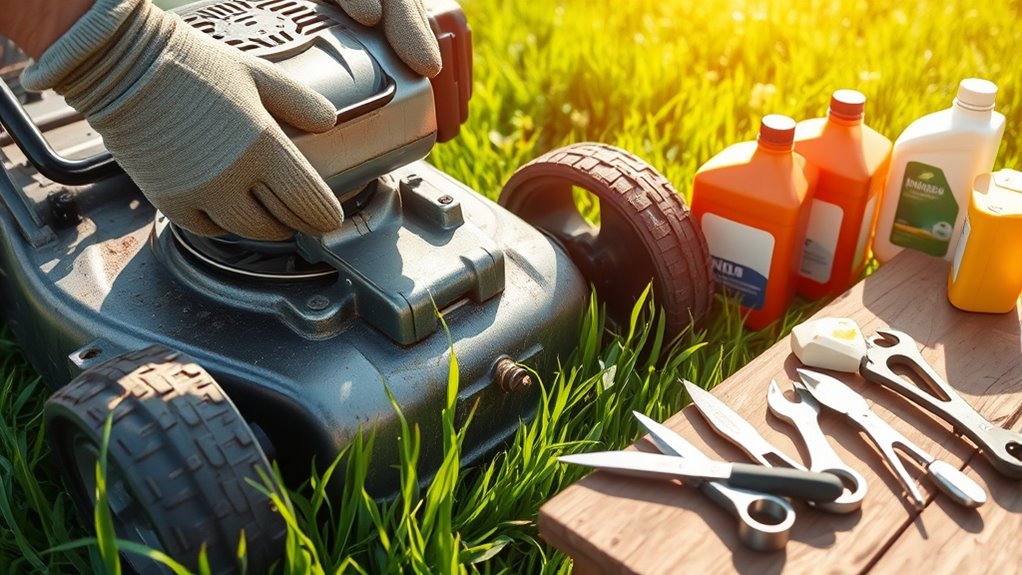
Although it might seem like a hassle, regular lawn mower maintenance keeps your equipment running smoothly and prevents costly breakdowns. When you treat your mower as an essential part of your lawn care routine, you’ll notice better performance and a cleaner, more even cut.
Just like any other gardening tools, your mower needs attention to stay in top shape. By regularly checking and cleaning your mower, you reduce wear and tear on crucial components. This saves you money on repairs and extends the life of your machine.
Plus, a well-maintained mower is safer to operate and more efficient, making your lawn care tasks quicker and less frustrating. Neglecting maintenance can lead to clogged blades, dull cutting edges, and engine troubles that affect your lawn’s health.
Preparing Your Lawn Mower: Safety and Setup Tips
Before you start mowing, you need to prepare your lawn mower properly to guarantee safe and efficient operation. Begin by inspecting your mower for any damage or loose parts. Check the blades, wheels, and handles to ensure everything is secure. Lawn mower safety means never skipping this step.
Properly inspect your lawn mower for damage or loose parts before mowing to ensure safety and efficiency.
Next, confirm your fuel and oil levels are adequate; using fresh fuel prevents engine problems. Adjust the cutting height according to your lawn’s needs, which is a vital part of equipment setup.
Also, clear the mowing area of debris like sticks and stones that could cause accidents or damage the mower. Always wear protective gear such as gloves and safety glasses during setup and mowing.
Before starting, make sure the mower’s safety features like blade guards and shut-off mechanisms are functioning correctly. Taking these careful steps helps you avoid injuries and keeps your mower running smoothly throughout the season.
Cleaning Your Lawn Mower Step-by-Step
To keep your lawn mower running smoothly, start by removing all the grass clippings from the blade and deck area. You’ll want to clean these parts thoroughly to prevent buildup and rust.
Removing Grass Clippings
How often you clean grass clippings from your lawn mower directly impacts its performance and lifespan. After each mowing session, don’t let clippings build up on your mower’s underside or around the blades. These clumps can clog the mower and reduce cutting efficiency.
Use a brush or scraper to remove stuck grass clippings carefully. If you use mulching techniques, expect more residue since clippings are finely chopped and dispersed. This makes cleanup even more essential.
Regularly clearing grass clippings prevents rust and guarantees your mower runs smoothly. Always perform this step before storage or maintenance to avoid buildup that affects future cuts. Keeping your mower free of grass clippings helps maintain maximum airflow and prolongs the machine’s life.
Cleaning Blade and Deck
Why should you clean the blade and deck of your lawn mower regularly? Keeping these parts clean guarantees excellent cutting performance and prevents rust or corrosion, which can damage your mower over time.
Start by disconnecting the spark plug for safety. Tilt the mower to access the blade and deck, then use a brush or scraper to remove built-up grass and debris. This not only improves lawn mower aesthetics but also supports efficient grass disposal methods, preventing clogs and uneven cuts.
After cleaning, inspect the blade for damage and sharpen if needed. Regular cleaning helps your mower run smoothly, extends its lifespan, and keeps your lawn looking neat. Don’t neglect this step; it’s key to mastering lawn mower maintenance.
Checking and Sharpening Lawn Mower Blades
When was the last time you checked your lawn mower blades? Dull or damaged blades can tear grass instead of cutting it cleanly, which affects your garden design and makes your lawn more vulnerable to pests.
Sharp blades not only improve the appearance of your lawn but also help with pest control by reducing stress and disease in your grass. To check your blades, first disconnect the spark plug for safety.
Inspect each blade for nicks, bends, or dullness. If you spot any damage, it’s time to sharpen or replace them. Use a blade sharpener or a file to even out the edges while maintaining the original angle.
Be sure to wear gloves and secure the blade firmly while working. Regularly honing your blades ensures a healthy, attractive lawn that complements your garden design and keeps pests at bay.
Changing the Oil in Your Lawn Mower
Keeping your lawn mower blades sharp is just one part of maintaining a healthy machine. Changing the oil regularly is just as crucial to keep your mower running smoothly.
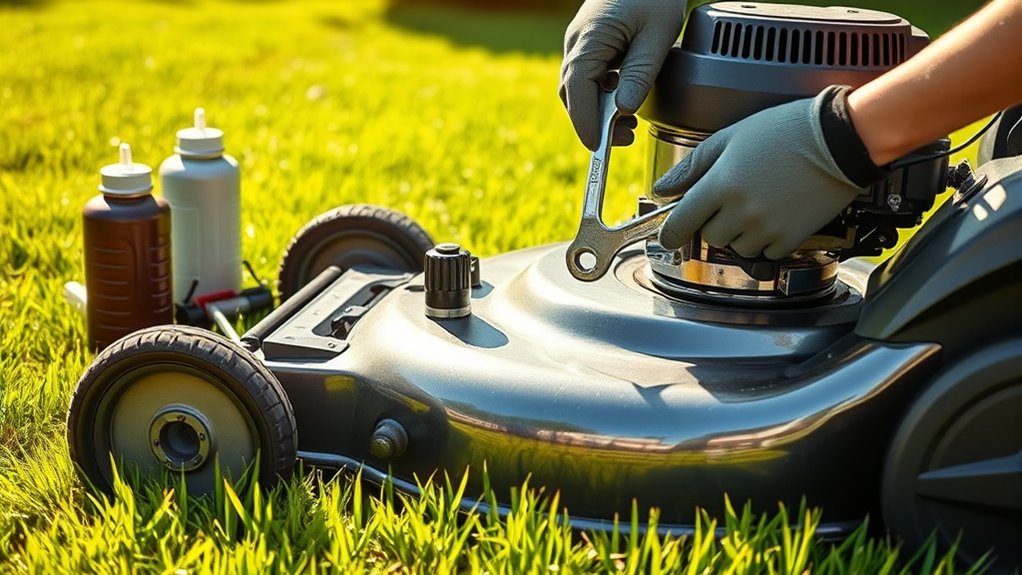
Start by warming up the engine for a few minutes to thin the oil, then turn off the mower and disconnect the spark plug for safety. Use a lawn mower accessory like an oil drain pan to catch the old oil as you remove the drain plug.
Warm the engine, turn off the mower, disconnect the spark plug, and use an oil drain pan for safe oil removal.
Once drained, replace the drain plug securely. Next, fill the engine with fresh oil, checking the owner’s manual for the right type and amount. Be careful not to overfill.
Proper oil changes improve engine performance and extend its life, especially when using grass collection bags or other lawn mower accessories that increase workload. Regular oil maintenance ensures your mower handles tough mowing jobs without strain, keeping your lawn neat and your machine in top shape.
Replacing Spark Plugs for Smooth Starts
If your mower is having a hard time starting, it might be a good idea to check the spark plug. You’ll want to make sure you pick the right replacement to keep your engine running smoothly. Just follow these simple steps to swap out the old plug for a fresh one.
Identifying Spark Plug Issues
How can you tell if your lawn mower’s spark plug needs attention? Spark plug troubleshooting is essential for ignition system maintenance and ensuring smooth starts. If your mower struggles to start or runs unevenly, it’s time to check the spark plug. Look for these signs:
- Difficulty starting or frequent stalling
- Visible corrosion or carbon buildup on the plug
- Cracked or damaged ceramic insulator
- Engine misfires or loss of power during operation
Regularly inspecting your spark plug helps maintain your mower’s performance and prevents ignition problems. If you notice any of these issues, cleaning or replacing the spark plug will save you time and frustration. Staying on top of spark plug troubleshooting is a straightforward step toward reliable lawn mower upkeep.
Choosing The Right Spark Plug
Why does choosing the right spark plug matter for your lawn mower? It directly affects your mower’s ability to start smoothly and run efficiently. Using the correct spark plug ensures consistent ignition, which helps maintain ideal engine performance.
When your mower runs well, you’ll cut your grass evenly, promoting better grass health and contributing to overall garden aesthetics. Picking a spark plug that matches your mower’s specifications, including heat range and electrode design, prevents misfires and engine damage.
Don’t overlook quality. Cheaper plugs may save money upfront but lead to poor starting and decreased mower life. By selecting the right spark plug, you’ll save time and protect your investment, keeping your lawn mower ready to deliver a flawless cut every time.
Step-By-Step Replacement Process
Although replacing a spark plug may seem intimidating, you can easily handle it with a few simple tools and steps. Proper lawn care depends on equipment safety, so make sure you wear gloves and disconnect the spark plug wire before starting.
Here’s how to replace the spark plug efficiently:
- Locate and remove the spark plug wire.
- Use a spark plug socket wrench to unscrew the old plug.
- Check the gap on the new plug and adjust if needed.
- Screw in the new spark plug and reconnect the wire securely.
Following this simple process guarantees your mower starts smoothly and runs reliably. Regular spark plug replacement keeps your lawn mower in top condition, preventing engine misfires and promoting safe, effective lawn care.
Cleaning the Lawn Mower Air Filter
Since your lawn mower relies on clean air to run efficiently, you’ll want to clean the air filter regularly to prevent dirt and debris from clogging it. Start with an air filter inspection to check for excessive dirt or damage. Remove the filter carefully, following your mower’s manual, and tap it gently to dislodge loose debris.
If it’s made of foam, wash it with warm, soapy water, then let it dry completely before reinstalling. For paper filters, avoid washing; instead, replace them if they appear too dirty or damaged.
Regular air filter inspection helps you spot when air filter replacement is necessary, ensuring your mower breathes freely and performs best. Neglecting this step can reduce engine efficiency and increase fuel consumption.
Checking and Adjusting the Lawn Mower Belt
When your lawn mower starts losing power or the blades stop spinning properly, checking the belt should be one of the first things you do. The belt connects the engine to the blade, so a worn or loose belt can cause performance issues. Before you start, always prioritize lawn mower safety by disconnecting the spark plug to prevent accidental starts.
To check and adjust the belt tension, inspect the belt for cracks, frays, or signs of wear. Make sure the belt has the proper tension because if it’s too loose or too tight, it can affect performance.
Next, locate the belt tension adjustment mechanism, which is usually a spring or an adjustable bracket. Follow your mower’s manual to tighten or loosen the belt correctly.
Proper belt tension adjustment improves cutting efficiency and prolongs belt life. Make these checks part of your regular maintenance to keep your mower running smoothly.
Lubricating Lawn Mower Moving Parts
To keep your lawn mower running smoothly, you need to lubricate its moving parts regularly. Lawn mower lubrication reduces friction and prevents wear, ensuring parts like wheels, blade spindles, and cables operate efficiently.
Start by consulting your mower’s manual to identify lubrication points and recommended lubricants. Use a high-quality grease or oil designed specifically for lawn mowers.
Apply lubricant sparingly to avoid attracting dirt, which can cause damage. Focus on essential areas such as the wheel bearings, blade shaft, and any pivot points.
Moving part maintenance isn’t just about lubrication. You should also clean these areas before applying lubricant to remove debris and old grease.
Regular lubrication extends your mower’s lifespan and improves performance, saving you time and repair costs. Set a schedule to lubricate every 10 to 15 hours of use, or at least once per mowing season, to keep your mower in top condition.
Storing Your Lawn Mower and Troubleshooting
To keep your lawn mower in top shape, you’ve got to store it properly and be ready to handle common issues. We’ll walk you through the best storage techniques that help prevent damage. Plus, we’ll share some quick troubleshooting tips so you can fix problems fast. Follow these simple steps, and your mower will keep running smoothly season after season.
Proper Storage Techniques
Although you might be enthusiastic to put your lawn mower away after the season ends, proper storage is essential to keep it running smoothly. Neglecting this step can lead to costly repairs, even if your mower insurance covers some damages. Treat your mower like you would your seasonal decor. Store it carefully to preserve its condition.
Follow these proper storage techniques:
- Drain the fuel or add a fuel stabilizer to prevent engine issues.
- Clean the mower thoroughly to avoid rust and debris buildup.
- Store it in a dry, sheltered area away from moisture.
- Disconnect the spark plug for added safety and to prevent accidental starts.
Common Mower Issues
Why does your lawn mower sometimes refuse to start after storage? Often, leftover fuel or moisture causes this issue. When storing your mower, draining the fuel or adding a stabilizer prevents gumming in the carburetor.
Moreover, moisture can cause rust or damage electrical parts, so keep your mower in a dry, sheltered spot. Common problems include clogged air filters and dull blades, which affect performance and your garden design’s neatness.
Furthermore, pests might nest in your mower if left unattended, so pest control is essential before long storage periods. Regularly inspect and clean parts before storing to avoid these issues.
Proper upkeep ensures your mower runs smoothly when you need it, maintaining your garden’s health and appearance without unexpected breakdowns.
Quick Troubleshooting Tips
When you store your lawn mower properly and know how to troubleshoot common issues quickly, you save time and frustration during mowing season. Proper storage protects your mower, ensuring it’s ready for your garden design projects or lawn aeration tasks.
Here are quick tips to keep your mower in top shape:
- Drain fuel before storing to prevent clogs.
- Clean the deck to avoid grass buildup.
- Check and replace spark plugs regularly.
- Inspect blades for damage or dullness.
If your mower won’t start, check the fuel and air filter first. For uneven cuts, sharpen or replace the blades.
Storing your mower in a dry, sheltered spot prevents rust and mechanical issues, helping your garden design flourish with healthy, well-maintained grass.
Frequently Asked Questions
What Type of Fuel Is Best for My Lawn Mower?
You should use unleaded gasoline with an octane rating of 87 or higher for your lawn mower. Fuel types like ethanol blends up to 10% (E10) are usually fine, but avoid higher ethanol content since it can harm engine performance.
Using fresh fuel helps prevent gumming and keeps your engine running smoothly. Always check your manual for specific recommendations, but sticking to quality unleaded gas guarantees your mower performs efficiently every time.
How Often Should I Replace My Lawn Mower Blade?
Blade sharpness considerably shapes your lawn’s look, so you should replace your lawn mower blade every 20 to 25 hours of cutting or at least once a season. If you notice jagged cuts or a change in cutting height, it’s a sign your blade’s worn out.
Regularly check for dullness or damage to maintain a clean, consistent cut and protect your grass’s health and appearance.
Can I Use Synthetic Oil Instead of Regular Oil?
Yes, you can use synthetic oil instead of regular oil for your lawn mower, but you need to check oil compatibility first. Synthetic oil often provides better engine protection and performs well under extreme temperatures.
However, some older mowers may not be compatible with synthetic oil, so consult your owner’s manual. Comparing synthetic vs. regular oil, synthetic tends to last longer and keep your mower running smoothly, making it a smart choice if compatible.
How Do I Winterize My Lawn Mower?
Picture your mower resting under a blanket of snow, ready for next spring. To winterize it, drain the fuel or add a stabilizer, then change the oil.
Clean the deck and sharpen the blade for smooth cutting next season. Remove the spark plug wire for safety, and store your mower in a dry, sheltered spot to prevent rust.
Proper seasonal storage keeps your mower in top shape for years to come.
What Are Signs My Lawn Mower Needs Professional Repair?
You’ll know your lawn mower needs professional repair if you notice unusual emissions, like excessive smoke or a strong fuel smell. Also, if your blade sharpening frequency increases because the blades dull quickly or your mower struggles to cut evenly, it’s a red flag.
Other signs include strange noises, difficulty starting, or loss of power. Don’t ignore these symptoms. Getting expert help can save you time and money.
Conclusion
By keeping up with these simple maintenance steps, you’ll guarantee your lawn mower runs smoothly, just like a well-oiled machine humming through a sunlit morning. Imagine the fresh scent of cut grass mingling with the satisfying sound of sharp blades at work.
With every tune-up, you’re not just caring for your mower—you’re setting the stage for a perfect lawn, season after season. So, roll up your sleeves and let your mower shine with proper lawn mower maintenance.