Step-by-Step Guide to Building Your Outdoor Living Space
Many people dream of creating the perfect outdoor living space but struggle to bring their vision to life. If you’ve ever felt overwhelmed by where to start or how to make your outdoor area both beautiful and functional, you’re not alone. Building an inviting space that suits your lifestyle can be challenging, but with the right approach, it’s completely doable.
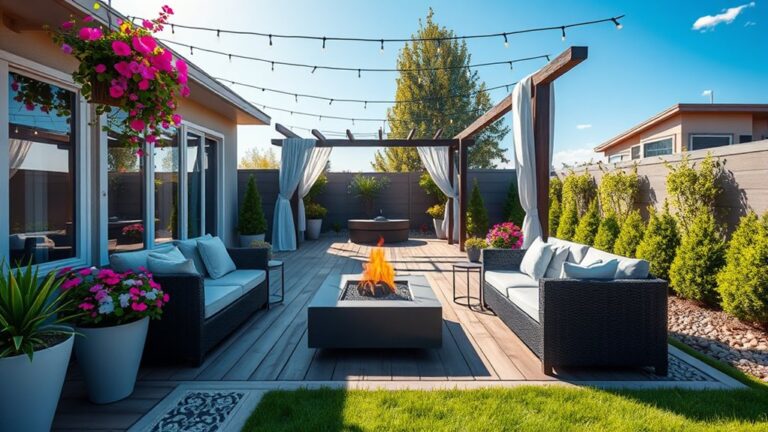
To build your outdoor living space, start by defining your goals and picking a location with good sunlight, privacy, and accessibility. Choose durable, weather-resistant materials and create a functional layout with seating, shade, and activity zones.
Add lighting and electrical features for safety and ambiance. Incorporate greenery that suits your climate, and personalize with decor and practical accessories. Keep up with regular maintenance to guarantee longevity.
Keep going to uncover tips for making your space truly inviting.
Key Takeaways
- Define your outdoor living goals and select a suitable location by considering sunlight, privacy, and accessibility.
- Design a functional layout with distinct activity zones to make the best use of space.
- Choose durable, weather-resistant materials and furniture that match your style.
- Plan lighting and electrical needs using safe, weatherproof fixtures and energy-efficient options.
- Incorporate greenery and personalize the space with plants, decor, and regular maintenance for lasting comfort.
Set Your Outdoor Living Space Goals
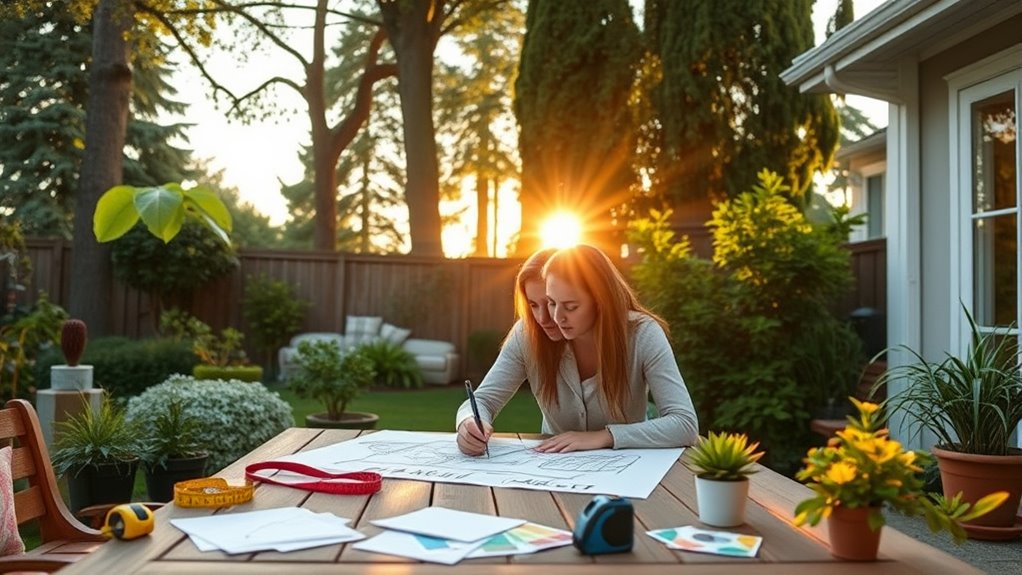
Before you plunge into designing your outdoor living space, it’s crucial to set clear goals. Think about how you want to use the area, whether for relaxing, entertaining, or gardening. Defining your purpose helps you focus on what elements to include.
For instance, if you love nature’s changing beauty, plan for seasonal plantings that bring color and life throughout the year. These will keep your space vibrant and inviting as the seasons shift.
Consider adding outdoor art to personalize the space and create focal points that reflect your style. Sculptures, wall hangings, or wind chimes can add character and charm, enhancing your outdoor experience.
Setting these goals upfront ensures you don’t overlook important features and helps you allocate your budget wisely. By knowing what you want, you’ll design a space that truly fits your lifestyle and makes the most of your outdoor environment.
Choose the Best Location for Your Outdoor Living Space
Where you place your outdoor living space can make all the difference in how much you enjoy it. Start by considering sunlight and shade. Choose a spot that fits your comfort needs throughout the day.
Next, think about garden privacy. Locating your space near natural barriers like shrubs or fences can create a cozy, secluded atmosphere. You can also improve privacy by positioning your area away from neighbors’ windows or busy streets.
Don’t forget outdoor soundproofing. Placing your space near dense foliage or installing sound-absorbing elements can minimize noise and boost relaxation.
Moreover, consider accessibility to your home’s entrance and utilities so you don’t struggle with logistics. Drainage is another key factor. Avoid low spots prone to puddling after rain.
Select Durable Materials for Structure and Style
You’ll want to pick materials that can stand up to the weather, but also match your style. It’s all about finding the right balance between durability and aesthetics. That way, your space not only looks great but lasts longer too.
And don’t forget to keep maintenance needs in mind—this helps protect your investment over time.
Weather-Resistant Material Options
Since your outdoor living space faces various weather conditions, choosing materials that can withstand rain, sun, and wind is essential. You’ll want weatherproof fabrics for cushions and curtains to resist fading and moisture.
Furthermore, rust-resistant hardware ensures the longevity of fixtures and fasteners exposed to humidity. Durable woods like teak or cedar, composite decking, and powder-coated metals offer excellent defense against the elements.
| Material Type | Key Benefit |
|---|---|
| Weatherproof fabrics | Resists fading and moisture |
| Rust-resistant hardware | Prevents corrosion |
| Teak or Cedar Wood | Naturally durable |
| Composite Decking | Low maintenance |
Selecting these materials helps your outdoor area stay stylish and functional, regardless of the weather.
Balancing Aesthetics And Durability
Although durability is essential for your outdoor living space, it shouldn’t come at the expense of style. You can select materials that combine strength and beauty by focusing on options with weatherproof finishes. These finishes protect surfaces from moisture, UV rays, and temperature changes, ensuring your space looks great year-round.
Choose durable woods like teak or composite decking that resist wear while adding warmth and texture. Metal accents with powder-coated finishes offer sleek, modern appeal without rusting. Keep seasonal maintenance in mind. Materials that require minimal upkeep free you to enjoy your space more and worry less about repairs.
Maintenance Requirements For Longevity
When choosing materials for your outdoor living space, consider how much upkeep they’ll need to stay in good shape. Durable materials like composite decking, treated wood, and weather-resistant metals reduce maintenance efforts and extend longevity.
Proper soil preparation is vital to prevent shifting foundations and to promote drainage. This protects your structure from moisture damage. Regular pest control also plays a key role. Untreated wood can attract termites or carpenter ants, compromising stability.
Opt for materials that resist pests naturally or can withstand treatments without losing style. By selecting these durable options and maintaining a solid base with good soil preparation and pest control, you’ll guarantee your outdoor space remains both beautiful and sturdy for years to come.
Design a Comfortable and Functional Layout
To design a comfortable and functional layout, you’ll want to make the most of your space by organizing it thoughtfully. Think about picking seating that’s not just cozy but also matches your style—this way, everyone can feel relaxed and at ease.
After that, it’s a good idea to clearly define different activity zones. That way, each area has its own purpose and nothing feels too crowded or out of place. It really helps the whole space flow better!
Optimize Space Utilization
Since every inch of your outdoor living space matters, you’ll want to arrange furniture and features thoughtfully to create both comfort and functionality. Start by zoning areas. Dedicate a corner for urban gardening with vertical planters or compact raised beds to save ground space while adding greenery.
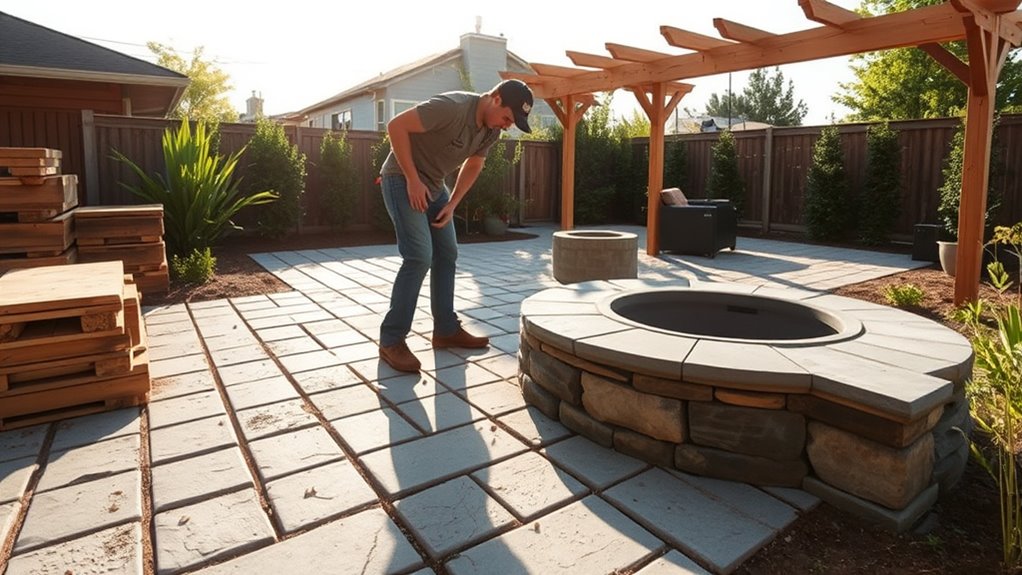
Next, consider fire pit options that fit your layout, like a built-in pit with surrounding benches or a portable model you can move as needed. Keep pathways clear to maintain flow and avoid overcrowding. Use multi-purpose furniture to maximize space without sacrificing style.
Choose Comfortable Seating
Although choosing the right seating might seem straightforward, it plays a crucial role in shaping your outdoor living space’s comfort and usability. To maximize outdoor comfort, focus on seating arrangements that invite relaxation and conversation. Here’s how you can do it:
- Pick weather-resistant furniture with cushions for lasting comfort.
- Arrange seating to encourage social interaction without overcrowding.
- Include versatile pieces like ottomans or benches for extra seating or footrests.
- Consider your space size to avoid blocking pathways or creating clutter.
Define Activity Zones
Comfortable seating sets the foundation for your outdoor space, but organizing your layout around specific activity zones brings it all together. Defining zones helps you create a functional flow, whether it’s a cozy fire pit area for evening chats or a calming water feature spot to unwind.
Consider how you’ll use each zone and arrange furniture accordingly to keep paths clear and encourage interaction.
| Zone | Purpose | Essential Elements |
|---|---|---|
| Fire Pit Area | Socializing & warmth | Fire pit, seating, lighting |
| Dining Zone | Eating & gatherings | Table, chairs, shade |
| Water Feature | Relaxation & ambiance | Fountain, seating |
| Play Area | Kids & activities | Open space, soft flooring |
| Garden Zone | Plant enjoyment | Benches, planters |
Add Seating, Shade, and Functional Features
When you design your outdoor living space, adding seating, shade, and functional features transforms it into a welcoming retreat. Start by choosing versatile seating arrangements that encourage conversation and comfort, like built-in benches or movable chairs.
Design your outdoor space with versatile seating and shade to create a comfortable, inviting retreat.
Next, incorporate shade structures to provide relief from the sun and extend your outdoor enjoyment throughout the day.
Here’s how to improve your space effectively:
- Select seating arrangements that fit your activity zones and allow easy movement.
- Install shade structures such as pergolas, umbrellas, or retractable awnings for flexible coverage.
- Add functional features like side tables, storage benches, or outdoor lighting to increase usability.
- Consider weather-resistant materials to guarantee durability and low maintenance.
Select Outdoor Furniture That Fits Your Style
You’ll want to pick outdoor furniture made from durable materials that can stand up to the weather. At the same time, it’s important to choose pieces that complement your existing decor so everything feels connected. When you balance function and style, your outdoor space becomes both practical and inviting.
Choosing Durable Materials
How do you choose outdoor furniture that stands up to the elements while matching your style? The key lies in smart material selection combined with design innovation. You want pieces that look great and last through sun, rain, and wind.
Consider these four points when choosing durable materials:
- Aluminum: Lightweight, rust-resistant, and easy to maintain.
- Teak: Naturally weatherproof with a timeless aesthetic.
- Synthetic wicker: Resists fading and cracking, offering modern design flexibility.
- Stainless steel: Extremely strong and corrosion-resistant but heavier.
Matching Your Decor
Selecting durable materials lays a strong foundation, but matching your outdoor furniture to your decor truly brings the space to life. Start by identifying the style you want, whether modern, rustic, or coastal, and choose pieces that reflect that vibe.
Pay close attention to your outdoor decor’s color schemes to create harmony. If your patio features neutral tones, add pops of color with cushions or rugs. For bolder palettes, select furniture with complementary hues to avoid clashes.
Don’t forget textures; mixing wood, metal, and fabric can add depth without overwhelming the space. Ultimately, your outdoor furniture should feel like an extension of your personal style, making your outdoor living area inviting and cohesive.
Plan Outdoor Living Space Lighting and Electrical
When planning your outdoor living space, lighting and electrical systems play a crucial role in enhancing both functionality and ambiance. You’ll want to create a safe, inviting environment that extends your enjoyment well into the evening.
Consider these key steps:
Keep these essential steps in mind for effective and safe outdoor lighting and electrical planning.
- Choose solar power options to save energy and simplify installation.
- Use weatherproof fixtures designed specifically for outdoor use.
- Plan your lighting zones: ambient, task, and accent to create the perfect mood.
- Prioritize electrical safety by hiring a licensed electrician to handle wiring and ensure compliance with local codes.
Incorporate Greenery and Landscaping Ideas
Lighting sets the mood, but greenery brings your outdoor space to life. To create a vibrant and inviting area, start by integrating urban gardening techniques. Even if you have limited space, container gardens or vertical planters let you grow herbs, veggies, or flowers right outside your door.
Choosing native plants is key. They thrive in your local climate, require less water, and attract beneficial wildlife like pollinators. Mix shrubs, perennials, and ground covers for layered texture and seasonal interest.
Incorporate pathways or raised beds to define the space and make maintenance easier. Don’t forget to think about plant height and placement to maintain sightlines and avoid overcrowding. By thoughtfully adding greenery and landscaping, you’ll foster a natural, invigorating environment that improves your outdoor living experience while promoting sustainability through smart plant choices and urban gardening practices.
Personalize Your Space With Decor and Accessories
Although greenery establishes a natural foundation, adding decor and accessories lets you express your style and make the space truly yours. Personalizing your outdoor living area creates a welcoming vibe and reflects your personality.
Start by choosing outdoor lighting that sets the mood. String lights or lanterns add warmth and charm. Next, incorporate decorative accents like colorful cushions or patterned rugs to inject energy and comfort.
Here are four simple ways to personalize your space:
- Install versatile outdoor lighting to amplify ambiance and usability.
- Use decorative accents such as throw pillows and sculptures for visual interest.
- Add functional accessories like stylish storage benches or side tables.
- Display personal touches like framed photos or handmade crafts that withstand outdoor conditions.
Maintain Your Outdoor Living Space for Longevity
To keep your outdoor living space looking great and lasting longer, you’ll need to perform regular maintenance. Start by inspecting furniture, fixtures, and surfaces for wear or damage. Address issues promptly to prevent further deterioration.
Regularly inspect outdoor furniture and fixtures to catch and fix damage early, ensuring lasting beauty.
Implement outdoor pest control measures to protect your space from insects and critters that can cause damage or discomfort. Use natural repellents or professional treatments depending on your needs.
Refresh your area by updating seasonal color schemes with plants, cushions, or décor. This keeps the environment vibrant and inviting year-round.
Clean outdoor surfaces regularly to prevent mold and dirt buildup, ensuring your space remains safe and attractive. Store cushions and delicate items during harsh weather to prolong their life.
Finally, check lighting and electrical elements to maintain safety and functionality. By staying on top of these simple tasks, you’ll enjoy a beautiful, durable outdoor living space for years to come.
Frequently Asked Questions
How Do I Obtain Permits for Building an Outdoor Living Space?
To obtain permits for building your outdoor living space, start by checking with your local building department or city hall. They’ll guide you on requirements based on your landscape design and DIY construction plans.
You’ll likely need to submit detailed drawings and specifications. Make certain your plans comply with zoning laws and safety codes. Getting permits early prevents costly delays and ensures your project’s legal and safe from the start.
What Is the Average Cost to Build an Outdoor Living Area?
The average cost to build an outdoor living area usually ranges from $5,000 to $20,000, depending on size and features. When planning, consider landscaping ideas that complement your space and budget.
Don’t forget furniture selection, which can considerably affect costs. Opt for durable, weather-resistant pieces to maximize value. By balancing design, materials, and comfort, you’ll create an inviting outdoor area without overspending.
How Can I Make My Outdoor Space Eco-Friendly?
Like planting your own Eden, you can make your outdoor space eco-friendly by choosing sustainable materials such as reclaimed wood or recycled metal. Adopt native plant selection to support local wildlife and reduce water use, creating a thriving habitat.
Using solar lighting and rainwater harvesting systems also helps. By doing this, you’ll craft a beautiful, environmentally responsible retreat that honors nature while reducing your footprint.
What Are the Best Plants for Pest Control in Outdoor Spaces?
The best plants for pest control in outdoor spaces include marigolds, basil, and lavender. You can use companion planting to naturally repel pests. Marigolds deter nematodes, while basil keeps mosquitoes away.
Lavender attracts pollinators and repels moths. These natural repellents reduce your need for chemicals, keeping your garden eco-friendly. By strategically placing these plants near vulnerable crops, you’ll create a healthier, pest-resistant outdoor space effortlessly.
How Do I Winterize My Outdoor Living Space?
You might think winterizing your outdoor living space means just covering everything up, but it’s more than that. Start with seasonal maintenance: clean and dry outdoor furniture thoroughly to prevent mold and rust.
Store cushions and delicate items indoors or in waterproof containers. Trim plants, clear debris, and protect sensitive greenery with mulch or covers.
Taking these simple steps keeps your space cozy and ready to shine when spring returns.
Conclusion
Now that you’ve got your outdoor living space planned, it’s time to bring your vision to life. Like a Renaissance artist crafting a masterpiece, you’ll blend style and function to create a timeless retreat.
Remember, choosing the right location, durable materials, and thoughtful lighting will keep your space inviting season after season. Keep personalizing it with greenery and cozy touches, and don’t forget regular upkeep.
This way, you’ll enjoy your outdoor living space for years to come.