
7 Essential Tips to Maintain Your Air Conditioner
Keeping your air conditioner running smoothly can feel like a never-ending challenge, especially when the summer heat hits hard. You’re not alone—many people struggle with maintaining their AC units, unsure of what steps to take to avoid breakdowns or rising energy bills.
That’s why we’ve put together these essential tips to help you keep your air conditioner in top shape all year round.
You should regularly clean or replace your air filters to keep air quality high and your AC efficient. Clear debris around outdoor units to prevent overheating, and clean evaporator and condenser coils to boost performance.
Check fan blades and blower motors for smooth operation.
Test and calibrate your thermostat, and guarantee refrigerant levels are correct to avoid cooling loss.
Finally, schedule annual professional tune-ups to catch small issues early.
Keep following for deeper maintenance insights to keep your AC in top shape.
Key Takeaways
- Check and replace air filters every 1 to 3 months. This helps improve air quality and keeps your system running efficiently.
- Clean evaporator and condenser coils regularly to prevent dust buildup. This boosts your AC’s cooling performance.
- Keep the outdoor unit clear of debris. Make sure there’s at least two feet of clearance around it for proper airflow.
- Inspect and lubricate fan blades and the blower motor. This ensures smooth operation and helps prevent strain.
- Schedule annual professional tune-ups. A technician will check the refrigerant, electrical connections, and overall system health.
Clean or Replace Your Air Conditioner Filters Regularly
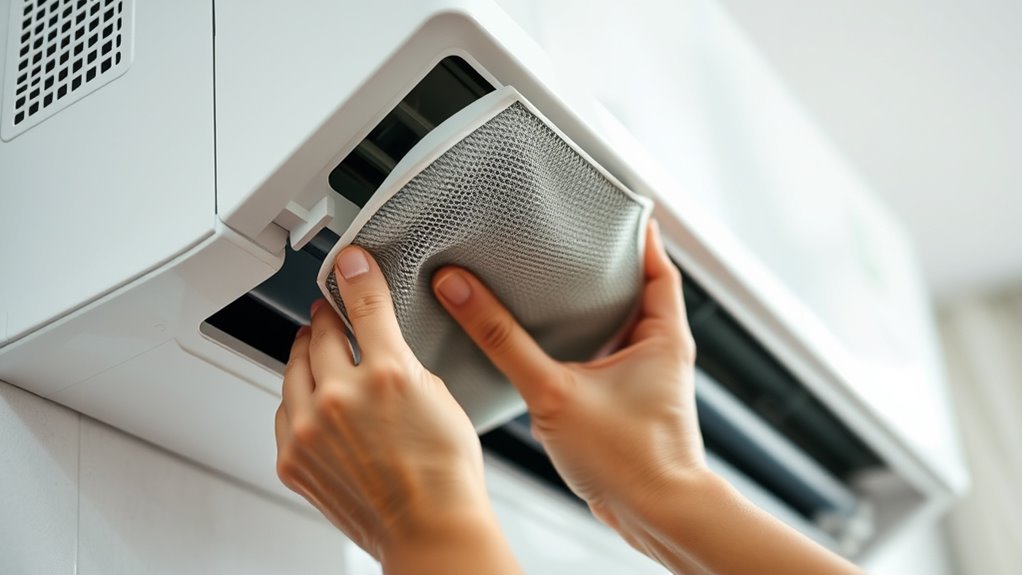
How often do you check your air conditioner filters? Sticking to a regular air filter maintenance routine is crucial for keeping your AC running efficiently. Dirty or clogged filters restrict airflow, making your unit work harder and increasing energy bills. You should inspect your filters at least once a month, especially during peak usage seasons.
Following a strict filter replacement schedule helps prevent dust buildup and ensures better indoor air quality. Depending on the type of filter you use, replace it every 1 to 3 months. If you have pets or allergies, you might need to clean or replace your filters more frequently.
Don’t wait until you notice reduced cooling or unusual odors. Staying proactive with air filter maintenance not only extends your air conditioner’s lifespan but also improves its performance. Taking this simple step saves you money and keeps your home comfortable year-round.
Clear Debris and Keep Outdoor AC Units Free of Obstructions
Keeping your air filters clean is only part of maintaining an efficient air conditioner. Outdoor maintenance plays a vital role in ensuring your system runs smoothly. You need to regularly check your outdoor AC unit for any debris like leaves, grass clippings, or dirt that can block airflow.
Debris removal prevents your unit from overheating and helps maintain energy efficiency. Make sure to clear at least two feet of space around the unit, removing plants, branches, or any objects that might obstruct airflow.
Clearing two feet of space around your AC unit prevents overheating and boosts energy efficiency.
You can use a soft brush or a hose with gentle water pressure to clean the fins and exterior without causing damage. Regularly inspecting and clearing debris from your outdoor AC unit not only prolongs its lifespan but also keeps your home’s cooling performance excellent.
Prioritizing outdoor maintenance alongside indoor upkeep will help you avoid costly repairs and keep your air conditioner running at its best all season long.
Clean Evaporator and Condenser Coils to Boost Efficiency
Although your air filters catch many particles, dust and dirt still accumulate on the evaporator and condenser coils over time. This buildup restricts airflow and reduces your AC’s ability to absorb and release heat effectively. Regular coil cleaning is essential for efficiency optimization and helps your system run smoothly.
To clean the coils, first turn off the power to your unit. Use a soft brush or a vacuum with a brush attachment to gently remove dust and debris. For stubborn grime, apply a no-rinse coil cleaner designed specifically for air conditioners.
Keeping these coils clean improves heat exchange, reduces energy consumption, and extends your unit’s lifespan. Neglecting coil cleaning can lead to higher utility bills and more frequent repairs.
Check Fans and Blowers for Proper AC Operation
You should regularly take a look at the fan blades to make sure they’re clean and not damaged. It’s a good idea to check that the blower motor is running smoothly, without any unusual noises or vibrations. Clearing debris from the fans really helps keep the airflow steady and makes sure your AC runs efficiently.
Inspect Fan Blades Regularly
How often do you check the fan blades of your air conditioner? Regular inspection is essential to ensure efficient cooling and prevent costly damage. Start by examining the fan blade balance. Unbalanced blades cause vibrations that reduce performance and can wear out components prematurely.
If you notice wobbling or unusual noises, it’s time to address the balance. Furthermore, don’t overlook blade lubrication. Proper lubrication minimizes friction, allowing blades to spin smoothly and quietly.
Use a manufacturer-recommended lubricant to keep the blades operating efficiently. By keeping the fan blades well-balanced and lubricated, you maintain ideal airflow and extend your AC’s lifespan. Make inspecting these parts a routine part of your maintenance schedule to avoid unexpected breakdowns.
Ensure Blower Motor Function
Keeping the fan blades in good shape sets the stage for the blower motor to do its job effectively. To guarantee proper airflow regulation, you need to check that the blower motor runs smoothly without unusual noises or vibrations.
A malfunctioning blower motor can disrupt airflow, reducing your AC’s efficiency.
Here’s a quick checklist to help you maintain the blower motor:
| Task | What to Look For | Action Needed |
|---|---|---|
| Motor Noise | Grinding or rattling | Tighten or replace parts |
| Motor Speed | Consistent RPM | Adjust or service motor |
| Airflow Strength | Steady airflow output | Clean or repair blower |
| Electrical Connections | Secure wiring | Tighten connections |
| Motor Cleanliness | Dust buildup | Clean regularly |
Regular checks keep your blower motor in top shape and optimize airflow regulation.
Clear Debris From Fans
Why does clearing debris from your AC’s fans matter? Debris buildup on fan blades can reduce airflow, making your unit work harder and less efficiently. To keep your system running smoothly, regular debris removal is essential.
Start by turning off the power to your air conditioner. Then, inspect the fan blades for dirt, leaves, or other debris that may have accumulated. Use a soft brush or cloth to gently clean the blades, avoiding damage.
Removing debris guarantees the fan blades spin freely, maintaining proper airflow and preventing strain on the motor. By keeping your fans clean, you improve your AC’s performance and extend its lifespan, saving you from costly repairs or premature replacement down the line.
Test and Calibrate Your Thermostat for Accurate Cooling
Since your thermostat controls when your air conditioner turns on and off, testing and calibrating it guarantees your home stays comfortably cool without wasting energy. Start by comparing the thermostat’s reading to an accurate thermometer placed nearby. If the temperature differs by more than a degree or two, your thermostat calibration is off.
Most modern thermostats allow you to adjust the temperature accuracy through simple settings or a calibration screw inside the unit. Follow the manufacturer’s instructions to fine-tune it. Regularly testing ensures the thermostat signals your AC at the right temperature, preventing unnecessary cooling cycles or discomfort.
If you notice persistent inaccuracies despite calibration, consider replacing the thermostat to maintain precise control. By keeping your thermostat calibrated, you optimize your air conditioner’s efficiency and extend its lifespan, all while enjoying consistent, comfortable indoor temperatures. Don’t overlook this step. Accurate temperature control is essential for effective cooling and energy savings.
Maintain Proper Refrigerant Levels to Prevent Cooling Loss
If your air conditioner isn’t cooling as it should, low refrigerant levels could be the culprit. Refrigerant is the lifeblood of your AC system, responsible for absorbing heat and delivering cool air. To maintain proper refrigerant levels, you need to understand different refrigerant types and make sure there’s no leakage.
Here’s what you can do:
- Learn which refrigerant type your AC uses, as handling requirements vary.
- Perform regular leakage detection by checking for oily spots or hissing sounds around coils and connections.
- Avoid topping off refrigerant yourself; improper handling can damage the system or violate regulations.
Maintaining correct refrigerant levels prevents cooling loss and boosts efficiency. If you suspect leakage or low refrigerant, calling a qualified technician is your best move. They’ll safely identify leaks and recharge the system with the right refrigerant type, keeping your AC running smoothly all season long.
Schedule Annual Professional AC Tune-Ups for Optimal Performance
Scheduling an annual professional tune-up for your air conditioner guarantees it runs efficiently and reliably throughout the hottest months. A skilled technician will inspect, clean, and adjust key components, ensuring your system operates at peak energy efficiency.
This prevents small issues from turning into costly repairs, saving you money in the long run.
During the tune-up, the technician checks refrigerant levels, electrical connections, and airflow to maximize performance. When your AC runs efficiently, it uses less energy, lowering your utility bills and providing significant cost savings.
You’ll also extend the lifespan of your unit, avoiding premature replacement expenses.
Don’t wait for your system to break down in the heat. Scheduling your annual professional AC tune-up now keeps your home comfortable and your wallet happy all summer long.
It’s a simple step that delivers lasting benefits in performance, reliability, and energy efficiency.
Frequently Asked Questions
How Often Should I Replace My Air Conditioner’s Drain Pan?
You should consider drain pan replacement every 3 to 5 years, but it really depends on its condition. Regular drain pan inspection helps you catch cracks or rust early, preventing leaks and water damage.
If you notice pooling water or unpleasant odors, it’s time to replace the drain pan. Don’t wait too long. Consistent inspection and timely replacement keep your air conditioner running smoothly and avoid costly repairs down the line.
Can Using a Ceiling Fan Reduce AC Energy Consumption?
Think of a ceiling fan like a gentle breeze on a hot day. It makes you feel cooler without turning down the temperature.
Yes, using a ceiling fan can reduce your AC energy consumption by allowing you to raise the thermostat a few degrees while still feeling comfortable. This simple trick leads to significant energy savings, cutting your cooling costs and easing the strain on your air conditioner.
What Is the Ideal Temperature Setting for Energy Efficiency?
You should set your thermostat to around 78°F (26°C) when you’re home to maximize energy saving strategies. This temperature balances comfort and efficiency, helping you reduce electricity use.
When you’re away or sleeping, raise it to about 85°F (29°C). Regular temperature calibration guarantees your AC reads accurately, so you don’t waste energy cooling unnecessarily.
Keeping these settings helps you save money while staying comfortable all year long.
How Do I Know if My AC Unit Needs Refrigerant Recharge?
You might not realize it, but a refrigerant leak could be silently harming your AC. If your unit isn’t cooling like before or you notice ice buildup, it’s a strong sign it needs a refrigerant recharge.
Ignoring this can lead to compressor issues, which are costly to fix. Watch for hissing sounds or higher energy bills too. These clues mean it’s time to act before things get worse.
Are Smart Thermostats Compatible With All AC Systems?
Smart thermostat compatibility varies, so you can’t assume they work with all AC systems. Before buying, check if your specific AC system supports smart thermostat integration. Most modern systems do, but older or specialized units might not.
You’ll want to verify the AC system integration requirements and your thermostat’s features to guarantee smooth operation. Doing this helps you avoid compatibility issues and get the most out of your smart thermostat’s energy-saving perks.
Conclusion
By keeping your filters clean and your outdoor unit clear, you’re already ahead in maintaining your AC. When you clean those coils and check the fans, you’re not just preventing breakdowns, you’re saving money.
And here’s the coincidence: the same simple steps you take to keep your home cool also extend your AC’s life. So, stick to these tips, and you’ll enjoy a comfortable, efficient system all season long without unexpected surprises.
Following these essential tips to maintain your air conditioner ensures you get the best performance and longevity from your unit.