10 Essential Tips to Start Your Gardening Journey
Starting a garden can feel overwhelming, especially if you’re unsure where to begin or worried about making mistakes. You’re not alone—many people struggle with getting their gardening journey off the ground.
The good news is, with a few simple tips, you can set yourself up for success and enjoy the rewards of a thriving garden.
Start by choosing a sunny, accessible spot near water, avoiding shady or damp areas. Test and improve your soil with organic matter and proper drainage.
Pick easy-to-grow plants like basil or lettuce, and plan your garden layout to match their sunlight and spacing needs.
Water deeply but less often, mulch to retain moisture, and prevent pests naturally.
Keep a gardening journal to monitor progress and success.
There’s plenty more to investigate to help your garden thrive.
Key Takeaways
- Choose a garden site with at least 6 hours of sunlight and easy access to water for healthy plant growth and maintenance.
- Test and improve soil quality by adding organic matter and ensuring good drainage to support strong root development.
- Start with beginner-friendly plants like marigolds and basil, and use companion planting to enhance growth and pest resistance.
- Water deeply and mulch around plants to conserve moisture, regulate soil temperature, and promote healthy roots.
- Keep a gardening journal to track plant progress, pests, and successes for continuous learning and improvement.
Choose the Right Location for Your Garden
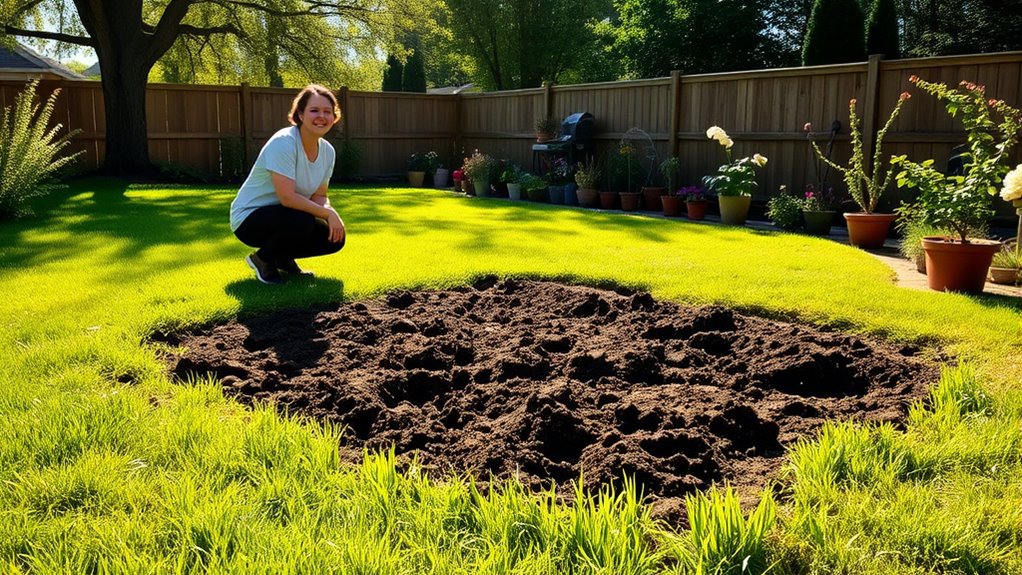
Before you plant a single seed, you need to choose the right location for your garden. This decision is vital and forms the foundation of your garden design. Look for a spot that gets ample sunlight. Most vegetables and flowers need at least six hours daily. Also, consider how close the area is to a water source to make watering easy.
You’ll want to avoid spots prone to standing water or heavy shade, as these can hinder plant growth. Think about accessibility too. You don’t want your garden tucked away in a hard-to-reach place.
Pest control starts with location too. Placing your garden near shrubs or woodpiles can attract unwanted pests, so keep these at a distance. By selecting the right spot, you’re already setting yourself up for fewer pest problems and healthier plants. Take your time with this step—it’ll make the rest of your gardening journey smoother.
Check and Boost Your Soil Quality
Before you start planting, it’s a good idea to test your soil’s nutrient levels to find out what it might be missing. That way, you can give your plants exactly what they need.
Also, improving drainage is really important because it helps prevent waterlogging and root problems.
And don’t forget to add some organic matter—it boosts fertility and gives your plants a better chance to thrive.
Test Soil Nutrient Levels
Although it might seem simple, testing your soil’s nutrient levels is an essential step to guarantee your plants get exactly what they need to thrive. Soil testing helps you understand the current nutrient balance and identify any deficiencies or excesses.
You can buy an easy-to-use soil testing kit or send samples to a local extension service for detailed analysis. Once you know your soil’s nutrient profile, you can add the right fertilizers or organic amendments to correct imbalances.
This targeted approach prevents over-fertilizing and promotes healthier plant growth. Regular soil testing throughout the growing season ensures you stay on top of nutrient changes, helping your garden flourish with vibrant, robust plants.
Don’t skip this key step in your gardening journey!
Improve Soil Drainage
Knowing your soil’s nutrient levels is just one part of creating a thriving garden. Improving soil drainage guarantees your plants don’t suffer from waterlogged roots.
To boost drainage, focus on soil aeration and compaction relief. Here’s how you can do it:
- Loosen the soil by tilling or using a garden fork to increase aeration.
- Break up compacted areas with a spade or aeration tool to allow roots to breathe.
- Create raised beds or mounds to encourage water runoff and prevent pooling.
- Incorporate coarse sand or small gravel in problem areas to improve water flow.
Add Organic Matter
Why does adding organic matter matter so much for your garden’s success? It improves soil structure, boosts nutrient content, and improves moisture retention.
To do this effectively, use various organic matter sources like compost, leaf mold, and well-rotted manure. These materials enrich your soil naturally and support beneficial microbes.
Mastering simple composting techniques lets you recycle kitchen scraps and garden waste into valuable fertilizer. Spread a layer of compost over your garden beds, then mix it into the topsoil to improve texture and fertility.
Regularly adding organic matter strengthens your plants by helping them get essential nutrients and grow healthier, stronger roots. By focusing on quality soil through organic matter, you create a thriving environment where your garden can truly flourish.
Feed Your Garden Plants With the Best Fertilizers
You’ll want to pick the right kind of fertilizer to give your plants the nutrients they need—whether that’s organic or synthetic. It really makes a difference to know when and how to apply it. Timing and method can seriously boost your garden’s growth. So, let’s take a closer look at what works best and the best times to feed your plants for ideal results.
Types Of Fertilizers
Choosing the right fertilizer can make a huge difference in how well your garden thrives. Understanding the types of fertilizers helps you feed your plants effectively. Here are four common types to contemplate:
1. Granular Fertilizers
These release nutrients slowly, perfect for steady feeding.
2. Liquid Fertilizers
Quick-acting and easy to apply, ideal for a nutrient boost.
3. Organic Fertilizers
Made from natural materials, they support soil health and are key in organic gardening.
4. Slow-Release Fertilizers
Designed to provide nutrients over time, reducing the need for frequent applications.
Organic Vs. Synthetic
Although both organic and synthetic fertilizers supply essential nutrients, they differ markedly in composition and impact on your garden. Organic fertilizers come from natural sources like compost and manure, slowly releasing nutrients while improving soil health.
They support beneficial microorganisms and reduce the risk of chemical buildup. Synthetic or chemical fertilizers deliver nutrients quickly, which can boost plant growth rapidly but may harm soil structure over time.
You should consider the environmental impact when choosing; chemical fertilizers often lead to runoff that pollutes waterways, whereas organic options tend to be more eco-friendly. By understanding these differences, you can decide which fertilizer aligns best with your gardening goals and values, ensuring your plants thrive while protecting the environment.
Application Timing Tips
Knowing the type of fertilizer to use is just part of the equation; when you apply it can make all the difference in how well your plants absorb nutrients. To avoid timing conflicts and maximize effectiveness, consider these tips:
- Apply fertilizers early in the morning or late afternoon to prevent nutrient loss from heat.
- Avoid fertilizing just before heavy rain, as it can wash away nutrients.
- Time applications according to your plants’ growth stages. Seedlings need less, mature plants more.
- Check weather considerations regularly; windy days can lead to uneven spread and waste.
Pick Easy-to-Grow Garden Plants for Beginners
When you’re just starting out, selecting plants that thrive with minimal care can boost your confidence and enjoyment. Choose easy-to-grow options like marigolds, basil, or lettuce. They’re forgiving and quick to reward your efforts. These plants also support companion planting, where certain species grow well together, improving health and yield naturally. For example, planting basil alongside tomatoes can improve flavor and deter pests.
Focusing on beginner-friendly plants lets you experiment without feeling overwhelmed while still creating attractive garden aesthetics. Opt for a mix of flowering and edible plants to add color and purpose. Easy plants help you learn watering, feeding, and pruning basics smoothly.
Plan Your Garden Layout for Your Plants
Before you start planting, take a moment to see how much sunlight each part of your garden gets during the day. It’s important because some plants love full sun, while others prefer a bit of shade. Also, don’t forget to give your plants enough space to grow and thrive—crowding them can hold them back.
Assess Sunlight Exposure
Sunlight plays a crucial role in your garden’s success, so start by observing how much sun each area receives throughout the day. Understanding sunlight duration helps you choose the right plants for each spot. Some plants need full sun, while others thrive in partial shade or even full shade, depending on their shade tolerance.
Here’s how to assess sunlight exposure effectively:
- Track sunlight duration by noting direct sun hours in different garden zones.
- Identify shaded areas caused by trees, buildings, or fences.
- Match plants to spots based on their sunlight and shade tolerance.
- Adjust your garden layout to place sun-loving plants where they’ll get ample light.
Optimize Plant Spacing
Three key reasons make optimizing plant spacing essential for a thriving garden: healthy growth, easier maintenance, and disease prevention. When planning your garden design, consider how much room each plant needs to spread roots and leaves.
Crowded plants compete for nutrients and sunlight, which can stunt growth and increase disease risk. Proper plant spacing improves air circulation, reducing pests and fungal issues. It also makes watering and weeding simpler.
Here’s a quick guide to ideal plant spacing:
| Plant Type | Spacing (inches) | Notes |
|---|---|---|
| Leafy Greens | 6-12 | Plant closer for shade |
| Root Veggies | 3-6 | Avoid crowding roots |
| Tomatoes | 18-24 | Support with stakes |
| Herbs | 12-18 | Trim regularly for health |
Plan your layout carefully to maximize space and plant health.
Start Seeds Indoors or Buy Healthy Starters
When you want to get a head start on your garden, starting seeds indoors gives you control over the growing environment and extends the growing season. Using effective seed starting techniques and indoor germination methods, you can nurture healthy seedlings before transplanting them outside. Alternatively, buying healthy starters from a nursery saves time and guarantees robust plants.
Consider these tips to decide what works best for you:
- Choose seeds suited for indoor germination methods, like tomatoes or peppers.
- Use quality seed-starting mix for better moisture retention and root growth.
- Provide adequate light using grow lights or a sunny window.
- Monitor temperature and humidity to mimic ideal growing conditions.
Water Your Garden Properly and Consistently
Once your seedlings are thriving indoors or you’ve planted healthy starters outside, maintaining proper watering habits becomes key to their continued growth. You should water your garden deeply but less frequently to encourage strong root development. Using efficient watering techniques like drip irrigation or soaker hoses helps deliver water directly to the soil, reducing waste.
Consider installing irrigation systems to automate watering, which guarantees consistency even when you’re busy.
Here’s a quick guide to watering types and timing:
| Watering Technique | Best Time to Water |
|---|---|
| Hand Watering | Early morning |
| Drip Irrigation | Early morning or late evening |
| Sprinkler Systems | Early morning |
Avoid watering in the heat of the day to prevent evaporation and plant stress. By watering properly and consistently, you’ll help your garden thrive and reduce water waste.
Use Mulch to Protect Your Garden
Although watering is essential, using mulch can considerably boost your garden’s health by conserving moisture, regulating soil temperature, and suppressing weeds. Mulch benefits are numerous and easy to take advantage of once you understand how to apply it correctly.
You’ll want to choose the right mulch materials based on your garden’s needs, whether organic options like wood chips and straw or inorganic ones like gravel.
Here’s how to use mulch effectively:
- Spread a 2-3 inch layer around your plants to retain soil moisture.
- Keep mulch a few inches away from plant stems to prevent rot.
- Replenish mulch annually to maintain its effectiveness.
- Select mulch materials that improve soil fertility, like compost or shredded leaves.
Identify and Manage Common Garden Pests
Mulch helps keep your garden healthy, but pests can still sneak in and damage your plants. To protect your garden, start with pest identification. Recognizing the signs early lets you take action before infestations get out of hand.
Use organic pest control methods like neem oil, insecticidal soap, or introducing beneficial insects to manage pests safely without harming your garden ecosystem.
Here’s a quick guide to common pests and organic controls:
| Pest | Organic Pest Control |
|---|---|
| Aphids | Spray with insecticidal soap |
| Slugs | Use beer traps or copper barriers |
| Caterpillars | Handpick or use Bacillus thuringiensis (Bt) |
| Spider mites | Spray with neem oil or water |
Keep a Gardening Journal to Track Your Progress
Keeping a gardening journal lets you track what works and what doesn’t, helping you improve your skills over time. By recording details about your garden design and plant selection, you create a valuable reference for future seasons. This habit lets you spot patterns, adjust your approach, and avoid repeating mistakes.
Here’s how to use your journal effectively:
- Note the garden design layout and changes you make throughout the season.
- Record the types of plants you choose, including varieties and where you plant them.
- Track growth progress, bloom times, and any issues like pests or diseases.
- Reflect on what worked well and what didn’t, adding ideas for next time.
With this simple routine, you’ll make smarter decisions and watch your garden flourish. Your journal becomes a personalized guide, turning each gardening season into a learning opportunity.
Frequently Asked Questions
What Gardening Tools Are Essential for Beginners?
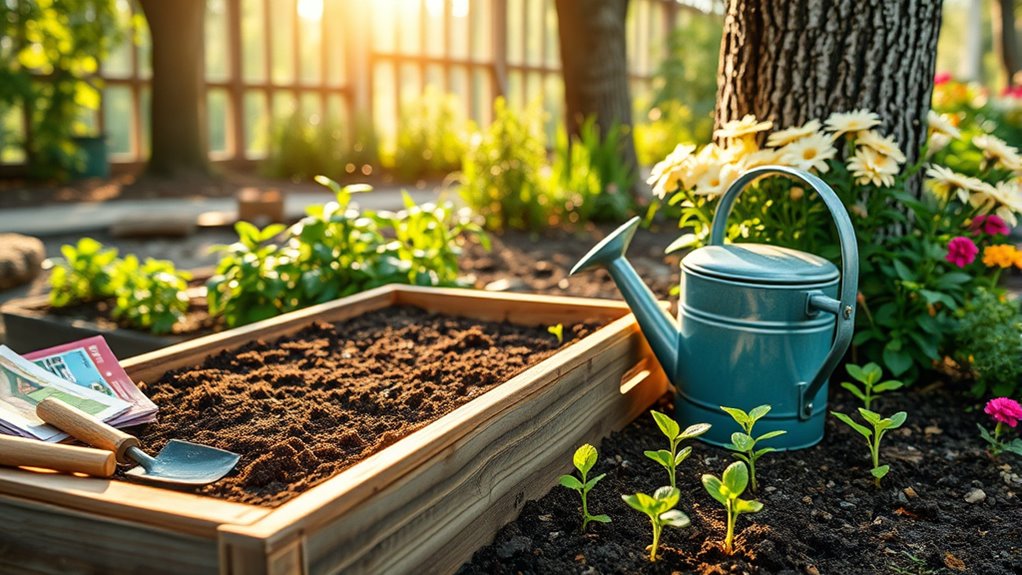
You’ll need a few essential gardening tools to get started: a trowel for planting and transplanting, pruning shears for plant care, and a garden fork or spade to help with soil preparation.
A watering can or hose with a gentle spray attachment is also key for keeping your plants hydrated. Don’t forget gloves to protect your hands while working.
These tools make tending your garden easier and help your plants thrive.
How Do I Compost Kitchen Scraps Effectively?
Think of your compost bin setup as a magic cauldron where kitchen scraps transform into garden gold. Start by sorting your kitchen scraps. Fruit peels, coffee grounds, and veggie bits are perfect.
Avoid meat or oily foods because they attract pests. Layer green scraps with brown materials like dry leaves or shredded paper to balance moisture and airflow.
Turn your pile regularly to speed decomposition. Watch your compost turn into rich soil, nourishing your plants effortlessly.
Can Gardening Help Improve Mental Health?
Yes, gardening can profoundly improve your mental health. It offers mental health benefits by reducing stress and promoting relaxation. When you tend to plants, you engage in mindful activities that provide stress relief and boost your mood.
Being outdoors and nurturing life helps lower anxiety and increases feelings of accomplishment. So, by gardening regularly, you’re actively supporting your emotional well-being and creating a peaceful, calming space for yourself.
What Are the Best Times of Day to Garden?
The best times to garden are early morning and late afternoon, not just because it feels peaceful but because plants thrive then too. You’ll avoid the harsh midday sun, reducing stress on both you and your plants.
Stick to a consistent watering schedule during these cooler hours to maximize water absorption and prevent evaporation. Plus, managing sun exposure carefully helps your garden flourish without wilting under intense heat.
How Do I Attract Beneficial Insects to My Garden?
You can attract beneficial insects by creating pollinator habitats with native flowering plants that bloom throughout the season. Include diverse plants like lavender, marigolds, and daisies to provide nectar and pollen.
Avoid pesticides and use organic pest control strategies to keep your garden safe for these helpful bugs. Adding water sources and shelter, like small brush piles, also encourages beneficial insects to stay and support your garden’s health.
Conclusion
Starting your gardening journey is rewarding, but remember, not every tip works perfectly for every garden. While mulching and fertilizing boost growth, some experts argue that nature’s balance often corrects itself without much intervention.
Trust your observations and adapt accordingly. Keep learning, stay patient, and enjoy the process. By choosing the right plants, caring for your soil, and managing pests wisely, you’ll cultivate a thriving garden that reflects your unique touch.
Happy gardening, and may your gardening journey bring you joy and success!