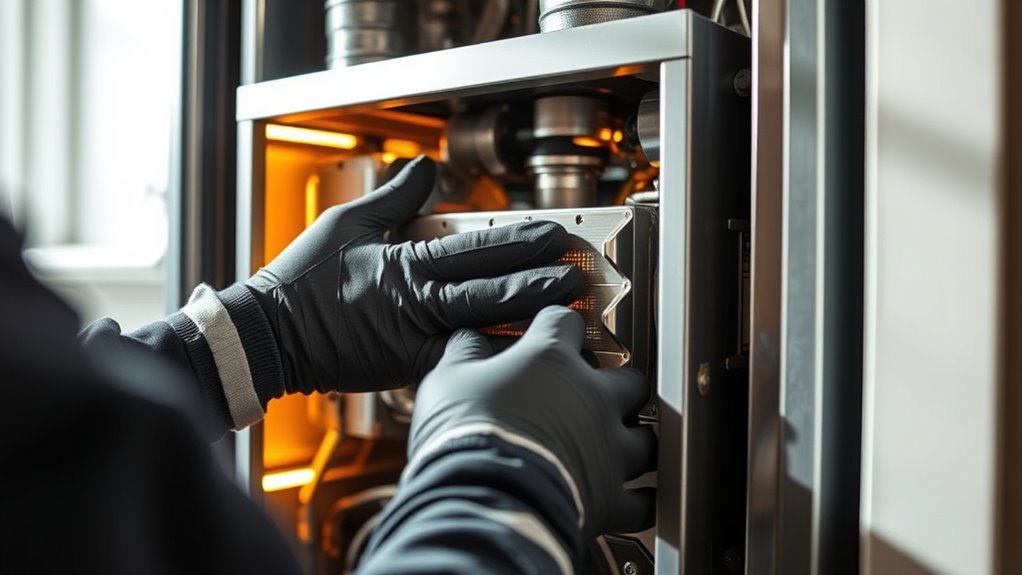
Essential Tips to Maintain a Furnace
If you’ve ever dealt with a furnace that suddenly stops working or struggles to heat your home efficiently, you’re not alone. Many people struggle with keeping their heating systems in top shape, especially when winter is just around the corner. The good news is, with a few simple steps, you can avoid costly repairs and enjoy a cozy home all season long.
To maintain your furnace effectively, replace or clean filters every 1-3 months to keep airflow smooth and energy bills low. Seal air leaks and ducts to prevent drafts and improve heat distribution.
Schedule annual professional inspections to catch issues early and guarantee safety. Test your thermostat for accuracy and clean the blower to boost efficiency.
Lubricate moving parts if needed, and prepare your furnace before winter arrives. Keep these basics in mind to protect your system and improve comfort.
Key Takeaways
- Regularly check and replace furnace filters every 1-3 months to ensure proper airflow and energy efficiency.
- Schedule annual professional inspections to detect issues, clean components, and ensure safe operation.
- Seal air leaks and ductwork to improve heat distribution, indoor air quality, and reduce energy waste.
- Test and calibrate the thermostat for accurate temperature control and optimal furnace performance.
- Clean and lubricate blower parts to prevent wear, reduce noise, and maintain efficient heat circulation.
How to Check and Replace Furnace Filters
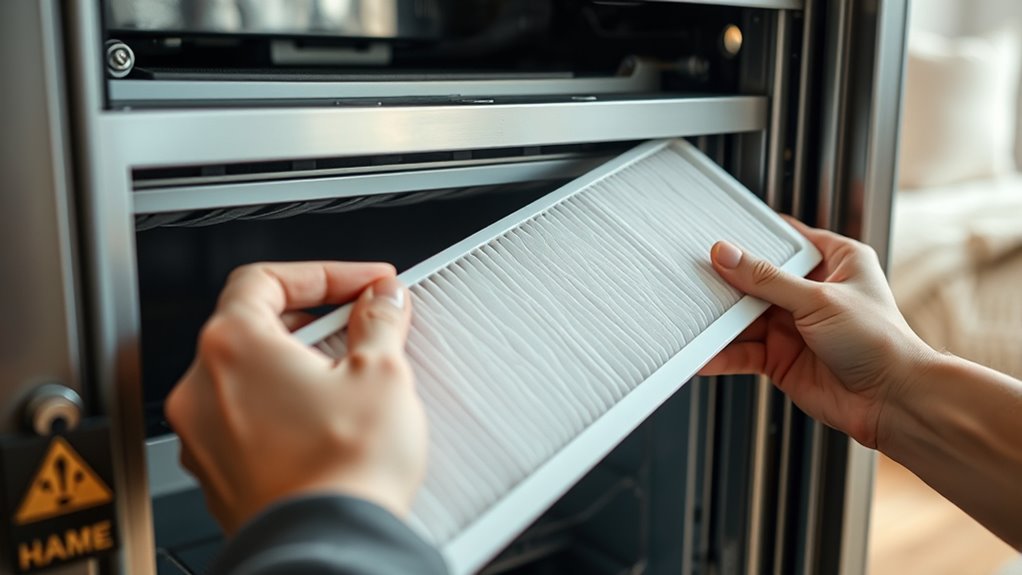
Before your furnace struggles to heat your home efficiently, you should check and replace the filters regularly. Dirty air filters block airflow, making your system work harder and raising energy bills.
Start by locating the filter, usually near the furnace’s blower compartment. Remove it carefully and inspect for dust or debris buildup. If it looks clogged, swap it out right away with a new one that fits your model.
Locate the filter near the blower, inspect for debris, and replace if clogged to maintain efficiency.
Regular air filter replacements, typically every 1-3 months, keep your furnace running smoothly and maintain good indoor air quality. While you’re at it, consider thermostat calibration to ensure your system heats your home to the desired temperature without overworking.
A properly calibrated thermostat works hand in hand with clean filters, optimizing comfort and efficiency. By staying on top of these simple tasks, you prevent strain on your furnace, save on energy costs, and extend its lifespan, all without needing professional help every time.
How Cleaning Furnace Parts Boosts Efficiency
When you clean key furnace parts regularly, you help your system run more efficiently and prevent costly breakdowns. One of the most vital tasks is air filter maintenance. Dirty filters restrict airflow, forcing your furnace to work harder, which increases energy consumption and wear. By replacing or cleaning air filters on schedule, you maintain proper airflow and improve indoor air quality.
Another essential step is blower assembly inspection and cleaning. Dust and debris can accumulate on the blower wheel and motor, reducing airflow and causing the system to overheat. When you clean the blower assembly, you ensure smooth operation and ideal heat distribution.
Regular cleaning of these parts reduces strain on your furnace, lowers energy bills, and extends the lifespan of your system. By staying consistent with air filter maintenance and blower assembly inspection, you keep your furnace running safely and efficiently throughout the heating season.
When to Schedule Professional Furnace Inspections
How often should you schedule a professional furnace inspection to keep your system running smoothly? Ideally, you should have your furnace inspected at least once a year, preferably before the heating season begins. Annual inspections help catch potential issues early, ensuring peak indoor air quality and preventing unexpected breakdowns.
If you notice unusual noises, inconsistent heating, or a spike in energy bills, don’t wait. Schedule an inspection immediately to avoid emergency heating repair. Regular check-ups include cleaning components, checking for carbon monoxide leaks, and verifying safety controls.
Skipping inspections can compromise your system’s efficiency and your home’s air quality. By staying proactive with professional inspections, you’ll extend your furnace’s lifespan and keep your home comfortable and safe throughout colder months. Remember, timely inspections are a smart investment that saves you from costly repairs and protects your family’s health.
How to Test Your Thermostat for Proper Function
To make sure your furnace runs efficiently, you’ll want to check if your thermostat is accurate. Start by comparing the temperature it shows to a reliable thermometer.
Next, take a moment to double-check that your thermostat settings match your comfort needs and daily schedule. This way, you can be sure everything is working just right.
Check Thermostat Accuracy
Why might your furnace run longer than expected or fail to reach the set temperature? The issue often lies in thermostat accuracy. Start by checking the thermostat calibration. You can compare the displayed temperature with an accurate room thermometer placed nearby.
If there’s a significant difference, your thermostat’s temperature sensors may be off, causing improper furnace cycling. To recalibrate, consult your thermostat’s manual. Many models allow manual adjustments.
If recalibration isn’t possible or doesn’t fix the problem, the temperature sensors might be faulty and require replacement. Ensuring your thermostat’s accuracy prevents unnecessary furnace operation, saves energy, and maintains consistent comfort. Regularly checking thermostat calibration and sensor function helps your furnace run efficiently and avoid unexpected heating issues.
Verify Thermostat Settings
Once you’ve confirmed your thermostat displays accurate temperatures, the next step is to verify its settings to guarantee proper operation. You’ll want to check that the mode (heat or cool), fan setting, and temperature calibration align with your comfort needs.
If the thermostat calibration is off, your furnace may not run efficiently. To test your thermostat, adjust the temperature setting and listen for the furnace to respond promptly. If it doesn’t, recheck the temperature calibration or consult a professional.
| Setting | What to Check | Action if Incorrect |
|---|---|---|
| Mode | Heat, Cool, or Auto | Switch to desired mode |
| Fan | Auto or On | Adjust to Auto for efficiency |
| Temperature | Matches actual room temp | Recalibrate if off by ±2°F |
| Response Time | Furnace starts promptly | Inspect wiring or replace |
How to Inspect and Clean the Furnace Blower
Before you start, make sure the furnace is completely turned off and cooled down to avoid any accidents. Begin by removing the access panel to locate the blower. Use a vacuum with a brush attachment to clean dust and debris from the blower wheel and motor.
Wipe down the blades carefully to prevent imbalance, which can affect performance. While you’re at it, inspect the blower belt for wear and tension, replacing it if necessary.
Regular duct maintenance is vital, as clean ducts improve airflow and reduce strain on the blower. Don’t forget ventilation checks. Make sure that vents and registers are clear of obstructions to maintain proper air circulation.
After cleaning, reassemble the panel securely and turn the furnace back on. By routinely inspecting and cleaning the blower, you’ll improve efficiency, prolong your furnace’s lifespan, and keep your home comfortable all season long.
How to Fix Strange Furnace Noises
If your furnace starts making strange noises, it’s a sign that something needs your attention. Ignoring unusual furnace noise can lead to bigger problems, so it’s best to act promptly. Here’s what you can do to fix it:
- Tighten Loose Parts: Vibration often causes screws or panels to loosen, creating rattling sounds. Check and tighten any loose components to reduce furnace noise and improve stability.
- Lubricate Moving Parts: Squeaks and squeals usually come from friction. Apply lubricant to the blower motor bearings and other moving parts to ensure smooth operation and vibration reduction.
- Inspect and Replace Worn Belts: A worn or misaligned belt can cause thumping or squealing. Inspect belts regularly, and replace them if you notice cracks or fraying.
How Sealing Air Leaks Improves Furnace Performance
Sealing air leaks helps your furnace run more efficiently because it keeps the warm air inside where it belongs. When you do this, you’ll start to notice better heat distribution throughout your home. That means every room will feel more comfortable.
And here’s the best part: your furnace won’t have to work as hard. This not only saves energy but also saves you money in the long run. So, sealing those leaks is definitely worth it!
Energy Efficiency Benefits
One simple step you can take to boost your furnace’s energy efficiency is eliminating air leaks around doors, windows, and ductwork. Sealing these leaks not only reduces wasted energy but also improves indoor air quality by preventing drafts and pollutants from entering your home.
When you focus on this, you’ll notice several energy saving tips come into play:
- Your furnace won’t have to work as hard to maintain temperature, lowering energy bills.
- You’ll enjoy a more consistent indoor temperature, increasing comfort.
- Reduced strain on your system extends its lifespan, saving on costly repairs.
Enhanced Heat Distribution
By addressing air leaks, you not only save energy but also help your furnace distribute heat more evenly throughout your home. Sealing leaks prevents warm air from escaping, which improves indoor air quality by reducing dust and allergens entering through gaps.
It also supports accurate thermostat calibration by stabilizing room temperatures, so your furnace runs efficiently without overworking. Proper heat distribution means no cold spots, creating consistent comfort. Here’s how sealing air leaks impacts your furnace performance:
| Factor | Effect of Sealing Air Leaks | Benefit |
|---|---|---|
| Heat Distribution | Even warmth across rooms | Consistent comfort |
| Energy Usage | Reduced heat loss | Lower utility bills |
| Thermostat Response | Stable temperature readings | Efficient furnace cycling |
| Indoor Air Quality | Fewer pollutants entering home | Healthier environment |
| Furnace Longevity | Less strain on components | Extended system lifespan |
How to Maintain Your Furnace Pilot Light
Although it may seem simple, maintaining your furnace pilot light is vital for keeping your heating system running smoothly and safely. A properly functioning pilot light ensures efficient ignition and prevents gas leaks, which is essential for gas safety. Here’s how you can maintain it effectively:
Maintaining your furnace pilot light is essential for efficient ignition and preventing dangerous gas leaks.
- Regular Inspection: Check the pilot light flame regularly. It should be steady and blue. A yellow or flickering flame may indicate carbon buildup or gas issues, signaling the need for pilot light troubleshooting.
- Keep It Clean: Dust and debris can block the pilot light orifice. Use a soft brush or compressed air to clean around the pilot assembly carefully, avoiding damage.
- Monitor for Smells: If you ever detect a gas odor near your furnace, turn off the gas supply immediately and call a professional. This guarantees your safety and prevents dangerous leaks.
Following these steps helps maintain gas safety and keeps your furnace pilot light reliable throughout the heating season.
When to Lubricate Furnace Parts and How
You’ll want to lubricate your furnace parts whenever you start to hear squeaking or feel resistance in the moving components. It’s a good sign that those parts need a little extra care. Using the right lubricant is really important — lightweight oil usually does the trick to keep everything running smoothly.
Just take it step-by-step, and you’ll apply it safely and effectively without any hassle. It’s easier than you might think!
Identifying Lubrication Needs
When should you lubricate your furnace parts to keep everything running smoothly? Identifying lubrication needs starts with following a proper lubrication schedule tailored to your furnace model. Check your owner’s manual for recommended intervals.
Next, watch for signs like unusual noises, squeaking, or rough operation. These indicate it’s time to oil moving parts. Proper oil selection matters too. Use the type specified in your manual to avoid damage.
Here’s how to stay on top of it:
- Inspect moving components monthly during peak seasons.
- Follow the lubrication schedule without skipping intervals.
- Use the right oil type to ensure effective lubrication and prevent wear.
Best Lubricants To Use
Since choosing the right lubricant directly affects your furnace’s performance and lifespan, you need to pick oils designed specifically for heating equipment. These lubricants withstand high temperatures and resist drying out or thickening over time.
Avoid general-purpose oils, as they may not suit your furnace’s fuel types or mechanical parts. When selecting a lubricant, consider the manufacturer’s recommendations and the type of fuel your furnace uses. Natural gas and oil-fired systems have different requirements.
Always observe safety precautions: turn off your furnace and disconnect power before lubricating to prevent accidents. Use gloves and work in a well-ventilated area to avoid inhaling fumes.
Proper lubricant choice and handling keep your furnace running smoothly while minimizing wear and tear on moving parts.
Step-by-Step Lubrication Process
Although proper lubrication is essential for your furnace’s smooth operation, knowing exactly when and how to apply lubricant can make all the difference. You want to prevent furnace noise and airflow issues that signal worn parts.
Follow this simple step-by-step lubrication process:
- Identify parts needing lubrication. Focus on blower motors, belts, and bearings. Check the owner’s manual for specific points.
- Clean the parts. Remove dust and debris before applying lubricant to avoid grime buildup.
- Apply lubricant sparingly. Use the recommended oil or grease on each component, but avoid over-applying since that can attract dirt.
Tips for Preparing Your Furnace for Winter Use
Before the cold sets in, you’ll want to make certain your furnace is ready to keep your home warm and energy-efficient. Start by inspecting and replacing the air filter to improve indoor air quality and reduce strain on your system.
Next, check the thermostat settings to ensure they work correctly and maintain a comfortable temperature. Don’t forget to clean around the furnace, removing dust and debris that could block vents or reduce airflow.
If your furnace is older or inefficient, consider a furnace upgrade to save energy and improve performance. Also, inspect the vents and ductwork for leaks or damage, sealing any gaps to maximize heat distribution.
Finally, schedule a professional inspection to identify potential issues before winter hits. Taking these steps will help you avoid unexpected breakdowns and keep your home cozy throughout the season.
Frequently Asked Questions
What Type of Fuel Is Best for My Furnace?
The best fuel for your furnace depends on your needs and location, but natural gas often offers the best fuel efficiency and cost-effectiveness. Propane is a good alternative if natural gas isn’t available, while oil can be efficient but less environmentally friendly.
Electric furnaces use electricity as their fuel type and can be efficient in mild climates. You should consider fuel types, availability, and cost to choose what suits your home best.
How Long Does a Typical Furnace Last?
You’d think your furnace would last forever, but it typically sticks around for 15 to 20 years. If you skip the maintenance checklist, though, it might throw in the towel sooner.
When it starts acting up, you’ll face the classic repair versus replacement dilemma. Keep up with regular care, and you’ll extend its life, saving you from an untimely “goodbye” and costly decisions down the road.
Can a Furnace Cause Carbon Monoxide Poisoning?
Yes, your furnace can cause carbon monoxide poisoning if it’s not properly maintained. Furnace safety is essential because carbon monoxide risks come from incomplete combustion, which produces this deadly gas.
You should install carbon monoxide detectors and schedule regular inspections to catch leaks early. Don’t ignore any signs of malfunction like yellow flames or soot buildup, as these indicate potential dangers.
Staying vigilant protects you and your family from serious health risks.
What Are Common Signs of Furnace Wear and Tear?
You might notice your home suddenly feels chilly even though your furnace is running, or hear strange noises like banging or rattling. These signs contrast with the warmth and quiet you expect.
Dirty furnace filters and neglected blower maintenance often cause this wear and tear, reducing efficiency and airflow. If you spot uneven heating, frequent cycling, or a rise in energy bills, it’s time to inspect and service your furnace before bigger issues arise.
How Does a Programmable Thermostat Save Energy?
A programmable thermostat saves energy by letting you set energy-efficient settings that match your daily schedule. You won’t waste heat when you’re not home or asleep because it automatically adjusts temperatures.
Make sure you place your thermostat in a central spot, away from direct sunlight or drafts, so it reads the room temperature accurately. This way, your furnace runs only when needed, cutting down on energy bills.
Conclusion
Think of your furnace as the heart of your home’s warmth. Keeping it healthy means a cozy winter ahead. By regularly checking filters, cleaning parts, sealing leaks, and scheduling inspections, you’ll fuel its steady beat.
Don’t forget to test your thermostat and care for the pilot light, too. With these essential tips, you’ll guarantee your furnace runs efficiently, saving energy and costs while wrapping your home in comforting heat all season long. Maintaining a furnace is key to keeping your home warm and energy-efficient.