Essential Kitchen Tools: A List Every Home Cook Needs
Struggling to keep your kitchen organized and efficient can be really frustrating. You’re not alone—many home cooks find it challenging to have the right tools on hand when they need them most.
Whether you’re just starting out or upgrading your setup, having essential kitchen tools can make all the difference in how smoothly your cooking flows.
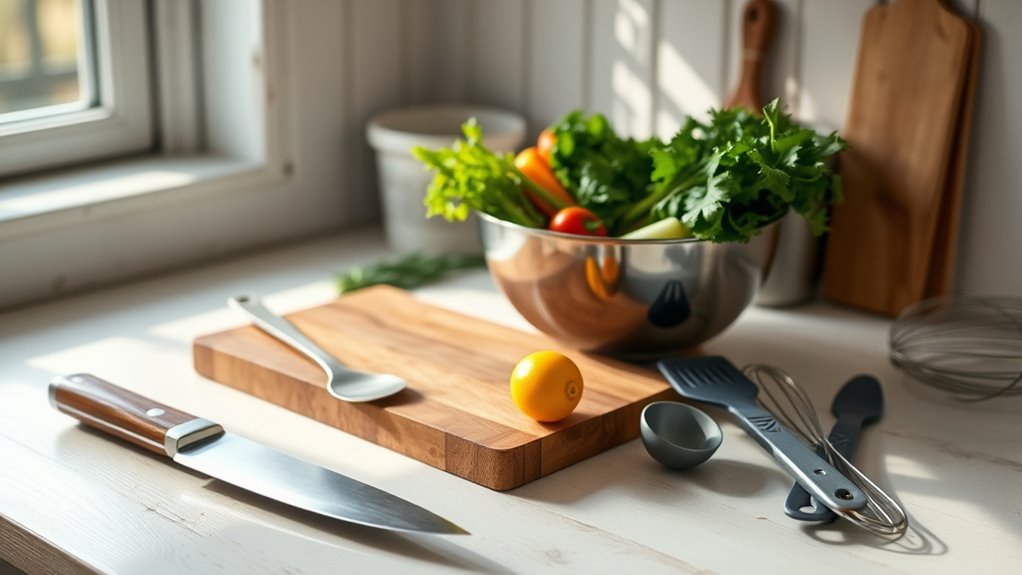
You’ll need sharp knives like a chef’s knife and serrated knife for versatile prep, plus color-coded cutting boards to keep things safe and organized.
Stock your kitchen with reliable measuring cups and mixing bowls for accurate recipes and smooth cooking.
Don’t forget essential pots and pans, airtight storage containers for freshness, and cleaning tools to maintain hygiene.
Choose durable materials and practice proper care to make your cooking experience easier and more enjoyable.
Learn how to build a kitchen that truly works for you.
Key Takeaways
- A set of sharp knives (chef’s, paring, serrated) with proper maintenance is essential for versatile food preparation.
- Durable cutting boards, preferably color-coded and non-slip, prevent cross-contamination and ensure safe cutting.
- Basic cookware includes nonstick and stainless steel pans, saucepans, and a Dutch oven for diverse cooking needs.
- Measuring cups, spoons, and mixing bowls in various sizes ensure recipe accuracy and efficient preparation.
- Small appliances like food processors, blenders, and Instant Pots save time and enhance kitchen versatility.
Essential Kitchen Knives Every Home Cook Needs
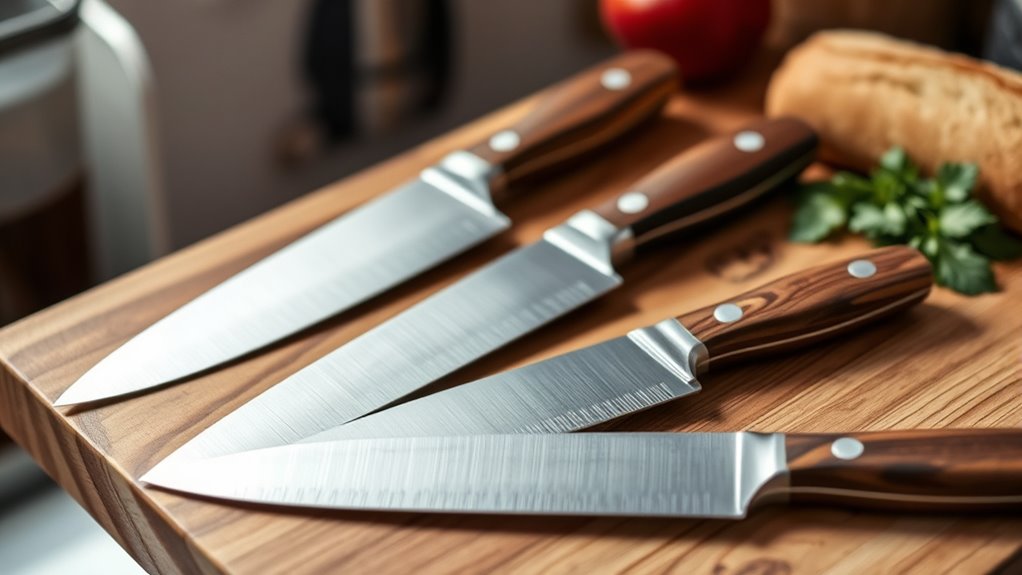
Every home cook needs a few essential kitchen knives to handle most tasks efficiently. You’ll want a chef’s knife for chopping and slicing, a paring knife for peeling and intricate work, and a serrated knife for cutting bread or tomatoes. These three cover nearly all your kitchen needs without cluttering your drawer.
To keep your knives sharp and safe, prioritize kitchen knife maintenance. Regular honing and occasional professional sharpening extend their life and ensure clean cuts, which reduces the risk of slips. Always hand wash and dry your knives immediately to prevent rust and damage.
Essential knife safety means using a stable cutting surface, keeping your fingers tucked away, and never trying to catch a falling knife. Store knives securely in a block or magnetic strip to protect both blades and fingers. With the right knives and proper care, you’ll boost your cooking efficiency and safety.
Essential Cutting Boards for Every Home Cook
Although choosing the right cutting board might seem simple, it plays a crucial role in your kitchen’s efficiency and hygiene. You want boards that support cutting board safety by preventing cross-contamination between raw meats, vegetables, and cooked foods. Color-coded sets or separate boards for different tasks help you stay organized and safe.
Opt for eco friendly cutting surfaces like bamboo or sustainably harvested wood, which are durable and naturally resistant to bacteria. These materials also protect your knives from dulling quickly. Avoid plastic boards that scar easily and can harbor bacteria in deep grooves.
Make sure your cutting boards are easy to clean and maintain. Regularly sanitize them to keep your kitchen healthy. Also, choose boards with a non-slip base or add a damp towel underneath to keep them steady while you work. By picking the right cutting boards, you’ll improve your prep work and keep your kitchen safer and more eco conscious.
Everyday Pots and Pans You Need
You’ll want a few essential skillets and saucepans to handle most cooking tasks with ease. And don’t forget versatile stockpots and Dutch ovens—they’re perfect for soups, stews, and so much more. Plus, knowing when to use nonstick versus stainless steel can really make a big difference in your cooking results.
Essential Skillets And Saucepans
Why settle for less when the right skillet or saucepan can transform your cooking? Investing in skillets with quality nonstick coatings lets you cook delicate foods like eggs and fish effortlessly, ensuring they release cleanly without sticking.
Meanwhile, stainless steel construction offers durability and even heat distribution. It’s perfect for searing meats or making sauces that need precise temperature control.
You’ll want a versatile nonstick skillet for everyday tasks and a sturdy stainless steel saucepan for simmering and boiling. Choose sizes that suit your typical meals. Usually, an 8- or 10-inch skillet and a 2- to 3-quart saucepan cover most needs.
These essentials provide the foundation for countless recipes, making your kitchen more efficient and your cooking far more enjoyable.
Versatile Stockpots And Dutch Ovens
Moving beyond skillets and saucepans, stockpots and Dutch ovens bring a whole new level of versatility to your kitchen. Stockpot versatility shines when you need to prepare large batches of soups, stews, or pasta. Its tall, spacious design lets you boil, simmer, and even blanch with ease.
On the other hand, Dutch ovens excel at slow-cooking, braising, and baking. Their heavy lids trap moisture, making your dishes tender and flavorful. You can sear meat directly on the stovetop and finish cooking in the oven without switching pots.
Investing in these everyday pots expands your cooking options and simplifies meal prep. With stockpot versatility and Dutch oven uses combined, you’re equipped to handle almost any recipe that comes your way.
Nonstick Vs Stainless Steel
Although both nonstick and stainless steel pans serve as kitchen essentials, each offers distinct advantages that suit different cooking styles. You’ll appreciate nonstick coatings for their easy food release and quick cleanup, making them perfect for delicate items like eggs or pancakes. They help you cook with less oil, ideal if you want healthier meals.
On the other hand, stainless steel pans boast a strong reputation for durability and even heat distribution. They’re excellent when you want to sear meat or build rich pan sauces because they can handle higher temperatures without damage.
Choosing between them depends on your cooking needs. You might even find having both in your kitchen gives you the best flexibility for everyday meals.
Measuring Cups and Spoons for Perfect Recipes
When you want your recipes to turn out just right, using accurate measuring cups and spoons is essential. These tools ensure measurement accuracy, which directly impacts recipe consistency. Whether you’re baking or cooking, precise measurements keep your dishes reliable every time.
Choose sets with clear markings, preferably in both metric and standard units, so you can follow any recipe without guesswork. Stainless steel or durable plastic options work well; just make sure they’re sturdy and easy to clean.
Using proper measuring tools helps you avoid common mistakes like overpacking flour or underestimating liquids. Remember, even small deviations can alter texture and flavor, especially in baking.
Mixing Bowls and Utensils for Prep and Cooking
You’ll want a variety of mixing bowls in different sizes and materials to handle all your prep tasks efficiently. It really helps to have options on hand, so you’re not caught without the right size when you need it.
Choosing the right utensils—like spatulas, whisks, and spoons—can make cooking smoother and more enjoyable. Plus, when you pick tools that feel good to use and match your cooking style, everything flows better.
Focus on durable options that will last through frequent use. That way, you won’t have to keep replacing them, and your kitchen tools will stay reliable for a long time.
Types Of Mixing Bowls
Since mixing bowls come in various materials and sizes, choosing the right one can make your prep work smoother and more efficient. You’ll find material variations like stainless steel, glass, ceramic, and plastic, each offering unique benefits.
Stainless steel is lightweight and durable, perfect for whipping up batters. Glass bowls let you see ingredients clearly and double as serving dishes. Ceramic bowls add a touch of design aesthetics to your kitchen, blending function with style.
Plastic bowls are budget-friendly and easy to handle but might stain or retain odors. When picking your mixing bowls, consider both their practicality and how they fit your kitchen’s look.
Having a set with different sizes and materials helps you tackle any recipe with ease and confidence.
Essential Cooking Utensils
Mixing bowls play a key role in meal prep, but they’re just one part of the toolkit you need in the kitchen. Essential cooking utensils like spatulas, whisks, and tongs help you master various cooking techniques and boost flavors efficiently.
Choosing the right utensil guarantees you handle ingredients properly, bringing out the best in your dishes.
| Utensil | Use Case | Flavor Enhancement |
|---|---|---|
| Spatula | Folding, scraping | Preserves delicate textures |
| Whisk | Mixing, aerating | Incorporates air for lightness |
| Tongs | Grilling, flipping | Avoids piercing, retains juices |
| Ladle | Serving soups, sauces | Maintains consistency |
| Peeler | Preparing vegetables | Retains fresh flavors |
Equip yourself with these essentials to improve your cooking technique and amplify flavors every meal.
Materials And Durability
Although selecting the right kitchen tools often focuses on function, considering the materials and durability of mixing bowls and utensils is just as essential. You want tools crafted from materials that guarantee to stand up to daily use. Stainless steel, silicone, and tempered glass are excellent choices.
Thanks to material innovation, manufacturers now create bowls and utensils that resist stains, odors, and warping. When shopping, look for products that have undergone rigorous durability testing to ensure they won’t crack or degrade over time.
Durable tools save you money and hassle, making prep and cooking smoother. By prioritizing quality materials and proven endurance, you equip yourself with kitchen tools that last, perform well, and keep your cooking experience hassle-free.
Time-Saving Small Kitchen Appliances
How can you shave precious minutes off your cooking routine without sacrificing quality? Time-saving small kitchen appliances are your answer. With smart appliance reviews guiding you, you can pick compact gadget recommendations that fit your space and lifestyle perfectly.
These tools streamline prep work, letting you focus on creating delicious meals faster.
Here’s a quick look at some essentials:
| Appliance | Benefit | Emotion Evoked |
|---|---|---|
| Food Processor | Quick chopping | Relief |
| Instant Pot | Multi-use, fast cooking | Empowerment |
| Blender | Smoothies & sauces | Excitement |
| Air Fryer | Healthier frying | Satisfaction |
| Hand Mixer | Easy mixing | Convenience |
Kitchen Storage Containers to Keep Ingredients Fresh
You’ll want kitchen storage containers with airtight seals to lock in freshness and keep ingredients from spoiling. That way, your food stays good for longer and you waste less.
Also, choosing the right material—like glass, plastic, or stainless steel—makes a difference. It affects how durable the containers are and how safe they are for your ingredients.
Airtight Seal Benefits
Why does an airtight seal matter when storing ingredients? It locks out air and moisture, key factors that speed up spoilage. When you choose containers with airtight seal benefits, you’re investing in better food preservation. Here’s why it matters:
1. Keeps food fresh longer
By preventing exposure to oxygen, your ingredients stay crisp and flavorful.
2. Prevents contamination
Airtight seals block out pests and bacteria, keeping your pantry safe.
3. Reduces waste
Fresh ingredients mean fewer toss-outs, saving you money and trips to the store.
Using airtight containers ensures you get maximum shelf life from your ingredients, making your cooking more efficient and enjoyable. So, don’t underestimate the power of a tight seal in your kitchen storage routine.
Material Types Overview
Choosing the right container material plays a big role in maintaining that airtight seal and keeping your ingredients fresh. You’ll find popular options like glass, BPA-free plastic, and stainless steel, each offering distinct advantages.
Glass containers provide excellent cookware safety since they don’t leach chemicals and are easy to clean. BPA-free plastics are lightweight and budget-friendly but may wear out faster. Stainless steel scores high on material sustainability and durability, though you won’t see inside without opening them.
When selecting containers, consider how each material aligns with your values, whether you prioritize eco-friendly choices or long-lasting safety. Ultimately, selecting containers that balance material sustainability and cookware safety ensures your ingredients stay fresh while supporting your kitchen’s health and environmental impact.
Essential Baking Tools for Home Kitchens
Although baking might seem straightforward, having the right tools can make all the difference in your results. Mastering baking techniques is easier when you have quality pastry tools at your disposal. These tools not only improve precision but also save time and reduce frustration.
Here are three essential baking tools every home cook should have:
- Mixing Bowls Durable, non-slip bowls in various sizes help you combine ingredients smoothly and efficiently.
- Measuring Cups and Spoons Accurate measurements are key to baking success, so invest in a reliable set for both dry and liquid ingredients.
- Pastry Blender This tool helps you cut butter into flour quickly, ensuring flaky, tender pastries.
With these tools on hand, you’ll feel confident experimenting with recipes and refining your baking techniques. They’re indispensable for turning simple ingredients into delicious baked goods with ease.
Cleaning Tools to Keep Your Kitchen Hygienic
Keeping your kitchen spotless requires the right cleaning tools to tackle messes quickly and effectively. For kitchen surface cleaning, you need sturdy scrubbers, microfiber cloths, and a reliable spray cleaner. These help you maintain hygienic counters and prevent bacterial buildup.
Dishwashing essentials like quality sponges, dish brushes, and drying racks make washing dishes less of a chore and keep your utensils germ-free.
Here’s a quick guide to must-have cleaning tools:
| Tool Type | Purpose | Tip for Use |
|---|---|---|
| Microfiber Cloth | Wiping surfaces | Use damp, not soaked |
| Scrub Brush | Tough stains on pots | Choose one with stiff bristles |
| Dish Sponge | General dishwashing | Replace every 2 weeks |
| Drying Rack | Air-drying dishes | Ensure good ventilation |
With these essentials, you’ll keep your kitchen hygienic and ready for your next meal prep.
Picking Durable, Budget-Friendly Kitchen Tools
Maintaining a clean kitchen is easier when your tools stand up to regular use without breaking the bank. When picking durable, budget-friendly kitchen tools, focus on quality and sustainability. You don’t have to spend a fortune to find reliable gadgets made from eco-friendly materials that last.
Here are three tips to guide you:
- Prioritize multifunctional affordable gadgets. Choose tools that serve several purposes, saving money and space.
- Look for eco-friendly materials like bamboo or recycled stainless steel. These are durable, safe, and reduce your environmental impact.
- Check reviews and warranties. A good warranty signals confidence in durability, ensuring you get your money’s worth.
Frequently Asked Questions
How Do I Properly Sharpen and Maintain Kitchen Knives?
To properly sharpen and maintain your kitchen knives, regularly use sharpening techniques like honing with a steel rod to realign edges and whetstones for grinding dull blades. Always clean and dry knives after use to prevent rust.
Store them safely in a block or magnetic strip to avoid damage. Consistent knife maintenance keeps your blades sharp, making cutting easier and safer, so you’ll enjoy cooking without struggling with dull knives.
What’s the Best Way to Organize a Small Kitchen Efficiently?
The best way to organize a small kitchen efficiently is to use smart storage solutions and space-saving hacks. You’ll want to maximize vertical space with wall-mounted racks or magnetic strips for knives.
Use stackable containers and pull-out drawers to keep things tidy. Don’t forget to declutter regularly and store rarely used items out of the way.
These tricks help you create more room and keep your kitchen functional without feeling cramped.
How Can I Safely Dispose of Old or Damaged Kitchen Tools?
You can safely dispose of old or damaged kitchen tools by checking local recycling safety guidelines first. Many metal and glass tools can go to recycling centers, but sharp items like knives need special handling. Wrap blades securely to prevent injury.
For plastic tools, confirm if your facility accepts them. If recycling isn’t an option, use designated disposal methods like hazardous waste programs. You can also donate items in good condition to reduce waste responsibly.
Are There Eco-Friendly Alternatives for Common Kitchen Tools?
Yes, you can definitely find eco-friendly alternatives for common kitchen tools. Look for sustainable materials like bamboo, recycled stainless steel, or silicone made from plant-based sources.
Eco friendly brands often focus on durability and minimizing waste, so your kitchen stays green without sacrificing quality. By choosing these options, you reduce plastic use and landfill waste.
You’ll feel good knowing your tools support both your cooking and the planet.
How Do I Choose Kitchen Tools Based on Cooking Style or Cuisine?
You should choose kitchen tools that match your cooking techniques and cultural influences. If you love stir-frying, invest in a wok. For baking, quality mixing bowls and a stand mixer help.
If you enjoy grilling, a good set of tongs and a grill pan are essential. Think about the cuisine you cook most often. Japanese, for example, might need a sushi mat and rice cooker.
Tailor tools to fit your style for better results.
Conclusion
You need knives that slice smoothly, boards that stay sturdy, and pots that heat evenly. You want measuring tools that guarantee accuracy, bowls and utensils that make prep easy, and storage containers that keep freshness locked in.
You’ll appreciate baking tools that inspire creativity and cleaning supplies that keep your kitchen spotless. By choosing durable, budget-friendly tools, you’ll cook confidently, prep efficiently, and enjoy every moment in your kitchen with essential kitchen tools.