Best Deck Maintenance Tips for Longevity
If you’ve ever noticed your deck looking worn or feeling unsure how to keep it in top shape, you’re not alone. Many people struggle with maintaining their outdoor spaces, especially when it comes to preventing damage from weather and wear. The good news is that with the right care, your deck can stay beautiful and durable for years to come.
To keep your deck lasting longer, regularly inspect it for cracks, loose fasteners, and signs of rot or mold. Clean debris and dirt often, using gentle methods suited for wood or composite materials, and avoid harsh power washing.
Apply sealant or stain during mild, dry weather to protect against moisture and UV damage. Maintain proper drainage, furniture placement, and lighting for safety and airflow. With consistent care and seasonal upkeep, you’ll preserve both your deck’s beauty and durability.
Discover more ways to guarantee its longevity.
Key Takeaways
- Inspect your deck regularly for loose fasteners, cracks, rot, and structural stability. Catching issues early helps prevent bigger damage down the road.
- Clean your deck seasonally with gentle cleaners made for wood. Avoid power washing since it can damage the surface.
- Apply sealants or stains during mild, dry weather. This protects the wood from moisture and UV rays, helping it last longer.
- Make sure there’s proper drainage and airflow around furniture to keep moisture from building up. That way, you reduce the chance of mold on your deck.
- Use non-slip treatments and keep lighting well-maintained, especially on stairs and in high-traffic areas, to stay safe.
How To Inspect Your Deck for Damage and Wear
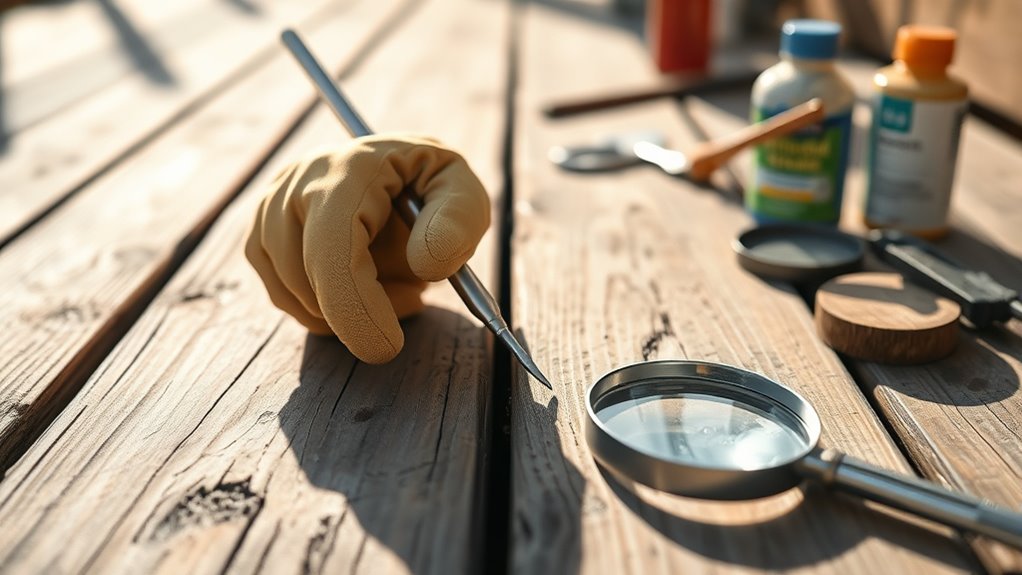
Before you begin any maintenance, you should thoroughly inspect your deck for damage and wear. Start by examining the deck material closely, whether it’s wood, composite, or another type, because each reacts differently to weather effects.
Look for cracks, splinters, or warping in wood decks. Check for fading or surface damage on composite decks. Pay attention to loose or rusted fasteners and any signs of rot or mold, which often result from prolonged moisture exposure.
Inspect wood for cracks and warping, composite for fading, and fasteners for rust or looseness to prevent moisture damage.
Weather effects like sun, rain, and snow can weaken your deck’s structure over time. So, inspect the underside and support posts for stability. Don’t forget to check railings and steps for any instability or damage.
Catching these issues early helps you address them before they worsen, ensuring your deck stays safe and durable. A thorough inspection sets the foundation for effective maintenance and prolongs your deck’s life.
How To Clean Your Deck: Wood and Composite Methods
When you clean your deck regularly, you prevent dirt and grime from causing long-term damage. Start by removing your furniture and adjusting your furniture arrangement to access every corner.
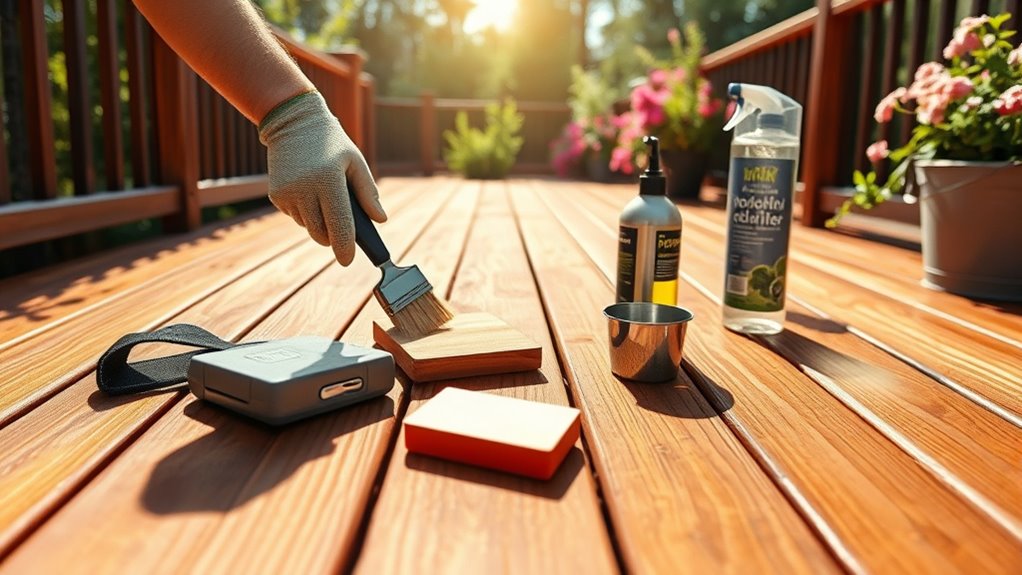
For wood decks, sweep away debris first, then scrub with a soft brush and a wood-safe cleaner to avoid splintering. Rinse thoroughly and let it dry completely before replacing furniture.
For composite decks, use a mild soap and water solution with a soft brush, avoiding harsh chemicals that can damage the surface. Pay special attention around deck lighting fixtures. Clean gently to maintain their shine and ensure they function properly.
Regular cleaning not only preserves your deck’s appearance but also extends its lifespan. Avoid power washing wood decks at high pressure to prevent splintering.
Keeping your deck clean makes your outdoor space safer and more inviting, ready for relaxing evenings under your well-maintained deck lighting.
Choosing the Best Deck Cleaners and Maintenance Products
You’ll want to pick the right deck cleaner based on your deck’s material and condition. It really makes a difference in how well it works. Also, think about using eco-friendly products—they’re great because they protect your wood and are better for the environment. After that, you’ll want to choose the best stain and sealant to keep your deck looking great and lasting longer. It’s all about finding the right combination to maintain your deck’s beauty and durability.
Types Of Deck Cleaners
Although many deck cleaners promise great results, selecting the right one depends on your deck’s material and condition. You want a product that complements your deck stain and aids wood restoration without causing damage.
Here are four common types of deck cleaners to evaluate:
1. Oxygen Bleach Cleaners
Gentle yet effective for removing dirt and mildew without harsh chemicals.
2. Chlorine Bleach Solutions
Powerful against mold but can strip color, so use cautiously.
3. Detergent-based Cleaners
Good for routine cleaning and prepping before applying deck stain.
4. Wood Brighteners
Restore the natural color and pH balance of wood after cleaning, enhancing wood restoration.
Choose a cleaner tailored to your deck’s needs to maintain its beauty and prolong its life.
Eco-Friendly Maintenance Options
Selecting the right deck cleaner goes beyond effectiveness. It also involves considering the environmental impact. You can choose products made from recycled materials and eco friendly paints that protect both your deck and the planet. These options reduce harmful chemicals and promote sustainability without compromising quality.
Here’s a quick comparison to help you decide:
| Product Type | Environmental Benefit |
|---|---|
| Biodegradable Cleaners | Break down naturally, safe for plants |
| Recycled Material Paints | Minimize waste, low VOC emissions |
| Natural Oil Finishes | Renewable resources, non-toxic |
Stain And Sealant Choices
How do you pick the best stain and sealant for your deck? Start by considering the wood type and exposure to elements. Proper deck staining not only improves beauty but also protects against moisture and UV damage.
When making your sealant selection, think about the finish. Do you want a matte, satin, or glossy look? Also, check for products with mildew resistance and easy application.
Here’s a quick guide to help you choose:
- Transparent stains highlight natural wood grain.
- Semi-transparent stains offer color with some wood visibility.
- Solid stains provide full color and maximum UV protection.
- Clear sealants preserve the wood’s natural color but need frequent reapplication.
Choose products tailored for your deck’s needs to guarantee lasting protection.
When and How To Seal or Stain Your Deck for Protection
You’ll want to seal or stain your deck when the weather is dry and mild. This helps make sure the product soaks in properly and dries just right.
Now, choosing between a sealant or stain really comes down to the look you’re after and how much protection you need.
Once you’ve picked your product, just apply it evenly and be sure to follow the manufacturer’s instructions. That way, your deck will stay protected and look fantastic for a long time.
Best Time To Seal
Although sealing your deck might seem straightforward, timing it correctly is crucial to guarantee maximum protection. Proper deck sealing depends heavily on weather considerations to ensure the sealant adheres well and lasts longer. You’ll want to:
- Choose a dry period with no rain forecasted for at least 48 hours.
- Seal your deck when temperatures stay between 50°F and 90°F, avoiding extremes.
- Avoid sealing just after rain; let the wood dry thoroughly for several days.
- Aim for late spring or early fall when humidity is moderate and sunlight isn’t too harsh.
Choosing Sealant Vs. Stain
When should you choose a sealant over a stain for your deck? Opt for sealant if you want to preserve your deck’s natural wood appearance and emphasize its surface texture. Sealants offer clear protection without altering color options, making them ideal if you prefer a transparent finish.
Stains, on the other hand, provide richer color options and help hide imperfections while protecting your deck. If you want to refresh or change your deck’s look, stains are the way to go.
Both sealants and stains protect against moisture and UV damage, but your choice depends on whether you prioritize natural wood texture or vibrant color. Consider your deck’s condition and desired aesthetic before deciding between sealant or stain for long-lasting protection.
Proper Application Techniques
Since proper timing and technique are essential, you should apply sealant or stain only when the weather is dry and temperatures are moderate. This guarantees the product adheres well and dries evenly.
Before you start, remove furniture and cover deck lighting to avoid any damage. Follow these steps for best results:
- Clean the deck thoroughly, removing dirt and mildew.
- Use a brush or roller for even application, focusing on edges and tight spots.
- Apply sealant or stain in thin, consistent coats to prevent pooling.
- Let the deck dry completely before replacing furniture and uncovering lighting.
How To Prevent Deck Damage From Moisture and Sun
To protect your deck from moisture and sun damage, you need to take proactive steps that shield its surfaces and structure. Start by using water-resistant sealants and UV-protective finishes. Proper deck lighting helps you spot areas prone to moisture buildup early.
Also, arrange furniture to allow airflow; avoid placing pieces directly against the deck surface to prevent trapped moisture.
Regularly clean your deck to remove debris and dirt that hold moisture. Consider installing shade solutions like umbrellas or pergolas to minimize sun exposure.
| Prevention Method | Benefit | Tip |
|---|---|---|
| Water-Resistant Sealant | Blocks moisture penetration | Reapply every 1-2 years |
| UV-Protective Finish | Reduces sun damage | Choose a high SPF rating |
| Deck Lighting | Identifies wet spots early | Use soft, moisture-proof lights |
| Furniture Placement | Improves airflow | Raise furniture slightly |
Following these steps helps lift your deck’s life by preventing warping, fading, and rot.
Fixing Common Deck Problems: Cracks, Loose Boards, and Rot
You’ll want to catch cracks early, before they get worse and start affecting your deck’s safety. It’s a good idea to tighten or swap out any loose boards you come across to keep the surface steady. And if you spot wood rot, be sure to treat it right away — this helps stop more damage and keeps your deck lasting longer.
Identifying Deck Cracks
When cracks appear on your deck, they can signal underlying issues that need prompt attention. These fissures might look minor but could lead to wood warping or water damage if ignored.
To spot deck cracks effectively, inspect your deck regularly, especially after harsh weather. Look for:
- Fine hairline splits on deck stain surfaces.
- Larger gaps between boards indicating movement or warping.
- Uneven or raised wood areas where cracks have caused distortion.
- Moisture accumulation inside cracks that can lead to rot.
Addressing deck cracks early helps maintain structural integrity and appearance. Keep an eye out for these signs during your routine maintenance to prevent costly repairs and extend your deck’s lifespan.
Securing Loose Boards
How can you guarantee your deck stays safe and sturdy despite loose boards? Start by inspecting your deck regularly to spot any movement or squeaking.
Loose boards compromise deck board stability, so tighten them promptly. Avoid loose fastening techniques like using worn-out nails or screws, which can worsen the problem.
Instead, replace old fasteners with corrosion-resistant screws designed for decking. When securing boards, assure you drive screws straight and deep enough to hold firmly without splitting the wood.
If a board is damaged or warped, consider replacing it to restore stability. Taking these steps not only prevents accidents but also extends your deck’s lifespan.
Treating Wood Rot
Addressing loose boards keeps your deck sturdy, but wood rot can quietly weaken its structure if left unchecked. To tackle rot effectively, start with a thorough inspection to spot soft, discolored, or crumbling wood.
Next, remove the damaged sections carefully to prevent further decay. Apply a high-quality wood treatment to protect the surrounding areas from moisture and fungal growth. Finally, perform rot repair by replacing removed sections with durable, treated wood that blends seamlessly with your deck.
Follow these steps for best results:
- Inspect all deck boards for signs of rot.
- Cut out and remove affected wood carefully.
- Treat exposed wood with a preservative wood treatment.
- Replace removed sections with rot-resistant, treated lumber.
This approach keeps your deck safe and extends its life.
How To Maintain Deck Hardware and Fasteners
Since your deck’s hardware and fasteners hold everything together, you’ll want to inspect them regularly to prevent rust, loosening, or damage. Start by checking screws, bolts, and nails for signs of fastener corrosion, such as rust or discoloration.
Corroded fasteners weaken your deck’s structure and should be replaced promptly with corrosion-resistant options like stainless steel or coated hardware. Tighten any loose screws or bolts to maintain stability and safety.
When replacing hardware, choose materials compatible with your deck wood to avoid accelerated corrosion. Keep deck hardware clean by brushing away dirt and debris, which can trap moisture and speed up corrosion.
Applying a protective lubricant to metal parts can also help prevent rust and ease future maintenance. By staying proactive with your deck hardware and fasteners, you’ll extend your deck’s lifespan and keep it safe for years to come.
Regular maintenance here is key to preventing costly repairs down the line.
Seasonal Deck Maintenance: Essential Year-Round Tasks
When should you tackle deck maintenance to keep it in top shape? The answer is year-round. Each season brings unique tasks that protect your deck and improve its longevity.
Stay proactive by following these essential seasonal maintenance steps:
- Spring: Clean your deck thoroughly, checking deck lighting for any damage or burnt-out bulbs. This guarantees safety and ambiance as evenings get longer.
- Summer: Regularly inspect and adjust furniture placement to prevent uneven wear and allow airflow, reducing moisture buildup under furniture.
- Fall: Clear leaves and debris promptly to avoid stains and mold growth. Check deck lighting fixtures for weather damage and clean them before winter.
- Winter: Remove snow carefully to prevent moisture damage, and move furniture indoors or cover it to protect surfaces.
How To Avoid Safety Hazards on Your Deck
Although a well-maintained deck improves your outdoor space, ignoring safety hazards can lead to accidents. To guarantee deck safety, start by regularly inspecting for loose boards, protruding nails, or unstable railings. These issues can cause trips or falls if left unchecked.
Clear debris like leaves and branches promptly to prevent slippery surfaces, especially after rain. Use non-slip treatments or mats in high-traffic areas to reduce slipping risks. Make sure your deck lighting works well, especially around stairs and entry points, so you can navigate safely at night.
Avoid overcrowding your deck with heavy furniture or planters that might strain its structure. Finally, keep children’s play areas clear of sharp objects or gaps where fingers or toes could get caught. By staying vigilant with hazard prevention, you’ll protect everyone while enjoying your deck safely.
Extend Your Deck’s Life With Regular Upkeep and Care
To keep your deck looking great and functioning well for years, you need to commit to regular upkeep and care. Consistent maintenance prevents damage and preserves its beauty. Start by inspecting your deck monthly for loose boards or nails.
Next, clean the surface to remove dirt and mildew. Proper furniture arrangement also matters. Avoid dragging heavy pieces that can scratch or dent the wood.
Furthermore, ensure your deck lighting is properly installed and maintained to prevent electrical issues and improve safety. Here are four essential upkeep tasks:
- Sweep and wash your deck regularly to prevent buildup of debris.
- Check and tighten loose screws or nails to maintain structural integrity.
- Rearrange furniture periodically to avoid uneven wear and tear.
- Test and replace any faulty deck lighting to keep the area well-lit and inviting.
Frequently Asked Questions
What Type of Wood Is Best for Building a Long-Lasting Deck?
You’ll want to choose hardwoods like cedar, redwood, or tropical hardwoods for your deck because their timber durability naturally resists rot and insects. Pressure-treated pine is also popular and affordable but needs regular deck staining to protect it.
Can Plants or Furniture Damage My Deck Over Time?
Yes, plants and furniture can damage your deck over time. Plant roots can grow underneath and cause wood to lift or crack. Standing water from pots can also lead to rot.
Furniture scratches wear down your deck’s finish, making it more vulnerable to damage. To protect your deck, use pot feet or trays and add felt pads under furniture legs. Regularly move items to prevent long-term wear.
How Do Weather Conditions Affect the Choice of Deck Materials?
You need to take weather impact and climate considerations when choosing deck materials. If you live in a wet climate, materials like composite or pressure-treated wood resist moisture better.
In hot, sunny areas, UV-resistant materials prevent fading and cracking. Harsh winters demand materials that handle freeze-thaw cycles without warping.
Are There Eco-Friendly Alternatives to Traditional Deck Sealants?
You’d think sealing your deck would release a toxic chemical storm, but luckily, eco-friendly coatings exist that keep your wood safe and the planet happier than a kid in a candy store. These sustainable treatments use natural oils and water-based formulas, cutting down harmful fumes and waste.
When you choose them, you’re not just protecting your deck, you’re making a green statement that even Mother Nature would applaud.
How Often Should I Replace My Deck Entirely?
You should consider replacing your deck entirely every 15 to 25 years, depending on its condition. Regular deck cleaning and deck staining can extend its life. But once you notice significant rot, warping, or structural damage, it’s time for a replacement.
Keep an eye on the wood’s integrity during your maintenance routine. Consistent care helps delay full replacement. Just don’t wait too long to guarantee safety and appearance.
Conclusion
Think of your deck as a trusted friend. Nurture it with care, and it’ll stand strong through every season. By inspecting, cleaning, sealing, and tending to its hardware, you’re wrapping it in armor against time’s wear and nature’s whims.
Keep up with these simple rituals, and your deck will blossom into a lasting haven, ready for countless memories. With your hands guiding its care, your deck’s story will shine bright, season after season. Following these best deck maintenance tips will ensure your deck stays beautiful and durable for years to come.