Unlock Your Bathroom Door In 5 Easy Steps
Unlock Your Bathroom Door In 5 Easy Steps: Getting locked out of your bathroom is more common than you might think. Many people struggle with this frustrating situation, especially when in a hurry. If you’ve ever found yourself standing outside a locked bathroom door, you’re not alone.
Luckily, there are simple ways to get back inside without damaging the door or lock.
First, identify your bathroom lock type. Most have privacy locks with push-buttons or turn knobs.
If the latch is stuck, try sliding a flexible card between the door frame and latch to push it back.
If that doesn’t work, use a bobby pin or paperclip to pick the lock gently.
You can also remove the door handle to access the mechanism directly.
If all else fails, calling a locksmith is your safest bet.
Keep going to examine these steps in detail and open your door quickly.
Key Takeaways
- Identify if your bathroom door uses a privacy lock with a push-button or turn mechanism. This helps you choose the right unlocking method.
- Use a flexible credit card by sliding it between the door frame and latch. This can help retract spring bolt latches and open the door.
- Pick the lock by using a bent bobby pin or paperclip. Apply tension and lift the pins inside the keyhole carefully.
- Remove the door handle by unscrewing it. This lets you access and manually manipulate the latch mechanism.
- Call a locksmith if your attempts fail or if the lock shows signs of damage or jamming. They can help you avoid further issues.
Identify Your Bathroom Lock Type

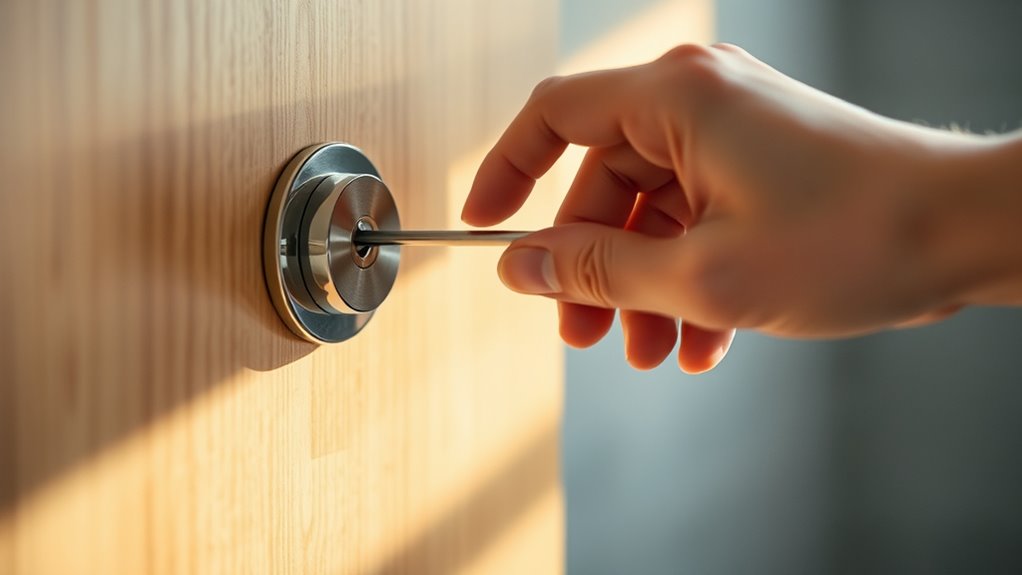
Before you try any open method, you need to identify your bathroom lock type. Knowing exactly what kind of lock you’re dealing with makes unlocking easier and protects your door from damage. Most bathroom doors use a privacy lock, which typically features a simple push-button or turn mechanism on the inside and a small hole on the outside for emergency access.
During privacy lock installation, manufacturers design these locks to be easy to maintain and operate. So, you’ll often find straightforward mechanisms. Proper bathroom lock maintenance involves regular cleaning and occasional lubrication to keep the lock functioning smoothly.
If your lock looks more complex or has a keyhole, it might be a different style, such as a keyed lock or deadbolt. Those require different unlocking techniques.
Use a Credit Card to Unlock a Stuck Bathroom Door Latch
Wondering how to quickly open a stuck bathroom door without a key? Using a credit card is a simple, effective trick you can try. Slide a flexible card, like an old credit card, between the door frame and the latch.
Wiggle the card while pushing the door, trying to force the latch back into the door. This method works best on spring bolt latches, commonly found on bathroom doors.
Locksmith tips suggest using a card that you don’t mind damaging, as this technique can bend or scratch it. Keep in mind, this method won’t work if the door has a deadbolt.
For your security advice, avoid using this technique on doors that require stronger protection, as it compromises lock integrity. If the latch resists, don’t force it; instead, consider professional help.
This simple hack can save time but always respect privacy and security when disengaging doors.
Pick a Bathroom Door Lock With a Bobby Pin or Paperclip
If you don’t have a key handy, you can often pick a simple bathroom door lock using just a bobby pin or paperclip. Start by straightening one pin to use as a tension wrench, and bend the other into a small hook for picking.
Insert the tension wrench into the bottom of the keyhole and apply slight pressure in the direction the key would turn. Then, carefully insert the hooked pin into the top of the keyhole, feeling for the pins inside.
Use a gentle up-and-down motion to lift each pin until they set. Patience is key in lock picking; don’t rush or apply too much force.
Remove the Door Handle to Unlock the Door
Although it may seem intimidating at first, you can open your bathroom door by removing the door handle. Start by locating the small screws holding the handle in place. These are usually on the side or underneath the knob.
Use a screwdriver to carefully unscrew them, then gently pull the handle off. This exposes the internal mechanism, allowing you to manipulate the latch directly.
Removing the handle not only helps access the lock but also gives you a chance to assess any damage or wear that might affect your bathroom decor. While you’re at it, consider how your door’s design and ventilation options impact airflow and moisture control.
Sometimes, upgrading to a handle with better ventilation features can improve your bathroom’s overall comfort. Just remember to keep the screws safe so you can reattach the handle once the door is freed.
This method is straightforward and saves you from calling for professional help.
Know When to Call a Locksmith
When your attempts to open the bathroom door don’t work or you notice signs of damage to the lock mechanism, it’s time to call a locksmith. Trying to force the lock can cause more harm and expensive repairs later. Knowing when to seek professional help is crucial for emergency preparedness and prevents frustration.
You should consider a locksmith consultation if you encounter a jammed or broken lock that simple tools can’t fix, notice damage like bent components or stripped screws, or need quick access during urgent situations.
A skilled locksmith has the right tools and expertise to unlock your bathroom door without causing damage. Plus, they can advise on repairs or replacements to keep your door secure afterward. Don’t hesitate to call a pro when the situation feels beyond your control. It’s safer, faster, and saves you stress. Prioritize safety and efficiency by knowing when to get expert help.
Frequently Asked Questions
How Can I Prevent My Bathroom Door From Locking Accidentally?
To prevent your bathroom door from locking accidentally, you should regularly check your bathroom lock for smooth operation as part of bathroom lock troubleshooting. Lubricate the lock mechanism to avoid stiffness that causes jams.
Consider installing a privacy lock with an external release to prevent lock jams. Also, avoid slamming the door and make sure the latch aligns with the strike plate to keep the lock from engaging unintentionally.
What Should I Do if My Bathroom Door Lock Is Broken?
If your bathroom lock breaks, think of it like a car stuck in mud. You need the right tools and a little help to get moving again. Start by using emergency tools like a screwdriver or a credit card to try releasing it.
If that doesn’t work, don’t hesitate to seek professional assistance. A locksmith can quickly fix or replace the lock, ensuring you’re not trapped and your bathroom stays secure.
Are There Childproof Locks Suitable for Bathroom Doors?
Yes, you’ll find childproof locks designed specifically for bathroom doors that prioritize child safety. These lock alternatives often use simple push-button or sliding mechanisms that adults can easily operate but keep little ones out.
You can choose from adhesive locks, magnetic locks, or lever handle covers to prevent accidental lock-ins while ensuring quick access in emergencies. These options balance safety and convenience effectively for your bathroom doors.
Can I Use Lubricant to Fix a Sticky Bathroom Door Latch?
Of course, you can’t just summon a locksmith every time your bathroom door acts like it’s auditioning for a horror film with its creaks and jams. Door latch lubrication is your secret weapon against that sticky lock fix nightmare.
Grab some lubricant, apply it to the latch, and watch the magic happen. It’s like giving your door a spa day, making it smooth, quiet, and less likely to trap you in an unplanned bathroom drama.
How Do I Maintain My Bathroom Door Lock for Longevity?
You should regularly clean and lubricate your bathroom door hinge and lock mechanism to keep them working smoothly. Use a silicone-based lubricant on the hinge and inside the lock to prevent rust and sticking.
Tighten any loose screws on the door hinge to avoid misalignment. Also, avoid slamming the door, as that can damage the lock mechanism.
With consistent lock mechanism maintenance and hinge care, your bathroom door lock will last much longer.
Conclusion
So, next time you find yourself locked out of your own bathroom, remember these foolproof steps because nothing says “relaxing bath” like a mini lock-picking adventure. Whether you’re wielding a credit card or fashioning a bobby pin tool, you’ve got this covered.
Just don’t be surprised if you end up calling a locksmith anyway. Sometimes the simplest doors are the trickiest to open. At least you’ll have a great story to tell about how to unlock your bathroom door!