Step-by-Step Guide to Renovate Your Kitchen Like a Pro
Renovating your kitchen like a pro can feel overwhelming, and you’re definitely not alone if you’re struggling to know where to start. Many people find it hard to balance style, functionality, and budget while avoiding costly mistakes. But with the right guidance and tools, transforming your kitchen into a space you love is absolutely achievable.
To renovate your kitchen like a pro, start by planning your budget and choosing a layout that fits your space and lifestyle. Pick durable, eco-friendly materials and appliances that complement your style while maximizing energy efficiency.
Prioritize safety during plumbing and electrical updates, and add smart storage solutions to keep things organized. Finish with personal touches that boost warmth and function.
Keep going to uncover tips that can help you avoid common renovation mistakes and make your kitchen truly shine.
Key Takeaways
- Define your kitchen style, layout, and budget before starting. This helps ensure a clear renovation vision and keeps costs under control.
- Choose durable, eco-friendly materials and energy-efficient appliances. Make sure they match your kitchen’s aesthetic and sustainability goals.
- Plan appliance placement carefully to create an efficient work triangle. Consider integrating smart technology for enhanced functionality.
- Decide whether to DIY or hire professionals based on the project’s complexity. Always ensure safety by getting plumbing and electrical inspections.
- Maximize storage with vertical and pull-out solutions. Add finishing touches, and be mindful to avoid common design and planning mistakes.
Planning Your Kitchen Renovation Step-by-Step

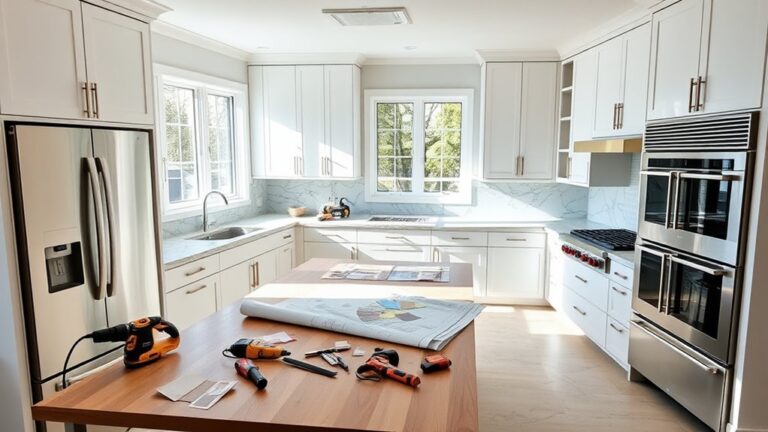
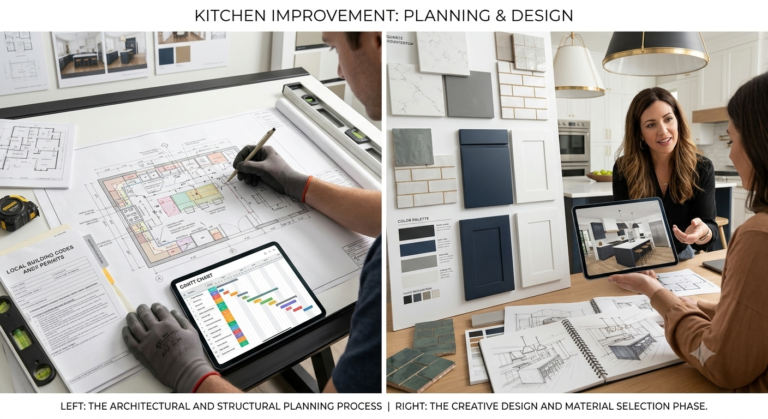
Before you plunge into demolition or shopping for new appliances, you need a solid plan. Start by envisioning how you want your kitchen to feel. Choose color schemes that reflect your style and improve the space. Light, neutral tones can open up small kitchens, while bold colors add personality.
Next, investigate lighting options that complement both functionality and ambiance. Layered lighting, combining task, ambient, and accent lights, ensures your kitchen is bright where it needs to be and cozy when desired.
Sketch a rough layout incorporating these choices, keeping flow and convenience in mind. This step-by-step approach helps you avoid costly mistakes and guarantees every detail supports your vision.
Setting a Realistic Kitchen Renovation Budget
Once you’ve nailed down your kitchen’s style and lighting, it’s time to figure out how much you’re willing to spend. Setting a realistic kitchen renovation budget helps you avoid overspending and guarantees your project stays on track. Start by listing must-haves versus nice-to-haves, focusing on elements that influence kitchen aesthetics and appliance placement.
Remember, high-quality materials or custom cabinetry can boost costs quickly. Don’t forget to allocate funds for unexpected expenses, around 10-15% of your total budget. Prioritize spending on key features that improve both function and style, like durable countertops or efficient appliance placement.
This balance keeps your renovation practical and visually appealing. Research prices and get multiple quotes to refine your budget. By planning thoughtfully, you’ll create a kitchen that reflects your vision without breaking the bank.
Choosing the Right Layout for Your Kitchen
You’ll want to pick a kitchen layout that fits your space and lifestyle. Whether it’s a U-shape, L-shape, or galley, each design offers unique ways to maximize efficiency and flow while keeping everything within easy reach. So, let’s take a look at some popular layouts to help you create a kitchen that works perfectly for you.
Popular Kitchen Layouts
Choosing the right kitchen layout can make all the difference in how efficiently your space functions and feels. Popular layouts like the U-shape, L-shape, and galley each offer unique advantages depending on your kitchen size and workflow.
If you love classic charm, incorporating vintage appliances into a U-shaped kitchen can create a cozy, timeless vibe. Meanwhile, an L-shape layout opens up space for dining and socializing, perfect if you want to blend cooking with entertaining.
For smaller spaces, the galley layout maximizes functionality by keeping everything within easy reach. Don’t forget to select eco friendly materials for your countertops and cabinets to reduce environmental impact while enhancing style.
Pick a layout that fits your lifestyle and complements your design preferences for a kitchen you’ll enjoy daily.
Maximizing Space Efficiency
When you focus on maximizing space efficiency, your kitchen not only feels more open but also works better for your daily routines. Start by choosing a layout that fits your needs, whether it’s an L-shape, U-shape, or galley design, to guarantee smooth movement.
Incorporate smart storage solutions like pull-out shelves and vertical racks to keep counters clutter-free. Don’t forget kitchen lighting; layered lighting brightens work areas and highlights your vintage decor, blending function with style.
Using under-cabinet lights can make small spaces feel larger and more inviting. By carefully planning your layout and lighting, you create a kitchen that’s both practical and visually appealing, making every inch count without sacrificing your design preferences.
Picking Durable, Stylish Materials on a Budget
You don’t have to spend a fortune to find materials that are both durable and stylish. Think about affordable options like laminate countertops or vinyl flooring—they hold up well over time.
With a few smart choices, you can create a kitchen that looks great without breaking your budget. It’s all about finding the right balance between cost and quality.
Affordable Durable Material Options
Finding affordable, durable materials that don’t sacrifice style can transform your kitchen renovation without breaking the bank. Start by exploring eco friendly options like bamboo or recycled glass countertops. They’re tough, sustainable, and add a unique touch.
Vintage inspired materials, such as reclaimed wood or classic subway tiles, offer timeless appeal and durability while staying budget-friendly. These choices not only stand up to daily wear but also bring character to your space.
Don’t overlook laminate surfaces, which now come in high-quality finishes that mimic pricier stones. By focusing on materials that blend longevity with affordable charm, you create a kitchen that looks great and lasts. Prioritize quality and sustainability to get the best value in your renovation.
Stylish Choices Within Budget
Although budget constraints can feel limiting, you can still select stylish, durable materials that improve your kitchen’s look without overspending. Focus on coordinating color schemes and lighting fixtures to uplift your space affordably.
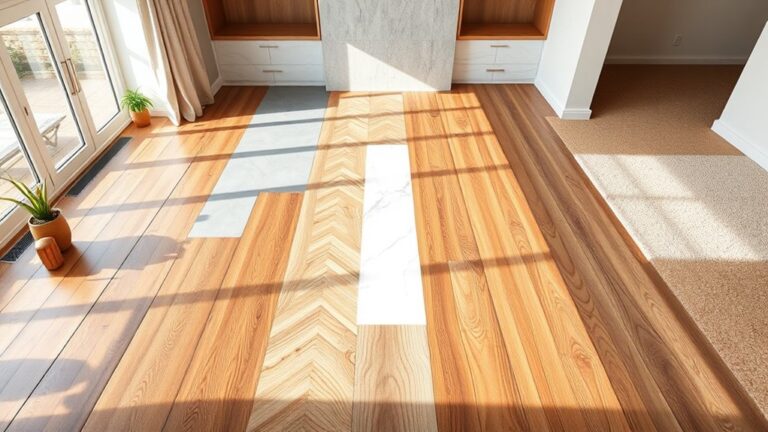
Choose materials that balance aesthetics and longevity, like quartz countertops or laminate flooring.
| Material | Durability | Style Tip |
|---|---|---|
| Quartz | High | Works with neutral color schemes |
| Laminate | Moderate | Offers versatile patterns |
| Ceramic Tiles | High | Reflects light for brightness |
| Vinyl Flooring | Moderate | Complements modern lighting fixtures |
Selecting Kitchen Appliances That Fit Your Style
When choosing kitchen appliances, consider how their design complements your overall decor and personal taste. Whether you prefer sleek stainless steel, retro colors, or minimalist finishes, appliances should enhance your kitchen’s style without overpowering it.
Think about appliance placement carefully; it’s crucial for both aesthetics and functionality. Position your fridge, stove, and sink to create an efficient work triangle, making cooking smoother and more enjoyable.
Don’t forget energy efficiency when selecting appliances. Look for Energy Star-rated models that save on utility bills and reduce your environmental footprint. Efficient appliances often feature the latest technology, combining style with smart performance.
Hiring Kitchen Contractors or Doing It Yourself?
Deciding whether to hire kitchen contractors or tackle the renovation yourself can profoundly impact your project’s timeline, budget, and outcome. If you choose to DIY, you’ll save labor costs and have full control, especially helpful if you want to integrate eco friendly materials carefully. However, it demands time, skill, and patience, particularly when addressing challenges like historical preservation in older homes.
Hiring experienced contractors can speed up the process and ensure professional handling of delicate elements, such as maintaining original woodwork or vintage fixtures. Contractors often have access to specialized suppliers of sustainable products, helping you meet green goals without compromise. On the flip side, hiring pros adds to your budget and requires clear communication to align with your vision.
Ultimately, weigh your expertise, available time, and the project’s complexity. If preserving history and using eco friendly materials are priorities, professionals might be your best bet to balance quality, efficiency, and respect for your kitchen’s character.
Updating Your Kitchen’s Plumbing and Electrical Safely
When you’re updating your kitchen’s plumbing, the first thing to do is turn off the water supply. This helps prevent any unexpected leaks or water damage. Once you’ve made your changes, be sure to check carefully for any leaks before you finish up.
Now, when it comes to electrical upgrades, always switch off the power at the breaker first. It’s really important to use the proper wiring that meets safety standards. Doing this not only keeps you safe but also makes sure everything runs smoothly.
Plumbing Safety Precautions
Because plumbing and electrical systems are the backbone of your kitchen, handling them with care is essential to avoid costly damage or safety hazards. Before you start any fixture installation, schedule thorough plumbing inspections to identify leaks or weak points.
Always shut off the main water supply to prevent flooding, and wear protective gloves to avoid injuries. Use the right tools and materials designed for kitchen plumbing to guarantee durability and safety. Here’s a quick reference to keep your plumbing work safe and efficient:
| Task | Safety Tip | Reason |
|---|---|---|
| Plumbing inspections | Check for leaks and corrosion | Prevent water damage |
| Fixture installation | Turn off water supply first | Avoid flooding and accidents |
| Pipe handling | Use gloves | Protect hands from sharp edges |
| Tool usage | Use proper plumbing tools | Ensure secure and safe fittings |
Electrical Upgrade Tips
Although upgrading your kitchen’s electrical system can seem intimidating, following the right steps guarantees safety and efficiency. First, assess your current wiring to determine if circuit upgrades are necessary to handle new appliances and smart lighting installations.
Overloaded circuits can pose fire risks, so upgrading your breaker panel might be essential. When installing smart lighting, ensure compatibility with your existing system and consider energy-efficient LED options.
Always turn off power at the breaker before starting any work, and use a voltage tester to confirm wires are dead. If you’re unsure about local codes or complex wiring, hiring a licensed electrician is the safest choice.
With these electrical upgrade tips, you’ll improve your kitchen’s functionality while keeping safety a top priority.
Smart Kitchen Storage Solutions to Maximize Space
To make the most of your kitchen’s layout, you’ll want to incorporate smart storage solutions that keep everything accessible without cluttering your space. Start by using vertical space. Install tall cabinets and open shelves to store items you don’t use daily.
Pull-out pantry racks and rotating corner units help you reach everything easily, boosting space optimization. Consider drawer organizers and custom inserts to keep utensils, spices, and cookware neatly arranged.
Magnetic strips for knives or metal containers for small tools free up counter and drawer space. Don’t forget under-sink organizers and hooks inside cabinet doors for extra storage.
By choosing smart storage options that fit your cooking style, you’ll create an efficient, clutter-free kitchen where everything has its place. This not only maximizes your kitchen’s functionality but also makes daily cooking and cleanup a breeze.
With thoughtful space optimization, your renovated kitchen will stay organized and stylish for years.
Adding Finishing Touches That Elevate Your Kitchen
When you’ve optimized your kitchen’s layout and storage, adding finishing touches can truly transform the space from functional to inspiring. Start by selecting decorative accents that reflect your style. Think sleek vases, unique bowls, or artful lighting fixtures. These details add personality and warmth without overcrowding the space.
Next, consider your color schemes carefully. A cohesive palette can unify the room and make it feel more inviting. Whether you choose soft neutrals or bold contrasts, make sure your colors complement cabinetry, countertops, and walls. Small pops of color through accessories like rugs or dish towels can also refresh the look instantly.
Don’t overlook hardware such as knobs and pulls. Upgrading these can subtly raise your kitchen’s overall aesthetic. Finally, adding greenery or fresh flowers brings life and freshness to the space. These finishing touches, when thoughtfully combined, raise your kitchen from merely practical to beautifully polished.
How to Avoid Common Kitchen Renovation Mistakes
Since kitchen renovations involve many moving parts, it’s easy to overlook critical details that can lead to costly mistakes. To avoid this, plan your kitchen color schemes carefully to guarantee they complement lighting and appliances. Don’t skimp on researching eco friendly materials. They not only reduce environmental impact but often last longer and add value.
Here’s a quick guide to avoid common pitfalls:
| Mistake | Solution | Benefit |
|---|---|---|
| Poor color coordination | Choose a cohesive kitchen color scheme | Balanced, inviting space |
| Ignoring eco friendly materials | Select sustainable options like bamboo or recycled glass | Durability and environmental care |
| Overlooking storage needs | Plan ample, smart storage | Clutter-free, functional kitchen |
Frequently Asked Questions
How Long Does a Typical Kitchen Renovation Take From Start to Finish?
A typical kitchen renovation takes about 6 to 12 weeks from start to finish, depending on your kitchen layout and the material durability you choose. If your layout stays the same, it usually goes quicker. But if you’re changing plumbing or electrical setups, it might take longer.
Durable materials might need more prep but save time later with fewer repairs. Planning carefully helps you stick to your timeline and budget.
What Permits Are Required for a Kitchen Renovation in My Area?
You’ll need to check your local building codes to know exactly what permits are required for your kitchen renovation. Typically, you’ll have to submit a permit application for any structural changes, electrical work, or plumbing updates.
It’s important you don’t skip this step because following proper codes guarantees safety and avoids fines. Contact your city’s building department or visit their website to get detailed info and start your permit application process.
How Do I Choose Eco-Friendly Materials for My Kitchen Renovation?
Choosing eco-friendly materials is like planting seeds for a greener future. You want sustainable material options that reduce impact.
Start by selecting reclaimed wood, bamboo, or recycled metal for durability and style. Use low-VOC paints and energy-efficient appliances to boost eco-friendly design tips.
Don’t forget to verify certifications like FSC or GREENGUARD to confirm your choices truly support a healthier home and planet. You’ll feel good every time you cook!
Can I Live in My Home During the Kitchen Renovation Process?
You can live in your home during the kitchen renovation, but be prepared for renovation disruption. Noise, dust, and limited kitchen access might make daily life challenging.
If the work is extensive, consider temporary living arrangements to reduce stress. Setting up a small, functional area with essentials helps. But if disruption feels overwhelming, temporary living could be the best choice to keep your routine comfortable and safe throughout the renovation process.
What Are the Best Ways to Dispose of Old Kitchen Materials Responsibly?
You’d think tossing old kitchen materials is rocket science, but it’s simpler than you imagine! Start by sorting items into recycling options like metal, wood, and glass.
For hazardous waste like paint or old batteries, never dump them in the trash. Take them to a designated disposal facility. This way, you’ll protect the environment and keep your renovation eco-friendly.
Always check local guidelines to make sure you’re disposing of everything responsibly and safely.
Conclusion
Now’s the time to tackle your kitchen transformation with confidence. By planning precisely, picking practical materials, and prioritizing powerful storage solutions, you’ll create a space that’s both stunning and smart.
Stay savvy, steer clear of slip-ups, and savor the satisfaction of a seamless, stylish kitchen. Remember, a well-renovated kitchen isn’t just a room; it’s a revitalizing retreat where functionality meets flair.
Get ready to enjoy every moment in your dazzling, dream-worthy kitchen renovation!