5 Essential Tips to Improve Electrical Safety in Your Home
If you’ve ever worried about the safety of your home’s electrical system, you’re not alone. Many people struggle with knowing how to protect their families from electrical hazards without the hassle or confusion. Improving electrical safety is essential, and with a few simple steps, you can make your home much safer and more secure.
You should regularly inspect your home’s wiring for damage and replace any faulty parts promptly to avoid fires. Don’t overload outlets or power strips, and use ones with built-in circuit breakers. Follow appliance safety instructions and unplug devices when not in use.
Install GFCIs in bathrooms, kitchens, and outdoors to protect against shocks. Finally, schedule periodic electrical system checks with a licensed electrician to catch hidden issues early. Keep going, and you’ll uncover easy ways to boost your home’s safety even more.
Key Takeaways
- Regularly inspect your electrical wiring and replace any damaged or worn parts promptly to prevent hazards.
- Avoid overloading outlets and power strips by spreading out electrical loads evenly.
- Follow appliance safety tips like unplugging devices when not in use and checking cords regularly.
- Install Ground Fault Circuit Interrupters (GFCIs) in bathrooms, kitchens, and other wet areas to protect against shocks.
- Make sure to schedule routine inspections with licensed electricians to keep your system safe and up to code.
Inspect and Replace Faulty Wiring for Electrical Safety
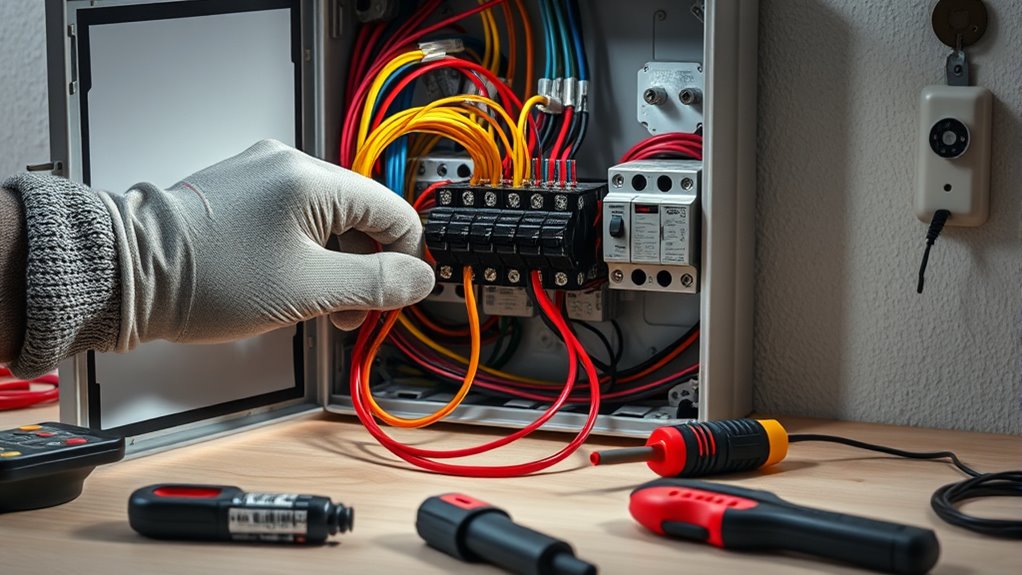
Before electrical problems escalate, you should regularly inspect your home’s wiring for signs of damage or wear. Conducting a thorough wiring inspection helps you identify frayed wires, exposed insulation, or scorch marks early. These issues can cause dangerous short circuits or electrical fires if left unchecked.
Make it a habit to check outlets, switches, and visible wiring in your home. If you spot any irregularities, don’t delay in arranging faulty wiring replacement. Replacing damaged wiring ensures your electrical system remains safe and reliable.
It’s best to hire a licensed electrician for this task since improper handling can increase risks. Prioritizing wiring inspection and timely replacement not only protects your home but also prevents costly repairs down the line.
Avoid Overloading Outlets and Power Strips
When you plug too many devices into one outlet or power strip, you risk overheating the circuit and causing a fire. Be mindful of outlet placement in your home to distribute electrical load evenly. Avoid clustering high-wattage appliances in a single spot.
Use power strips wisely. Choose those with built-in circuit breakers and never daisy-chain multiple strips together. Limit power strip usage to low-power devices like chargers or lamps rather than heavy appliances.
If you notice outlets or power strips feeling warm, unplug devices immediately and reassess your setup. Regularly check the condition of cords and plugs to prevent damage that can lead to shorts or sparks.
Follow Appliance Safety Guidelines to Prevent Hazards
Managing how you use your outlets and power strips sets a strong foundation, but you also need to follow appliance safety guidelines to prevent hazards. First, always read and adhere to the manufacturer’s instructions for each appliance. Proper appliance maintenance is essential. Regularly inspect cords for frays or damage and avoid using appliances with exposed wiring. Unplug devices when not in use to reduce risks.
Additionally, getting basic safety training can help you recognize potential electrical hazards early on. This training teaches you how to handle appliances safely and respond to issues like sparks or overheating. Never attempt repairs unless you’re qualified. Instead, call a professional. Using appliances as intended and keeping them well maintained minimizes risks like electrical shocks or fires. By staying proactive and informed, you protect yourself and your home from avoidable electrical dangers.
Add Ground Fault Circuit Interrupters (GFCIs) in Wet Areas
Since wet areas increase the risk of electrical shock, you should install Ground Fault Circuit Interrupters (GFCIs) in places like bathrooms, kitchens, and outdoor outlets. GFCIs quickly shut off power when they detect a ground fault, preventing serious injury or fire.
Install GFCIs in wet areas to prevent electrical shocks by quickly shutting off power during ground faults.
Make sure your bathroom outlets have GFCI protection, as moisture from showers and sinks raises the danger of shocks. In the kitchen, GFCIs should be part of your kitchen wiring, especially near sinks and countertops where water exposure is common.
These devices are easy to install and provide an essential safety layer. If you’re upgrading or renovating, prioritize adding GFCIs to all wet areas. Not only do they protect you and your family, but many local codes require them in these locations.
Don’t overlook outdoor outlets either. Rain and dampness create hazards outside just like inside. Installing GFCIs is a straightforward, effective way to boost your home’s electrical safety.
Get Your Electrical System Checked Regularly by a Pro
Although you might feel confident handling minor electrical tasks, having a licensed professional inspect your electrical system regularly guarantees everything functions safely and up to code. A pro will thoroughly examine your electrical panel, ensuring all connections are secure and components aren’t worn out or damaged.
They’ll also test your circuit breakers to confirm they trip correctly when necessary, preventing potential overloads or fires. Regular inspections help spot hidden issues before they escalate, saving you from costly repairs and dangerous situations.
Plus, professionals can update your system to meet current safety standards, especially in older homes. Don’t wait for an emergency. Schedule routine check-ups every few years or after significant electrical work.
Frequently Asked Questions
How Can I Childproof Electrical Outlets at Home?
You can childproof outlets by using outlet safety accessories like plastic covers or sliding outlet caps that block access to the electrical sockets. These accessories are easy to install and prevent curious kids from inserting objects.
You might also consider tamper-resistant outlets, which have built-in shutters that only open with equal pressure on both slots. Regularly check these childproof outlets to make certain they stay secure and keep your little ones safe.
What Are the Signs of Electrical Shock Risk?
You’ll notice signs of electrical shock risk when you see flickering lights, frequent circuit breaker trips, or outlets that feel warm. Grounding issues often cause sparks or buzzing sounds from outlets.
Overloaded circuits make breakers trip repeatedly or wires get unusually hot. If you experience tingling sensations when touching appliances or notice scorch marks around outlets, you should address these hazards immediately to keep yourself and your home safe.
Can LED Bulbs Improve Electrical Safety?
Imagine your old bulbs as unreliable bridges, prone to sparks and wear. Switching to LED bulbs boosts your home’s electrical efficiency, reducing the risk of overheating and electrical faults.
Their LED durability means they last longer and handle power surges better, acting like sturdy, well-built bridges. So yes, using LED bulbs can definitely improve electrical safety by minimizing hazards associated with traditional lighting and promoting a safer, more efficient electrical system.
How Do Solar Panels Affect Home Electrical Safety?
Solar panels can improve your home’s electrical safety if you follow proper solar panel installation procedures and adhere to electrical safety regulations. When installed correctly, they reduce reliance on the grid and minimize electrical hazards.
However, improper installation can cause risks like electrical fires or shocks. Make sure you hire certified professionals who comply with local electrical safety regulations to guarantee your system is safe, efficient, and reliable.
Are Smart Home Devices Safe to Use With Old Wiring?
You might be surprised to learn that smart home devices can pose risks if your wiring is outdated. While wireless security features make these gadgets appealing, old circuits might struggle with the additional load, leading to potential hazards.
Before diving in, you should prioritize circuit troubleshooting to guarantee everything can handle the new tech safely. Taking these steps helps you enjoy smart comforts without compromising your home’s electrical safety.
Conclusion
Think of your home’s electrical system like a garden. Just as you wouldn’t let weeds overrun your plants or ignore a broken fence, you shouldn’t overlook faulty wiring or overloaded outlets.
By tending to your electrical safety with regular checks, proper appliance use, and protective devices like GFCIs, you’re nurturing a safe, thriving space for your family. Taking these steps now keeps danger at bay and peace blooming inside your home, making electrical safety a priority for everyone.