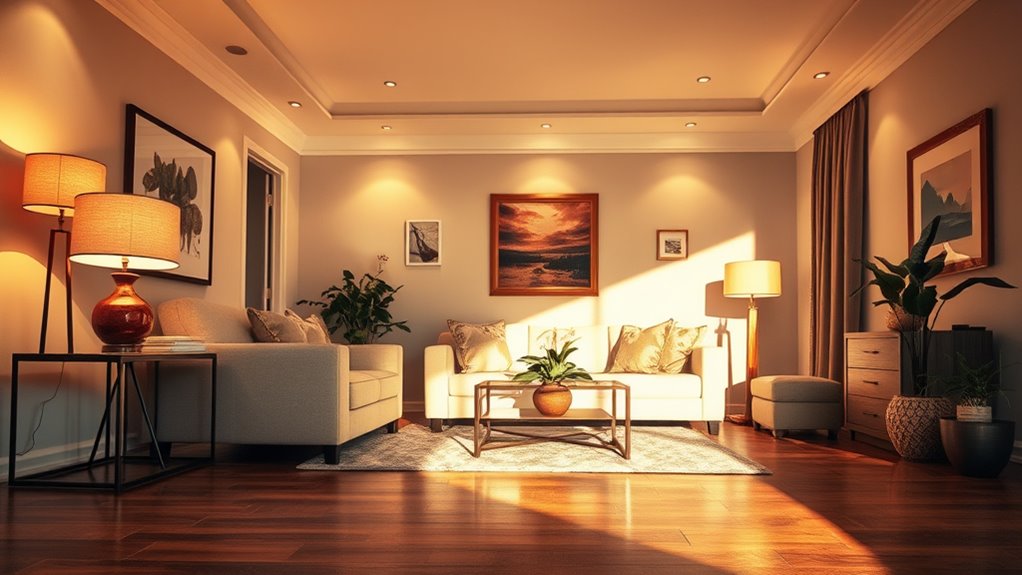
10 Essential Tips for Choosing Home Lighting
Finding the perfect lighting for your home can feel overwhelming. You want a space that’s both functional and inviting, but with so many options, it’s easy to get lost. You’re not alone—many people struggle with choosing the right lighting that balances style, comfort, and efficiency.
When choosing home lighting, start by understanding ambient, task, and accent types to match each room’s purpose.
Pick bulbs with the right brightness and color temperature for comfort and style.
Layer your lighting and use dimmers to control mood and cut energy use.
Choose fixtures that complement your decor, position lights to avoid shadows, and consider smart options for convenience.
Set a practical budget to balance cost and quality.
Investigate these tips to transform your space efficiently and beautifully.
Key Takeaways
- Balance ambient, task, and accent lighting to create a functional and inviting home environment.
- Choose bulbs with appropriate brightness (lumens) and color temperature to match each room’s purpose.
- Match fixture styles with your home decor for cohesive aesthetics and enhanced visual appeal.
- Opt for energy-efficient LED or smart bulbs to save costs and enable customizable lighting control.
- Plan lighting placement carefully to minimize shadows and glare while maximizing comfort and style.
Understand Different Types of Home Lighting

Before you choose any fixtures, you need to understand the different types of home lighting and how they serve various purposes. You’ll encounter three main categories: ambient, task, and accent lighting. Ambient lighting provides overall illumination, making a space comfortable and functional.
Task lighting focuses on specific activities like reading or cooking, so it needs to be bright and well-placed. Accent lighting highlights architectural features or decor, adding depth and character.
When selecting lighting fixtures, consider their style and function carefully. Pay attention to color temperature, which affects the mood of your room. Warm light (around 2700K) feels cozy, while cooler light (4000K and above) creates a crisp, energetic vibe.
Choosing the right color temperature ensures your lighting complements your space. Understanding these basics helps you make informed decisions and sets the foundation for creating a balanced, inviting home environment.
Match Lighting to How You Use Each Room
Now that you know the different types of lighting and their effects, it’s important to tailor your choices to how you use each room. Matching lighting fixtures to a room’s function guarantees comfort and elevates its atmosphere. Consider these three key points:
Tailor lighting choices to each room’s use for comfort and an elevated atmosphere.
- Task lighting: In areas like the kitchen or home office, choose bright, focused fixtures to help you see clearly while working. Adjustable lights or under-cabinet fixtures work well here.
- Ambient lighting: For living rooms or bedrooms, opt for soft, diffused fixtures that create a relaxing vibe. Layering with dimmers lets you control the mood.
- Accent lighting: Use spotlights or wall sconces to highlight art or architectural features, adding depth and interest.
Always coordinate your lighting fixtures with the room’s color schemes. Light reflects differently on cool versus warm tones, so pick fixtures that complement your palette for a cohesive look that feels intentional and inviting.
Choose the Right Lighting Bulbs for Brightness and Color
You’ll want to pick bulbs that provide the right brightness for each space so your rooms feel comfortable and functional. It really makes a difference how bright the light is depending on what you use the room for.
Also, think about the color temperature. Warmer tones can create a cozy vibe, while cooler tones help boost your focus. It’s all about matching the light to the mood you want.
And don’t forget to check out energy-efficient options. They can help you save on your electricity bill without sacrificing quality. It’s a win-win!
Brightness Levels Explained
How do you know if a lighting bulb will brighten your room just right? It starts with understanding brightness levels, measured in lumens. The higher the lumens, the brighter the light.
When selecting bulbs, consider these three key points:
- Match brightness to room size. Larger rooms need bulbs with higher lumens.
- Factor in lighting installation because the fixture’s design affects how light spreads.
- Plan for fixture maintenance. Dusty or dirty fixtures reduce brightness, so keep them clean.
Don’t just pick bulbs by wattage. Focus on lumens to get the perfect light output. This way, your space will be both functional and inviting without wasting energy or dealing with overly dim or harsh lighting.
Color Temperature Choices
Although brightness is essential, the color temperature of your lighting bulbs dramatically influences your room’s mood and functionality. Choosing the right color temperature helps you create the perfect lighting ambiance, whether you want warmth or cool clarity.
Color temperature is measured in Kelvins (K), ranging from warm (yellowish) to cool (bluish) light.
| Color Temperature | Lighting Ambiance | Best For |
|---|---|---|
| 2700K–3000K | Warm, cozy | Living rooms, bedrooms |
| 3500K–4100K | Neutral, balanced | Kitchens, bathrooms |
| 5000K–6500K | Cool, energizing | Offices, workspaces |
Energy Efficiency Options
When selecting lighting bulbs, balancing energy efficiency with the right brightness and color is key to both saving on electricity bills and creating your desired ambiance. You want bulbs that complement natural light and highlight your decorative fixtures without wasting energy.
Here are three energy-efficient options to evaluate:
- LED Bulbs Use up to 80% less energy than incandescent bulbs and offer various color temperatures to match your natural light.
- CFL Bulbs More affordable than LEDs, they’re energy savers but take time to reach full brightness.
- Smart Bulbs Allow you to adjust brightness and color remotely, optimizing energy use based on your needs.
Choose bulbs that blend well with your space’s lighting and decorative style while maximizing efficiency.
Layer Your Lighting for Flexibility and Ambiance
Since lighting needs change throughout the day, layering different types of light lets you adjust the mood and functionality of any room with ease. By using layering techniques, you combine ambient, task, and accent lighting to create a balanced and adaptable environment. Ambient lights provide overall illumination, setting the base for comfortable visibility.
To improve flexibility and ambiance, add task lighting where specific activities occur, like reading or cooking. Accent lights highlight artwork or architectural features, adding depth and interest. This mix helps you tailor the space to your needs, whether you’re relaxing or working.
Pay attention to the placement and intensity of each layer to avoid harsh shadows or glare. Thoughtful use of layering techniques not only improves comfort but also raises the style of your home. Embracing these ambient effects lets you transform any room easily, making your lighting both practical and inviting.
Use Dimmers to Set Mood and Save Energy
You can easily create the perfect atmosphere by installing dimmer switches in your home. They let you adjust light levels to match your mood while cutting down on energy use. Plus, dimmers help extend the life of your bulbs, saving you money in the long run.
It’s a simple change that makes a big difference. Just a twist of the switch, and you’re setting the vibe exactly how you want it. And since you’re using less electricity, your energy bill gets a break too.
Benefits of Dimmer Switches
Although many lighting options exist, dimmer switches stand out for their ability to instantly transform a room’s ambiance while lowering energy use. When you choose dimmers, you benefit in several ways:
- Customizable Atmosphere: You control the brightness to match any mood, from bright task lighting to soft, relaxing glows.
- Extended Fixture Life: Dimming reduces the stress on bulbs, meaning less frequent lighting installation and fixture maintenance.
- Improved Functionality: Dimmers work well with various lighting types, giving you flexible control over your home’s illumination.
Energy Savings With Dimmers
When you lower the brightness with dimmer switches, your home uses less electricity, which directly cuts energy costs. Using dimmers lets you adjust the light level to fit your needs, so you’re not wasting power when full brightness isn’t necessary.
This is especially handy with vintage fixtures, which often have higher wattage bulbs; dimming them reduces energy consumption without sacrificing style. Plus, dimmers help you create the perfect ambient lighting, setting a cozy mood while saving money.
Pick Energy-Efficient Lights That Save You Money
Since lighting can account for a significant portion of your energy bill, choosing energy-efficient bulbs makes a noticeable difference in your monthly expenses. You can reduce costs while enhancing your lighting design by opting for bulbs that use less power but still deliver brightness. Here’s how to pick the best energy-efficient lights:
Lighting choices greatly impact your energy bill; selecting efficient bulbs lowers costs without sacrificing brightness.
- Choose LED bulbs. They consume up to 85% less energy than traditional incandescent bulbs and last longer.
- Integrate smart technology like programmable bulbs and motion sensors to automatically adjust lighting based on your needs. This saves energy when rooms are empty.
- Look for bulbs with the ENERGY STAR label to guarantee high efficiency and quality performance.
Select Fixtures That Complement Your Home Decor
To create a cohesive look, you’ll want to select lighting fixtures that improve your home’s style rather than clash with it. Start by identifying your decor theme, whether modern, rustic, or traditional. Then pick fixture styles that echo those elements.
Matching the fixture’s material, shape, and finish with your decor theme guarantees harmony throughout your space.
Here’s a quick reference to help you align fixture styles with common decor themes:
| Decor Theme | Fixture Styles | Materials/Finishes |
|---|---|---|
| Modern | Sleek pendants, recessed lighting | Chrome, black matte |
| Rustic | Lanterns, wrought iron | Wood, bronze |
| Traditional | Chandeliers, sconces | Brass, crystal |
| Industrial | Cage lights, exposed bulbs | Steel, aged metal |
| Minimalist | Simple flush mounts | White, brushed nickel |
Choosing fixtures that complement your decor theme boosts your home’s overall ambiance and visual flow.
Position Lighting to Avoid Shadows and Glare
Although good lighting improves a room’s appeal, poor placement can create distracting shadows and uncomfortable glare. To guarantee your space looks inviting and functions well, focus on shadow prevention and glare reduction from the start.
Here’s how you can position lighting effectively:
- Use multiple light sources: Layer ambient, task, and accent lighting to minimize harsh shadows and evenly illuminate your space.
- Choose adjustable fixtures: Opt for lamps and recessed lights with adjustable heads so you can direct light away from reflective surfaces and your eyes.
- Avoid placing lights directly overhead. Instead, position fixtures at angles or use wall sconces to reduce glare and soften shadows.
Consider Smart Lighting for Convenience and Control
You’ll love how smart lighting lets you adjust brightness and color with just a tap or a voice command. It’s super convenient! Plus, these systems offer seamless control options that make managing your lights really easy.
And the best part? They can easily integrate with your existing home setup. So, it’s a simple way to boost convenience and customize your lighting experience exactly how you like it.
Benefits of Smart Lighting
How can smart lighting transform your home experience? By embracing smart lighting advantages, you gain more than just illumination. You unlock convenience and efficiency. Here are three key benefits to consider:
- Energy Savings: Automation helps you reduce electricity use by scheduling lights to turn off when not needed.
- Enhanced Comfort: Adjust brightness and color to suit your mood or activity effortlessly.
- Improved Security: Simulate occupancy when you’re away, deterring potential intruders.
With smart lighting, you control your environment with ease, making your home more adaptable to your lifestyle. These benefits not only boost convenience but also contribute to a more sustainable and secure living space.
Control Options Available
When selecting home lighting, understanding the control options available can considerably improve your convenience and overall experience. You don’t have to settle for traditional switches anymore; lighting control now offers a variety of switch options tailored to your lifestyle.
From simple dimmer switches to advanced touch controls, you can adjust brightness effortlessly to set the perfect mood. Smart lighting control allows you to manage your lights remotely through apps or voice commands, giving you flexibility like never before.
Consider combining manual switch options with smart controls for backup and ease of use. By choosing the right control system, you guarantee your home lighting adapts to your daily routines, enhancing comfort and energy efficiency without any hassle.
Integration With Home Systems
Although selecting the right fixtures matters, integrating your lighting with home systems takes convenience and control to the next level. Smart lighting lets you manage your home’s ambiance effortlessly through apps or voice commands. This also streamlines lighting installation and fixture maintenance.
Here’s why you should consider it:
1. Remote Control
Adjust lights from anywhere, enhancing security and saving energy.
2. Automation
Schedule lighting to match your daily routine, improving comfort and efficiency.
3. Customization
Set scenes or moods with ease, making your space truly yours.
Set a Lighting Budget That Works for You
Because lighting options vary widely in price, setting a clear budget helps you focus on choices that fit your financial plan. Start by determining how much you’re willing to spend overall, keeping in mind that lighting installation costs can vary depending on complexity and location. Don’t forget to factor in not just the upfront price of fixtures but also long-term expenses like bulb longevity. Opting for energy-efficient bulbs can save you money over time.
When choosing fixtures, balance style and function within your budget. Prioritize areas where lighting is essential and consider more affordable options for less critical spaces. Remember, spending a bit more on quality lighting installation and durable bulbs can reduce maintenance costs down the line.
Frequently Asked Questions
How Often Should I Clean My Light Fixtures?
You should clean your light fixtures every three to six months to keep them looking bright and functioning well. Regular lighting maintenance prevents dust buildup, which can dim your lights and reduce energy efficiency.
If you have fixtures in kitchens or bathrooms, you might need to clean them more often due to grease and moisture. Make fixture cleaning part of your routine to guarantee your home stays well-lit and inviting.
Can Home Lighting Affect My Sleep Quality?
Absolutely, home lighting can affect your sleep quality. Imagine Sarah, who switched from harsh blue-toned bulbs to warm, dimmable lights in the evening. She noticed her sleep hygiene improved because the softer lighting helped regulate her circadian rhythms, signaling her body it was time to wind down.
What Are the Best Lighting Options for Allergy Sufferers?
You should choose hypoallergenic bulbs and air purifying lighting options to reduce allergens and improve your indoor air quality. These bulbs don’t emit irritants, making them ideal if you suffer from allergies.
Pair them with air purifying lamps or fixtures that help trap dust and pollen, creating a cleaner environment. This way, you’ll minimize allergy triggers and enjoy more comfortable, healthier lighting throughout your home.
How Do I Safely Dispose of Old Bulbs?
When your old bulbs have reached their final curtain call, don’t just toss them in the trash. You can safely handle their exit by exploring bulb recycling programs or designated disposal methods at local waste facilities.
Many places offer special drop-off points for bulbs containing hazardous materials, like CFLs. Always check your area’s guidelines to guarantee you’re giving your bulbs a respectful send-off, protecting both your home and the environment.
Are There Lighting Trends to Avoid for Resale Value?
Yes, you should avoid overly trendy lighting alternatives like neon or overly ornate fixtures, as they might hurt your resale impact. Buyers usually prefer neutral and timeless designs that complement various styles.
Stick to classic options like recessed lighting or simple pendant lights to appeal to a broader audience. This way, your home stays attractive without alienating potential buyers who want flexibility in their lighting choices.
Conclusion
Choosing the right home lighting is like painting with light. Each bulb and fixture adds color and depth to your daily life.
When you layer your lights thoughtfully and match them to your rooms, you create a warm, inviting glow that feels like a cozy hearth on a chilly night.
So, take control, dim the chaos, and let your home shine with comfort and style because every great space deserves its perfect spotlight. Choosing the right home lighting makes all the difference.