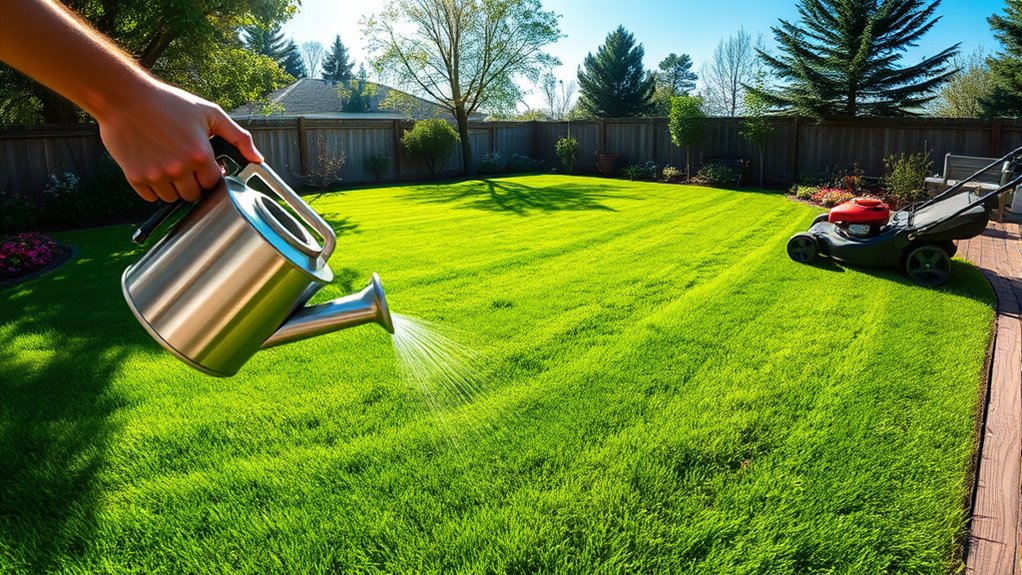
10 Essential Tips for Caring for Your Lawn
If you’ve ever struggled to keep your lawn looking lush and healthy, you’re not alone. Many people find it challenging to maintain a vibrant yard despite their best efforts. Whether it’s battling patchy grass, weeds, or uneven growth, finding the right lawn care routine can feel overwhelming.
To care for your lawn well, choose grass suited to your climate and prepare your soil with proper testing and amendments. Aerate and overseed regularly to keep your lawn thick and healthy. Mow properly by cutting no more than a third of the grass’s height and water deeply but infrequently. Fertilize at key times and manage weeds safely with targeted herbicides.
Encourage natural pest control and adjust care seasonally for the best results. Keep exploring to uncover more expert lawn care secrets.
Key Takeaways
- Choose grass types suited to your climate and soil for optimal growth and resilience.
- Regularly aerate and overseed to reduce soil compaction and improve lawn density.
- Mow grass properly by cutting no more than one-third of its height and keeping blades sharp.
- Fertilize strategically in spring and fall while controlling weeds with targeted herbicide use.
- Water deeply but infrequently to promote strong roots and use natural pest control methods.
Pick the Right Lawn Grass for Your Climate
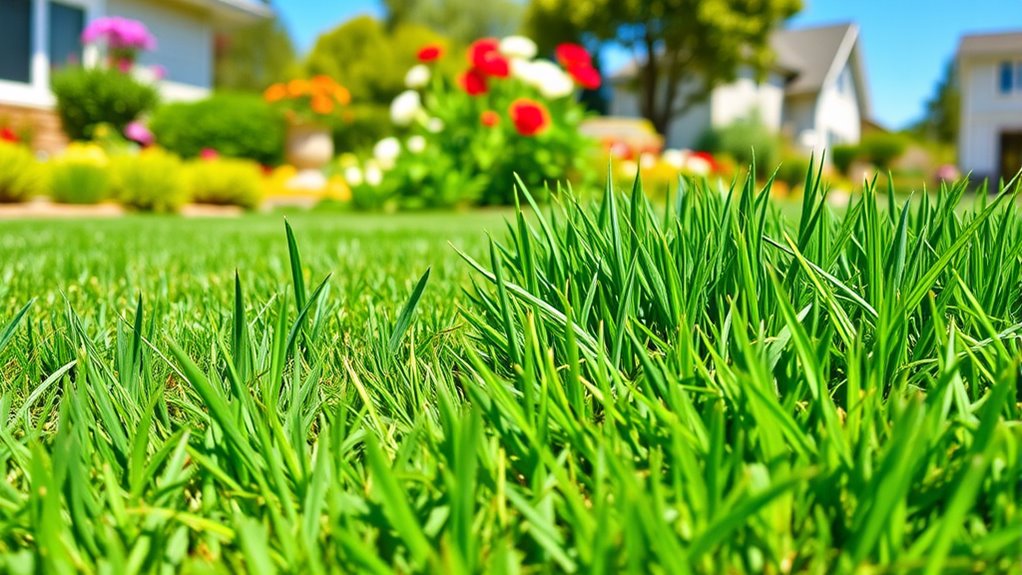
Before planting your lawn, you need to choose grass that thrives in your local climate. Understanding climate zones is essential because different grass varieties perform better in specific conditions.
For example, cool-season grasses like Kentucky bluegrass and fescue are ideal if you live in northern regions with cold winters. These grasses stay green longer during cooler months and handle frost well.
On the other hand, warm-season grasses such as Bermuda and zoysia grass suit southern zones. They handle heat and drought better, making them perfect for warmer climates.
You should also consider factors like soil type and sun exposure, but climate zones remain the primary guide. By selecting the right grass varieties for your area, you’ll save time and effort maintaining your lawn.
Your grass will grow healthier, resist pests, and use water more efficiently, giving you a lush, vibrant yard that fits your environment perfectly.
Prepare Your Soil for a Healthy Lawn
Choosing the right grass is just the start. Your soil plays a big role in how well it grows. Before planting, perform soil testing to understand its pH level and nutrient content.
Selecting the right grass begins with knowing your soil’s pH and nutrient profile through testing.
This helps you identify deficiencies that could stunt your lawn’s growth. Once you have the results, adjust the soil accordingly. Adding organic amendments like compost or well-rotted manure improves soil structure, increases nutrient availability, and promotes healthy root development.
These natural materials also boost microbial activity, which benefits your lawn’s overall health. Avoid using synthetic fertilizers before knowing your soil’s needs; they might do more harm than good. Spread organic amendments evenly and mix them into the top few inches of soil to create a fertile base.
Taking these steps guarantees your lawn has the right environment to thrive, making future care easier and more effective. Proper soil preparation sets the foundation for a lush, resilient lawn you’ll enjoy year-round.
Aerate Your Lawn to Improve Soil Health
Although healthy soil is essential, compacted ground can still limit your lawn’s growth by restricting air, water, and nutrients from reaching the roots. To combat soil compaction, you should aerate your lawn regularly.
Aeration involves creating small holes in the soil, which improves the flow of air and moisture to the grass roots. This process also boosts microbial activity, which is vital for breaking down organic matter and releasing nutrients that your lawn needs to thrive.
By aerating, you help loosen the soil, allowing roots to grow deeper and stronger. You can use a manual or mechanical aerator, depending on your lawn size.
Aim to aerate during the growing season when your grass can quickly recover. Avoid aerating when the soil is too wet or dry, as this can cause more harm than good.
Regular aeration promotes a healthier, more resilient lawn that withstands stress and stays lush.
Overseed to Keep Your Lawn Thick and Lush
To keep your lawn thick and lush, you should overseed regularly to fill in bare spots and improve overall density. Choosing the right seed variety is essential. Pick one that matches your existing grass and climate for the best results.
Use proper overseeding techniques like scattering seeds evenly and lightly raking them into the soil to guarantee good seed-to-soil contact. Water the area consistently to encourage germination and avoid letting the soil dry out.
Here’s a quick guide to help you choose the right seed variety and overseeding technique:
| Seed Variety | Overseeding Technique |
|---|---|
| Kentucky Bluegrass | Evenly distribute seeds |
| Perennial Ryegrass | Lightly rake after seeding |
| Tall Fescue | Water daily until established |
| Fine Fescue | Avoid heavy foot traffic |
Following these steps will rejuvenate your lawn and keep it looking lush season after season.
Mow Your Lawn Properly for Best Growth
When you mow your lawn properly, you encourage healthier growth and a more vibrant appearance. Start by mastering lawn mowing techniques that suit your grass type. Always mow when the grass is dry to avoid clumping, and never cut more than one-third of the grass height at once.
This grass height management prevents stress and promotes strong root development. Adjust your mower blade to the recommended height for your grass species, typically between 2.5 to 3.5 inches. Keeping blades sharp ensures clean cuts, reducing the risk of disease.
Change your mowing pattern regularly to avoid compacting soil and creating ruts. Finally, leave grass clippings on the lawn; they decompose quickly and provide natural nutrients. By following these simple yet effective lawn mowing techniques and practicing proper grass height management, you’ll maintain a lush, healthy lawn that thrives throughout the growing season.
Water Your Lawn Smartly and Efficiently
How often should you water your lawn to keep it healthy without wasting resources? Aim for deep, infrequent watering, about twice a week, to encourage strong roots.
Using smart irrigation systems helps you apply water precisely when and where your lawn needs it most. This cuts down on waste. Incorporate rainwater harvesting to supplement your watering, reducing reliance on tap water and lowering your utility bills.
Here’s a simple guide to watering based on weather and soil type:
| Condition | Watering Frequency |
|---|---|
| Hot, dry weather | 2-3 times per week |
| Moderate weather | Once or twice weekly |
| Sandy soil | More frequent, shorter sessions |
Smart irrigation paired with rainwater harvesting guarantees your lawn gets enough moisture efficiently. This promotes lush, green growth without unnecessary water use.
Fertilize Your Lawn at the Right Times
Efficient watering sets the stage for healthy growth, but your lawn also needs nutrients delivered at just the right moments. Lawn fertilization is most effective when you follow a precise timing schedule that matches your grass type and local climate. Applying fertilizer too early or too late can stunt growth or cause nutrient runoff.
Focus on these key times for fertilizing your lawn:
- Early spring, to revive growth after dormancy
- Late spring or early summer, to boost resilience during heat
- Early fall, to strengthen roots before winter
Stick to this timing schedule, and you’ll provide consistent nutrition that supports robust, green grass. Avoid over-fertilizing, which can damage your lawn and the environment. By fertilizing at these strategic points, you’ll maximize nutrient uptake and ensure your lawn stays healthy all year long.
Safely Control Weeds in Your Lawn
To keep your lawn weed-free, begin by figuring out which weeds are most common in your area. Then, when you use herbicides, make sure to follow all the instructions carefully—this helps protect both your grass and the environment. At the same time, try to encourage healthy grass growth because strong grass naturally crowds out weeds.
Identify Common Lawn Weeds
Why do certain plants keep popping up in your lawn despite your best efforts? It’s often because you haven’t identified the common lawn weeds correctly. Knowing which plants are native grasses and which are ornamental weeds helps you target the real intruders without harming your lawn.
To identify common weeds, watch for these signs:
- Unusual leaf shapes or textures different from your native grasses
- Flowers or seed heads that don’t match your lawn’s usual growth
- Rapid spreading patterns, especially in bare or thin lawn spots
Use Herbicides Safely
How can you control stubborn weeds without damaging your lawn? By practicing herbicide safety and careful chemical application, you can target weeds effectively while protecting your grass. Always read the label, wear protective gear, and apply herbicides on calm, dry days to prevent drift. Avoid overapplication to keep your lawn healthy.
| Herbicide Safety Tips | Chemical Application Method | Timing |
|---|---|---|
| Wear gloves & mask | Use a sprayer for even coat | Early morning |
| Follow label rates | Spot treat problem areas | When weeds appear |
| Avoid windy days | Calibrate equipment | Late afternoon |
| Store chemicals safely | Clean equipment after use | Avoid rain days |
Promote Healthy Grass Growth
Controlling weeds effectively sets the stage for your lawn to thrive. To promote healthy grass growth, focus on strengthening the grass root system and preventing soil compaction.
When your grass roots grow deep, they absorb nutrients and water better, making your lawn more resilient.
To encourage this, you should:
- Aerate the soil regularly to reduce soil compaction and improve air and water flow.
- Apply organic mulch or compost to nourish the soil and support root health.
- Water deeply but less frequently to encourage roots to grow downward.
Use Natural Pest Control to Protect Your Lawn
When you choose natural pest control methods, you protect your lawn without exposing it to harsh chemicals. You can encourage natural predators like ladybugs and spiders, which help keep harmful insect populations in check. These beneficial insects act as your lawn’s first line of defense, reducing the need for synthetic pesticides.
Additionally, using organic sprays made from natural ingredients can effectively target pests while preserving the health of your grass and soil. These sprays break down quickly and minimize environmental impact, making them safer for your family and pets. Remember to apply organic sprays during cooler parts of the day to maximize their effectiveness and avoid harming beneficial insects.
How to Care for Your Lawn Each Season
Wondering what steps to take as the seasons change? Proper lawn maintenance depends on adjusting your care routine throughout the year. Each season brings unique challenges and opportunities for your lawn’s health.
Adjusting your lawn care with each season is key to maintaining a healthy, vibrant yard year-round.
In spring, focus on seasonal planting by overseeding bare spots and applying fertilizer to jumpstart growth. Summer requires regular watering and mowing to keep your grass strong under heat stress. Fall is the best time for aeration and adding nutrients to prepare for winter dormancy.
Keep these essential tasks in mind for year-round lawn care:
- Spring: Seed, fertilize, and control weeds.
- Summer: Water deeply, mow high, monitor pests.
- Fall: Aerate, fertilize, and clear debris.
Frequently Asked Questions
How Do I Repair Lawn Damage Caused by Pets?
To repair lawn damage caused by pets, start with pet stain removal by diluting urine spots with water to prevent burning. Use lawn repair techniques like raking dead grass, loosening soil, and reseeding the area.
You can also apply a nitrogen-free fertilizer to help new grass grow without worsening damage. Regularly watering and keeping pets off repaired spots speeds recovery. With consistent care, your lawn will bounce back in no time.
What Are the Best Tools for Lawn Edging?
You probably don’t want to hear this, but the best tools for lawn edging aren’t your trusty old shovel. Garden borders demand precision, so grab a half-moon edger or a string trimmer to nail those clean lines.
Edging techniques get way easier when you use sharp, purpose-built tools instead of wrestling with makeshift gear. Trust me, your lawn and your back will thank you for choosing the right equipment.
How Can I Reduce Lawn Maintenance Costs?
You can reduce lawn maintenance costs by sticking to efficient watering schedules. This prevents overwatering and saves on your water bill.
Regular lawn aeration helps your grass absorb nutrients better, which means you won’t need to use as much fertilizer.
Mowing at the right height also promotes healthy growth. That way, you minimize costly repairs.
Should I Dethatch My Lawn Regularly?
You should dethatch your lawn if the thatch layer exceeds half an inch, as studies show that over 50% of healthy lawns benefit from dethatching. Thatch removal helps your lawn breathe and absorb nutrients better.
Pair it with lawn aeration to improve soil oxygen levels and water penetration. Doing this regularly prevents root suffocation and promotes stronger grass growth.
How Do I Prevent Lawn Diseases in Humid Climates?
To prevent lawn diseases in humid climates, focus on fungal prevention by improving drainage and avoiding overwatering. Choose disease-resistant grass varieties suited for your area to reduce infection risk.
Mow regularly but don’t cut too short because that stresses grass and invites disease. Also, aerate your lawn to increase airflow and reduce moisture buildup. By taking these steps, you’ll keep your lawn healthier and better equipped to fight fungal issues.
Conclusion
By following these ten essential tips, you’ll give your lawn the best chance to thrive year-round. While some believe that one-size-fits-all solutions work, the truth is your lawn’s needs change with climate, soil, and seasons.
Paying attention to details like proper aeration and timing your fertilization makes all the difference. So, commit to consistent care, and you’ll enjoy a lush, healthy lawn that’s truly worth the effort.
With these tips, your lawn care routine will help you maintain a vibrant and beautiful lawn all year long.