Clean Your Bathroom Sink Drain In 3 Easy Steps
Clean Your Bathroom Sink Drain: Dealing with a slow or clogged bathroom sink drain can be incredibly frustrating. You’re not alone—many people struggle with buildup that causes water to drain slowly or even back up. Finding an easy and effective way to keep your bathroom sink drain clear is something everyone wishes for.
Start by removing hair and debris from your bathroom sink drain using a drain snake, pliers, or even a bent wire hanger to prevent clogging.
Next, break down soap scum buildup by applying a chemical or enzyme cleaner, following the instructions for best results.
Finally, rinse the drain thoroughly with hot water to flush away loosened residue and restore smooth flow.
Keep these simple steps in mind, and you’ll find easy ways to maintain a clear, healthy drain.
Key Takeaways
- Remove hair and debris from the sink drain using pliers or a bent wire hanger to prevent clogs.
- Apply an enzyme or chemical cleaner to break down soap scum and buildup inside the drain.
- Let the cleaning solution sit for the recommended time to effectively loosen residues.
- Rinse the drain thoroughly with hot water for at least 30 seconds to flush away loosened debris.
- Check drain flow and repeat rinsing if needed to maintain smooth water drainage and prevent clogs.
Remove Hair and Debris From Your Sink Drain
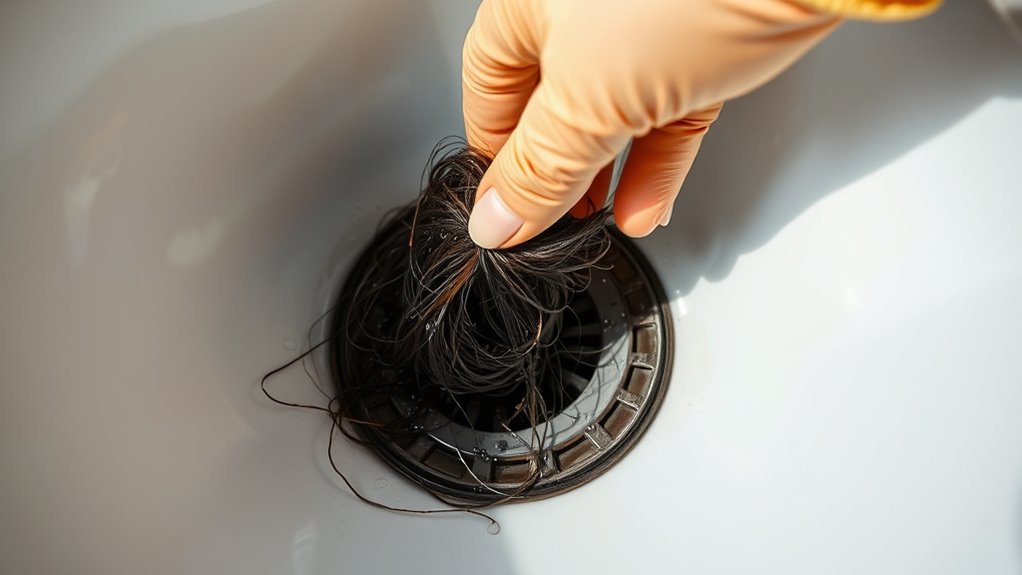
Before you plunge into deep cleaning, start by removing hair and debris from your sink drain. Clogs often begin with trapped hair and small particles, so tackling this first can prevent bigger plumbing issues.
Begin deep cleaning by clearing hair and debris from your sink drain to prevent larger clogs.
Use basic plumbing tools like a drain snake or a pair of needle-nose pliers to reach down and pull out any visible buildup. You don’t need to dismantle your pipes; just carefully extract the debris to clear the way.
If you don’t have specialized tools, a bent wire hanger can work as a DIY alternative for drain cleaning. Avoid using harsh chemicals initially, as they can damage your pipes over time.
Regularly removing hair and debris keeps water flowing smoothly and minimizes the chance of stubborn clogs. By addressing this simple step, you’re setting the stage for a more effective deep clean and maintaining your bathroom’s plumbing health.
Break Down Soap Scum in Your Sink Drain
Once you’ve cleared away hair and debris, the next challenge is tackling soap scum, which can build up inside your sink drain and slow water flow. To break down this stubborn buildup, you have two effective options: chemical solutions and enzyme cleaners.
Chemical solutions work quickly by dissolving soap scum and other residues, but they can be harsh on pipes and the environment. If you prefer a gentler approach, enzyme cleaners use natural bacteria to eat away at soap scum over time, making them safer and eco-friendly.
Apply your chosen cleaner according to the instructions, pouring it directly into the drain. Let it sit for the recommended time to make sure it penetrates the buildup thoroughly.
This step is vital because it loosens the soap scum, preparing your drain for the next stage of cleaning. By breaking down the soap scum effectively, you’ll help restore proper water flow and keep your sink drain functioning smoothly.
Rinse Your Sink Drain to Restore Flow
After letting the cleaner work its magic, flush your sink drain thoroughly with hot water to wash away loosened debris and residue. This step is vital for effective plumbing maintenance, as it helps restore proper flow and prevents future clogs.
Use a steady stream of hot water for at least 30 seconds to guarantee everything clears out. If water still drains slowly, consider repeating the process or exploring further drain troubleshooting methods.
Here’s a quick guide to effective rinsing:
| Action | Purpose |
|---|---|
| Use hot water | Dissolves soap and grease buildup |
| Flush for 30+ seconds | Clears loosened debris |
| Repeat if needed | Assures thorough cleaning |
| Avoid harsh chemicals | Protects pipes and environment |
| Monitor drain flow | Confirms success of maintenance |
Following these steps keeps your bathroom sink drain flowing smoothly and supports ongoing plumbing maintenance.
Frequently Asked Questions
How Often Should I Clean My Bathroom Sink Drain?
You should clean your bathroom sink drain every one to three months to prevent buildup and clogs. Don’t fall for drain cleaning myths that say you only need to clean it when it’s clogged. That’s too late.
While DIY drain cleaning works for regular maintenance, sometimes you’ll need professional help to tackle stubborn blockages or plumbing issues. Staying consistent keeps your drain flowing smoothly and avoids costly repairs down the line.
Can Natural Cleaners Damage My Sink Drain Pipes?
Natural cleaners generally won’t damage your sink drain pipes if you use them correctly. However, some natural ingredients can cause chemical reactions, especially if mixed with other substances, potentially harming pipes or finishes.
You’ll want to avoid harsh acids or abrasive materials. Plus, natural cleaners usually have a lower environmental impact, making them a safer choice overall. Just be mindful to use them as directed to protect both your plumbing and the planet.
What Tools Do I Need for Deep Drain Cleaning?
You’ll need a drain snake and an enzyme cleaner for deep drain cleaning. No fancy gadgets required.
While a drain snake physically removes stubborn clogs, an enzyme cleaner works chemically to break down organic buildup. Combining these tools tackles blockages in two very different ways, making your cleaning more effective.
Don’t forget gloves and a bucket to catch debris and water. With these, you’ll handle even tough clogs confidently and safely.
How Do I Prevent Bad Odors From My Sink Drain?
To prevent drain odor, you need to keep your sink drain clean and dry. Regularly flush it with hot water and a mixture of baking soda and vinegar to break down buildup.
Make sure your bathroom has proper ventilation. Open windows or use an exhaust fan to reduce moisture, which helps stop odors from lingering.
Also, check your drain trap for clogs, as trapped debris often causes bad smells.
When Should I Call a Professional Plumber for Drain Issues?
You should call a professional plumber when you notice persistent clogs, slow drainage, or foul odors that DIY methods can’t fix. If you suspect hidden leaks or need leak detection, don’t wait. Addressing these early can prevent costly repairs down the line.
Also, if your drain issues cause water damage or you’re unsure about the problem’s cause, it’s best to get expert help to avoid worsening the situation and expensive fixes.
Conclusion
You might think cleaning your bathroom sink drain is a hassle, but with just a few simple steps, it’s surprisingly quick and easy. Instead of letting hair, soap scum, and buildup slow your drain to a crawl, you can restore smooth flow in minutes.
By removing debris, breaking down grime, and rinsing thoroughly, you turn a dreaded chore into a satisfying, almost effortless task. Your sink will thank you and so will your peace of mind when you keep your bathroom sink drain clean.