
3 Simple Steps for Refrigerator Repair
Struggling with a fridge that just won’t cool right or keeps making strange noises? You’re not alone. Many people face these common refrigerator problems and feel overwhelmed about how to fix them. The good news is, with a little know-how and some simple steps, you can get your fridge back to running smoothly in no time.
You can quickly restore your refrigerator by first cleaning key parts like door gaskets and condenser coils to improve cooling. Next, fix common issues such as faulty seals, incorrect thermostat settings, or noisy fans that reduce efficiency.
Finally, perform simple maintenance like regularly checking seals and cleaning coils to prevent future problems and extend your fridge’s lifespan. Keep exploring to uncover more tips that will help your fridge run smoothly and save energy.
Key Takeaways
- Check and clean door gaskets to ensure proper sealing and prevent cold air leaks. This helps keep your fridge running efficiently.
- Clean condenser coils gently using a coil brush or vacuum. Doing this improves cooling performance and saves energy.
- Verify thermostat settings are within recommended ranges. That way, you maintain optimal temperature control without wasting power.
- Listen for compressor and fan operation to spot any mechanical issues early. If you hear unusual sounds, it might be time for a closer look.
- Replace damaged seals or faulty components promptly. Taking care of these fixes restores your refrigerator’s performance quickly.
Clean Refrigerator Components to Improve Cooling
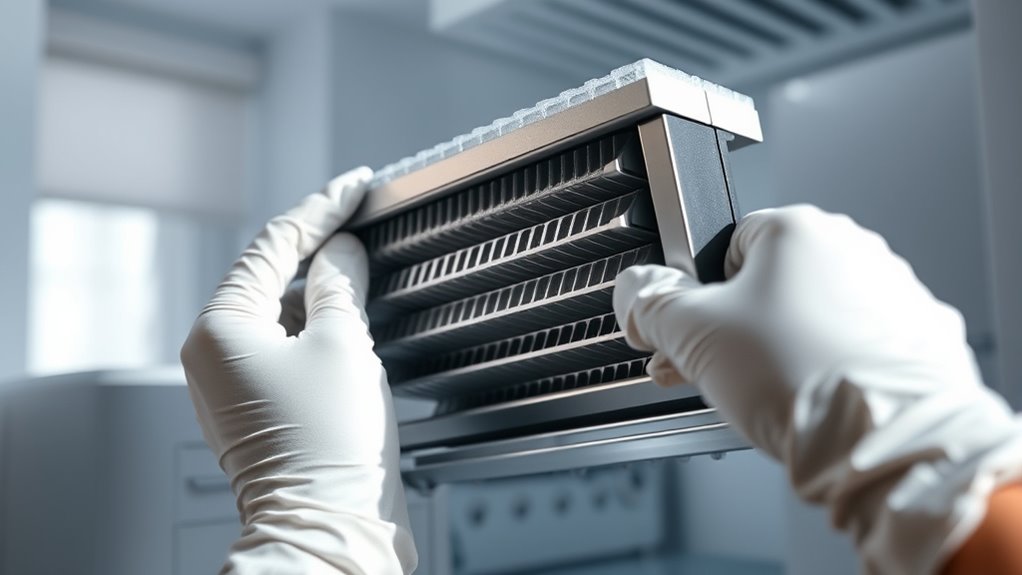
Before you plunge into complex repairs, clean your refrigerator’s key components to boost its cooling efficiency. Start with a gasket inspection; check the door seals for cracks, tears, or dirt buildup. A faulty gasket lets cold air escape, forcing your fridge to work harder.
Clean the gaskets with warm, soapy water and dry them thoroughly. Next, focus on coil cleaning. Dust and debris gather on the condenser coils, usually located at the back or beneath the fridge, reducing cooling performance.
Unplug your refrigerator, then use a coil brush or vacuum to remove dirt gently. Avoid bending the coils. Regular cleaning keeps the coils efficient, preventing overheating and saving energy.
Fix Common Refrigerator Cooling Problems
Once you’ve cleaned the gasket and coils, you can tackle common cooling problems that might still be affecting your refrigerator’s performance. Start by troubleshooting temperature settings. Make sure the thermostat is set between 37°F and 40°F for the fridge and 0°F for the freezer. If it’s too high or low, adjust accordingly and monitor for changes.
Next, check the door seals for any gaps or damage. Poor seals let cold air escape, reducing efficiency. Consider energy efficient upgrades like replacing old fans or installing a smart thermostat to maintain consistent cooling with less power.
Also, listen for the compressor and evaporator fan running. If either is silent or noisy, it may need repair or replacement. By addressing these issues promptly, you’ll restore proper cooling and extend your refrigerator’s lifespan without costly service calls.
Perform Simple Maintenance to Prevent Future Repairs
Although refrigerators are built to last, performing simple maintenance regularly can prevent many common issues and save you from costly repairs down the line. By staying proactive, you can extend your fridge’s lifespan and keep it running efficiently.
Here are three key steps you should follow:
1. Clean the Condenser Coils
Dust and dirt buildup reduce cooling efficiency. Use a vacuum or brush to clean coils every six months.
2. Check Door Seals
Make sure gaskets are intact and seal tightly. Replace worn seals to prevent cold air leaks and improve energy efficiency.
3. Upgrade to Energy Efficient Features
Consider adding energy efficient upgrades like LED lights or smart thermostats to reduce power consumption.
Frequently Asked Questions
How Do I Safely Dispose of Old Refrigerator Coolant?
You should never release old refrigerator coolant into the environment. Instead, take it to a certified refrigerant recycling center or hazardous waste disposal facility. These places handle refrigerants safely, preventing harm to the ozone layer and your health.
Make sure you use a licensed technician if you’re removing the coolant yourself. They’ll follow proper procedures for refrigerant recycling and hazardous waste disposal. This way, you’re protecting the planet and following the law.
What Tools Are Essential for Advanced Refrigerator Repairs?
You’ll need a multimeter to test electrical components and a refrigerant gauge set for monitoring pressure during coolant recharge. A vacuum pump helps evacuate air before refilling the system.
For dealing with the refrigerator compressor, specialized wrenches and screwdrivers are essential. Don’t forget leak detectors to spot any refrigerant leaks. These tools guarantee you handle advanced repairs confidently and keep your fridge running smoothly.
When Should I Replace My Refrigerator Instead of Repairing It?
You should replace your refrigerator instead of repairing it if it’s over 10 years old, as models older than that can use 30% more energy than newer, energy-efficient ones. When you compare costs, frequent repairs plus higher energy bills often outweigh buying a new unit.
If repair costs approach half the price of a new fridge or your energy bills keep rising, it’s time to upgrade for better efficiency and savings.
How Do I Troubleshoot Electrical Issues in My Refrigerator?
Start troubleshooting electrical issues by unplugging your refrigerator and inspecting the power cord for damage from power surges. Check your home’s circuit breaker to make certain it hasn’t tripped.
Then, look for loose or frayed wiring inside the fridge, especially around the compressor and thermostat. If you spot wiring issues, tighten connections or replace damaged wires.
If problems persist, consider using a multimeter to test electrical components or call a professional for safety.
Can I Fix a Noisy Refrigerator Compressor Myself?
Yes, you can try a DIY repair for compressor noise, but be cautious. First, unplug your refrigerator to avoid electrical hazards. Check if the noise comes from the compressor fan or the compressor itself. Sometimes cleaning dust or tightening screws reduces noise.
However, if the compressor hums loudly or clicks, it might need professional help. Don’t ignore persistent noise because it could signal a serious issue that DIY fixes can’t solve safely.
Conclusion
Think of your refrigerator like a trusty ship steering daily storms of heat and wear. By cleaning its components, fixing common cooling hiccups, and performing simple maintenance, you’re guiding it clear of trouble and keeping your food cargo safe.
Just as a captain tends to their vessel, your care ensures smooth sailing through every season. Stick to these steps, and your refrigerator will keep running strong, quietly preserving your treasures day after day.
Following these simple steps for refrigerator repair helps you avoid costly breakdowns and keeps your appliance working efficiently for years to come.