5 Best Kitchen Maintenance Tips for a Spotless Space
Keeping your kitchen spotless can feel like a never-ending battle. If you’re tired of stubborn grease and clutter taking over your space, you’re not alone. Many people struggle to maintain a clean and efficient kitchen, but the good news is that with the right approach, it doesn’t have to be overwhelming.
Keep your kitchen spotless by tackling grease and grime right after cooking to prevent stubborn buildup. Organize your pantry with clear containers and labels to find items quickly and keep them fresh.
Maintain appliances by cleaning filters, checking seals, and defrosting regularly to boost efficiency. Use microfiber cloths and proper tools to clean without damaging surfaces.
Protect countertops and fixtures with gentle, pH-neutral cleaners. Follow these tips, and you’ll uncover even more ways to keep your kitchen spotless and efficient.
Key Takeaways
- Clean spills and grease immediately to prevent buildup and stubborn stains on kitchen surfaces.
- Organize pantry items in clear containers with labels to maintain order and easy access.
- Regularly clean and maintain appliances, including vents, filters, and seals, for optimal performance.
- Use microfiber cloths and appropriate tools for gentle, effective daily cleaning without surface damage.
- Protect surfaces by using pH-neutral and mild cleaners suited to specific materials like granite and stainless steel.
Tackle Grease and Grime Early
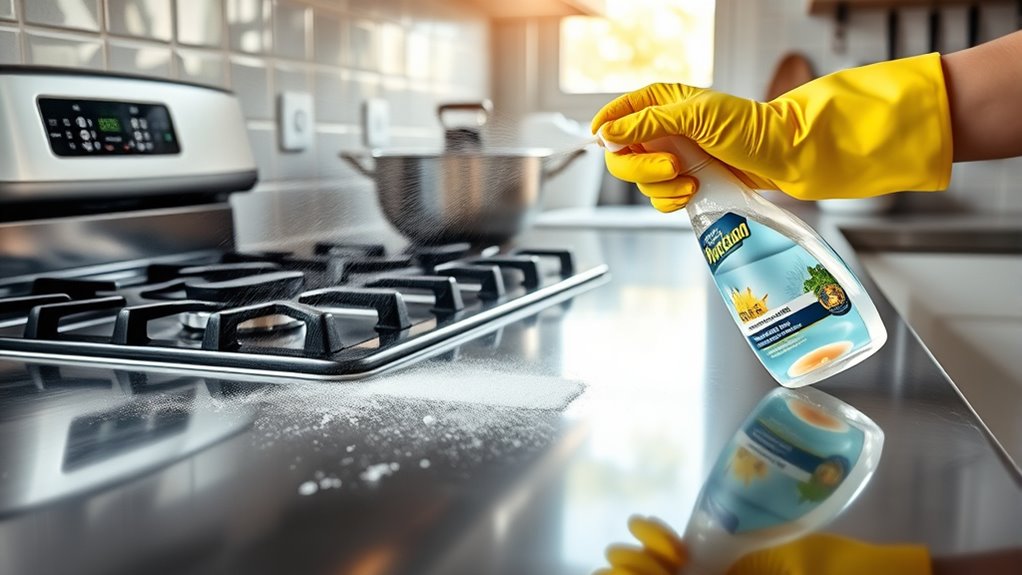
Although it might seem easier to wait, tackling grease and grime early prevents buildup that’s harder to remove later. When you address spills and splatters right away, you avoid stubborn stains that require intense deep cleaning.
Grease, especially, can cling to surfaces and appliances, making stain removal much more challenging if left unattended. By wiping down counters, stovetops, and backsplashes after cooking, you keep your kitchen fresh and reduce the effort needed for weekly cleanings.
Don’t let grime settle into cracks or crevices where it’s tough to reach. Use a gentle cleaner or a mixture of vinegar and water for regular wipe-downs. Then save stronger solutions for those occasional deep cleaning sessions.
Staying proactive saves you time and keeps your kitchen hygienic, preventing buildup that can affect both cleanliness and appliance efficiency. You’ll find it much easier to maintain a spotless space when you act early on grease and grime.
Organize Your Kitchen Pantry for Easy Access and Freshness
Keeping your kitchen clean is important, but organizing your pantry can make a big difference in how smoothly your cooking and cleaning routines go. When your pantry is well-organized, meal prep becomes faster and less stressful.
A well-organized pantry streamlines cooking and cleaning, making meal prep quicker and less stressful.
Here’s how you can optimize your pantry for easy access and freshness:
- Use clear storage solutions: Invest in airtight containers and clear bins to keep ingredients fresh and visible. This reduces waste and helps you spot what you need quickly.
- Group similar items together: Arrange snacks, canned goods, baking supplies, and spices in dedicated sections. Label shelves or containers to maintain order and speed up meal prep.
- Rotate stock regularly: Place newer items behind older ones to use up ingredients before they expire. Keep a checklist to track what you have and avoid overbuying.
Maintain Kitchen Appliances to Extend Their Lifespan
Since your kitchen appliances handle daily tasks, maintaining them regularly can save you money and hassle down the line. Start by cleaning your appliances according to the manufacturer’s instructions to prevent buildup and guarantee they run smoothly.
Regularly check for signs of wear or malfunction and address these promptly through appliance troubleshooting. Ignoring small issues can lead to costly repairs or replacements. Keep vents and filters clean to improve energy efficiency, reducing your utility bills while minimizing environmental impact.
Don’t forget to defrost your refrigerator and freezer to maintain superior performance. Also, inspect seals and gaskets to prevent energy loss. Scheduling routine maintenance, like servicing your oven or dishwasher, can catch problems early and extend their lifespan.
Choose the Right Tools for Daily Kitchen Cleaning
How do you guarantee your kitchen stays spotless every day without spending too much time or effort? The key lies in choosing the right tools for daily kitchen cleaning. When you select effective, easy-to-use tools, maintaining your cleaning schedules becomes manageable and efficient.
Keeping your kitchen spotless daily is simple with the right, easy-to-use cleaning tools.
Plus, having a designated tool storage area ensures your supplies are always within reach.
Focus on these essentials:
- Microfiber cloths. They trap dirt and grease without scratching surfaces, making daily wipe-downs quick.
- A good-quality scrub brush. It’s perfect for tackling stubborn spots without damaging your countertops.
- A multi-purpose spray bottle. Fill it with your favorite cleaner for fast and versatile use.
Keep Your Surfaces and Fixtures Safe From Damage
To protect your kitchen surfaces and fixtures, you need to use the right cleaning methods and products that won’t cause wear or damage over time. Surface protection starts with avoiding harsh chemicals and abrasive tools that can scratch or dull finishes.
For fixture maintenance, gently clean faucets and handles regularly to prevent buildup and corrosion. Using soft cloths and mild detergents keeps your kitchen looking fresh without risking damage.
Here’s a quick guide for surface protection and fixture maintenance:
| Surface/Fixture | Cleaning Tip |
|---|---|
| Granite countertops | Use pH-neutral cleaner, avoid acid |
| Stainless steel sinks | Wipe with soft cloth, mild soap |
| Wood cabinets | Clean with damp cloth, dry fast |
| Chrome fixtures | Use vinegar-water solution lightly |
| Glass surfaces | Use glass cleaner, avoid scrubbing |
Follow these tips to keep your kitchen durable and spotless every day.
Frequently Asked Questions
How Often Should I Deep Clean My Kitchen Drains?
You should deep clean your kitchen drains at least once a month to keep things flowing smoothly. Regular deep cleaning prevents clogs and odors, which supports your overall kitchen organization and appliance maintenance.
If you cook frequently or notice slow drains, consider cleaning them biweekly. Using natural cleaners like baking soda and vinegar can help maintain your drains without harsh chemicals, making your kitchen a cleaner, more efficient space.
What Natural Remedies Remove Kitchen Odors Effectively?
You can effectively remove kitchen odors using natural remedies like baking soda, white vinegar, and lemon. Sprinkle baking soda in your trash can or down drains to neutralize smells.
White vinegar works wonders when sprayed or boiled to eliminate odors. Lemon juice not only freshens but also breaks down grease.
These natural remedies offer safe, chemical-free odor elimination, keeping your kitchen smelling fresh without harsh scents or residues.
How Can I Prevent Mold Growth Under the Sink?
Did you know that mold can grow within 24-48 hours in damp conditions? To prevent mold growth under the sink, focus on improving ventilation. Keep the area dry by fixing leaks immediately and using moisture absorbers.
You can also install a small vent or leave the cabinet door slightly open to increase airflow. Regularly clean and inspect the space to catch mold before it spreads.
What Is the Best Way to Clean Kitchen Windows?
The best way to clean kitchen windows is to use a mix of warm water and a few drops of dish soap. Spray the solution on the glass and wipe it with a microfiber cloth to avoid streaks.
For streak removal, follow up with a clean, dry microfiber cloth or a squeegee, wiping in a vertical or horizontal motion. You’ll get sparkling windows without any annoying streaks every time.
How Do I Safely Dispose of Old Cooking Oils?
Wondering how to safely dispose of old cooking oils? Don’t just pour them down the drain. That can cause clogs and pollution.
Instead, cool and strain the oil, then store it in a sealed container. Check for local oil recycling centers or participate in community recycling methods to guarantee proper disposal.
These centers convert used oils into biofuel or other products, helping you protect the environment while keeping your kitchen clean and safe.
Conclusion
Keeping your kitchen spotless is easier than you think when you tackle grease early, organize your pantry, maintain appliances, use the right tools, and protect surfaces. Did you know that 60% of kitchen messes start from overlooked grease buildup?
By staying proactive, you’ll not only save time but also extend your appliances’ lifespan and enjoy a safer, more efficient cooking space. Start these simple habits today and see the difference in your kitchen maintenance for a spotless space!