Best Air Conditioner Maintenance Tips for Peak Performance
Many people struggle with keeping their air conditioners running efficiently, especially when unexpected breakdowns or high energy bills sneak up on them. You’re not alone if you’ve ever felt frustrated trying to maintain your AC without knowing where to start.
The good news is, with a few simple steps, you can boost your unit’s performance and extend its lifespan.
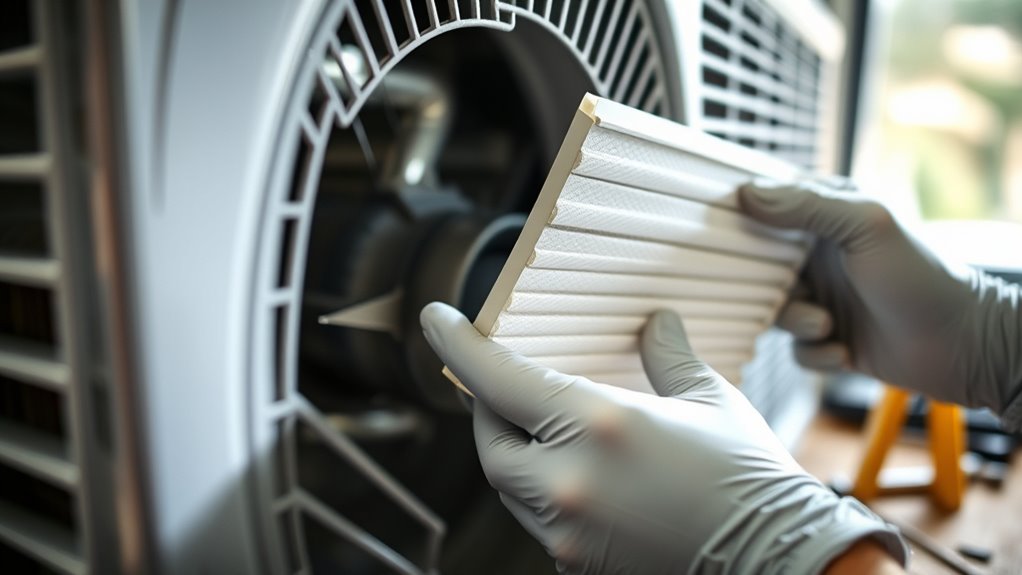
To keep your air conditioner running at peak performance, regularly clean or replace your filters every 1-3 months and clear debris from the outdoor condenser unit.
Don’t forget to inspect and gently clean the evaporator coil and keep the drain line free of blockages.
Check refrigerant levels and tighten electrical connections to avoid breakdowns.
Scheduling professional tune-ups yearly also helps.
Follow these steps and you’ll find easy ways to boost efficiency and extend your AC’s lifespan.
Key Takeaways
- Regularly clean or replace air filters every 1-3 months to keep airflow smooth and indoor air quality fresh. This simple step really makes a difference.
- Clear debris and straighten fins on the outdoor condenser unit. Doing this helps your AC work efficiently by maintaining proper heat exchange.
- Flush the drain line with water and vinegar every few months. It prevents clogs and avoids potential water damage, so it’s worth the effort.
- Schedule annual professional inspections and tune-ups. These checkups help spot issues early and keep your system running longer.
- Check and calibrate the thermostat to make sure it’s accurate. This ensures your temperature control is spot on and saves energy too.
How to Clean and Replace Your AC Filters Regularly
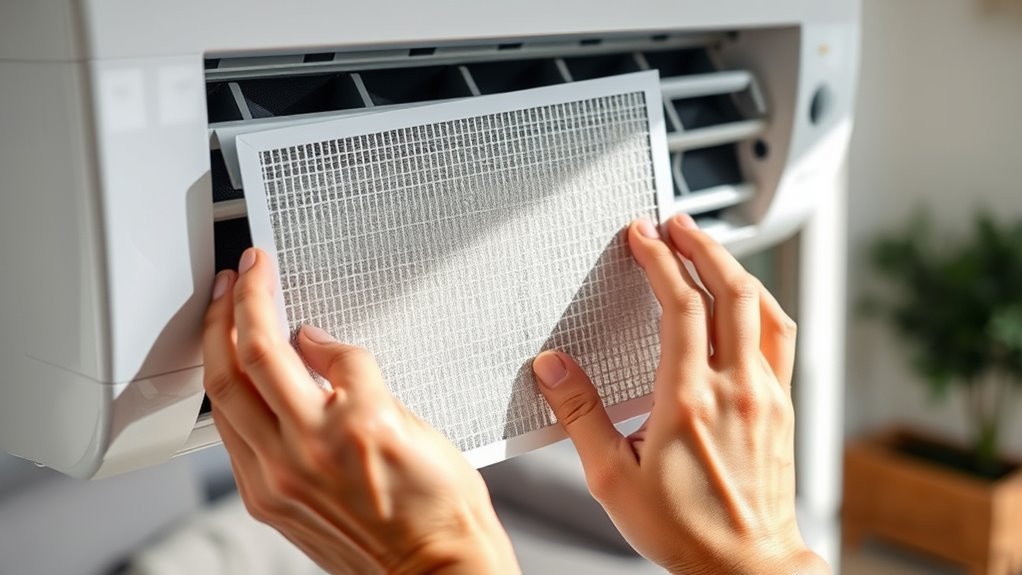
Although it might seem like a small task, cleaning and replacing your AC filters regularly can considerably improve your unit’s efficiency and air quality. You should first identify the air filter types your system uses. Common ones include fiberglass, pleated, and electrostatic filters. Each type has different cleaning needs and lifespans, so knowing this helps you maintain them properly.
Pay close attention to the filter replacement frequency recommended by the manufacturer, typically every 1 to 3 months. If you have pets or live in a dusty area, you might need to replace or clean filters more often. You can usually clean reusable filters by rinsing them with water and letting them dry completely before reinstalling. For disposable filters, simply swap them out for a new one.
Staying consistent with this routine not only improves airflow but also prevents dust and allergens from circulating in your home. It ensures your AC runs smoothly and your indoor air stays fresh.
Why You Should Regularly Check and Clear Your AC’s Condenser Unit
It’s a good idea to regularly check your AC’s condenser unit because debris can build up and block airflow. When leaves, dirt, and other stuff get stuck, it makes your system work harder than it needs to.
Prevent Debris Buildup
Since your AC’s condenser unit sits outside, it easily collects leaves, dirt, and other debris that can block airflow and reduce efficiency. You should regularly check the unit to remove any buildup that restricts outdoor airflow, preventing your system from working harder than necessary.
Clearing debris guarantees your AC runs smoothly and prolongs its lifespan. Installing debris barriers like mesh screens can help reduce the amount of dirt and leaves that reach the condenser, making maintenance easier.
Just remember to keep these barriers clean too, as they can trap particles over time. By staying on top of debris removal and protecting your unit with barriers, you’ll maintain ideal performance and avoid costly repairs caused by clogged condenser units.
Enhance Cooling Efficiency
Regularly checking and clearing your AC’s condenser unit not only prevents debris buildup but also considerably boosts its cooling efficiency. When you keep the condenser clean, your system runs smoother, which helps maintain better indoor air quality and reduces energy costs.
Make seasonal maintenance a habit by following these steps:
- Remove leaves, dirt, and grass clippings around the condenser to guarantee proper airflow.
- Inspect fins for damage and gently straighten them to optimize heat exchange.
- Clear any obstructions around the unit to prevent strain on your AC’s compressor.
How to Inspect and Clean Your Air Conditioner’s Evaporator Coil
You’ll find the evaporator coil inside your air handler or furnace, usually close to the air filter. To keep your AC running smoothly, it’s important to clean the coil carefully by removing any dirt and debris step-by-step. While you’re inspecting it, keep an eye out for any damage, like corrosion or bent fins, since these can impact how well your system works.
Identifying Evaporator Coil Location
Before you can inspect or clean your air conditioner’s evaporator coil, you need to know where to find it. The evaporator coil is essential for cooling your home, so locating it correctly is key to effective coil inspection. Here’s how to identify it:
- Locate the indoor unit. The evaporator coil is inside the air handler or furnace, usually near the blower fan.
- Check for an access panel. Look for a removable panel on the air handler’s side or top; this often covers the coil.
- Identify the coil’s appearance. The evaporator coil looks like a series of thin metal fins or tubing, usually coated in aluminum.
Knowing its location helps you prepare for proper maintenance and ensures your AC runs efficiently.
Step-by-Step Cleaning Process
Once you’ve located the evaporator coil, it’s time to inspect and clean it carefully to keep your system running smoothly. First, turn off the power to avoid any accidents. Gently remove the access panel to expose the coil.
Use a soft brush or a no-rinse coil cleaner to remove dust and debris, being careful not to bend the delicate fins. Cleaning the coil improves indoor air quality by preventing mold and allergens from circulating.
After cleaning, check for any remaining dirt and wipe it away with a damp cloth. Finally, replace the access panel and restore power. Regular coil cleaning boosts energy conservation by helping your air conditioner run efficiently, saving you money and keeping your home comfortable year-round.
Signs of Coil Damage
Cleaning the evaporator coil helps maintain your air conditioner’s efficiency, but it’s also important to watch for signs of coil damage. If you notice any issues early, you can prevent costly repairs.
Here are three common signs to look for:
1. Coil Corrosion
Rust or discoloration on the coil indicates corrosion, which reduces heat exchange efficiency.
2. Refrigerant Leaks
Look for oily residue or hissing sounds around the coil, signaling a refrigerant leak that compromises cooling.
3. Reduced Cooling Performance
If your AC isn’t cooling as well as before, the coil may be dirty, damaged, or leaking refrigerant.
Regularly inspect your evaporator coil for these signs during maintenance to keep your unit running smoothly and efficiently.
How to Keep Your Air Conditioner Drain Line Clear and Prevent Water Damage
If you want to prevent water damage and keep your air conditioner running smoothly, you need to regularly clear the drain line. This line carries condensation away from your unit, so a clog can cause water to back up, leading to leaks and potential damage to your home.
Start by locating the drain line, usually a PVC pipe near the indoor unit. Use a wet/dry vacuum to suck out any blockages from the outside end of the pipe. You can also flush the line with a mixture of water and vinegar to break down mold and algae buildup that often cause clogs.
Be sure to do this every few months, especially during the cooling season. Keeping the drain line clear not only prevents water damage but also helps maintain your AC’s efficiency and prolong its lifespan. Regular maintenance here saves you costly repairs down the line.
Checking AC Refrigerant Levels: When and How to Do It
Although checking your AC’s refrigerant levels might seem technical, it’s essential for ensuring your system cools effectively and runs efficiently. Low refrigerant can cause your AC to work harder, increasing energy bills and risking damage. Here’s when and how to check it:
- Look for signs of low refrigerant: If your AC isn’t cooling well or you notice ice buildup on the coils, it’s time for a refrigerant recharge.
- Perform leak detection: Before adding refrigerant, have a professional check for leaks. Adding refrigerant without fixing leaks only worsens the problem.
- Use proper tools: A qualified technician uses gauges to measure pressure and determine if levels are correct.
Avoid DIY refrigerant handling. It requires specialized equipment and knowledge. Checking refrigerant levels regularly and addressing leaks promptly keeps your AC running smoothly and extends its lifespan.
How to Test Your AC Thermostat for Accurate Cooling
To make sure your AC is cooling just right, you’ll want to check if your thermostat is calibrated correctly. A good way to start is by comparing the thermostat’s reading with a reliable thermometer to see if they match up.
Once you’ve done that, watch how your AC reacts when you change the temperature settings. This will help you figure out if the thermostat is doing its job properly.
Checking Thermostat Calibration
When your air conditioner isn’t cooling as expected, checking the thermostat calibration can quickly reveal if the issue lies in inaccurate temperature readings. Start by verifying your thermostat settings to ensure they match your desired comfort level.
Next, test the calibration accuracy by comparing the thermostat’s displayed temperature against a reliable thermometer placed nearby. If there’s a discrepancy, recalibrate the thermostat following the manufacturer’s instructions or consult a professional.
Here’s how to proceed:
- Set your thermostat to a specific temperature and wait for the AC to respond.
- Use a precise thermometer to measure the room temperature near the thermostat.
- Adjust the thermostat calibration if the reading deviates by more than 2 degrees from the thermometer.
Regularly checking calibration accuracy helps maintain efficient cooling performance.
Verifying Temperature Response
Since your thermostat controls the AC’s cooling cycles, verifying its temperature response guarantees your system reacts accurately to changes in room temperature. To test this, start by setting the thermostat to a temperature a few degrees below the current room temperature.
Listen for the AC to kick on promptly. If it delays or doesn’t respond, your thermostat may need temperature calibration or sensor adjustment. Use a reliable thermometer to compare the room’s actual temperature against the thermostat reading.
If there’s a discrepancy, consult your AC manual to adjust the sensor or recalibrate the thermostat. Ensuring accurate temperature response prevents unnecessary energy use and maintains comfort.
Regularly verifying this helps your AC perform efficiently and extends its lifespan.
Why Tightening Electrical Connections Keeps Your AC Running Smoothly
Even small electrical connections that loosen over time can cause your air conditioner to underperform or stop working altogether. When you tighten these connections, you guarantee your AC operates safely and efficiently.
Loose connections increase resistance, leading to overheating and potential component failure. Prioritizing electrical safety during maintenance prevents hazards and costly repairs.
Here’s why you should regularly check and tighten electrical connections:
- Prevent power interruptions: Tight connections keep current flowing smoothly, avoiding unexpected shutdowns.
- Simplify circuit troubleshooting: Secure connections make it easier to diagnose electrical issues without false faults.
- Extend component lifespan: Reduced electrical arcing and heat stress protect your AC’s internal parts.
How to Spot Warning Signs of AC Problems Early
How can you tell if your air conditioner needs attention before it breaks down? Watch for unusual noises, weak airflow, or inconsistent cooling. These early warning signs can help you address issues before they affect indoor air quality or increase energy costs.
Catching problems early supports energy saving tips by avoiding wasted power and maintaining top performance.
Here’s a quick guide to spotting AC warning signs:
| Warning Sign | What It Means | What You Can Do |
|---|---|---|
| Strange Noises | Loose parts or motor issues | Inspect and tighten connections |
| Weak Airflow | Blocked ducts or dirty filters | Clean or replace filters |
| Uneven Cooling | Refrigerant leaks or faults | Check refrigerant levels |
When to Schedule Professional AC Tune-Ups and Inspections
To keep your air conditioner running smoothly, you should schedule professional tune-ups and inspections at regular intervals. Doing so helps maintain indoor air quality and supports your energy-saving tips by ensuring your system runs efficiently. Here are three key times to book a professional check:
- Before the Cooling Season: Have a tune-up done in early spring to catch any issues before the heat hits. This prevents unexpected breakdowns and keeps your AC performing at its best.
- After Heavy Use: If your AC worked overtime during a heatwave, scheduling an inspection afterward can help identify wear and tear early.
- Annually for Older Units: For units over 10 years old, annual inspections are crucial to keep energy use in check and maintain good indoor air quality.
Regular professional attention not only extends your AC’s lifespan but also maximizes energy savings and keeps your home comfortable all year round.
Simple Habits to Boost Your AC’s Energy Efficiency
While professional tune-ups are essential, adopting simple daily habits can considerably boost your AC’s energy efficiency. Start by regularly cleaning or replacing your air filters to improve indoor air quality and reduce strain on the system. Dirty filters force your AC to work harder, increasing energy use and noise.
Next, keep vents and registers unblocked to ensure proper airflow throughout your home. Use ceiling fans to circulate cool air more effectively, which helps your AC run less frequently. Closing blinds or curtains during peak sunlight hours also prevents excess heat buildup, easing the cooling load.
Furthermore, sealing leaks around windows and doors improves energy efficiency by keeping cool air inside. Finally, make sure your outdoor unit is free from debris, which can cause noise and reduce performance. By incorporating these simple habits, you not only lower your energy bills but also extend your AC’s lifespan while maintaining a comfortable, quiet environment.
Frequently Asked Questions
How Often Should I Replace My AC Unit Entirely?
You should consider replacing your AC unit every 10 to 15 years. As your system ages, its energy efficiency drops, causing higher utility bills.
Comparing the cost of frequent repairs versus a new, energy-efficient model helps you decide the best time to replace it. If your maintenance costs are rising and your unit struggles to cool effectively, investing in a new AC can save you money and improve comfort in the long run.
Can I Use a Smart Thermostat With Any AC Model?
You can use a smart thermostat with most AC models, but compatibility depends on your system’s wiring and type. Studies show that smart thermostats can save up to 23% on cooling costs, making them worth considering.
Before buying, check if your AC model supports features like multi-stage cooling or heat pumps. It’s a good idea to consult your HVAC technician to ensure a seamless setup and peak performance with your current unit.
What Is the Average Lifespan of a Central Air Conditioner?
The average lifespan of a central air conditioner is typically 15 to 20 years. You can extend this by sticking to a regular maintenance schedule and keeping energy efficiency in mind.
When you clean filters, check refrigerant levels, and inspect components annually, your unit runs smoother and lasts longer. Neglecting upkeep can reduce energy efficiency and shorten your AC’s life, so staying proactive really pays off.
Are There Any Health Risks From Using an Air Conditioner?
Yes, using an air conditioner can pose health risks if you’re not careful. Poor indoor air quality can result from dirty filters or clogged ducts, which trap dust and allergens.
Also, moisture buildup may lead to mold growth inside the unit, worsening respiratory issues. To protect yourself, you’ll need to clean and maintain your AC regularly, ensuring it filters air properly and prevents mold from developing.
How Do I Choose the Right Size AC for My Home?
To choose the right size AC for your home, start by calculating your space’s square footage. You want a unit that’s powerful enough to cool efficiently without wasting energy. Look for models with high energy efficiency ratings to save on bills.
Also, consider noise levels. Quieter units make your home more comfortable. Don’t oversize the AC because it causes short cycling and higher costs. Match the AC size to your room for the best performance.
Conclusion
By following these simple air conditioner maintenance tips, you’ll keep your unit running smoother than a well-oiled machine, even on the hottest days that feel like the sun itself is melting the earth. Regular cleaning, timely checks, and knowing when to call a pro can save you from costly breakdowns and sky-high energy bills.
Stay proactive, and your AC will reward you with peak performance all summer long. Remember, consistent air conditioner maintenance is the key to keeping your cooling system efficient and reliable throughout the season.