5 Simple Steps to Install a Door Like a Pro
Installing a door can feel overwhelming if you’re not sure where to start or worried about making costly mistakes. You’re not alone—many people struggle with getting their doors to fit perfectly and operate smoothly. But with the right guidance, installing a door like a pro is totally achievable, even for beginners.
To install a door like a pro, start by measuring and prepping your door frame carefully to make sure it’s square and level. Choose the right door and hardware that suits your style and needs.
Next, install the hinges by marking, chiseling, and screwing them securely. Hang the door with precise alignment, then tighten everything incrementally.
Finally, test its smooth operation and make small adjustments for a perfect fit. Keep following along to master every detail with confidence.
Key Takeaways
- Measure the door frame accurately for width, height, and depth. Make sure it is level and square before installation.
- Choose a door and hardware that match the frame, material, and style. Also, ensure they offer durability and security.
- Install hinges by marking their placement, chiseling mortises, pre-drilling holes, and fastening securely. This helps the door operate smoothly.
- Hang the door by aligning the hinges with the frame. Secure the screws incrementally and get some help to keep the door balanced.
- Test how the door operates, adjust the hardware if needed, and apply weatherstripping for proper sealing and insulation.
Measure and Prepare Your Door Frame
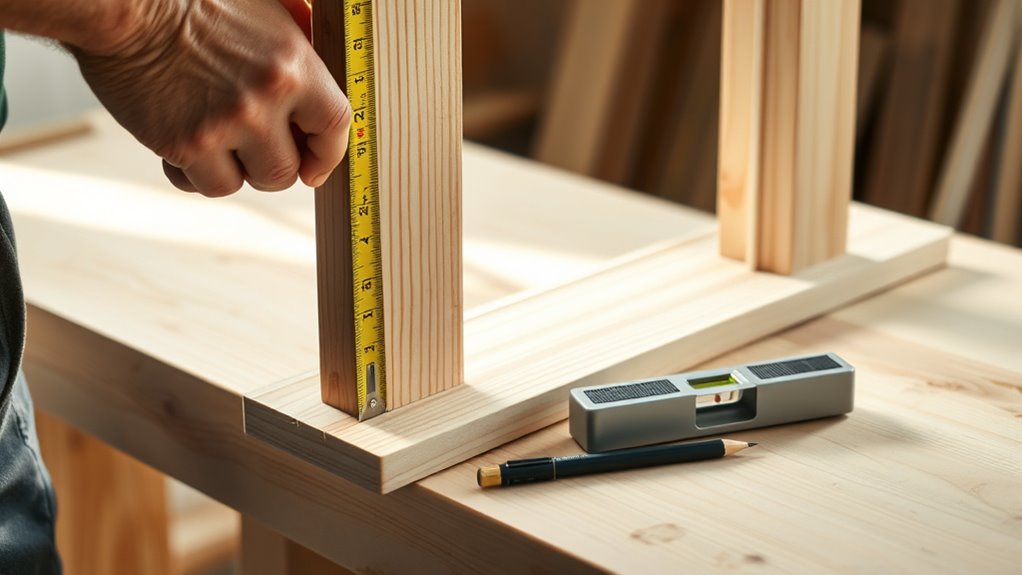
Before you begin installing your door, you need to measure and prepare your door frame carefully. Start with a thorough door frame inspection to spot any damage, warping, or uneven surfaces that could affect installation. Use a level to check for plumb and verify the frame is square. If you find any issues, address them before moving forward.
Next, apply precise measuring techniques. Measure the width and height of the door frame at multiple points, like the top, middle, and bottom, to confirm consistency. Don’t forget to measure the depth of the frame to ensure your new door will fit snugly. Record all measurements accurately to avoid costly mistakes.
Taking these steps guarantees your door will operate smoothly and fit perfectly. Skipping this phase can lead to misalignment or gaps, compromising security and insulation. So, invest time in door frame inspection and careful measuring techniques to set a solid foundation for your door installation.
Choose the Right Door and Installation Hardware
Selecting the right door and installation hardware is essential to guarantee durability, security, and style. When choosing your door, consider the door material carefully. Wood offers classic warmth, steel provides strength and security, and fiberglass resists weather and requires low maintenance. Your choice impacts not just appearance but also longevity and insulation.
Next, think about hinge types that suit your door’s weight and usage. Ball bearing hinges work well for heavy doors, ensuring smooth operation, while standard butt hinges fit lighter, interior doors perfectly. Don’t forget to match hinges to the door’s finish for a seamless look.
Install Door Hinges
Once you’ve gathered the right hinges, you’ll need to attach them carefully to guarantee your door swings smoothly and stays secure. Start by selecting hinges that match your door materials. Wood doors typically use butt hinges, while metal doors may require continuous or ball-bearing hinges for durability. Mark the hinge placement on both the door edge and the door frame, usually spacing them evenly with one near the top and one near the bottom.
Next, chisel shallow mortises on the door and frame to fit the hinge leaves flush, ensuring the door sits properly. Pre-drill screw holes to prevent splitting, then fasten the hinges securely with screws matching your hinge type and door material. Check that the hinges align perfectly to avoid binding or gaps. Taking care during this step sets the foundation for a door that operates smoothly and lasts, no matter the door materials or hinge types you’re working with.
Hang and Secure the Door for a Perfect Fit
After securing the hinges firmly to both the door and frame, you’re ready to hang the door and assure it fits perfectly. Begin by lifting the door carefully and aligning the hinge placement with the door frame alignment. This step guarantees your door swings smoothly without dragging or sticking.
Lift the door carefully and align hinges precisely to ensure smooth, effortless swinging without sticking or dragging.
Use a helper or a sturdy prop to hold the door in place while you secure the screws tightly.
Focus on:
- Achieving flawless door frame alignment to prevent gaps or uneven spacing.
- Confirming each hinge placement matches the pre-marked slots to avoid misalignment.
- Tightening screws incrementally to maintain the door’s balance and avoid strain on hinges.
Taking these steps will give you a perfectly hung door that looks professional and operates effortlessly. You’ll appreciate the satisfaction of a clean fit and the confidence that your installation will last for years.
Test the Door’s Operation and Make Final Adjustments
Although the door may seem perfectly aligned, you’ll want to test its operation thoroughly to catch any issues before finishing. Start by opening and closing the door several times to ensure smooth movement.
Check if the hardware compatibility is correct. Misaligned hinges or locks can cause sticking or gaps. Inspect the seal around the doorframe to confirm proper weatherproofing techniques are applied, preventing drafts and moisture.
If you notice any resistance or gaps, make small adjustments to hinges or strike plates. Tighten screws or reposition components slightly. Use weatherstripping to improve insulation if needed.
| Test Aspect | What to Check |
|---|---|
| Door Swing | Opens/closes smoothly |
| Lock Function | Engages and disengages properly |
| Hardware Fit | Hinges and screws aligned |
| Seal Integrity | No gaps or drafts |
| Weatherproofing | Proper insulation applied |
Frequently Asked Questions
What Tools Are Essential for Door Installation?
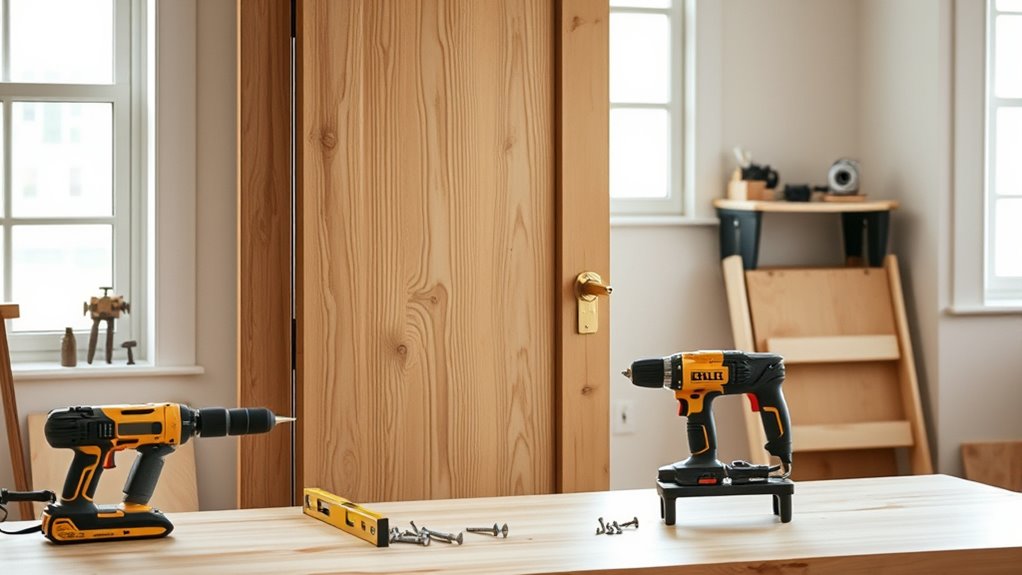
You’ll need a few essential tools to install a door properly. Grab a drill for screws, a level to guarantee perfect hinge alignment, and a hammer for adjustments.
Don’t forget door shims to keep the frame plumb and square. A tape measure helps with precise cuts, and a chisel lets you mortise hinges accurately.
With these tools, you’ll make sure your door fits snugly and swings smoothly every time.
How Do I Remove an Old Door Without Damaging the Frame?
Think of the old door as a chapter closing gently. Start by removing the hinge pins with a hammer and screwdriver, letting the door lift away without force.
Carefully pry off any trim to avoid damage to the door frame. If paint removal is needed around the edges, use a gentle scraper to preserve the wood.
This careful approach prevents costly door frame repair and keeps your frame intact for the next chapter.
Can I Install a Door by Myself or Do I Need Help?
You can definitely install a door by yourself if you’re comfortable with basic tools and have patience. Just make sure you pay close attention to frame alignment, as a crooked frame can cause the door to stick or not close properly.
Also, take your time installing door hardware like hinges and handles precisely. If the door is heavy or large, having help can make the process easier and safer, but it’s not absolutely necessary.
How Do I Weatherproof My New Door?
Think of your new door as a fortress against the storm. To weatherproof it, start by applying weatherproofing tape around the edges to block drafts like a shield.
Then, use door sealant to fill any tiny cracks or gaps, sealing out moisture and cold. This combo keeps your home cozy and dry, turning your door into a barrier that stands strong against wind, rain, and chill.
What Should I Do if My Door Squeaks After Installation?
If your door squeaks after installation, you should start by applying door lubrication to the hinges. Use a silicone spray or a lubricant specifically designed for door hardware to target the squeaky spots.
Open and close the door several times to work the lubricant in. This helps with squeak prevention. Regularly lubricating the hinges keeps them moving smoothly and prevents future noises, ensuring your door operates quietly and efficiently.
Conclusion
Now that you’ve mastered these five simple steps, you’re ready to install your door like a pro. Did you know that properly installed doors can improve your home’s energy efficiency by up to 20%? That’s a huge saving on your energy bills!
By measuring accurately, choosing the right hardware, and making precise adjustments, you’ll guarantee your door fits perfectly and operates smoothly. Take pride in your work; it really makes a difference when you install a door like a pro.