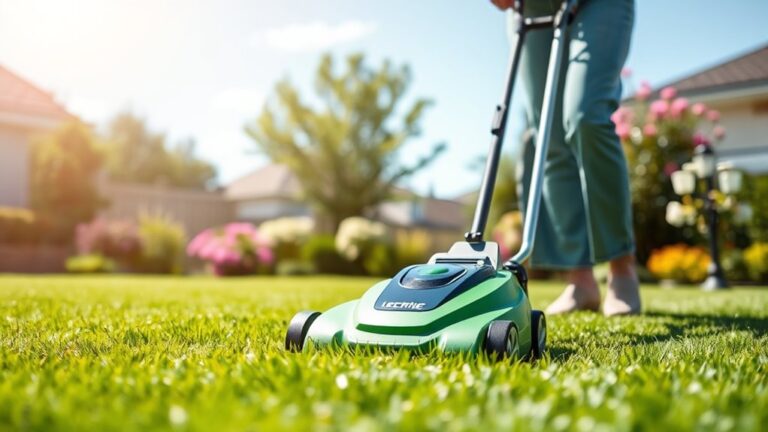
5 Best Lawn Care Tips for a Lush Green Yard
If you’ve ever struggled to get your lawn looking lush and green, you’re not alone. Many people find it challenging to maintain a vibrant yard despite their best efforts. Whether it’s uneven growth, pesky weeds, or weak grass, these common problems can be frustrating. But with the right approach, you can transform your lawn into a thriving outdoor space you’ll be proud of.
To get a lush green yard, start by checking your lawn’s health with soil and pest tests before mowing.
Mow correctly, never cutting more than a third of the blade and varying your patterns.
Water deeply but less often to build strong roots.
Choose fertilizers based on your soil needs, favoring organic options when possible.
Control weeds safely with natural methods and keep your grass dense.
These simple tips will set you on the path to a vibrant, thriving lawn you’ll love.
Key Takeaways
- Assess lawn health regularly, including soil testing and pest inspections. This helps you catch and address issues before mowing.
- Mow grass correctly by cutting no more than one-third of the blade height. Also, try varying your mowing patterns to keep the lawn healthy.
- Water deeply once or twice a week early in the morning. This strengthens roots and helps conserve water at the same time.
- Apply fertilizers based on soil tests. Favor organic options with balanced N-P-K ratios for sustained growth.
- Control weeds safely using organic methods and manual removal. At the same time, focus on maintaining dense, healthy grass.
Assess Your Lawn’s Health Before Mowing
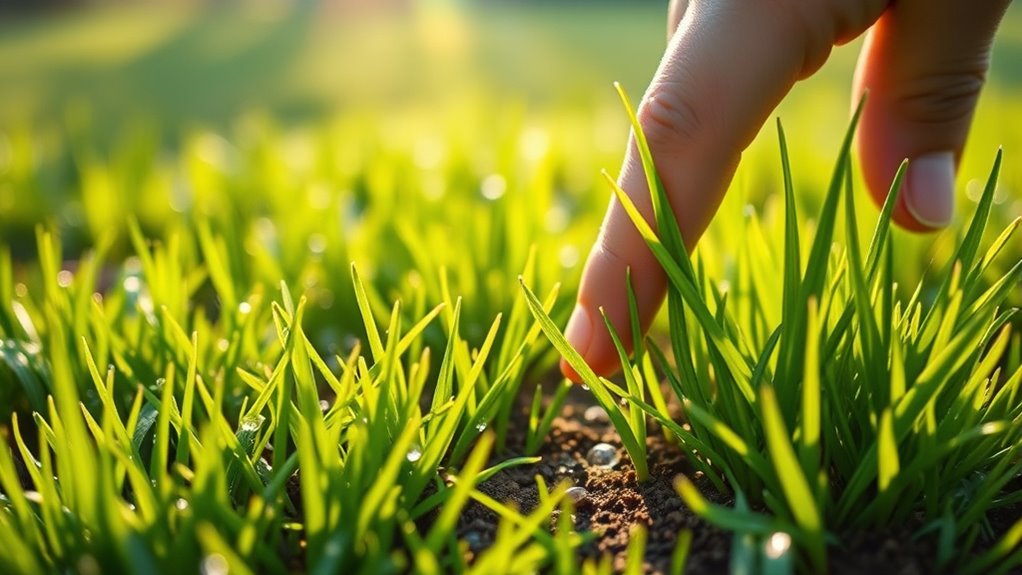
Before you grab the mower, take a close look at your lawn’s condition. You want to make certain the grass is healthy enough for mowing, so start by conducting a soil test. This will reveal nutrient deficiencies or pH imbalances that might be stressing your lawn.
If you skip this step, you could be cutting grass that’s already weakened by poor soil health. Next, perform a pest inspection. Check for signs of insects or grubs that might be damaging the roots or blades.
If pests are present, mowing could worsen the problem by spreading them or stressing the grass even more. Addressing these issues before mowing ensures your lawn recovers quickly and grows stronger.
Taking these steps helps you make informed decisions about fertilizing or treating pests, setting your yard up for long-term success. Evaluating your lawn’s health first saves time and prevents unnecessary damage.
Mow Your Lawn the Right Way for Healthier Grass
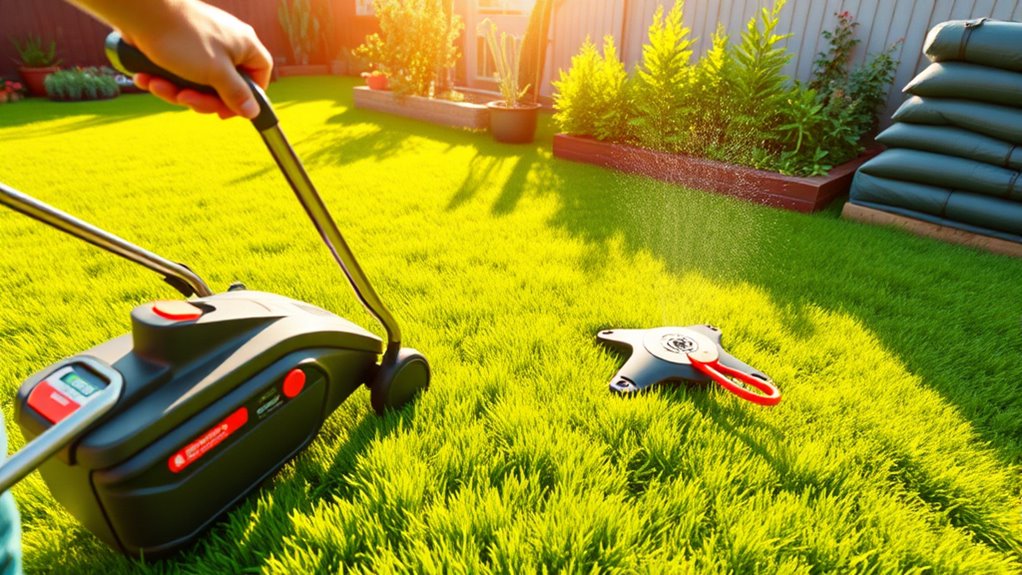
When you mow your lawn correctly, you encourage thicker, healthier grass that resists weeds and disease. Start by using proper lawn mowing techniques, such as never cutting more than one-third of the grass blade at a time. This prevents stress and promotes steady growth.
Proper mowing encourages healthy, thick grass that resists weeds and promotes steady, stress-free growth.
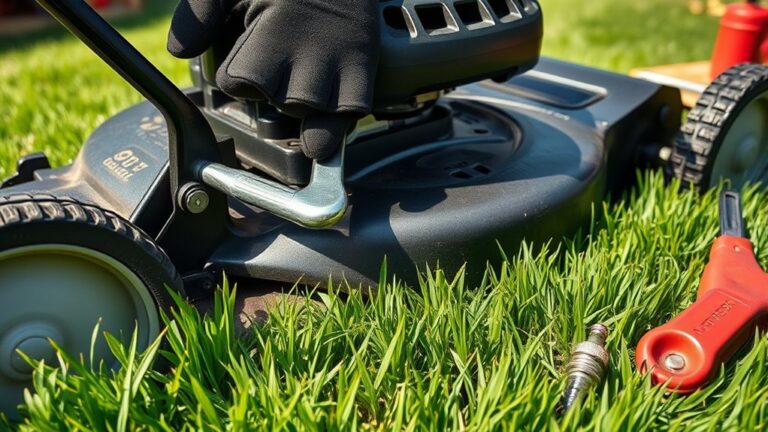
Adjust your mower height according to the grass type, keeping it higher during hot months to protect roots and reduce water loss. Grass trimming methods also matter. Trim regularly to maintain an even appearance and avoid scalping edges, which can weaken your lawn.
Always mow when the grass is dry to ensure clean cuts and prevent clumping. Change your mowing pattern each time to avoid soil compaction and encourage upright growth. Using sharp mower blades is essential because dull blades tear grass, leading to brown tips and vulnerability to disease.
Following these steps will help you maintain a vibrant, lush lawn that thrives season after season.
Water Your Lawn Deeply and Infrequently to Strengthen Roots
If you want a lawn that stays green and strong, water it deeply but less often. This approach encourages root development by pushing roots to grow deeper into the soil in search of moisture. When roots grow deep, your grass becomes more resilient to drought and heat, reducing the need for frequent watering.
Instead of watering a little every day, soak your lawn thoroughly once or twice a week. This method supports water conservation by minimizing runoff and evaporation. You’ll also avoid shallow roots that make grass vulnerable to stress.
Aim to provide about one inch of water per week, depending on your soil type and climate. Early morning is the best time to water, as it reduces evaporation and fungal growth. By watering deeply and infrequently, you’re setting your lawn up for long-term health while saving water and effort.
Choose the Right Fertilizer for a Healthy, Green Lawn
Choosing the right fertilizer plays a crucial role in keeping your lawn vibrant and healthy. Start by conducting soil testing to understand nutrient deficiencies and pH levels. This insight helps you pick a fertilizer that matches your lawn’s specific needs, preventing over-fertilization or nutrient imbalances.
Consider organic options, which provide slow-release nutrients, improve soil structure, and promote beneficial microbial activity. They’re a safe choice if you want to avoid harsh chemicals and support long-term soil health. When choosing fertilizer, pay attention to the N-P-K ratio (nitrogen, phosphorus, potassium). Nitrogen promotes lush green growth, phosphorus supports root development, and potassium strengthens overall plant health.
Apply fertilizer during active growing seasons, following the recommended rates to avoid burning your grass. By selecting the right fertilizer based on soil testing and considering organic options, you’ll give your lawn the nutrients it needs to stay thick, green, and resilient all season long.
Control Weeds Safely Without Harming Your Grass
Although weeds can quickly take over your lawn, you can control them without damaging your grass by using safe, targeted methods. Start by using organic weed control options, like vinegar-based sprays or corn gluten meal. These target weeds without harsh chemicals.
Regularly pull weeds by hand with specialized lawn maintenance tools, such as a weed puller or hoe. This helps minimize disturbance to your grass. Maintaining a thick, healthy lawn also helps crowd out weeds naturally.
Here’s a quick guide to safe weed control:
| Method | Benefit |
|---|---|
| Organic Sprays | Kills weeds without toxins |
| Manual Removal Tools | Precise, grass-friendly |
| Lawn Maintenance | Prevents weed growth |
Frequently Asked Questions
How Do I Prevent Lawn Diseases Naturally?
You can prevent lawn diseases naturally by using organic treatments like neem oil or compost tea, which boost your grass’s immunity. Make sure you practice natural aeration by gently poking holes in the soil to improve air circulation and water absorption.
Avoid overwatering and mow regularly to keep your lawn healthy. These steps help create an environment where disease-causing fungi struggle to thrive, keeping your grass lush and vibrant without chemicals.
What Is the Best Time of Year to Reseed My Lawn?
The best time to reseed your lawn is during early fall or spring. These seasons offer moderate temperatures and ample rainfall, helping seeds germinate quickly.
Before you start, do a soil test to check nutrient levels and pH balance. After reseeding, stick to a consistent watering schedule. Keep the soil moist but not soggy to encourage strong root growth.
This approach gives your new grass the best chance to thrive.
Can I Use Grass Clippings as Mulch?
Yes, you can use grass clippings as mulch, but be sure they’re dry and applied in thin layers to avoid matting. This helps retain moisture and suppress weeds.
Using clippings this way also supports composting benefits by recycling nutrients back into your soil. If you have too many clippings, consider proper grass clipping disposal like composting them separately to prevent thatch buildup and keep your lawn healthy.
How Do I Deal With Lawn Pests Without Chemicals?
Imagine your neighbor’s garden thriving after introducing ladybugs. To deal with lawn pests without chemicals, you can use organic pest control methods like beneficial insect introduction.
Ladybugs and predatory nematodes naturally reduce harmful pests, keeping your lawn healthy and chemical-free. You’ll find these insects easy to release, and they target pests without damaging your grass.
What Types of Grass Are Best for Shady Areas?
You’ll want to choose shade tolerant grasses like fine fescue, St. Augustine, or Zoysia for shady lawn care. These grasses thrive with less sunlight and stay green under tree canopies.
When planting, focus on improving soil quality and mowing higher to encourage healthy growth. Watering deeply but less frequently also helps.
You’ll find these grasses handle shade better, making your lawn look lush even in low-light spots.
Conclusion
By following these lawn care tips, you’ll nurture your yard like a gardener tending a precious flower. Assess your lawn’s health before mowing, mow properly, water deeply but less often, pick the right fertilizer, and control weeds safely.
With consistent care, your grass will thrive and stay lush and green, making your yard the envy of the neighborhood. Remember, a healthy lawn isn’t just beautiful; it’s a rewarding reflection of your dedication to lawn care for a lush green yard.