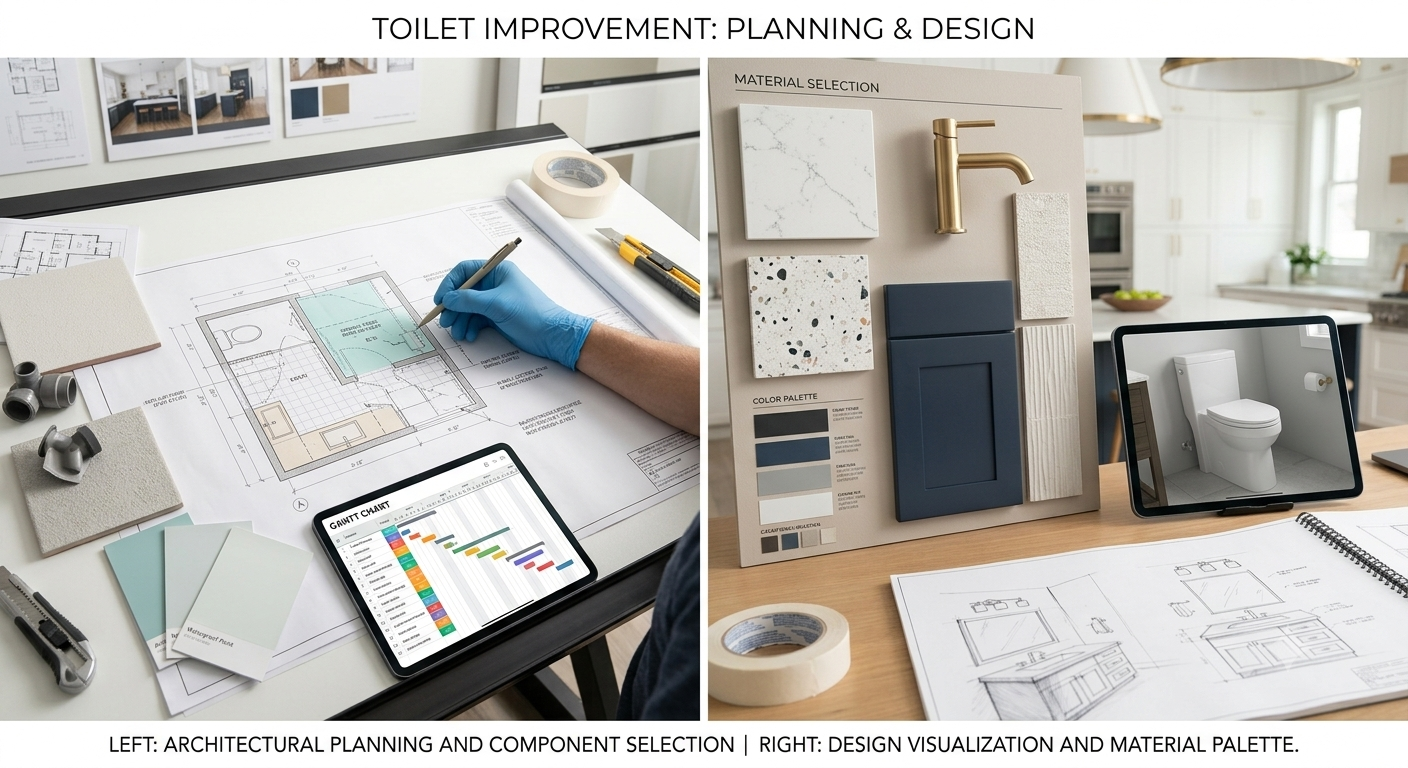
The Complete Toilet & Bathroom Improvement Guide: Planning, Design, and Upgrades
The bathroom, and the toilet at its center, is one of the most frequently used yet often overlooked spaces in the home. While kitchens tend to get the design spotlight, a well-planned bathroom renovation can dramatically improve daily comfort, boost your home’s resale value, and solve longstanding frustrations with outdated fixtures or inefficient layouts. This guide covers everything you need to know about improving your toilet and bathroom space, from choosing the right toilet model to planning a full bathroom renovation around it.
Why Toilet and Bathroom Improvements Matter
Bathrooms are used multiple times a day by everyone in the household, making even small inefficiencies or discomforts add up over time. An old, inefficient toilet can waste significant amounts of water with every flush, driving up utility bills. A cramped or poorly laid out bathroom can make daily routines feel rushed and stressful rather than relaxing.
From a financial perspective, bathroom renovations consistently rank among the highest-return home improvement projects. Because bathrooms are smaller than kitchens, improvements here tend to be more budget-friendly while still delivering a strong visual and functional impact. A dated bathroom with an old toilet, worn flooring, and inadequate lighting can be a major turnoff for potential buyers, while a fresh, well-maintained bathroom signals to buyers that the rest of the home has likely been well cared for too.
Beyond resale value, there’s also the everyday quality-of-life factor. A comfortable, efficient, and attractive bathroom contributes meaningfully to how relaxed and cared-for a home feels, whether you’re getting ready for a busy day or unwinding with a bath in the evening.
Step One: Assessing Your Current Toilet and Bathroom
Before starting any renovation, take time to evaluate what’s working and what isn’t in your current setup. Start with the toilet itself. Is it a high-efficiency model, or an older unit that uses significantly more water per flush than modern standards require? Does it run frequently, indicating a worn flapper or fill valve? Is the bowl height comfortable, or do you find it too low, particularly for elderly family members or those with mobility concerns?
Next, assess the broader bathroom space. Note any areas of water damage, such as soft spots in the flooring near the toilet or tub, which can indicate leaks that need to be addressed before cosmetic work begins. Check the condition of grout and caulk around the tub, shower, and toilet base, since deteriorating seals are a common source of hidden water damage.
Consider also the layout and functionality of the space. Is there enough clearance around the toilet for comfortable use? Is storage adequate for towels, toiletries, and cleaning supplies? Does the ventilation adequately prevent moisture buildup, or do you notice persistent humidity, mold, or mildew issues?
Step Two: Setting Your Budget
Bathroom renovation costs vary widely depending on the scope of work. A simple toilet replacement paired with minor cosmetic updates can be accomplished on a modest budget, while a full gut renovation involving moved plumbing, new tile throughout, and a redesigned layout represents a much larger investment.
When budgeting, break costs down into categories: fixtures (toilet, sink, tub or shower), tile and flooring, vanity and storage, lighting and ventilation, labor, and permits if structural or plumbing changes are involved. As with any renovation, set aside a contingency fund of 15-20% to cover unexpected issues, which are particularly common in bathrooms given the amount of plumbing and moisture exposure involved.
Decide early whether you’re planning a full renovation or a more targeted update. Replacing just the toilet, updating the vanity, and refreshing paint and hardware can transform the feel of a bathroom without the cost and disruption of a complete overhaul. A full renovation, by contrast, allows for layout changes and comprehensive updates but requires a significantly larger budget and longer timeline.
Step Three: Choosing the Right Toilet
Selecting a new toilet involves more considerations than many homeowners initially expect. The right choice depends on your bathroom’s layout, your household’s needs, and your priorities around water efficiency and comfort.
Toilet Types
Two-piece toilets, with a separate tank and bowl, remain the most common and budget-friendly option, and they’re generally easier to repair since components can be replaced individually. One-piece toilets combine the tank and bowl into a single unit, creating a sleeker look that’s easier to clean since there’s no seam between tank and bowl where grime can accumulate, though they typically come at a higher price point.
Wall-mounted toilets, where the tank is concealed within the wall and only the bowl is visible, offer a modern, space-saving aesthetic and make cleaning the floor around the toilet significantly easier. However, they require more complex installation and access to the in-wall tank for repairs, making them a bigger commitment both in terms of budget and long-term maintenance considerations.
Bowl Shape and Height
Elongated bowls offer more legroom and comfort for most adults and have become the standard choice in most modern bathrooms, though they require slightly more space than round bowls. Round bowls remain a practical choice for smaller bathrooms or powder rooms where space is at a premium.
Comfort-height toilets, with a bowl rim height closer to that of a standard chair, have become increasingly popular for their ease of use, particularly for taller individuals, elderly family members, or anyone with joint issues. Standard-height toilets sit lower and may be preferred in bathrooms designed primarily for children.
Flushing Systems and Water Efficiency
Modern toilets are dramatically more water-efficient than older models. Federal standards now require toilets to use no more than 1.6 gallons per flush, and many high-efficiency models use 1.28 gallons or less while maintaining strong flushing performance. Dual-flush toilets offer two flush options—a lower volume for liquid waste and a higher volume for solid waste—allowing households to reduce water usage further.
If your current toilet was installed before the mid-1990s, it likely uses 3.5 to 7 gallons per flush, meaning a simple toilet replacement alone can lead to substantial water savings and lower utility bills over time, often paying for itself within a few years through reduced water costs.
Pressure-assisted toilets use compressed air to create a more powerful flush, making them particularly effective at preventing clogs, though they tend to be louder than gravity-fed models. Gravity-fed toilets remain the most common type, relying on the weight of water to create flushing power, and modern designs have significantly improved their performance compared to older gravity models.
Bidet and Smart Toilet Features
Bidet attachments and integrated bidet toilets have grown significantly in popularity, offering enhanced hygiene and reduced reliance on toilet paper. Options range from simple, affordable bidet attachments that connect to your existing toilet, to fully integrated smart toilets featuring heated seats, adjustable water pressure and temperature, air drying, and even self-cleaning functions.
While smart toilets represent a significant investment compared to standard models, many homeowners find the added comfort and hygiene benefits well worth the cost, particularly for a primary or master bathroom used daily.
Step Four: Toilet Installation Considerations
Whether you’re replacing an existing toilet or installing one in a new location, several practical factors need consideration.
Rough-In Measurement
The “rough-in” measurement refers to the distance from the wall behind the toilet to the center of the drain outlet, and it’s critical to measure this accurately before purchasing a new toilet. The standard rough-in measurement is 12 inches, though some bathrooms, particularly in older homes, may have 10-inch or 14-inch rough-ins. Purchasing a toilet with the wrong rough-in measurement can result in an ill-fitting installation or require costly plumbing modifications.
DIY Versus Professional Installation
Replacing a toilet in the same location, using the existing plumbing connections, is a moderately accessible DIY project for homeowners with some plumbing experience and the right tools. The process involves shutting off the water supply, disconnecting the old toilet, installing a new wax ring seal, and securing the new toilet in place.
However, if you’re relocating the toilet to a new position within the bathroom, or if you encounter unexpected issues like a damaged flange or subfloor, professional installation is strongly recommended. Improper installation can lead to leaks, unstable toilets, or damage to the surrounding flooring, all of which are more costly to fix than the initial cost of hiring a professional.
Step Five: Beyond the Toilet — Planning a Full Bathroom Renovation
If you’re using a toilet replacement as an opportunity to update the entire bathroom, there are several additional elements to consider for a cohesive, functional result.
Vanity and Sink
The vanity often serves as a focal point in bathroom design. Floating vanities, mounted to the wall rather than resting on the floor, create a sense of spaciousness and make cleaning the floor easier, making them a popular choice in modern bathroom design. Traditional vanities resting on the floor offer more storage capacity, which can be valuable in bathrooms serving multiple family members.
Vessel sinks, which sit on top of the counter rather than being recessed into it, add a distinctive design element, while undermount sinks offer a more streamlined look and are easier to keep clean since there’s no rim to trap grime.
Shower and Tub
If your renovation extends to the shower or tub, consider your household’s needs carefully. Walk-in showers with frameless glass doors have become the dominant trend in modern bathroom design, favored for their sleek appearance and accessibility benefits, particularly for aging-in-place considerations. If you have young children or prioritize having a bathing option, retaining or adding a tub is worth considering, even in bathrooms where a shower is the primary daily-use fixture.
Tile and Flooring
Bathroom flooring needs to stand up to consistent moisture exposure while remaining slip-resistant for safety. Porcelain and ceramic tile remain popular choices due to their water resistance and design versatility. Large-format tiles create a more seamless, spacious appearance with fewer grout lines, while textured tiles can improve slip resistance, particularly important near the shower or tub.
Waterproof luxury vinyl plank has also gained popularity in bathrooms, offering the warm appearance of hardwood with far superior water resistance, making it a practical choice for a room that regularly deals with splashes and humidity.
Ventilation
Proper ventilation is one of the most important, yet frequently overlooked, elements of bathroom design. An underpowered or poorly functioning exhaust fan allows moisture to linger in the air, creating conditions for mold and mildew growth that can damage painted surfaces, wallpaper, and even structural elements over time.
When selecting a bathroom exhaust fan, choose one rated appropriately for your bathroom’s square footage, and consider a model with a humidity sensor that automatically activates when moisture levels rise, ensuring consistent ventilation even if you forget to turn the fan on manually.
Lighting
Bathroom lighting benefits from a layered approach similar to other rooms in the home. Vanity lighting, positioned at eye level on either side of the mirror rather than solely overhead, minimizes shadows on the face and provides more even, flattering illumination for tasks like shaving or applying makeup. General ambient lighting, often provided through recessed ceiling fixtures, ensures the space feels bright and welcoming overall.
Accessibility Features
Whether you’re planning for current needs or thinking ahead to aging in place, incorporating accessibility features during a renovation is far more cost-effective than retrofitting later. Grab bars near the toilet and in the shower provide crucial support and can be installed discreetly to complement the overall design. Comfort-height toilets, curbless shower entries, and adequate clearance space for wheelchair accessibility are all worth considering, even if immediate need isn’t present, since these features add value and future-proof the space.
Step Six: Storage and Organization
Bathroom clutter can undermine even the most beautifully designed space, making adequate storage a key consideration in any renovation.
Built-in medicine cabinets combine storage with functionality, often incorporating a mirror on the front to serve double duty. Open shelving offers an attractive way to display towels and decorative items while keeping frequently used items within easy reach, though it requires more consistent tidiness than closed storage.
Under-sink storage, whether through vanity cabinets or freestanding units, provides space for cleaning supplies, extra toilet paper, and other essentials that are better kept out of sight. Linen closets or built-in niches within the shower area for shampoo and soap further reduce clutter on counters and shower ledges.
Step Seven: Finishing Touches
Small details significantly impact the overall feel of a finished bathroom. Choosing a consistent hardware finish across faucets, towel bars, toilet paper holders, and cabinet pulls creates a cohesive, intentional design, whether you opt for brushed nickel, matte black, polished chrome, or warm brass.
Paint color plays an important role as well, particularly in bathrooms where tile and fixtures may already introduce significant color and texture. Light, neutral tones tend to make smaller bathrooms feel more spacious, while bolder colors can add personality in larger bathrooms with more wall space to work with.
Mirrors deserve thoughtful consideration beyond simple functionality. A well-chosen mirror frame or shape can serve as a design statement, and adequately sized mirrors above the vanity improve both function and the perceived spaciousness of the room.
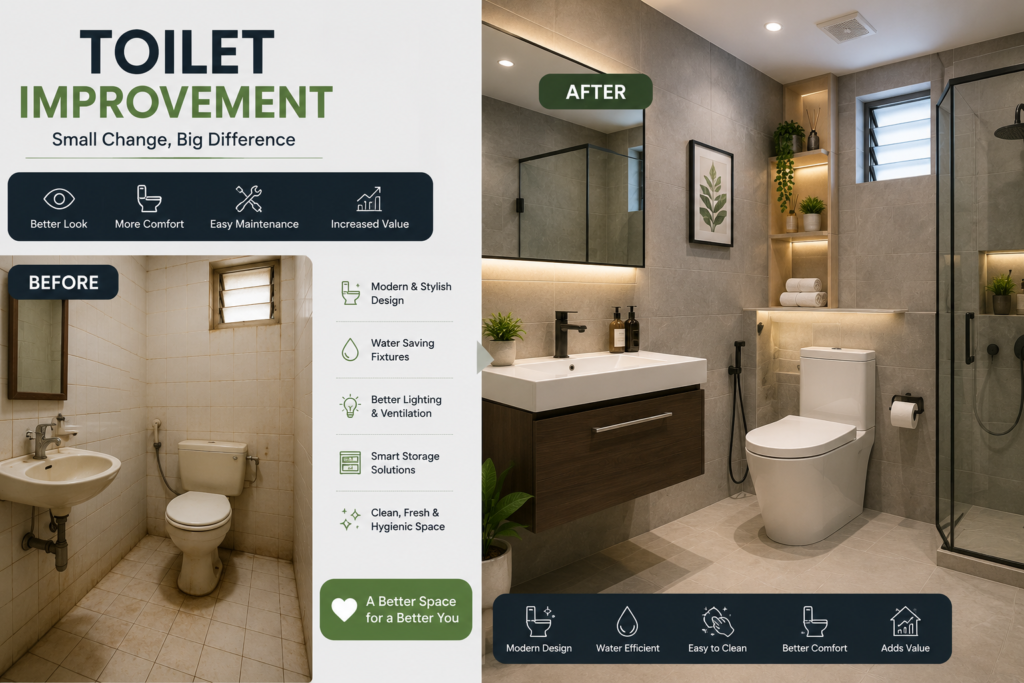
Common Mistakes to Avoid
Several mistakes tend to recur in toilet and bathroom renovation projects, and awareness of these pitfalls can help you avoid costly missteps.
Choosing a toilet based on price alone, without considering rough-in measurements, bowl height, and water efficiency, can lead to an ill-fitting or uncomfortable final result. Take time to measure carefully and consider your household’s specific needs before purchasing.
Underestimating the importance of ventilation is another common oversight. Skimping on exhaust fan quality to save a modest amount on the renovation budget often leads to mold and moisture issues down the line, resulting in far more expensive repairs than the initial cost of a quality fan.
Overlooking accessibility considerations is a mistake that becomes apparent only years later, when mobility needs change and retrofitting becomes necessary. Building in accessible features during the initial renovation, even if not immediately needed, is a far more practical and cost-effective approach.
Finally, neglecting proper waterproofing behind tile and around the toilet base can lead to hidden water damage that isn’t discovered until it has caused significant structural issues. Always ensure proper waterproofing membranes and sealants are used during installation, and don’t cut corners on this critical, if invisible, aspect of bathroom renovation.
Maintaining Your Improved Bathroom
Once your renovation is complete, a few ongoing maintenance habits will help protect your investment. Regularly check the toilet base and supply line connections for any signs of leaking, and address running toilets promptly, since a continuously running toilet can waste significant amounts of water and indicate a worn internal component that’s inexpensive to replace.
Clean grout lines regularly to prevent mold and mildew buildup, and reseal grout periodically to maintain its water-resistant properties. Run the exhaust fan during and after showers to minimize moisture buildup, and consider leaving the bathroom door open when not in use to allow better air circulation.
Conclusion
Improving your toilet and bathroom doesn’t have to mean an overwhelming, expensive undertaking. Whether you’re simply replacing an outdated, inefficient toilet or planning a comprehensive bathroom renovation, careful planning around layout, fixtures, ventilation, and finishing details will ensure a result that’s both functional and visually appealing.
By choosing the right toilet for your household’s needs, prioritizing proper waterproofing and ventilation, and thoughtfully selecting finishes that balance style with practicality, you can create a bathroom that enhances your daily routine while adding lasting value to your home. Even modest improvements in this frequently used space can make a meaningful difference in comfort, efficiency, and overall satisfaction with your home.