The Ultimate Kitchen Improvement Guide: Planning, Design, and Execution
The kitchen is more than just a place to cook—it’s the command center of the modern home. It’s where morning coffee is brewed, homework gets done, holiday meals come together, and friends gather during parties. Because the kitchen plays such a central role in daily life, kitchen renovations consistently rank among the most valuable and most rewarding home improvement projects a homeowner can undertake. This guide walks through every stage of a kitchen improvement project, from initial planning through the finishing touches, helping you create a space that’s both beautiful and highly functional.
Why Kitchen Improvements Matter So Much
Few rooms in a home carry as much weight, both emotionally and financially, as the kitchen. On the financial side, a well-executed kitchen renovation is one of the most reliable ways to increase a home’s resale value. Buyers consistently cite the kitchen as one of the top factors influencing their purchase decision, and an outdated or poorly functioning kitchen can be a major deterrent even when the rest of the home is appealing.
On the personal side, kitchens shape daily routines in ways other rooms simply don’t. A poorly laid out kitchen creates friction in even the simplest tasks—reaching for a pan, finding counter space to chop vegetables, or navigating around family members during a busy dinner prep. A well-designed kitchen, by contrast, makes cooking more enjoyable, entertaining easier, and daily life smoother overall.
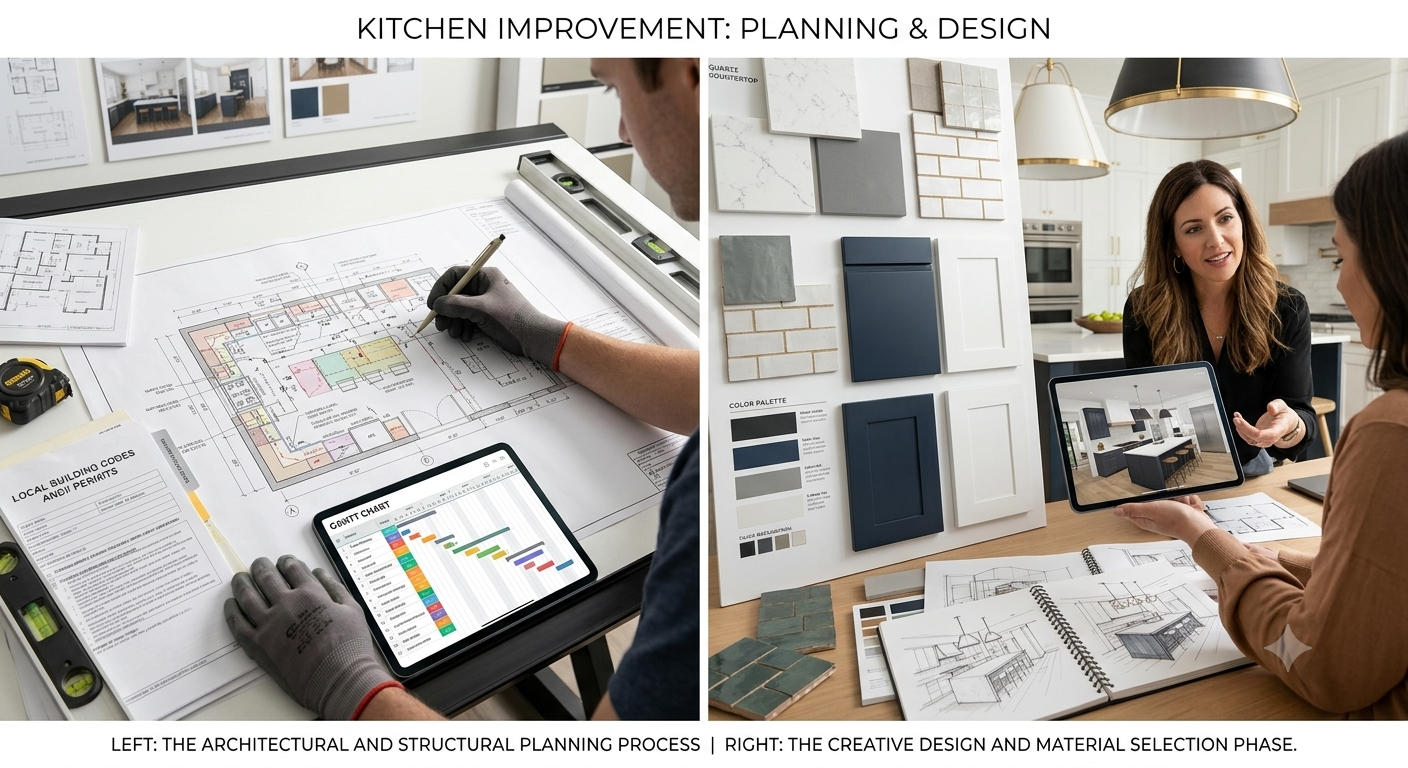
Given the significant investment kitchen renovations typically require, thoughtful planning is essential to ensure the final result meets both your practical needs and your aesthetic goals.
Step One: Assessing Your Current Kitchen
Before diving into design decisions, take time to honestly assess what’s working and what isn’t in your current kitchen. Walk through your daily routines and note specific pain points. Is there enough counter space for meal prep? Do you have to walk too far between the refrigerator, sink, and stove? Is storage adequate, or do you find yourself constantly shuffling items to access what you need?
Consider also the age and condition of existing systems. Outdated electrical wiring may not support modern appliances, and aging plumbing can lead to leaks or inefficient water use. If your kitchen was last updated decades ago, it’s worth having a professional assess these underlying systems before finalizing your renovation plans, since hidden issues can significantly impact your budget and timeline.
Take measurements of the entire space, including ceiling height, window and door placements, and the location of existing plumbing and electrical connections. These measurements will be essential whether you’re working with a designer or planning the layout yourself.
Step Two: Setting Your Budget
Kitchen renovations can range enormously in cost depending on the scope of work, the quality of materials, and whether structural changes are involved. Before getting attached to specific design ideas, establish a realistic budget based on what you’re willing and able to spend.
A helpful approach is to allocate your budget across major categories: cabinetry typically represents the largest portion, often 30-40% of the total budget, followed by appliances, countertops, labor, flooring, and lighting. Setting aside an additional 15-20% as a contingency fund is essential, since kitchens often reveal surprises once demolition begins—particularly in older homes where outdated wiring or water damage may not be visible until walls are opened.
Decide early whether you’re pursuing a full gut renovation, which involves reconfiguring the layout and replacing everything down to the studs, or a cosmetic refresh, which focuses on updating finishes like paint, hardware, and countertops while keeping the existing layout intact. A full renovation offers the most transformative results but comes with a significantly higher price tag and longer timeline. A cosmetic refresh can dramatically improve the look and feel of a kitchen at a fraction of the cost, making it an excellent option for homeowners on a tighter budget.
Step Three: Designing an Efficient Layout
Layout is arguably the single most important factor in kitchen functionality. Even the most beautiful cabinets and countertops won’t compensate for a layout that makes everyday cooking cumbersome.
The Kitchen Work Triangle
The classic design principle known as the “work triangle” positions the sink, stove, and refrigerator at three points forming a triangle, minimizing the distance a cook needs to travel between these key zones. While modern kitchen design has evolved to accommodate more open layouts and multiple cooks, the underlying principle—keeping essential work zones close together and free of obstruction—remains valuable.
Common Kitchen Layouts
Several standard layouts tend to work well across different home styles and sizes. The galley layout, featuring two parallel countertops with a walkway between them, is highly efficient for smaller spaces and creates a streamlined workflow. The L-shaped layout uses two adjoining walls, freeing up space for a dining area or kitchen island. The U-shaped layout wraps around three walls, offering maximum counter and storage space, making it ideal for larger kitchens or serious home cooks. The open-concept layout removes walls between the kitchen and adjacent living spaces, creating a more social cooking environment that has become increasingly popular in recent years.
Kitchen Islands
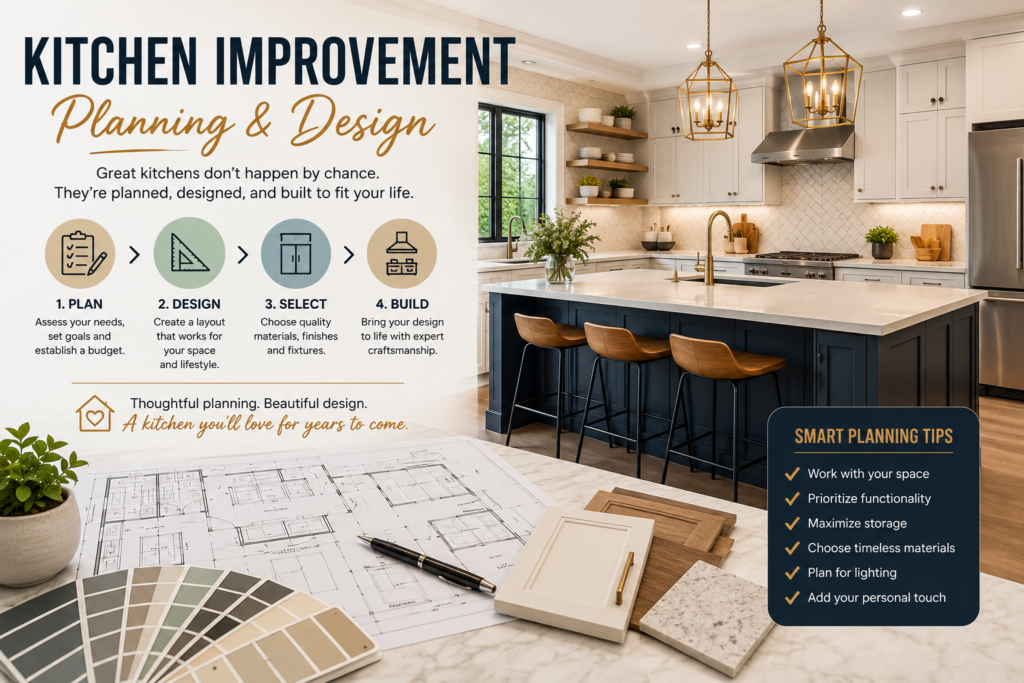
If space allows, a kitchen island can dramatically improve both function and style. Islands provide additional counter space, storage, and often seating, making them a natural gathering point during meal prep and entertaining. When planning an island, ensure there’s adequate clearance—generally at least 42 inches on all sides—to allow comfortable movement around it, especially in kitchens where multiple people cook simultaneously.
Step Four: Choosing Cabinetry
Cabinets set the visual tone for the entire kitchen and represent a major portion of the renovation budget, so this decision deserves careful consideration.
Cabinet Styles
Shaker-style cabinets remain a popular, timeless choice thanks to their clean lines and versatility across design styles, from traditional to modern farmhouse. Flat-panel or slab cabinets offer a sleek, contemporary look well-suited to modern and minimalist kitchens. Raised-panel cabinets bring a more traditional, ornate feel, often favored in classic or formal kitchen designs.
Material Considerations
Solid wood cabinets offer durability and a high-end appearance but come at a premium price. Plywood construction with a wood veneer provides a similar look at a lower cost while maintaining good structural integrity. MDF (medium-density fiberboard) cabinets are the most budget-friendly option and work particularly well for painted finishes, though they’re less durable than solid wood over the long term.
Stock, Semi-Custom, or Custom
Stock cabinets come in standard sizes and are the most affordable and fastest option, typically available for installation within a few weeks. Semi-custom cabinets allow for some modifications to standard sizes and configurations, striking a balance between cost and personalization. Fully custom cabinets are built to your exact specifications, offering maximum flexibility for unusual spaces or specific storage needs, but they come with a significantly higher price tag and longer lead time, sometimes several months.
Smart Storage Solutions
Modern cabinet design has moved well beyond simple shelves. Pull-out drawers for pots and pans eliminate the need to crouch and dig through stacked cookware. Lazy Susans and corner pull-out systems make awkward corner cabinets far more usable. Built-in spice racks, tray dividers, and pull-out trash and recycling bins all contribute to a more organized, efficient kitchen.
Step Five: Selecting Countertops
Countertops need to balance beauty with day-to-day durability, since they’re subjected to constant use, heat, moisture, and potential staining.
Quartz
Engineered quartz has become one of the most popular countertop materials in recent years, and for good reason. It’s highly durable, resistant to stains and scratches, and requires no sealing, unlike natural stone. Quartz is available in a huge range of colors and patterns, including options that closely mimic the look of marble without the associated maintenance concerns.
Granite
Granite remains a beloved choice for homeowners who want the natural beauty and variation of real stone. Each slab is unique, offering one-of-a-kind veining and coloring. Granite is heat-resistant and quite durable, though it does require periodic sealing to prevent staining.
Marble
Marble offers unmatched elegance and a timeless aesthetic that many homeowners find irresistible, particularly for baking-focused kitchens where its naturally cool surface is ideal for working with dough. However, marble is porous and prone to staining and etching from acidic substances, making it a higher-maintenance choice that requires regular sealing and careful use.
Butcher Block
Wood countertops bring warmth and a distinctly organic feel to a kitchen, often used as an accent alongside other materials on an island or a specific section of counter. Butcher block requires regular oiling to maintain its appearance and prevent water damage, and it’s more susceptible to scratching and staining than stone or quartz options.
Laminate
For budget-conscious renovations, laminate countertops have improved significantly in recent years, with modern options offering realistic stone and wood-look patterns at a fraction of the cost. While less durable than stone alternatives, laminate remains a practical choice for homeowners prioritizing affordability.
Step Six: Appliances
Appliances play a major role in both the function and the overall look of a kitchen, and choosing the right ones requires balancing performance, efficiency, and budget.
Refrigerators
Refrigerator styles range from traditional top-freezer models to French door and side-by-side configurations. Counter-depth refrigerators have grown in popularity because they create a more built-in, streamlined appearance by sitting flush with surrounding cabinetry rather than protruding into the room.
Ranges and Cooktops
Gas ranges remain popular among serious home cooks for the precise heat control they offer, while induction cooktops have gained significant traction due to their speed, energy efficiency, and safety, since the surface itself doesn’t get hot. Electric coil and smooth-top ranges remain more budget-friendly options, though they generally offer less precise temperature control than gas or induction.
Dishwashers
Modern dishwashers have become significantly quieter and more energy-efficient than older models. Look for adjustable racks that can accommodate items of varying sizes, and consider a panel-ready dishwasher if you want the appliance to blend seamlessly with your cabinetry rather than standing out as a visible stainless steel front.
Ventilation
An often-overlooked but essential component of any kitchen renovation is proper ventilation. A quality range hood removes smoke, odors, and airborne grease particles, protecting both your indoor air quality and the longevity of your cabinets and paint. Choose a hood with sufficient CFM (cubic feet per minute) rating for your cooking habits and range size.
Step Seven: Flooring
Kitchen flooring needs to withstand heavy foot traffic, moisture, and the occasional dropped dish, all while contributing to the room’s overall design.
Hardwood
Hardwood flooring brings warmth and timeless appeal to a kitchen, and it’s a favorite for open-concept spaces where the kitchen flows directly into living areas. However, hardwood requires more maintenance in a kitchen setting, since spills need to be cleaned promptly to avoid water damage.
Tile
Ceramic and porcelain tile are highly durable and water-resistant, making them a practical choice for kitchen flooring. With a huge range of colors, patterns, and sizes available, tile offers significant design flexibility, though the hard surface can be tiring to stand on for long periods and grout lines require regular cleaning.
Luxury Vinyl Plank
Luxury vinyl plank (LVP) has surged in popularity for kitchens due to its excellent water resistance, durability, and ability to convincingly mimic the look of hardwood or stone at a lower price point. LVP is also more comfortable underfoot than tile, making it a practical choice for kitchens where you spend significant time standing.
Step Eight: Lighting Design
Effective kitchen lighting operates on multiple layers, each serving a distinct purpose.
Ambient Lighting
Ambient, or general, lighting provides overall illumination for the space, typically through ceiling fixtures, recessed lighting, or a combination of both. This layer ensures the kitchen is comfortably lit for general movement and activity.
Task Lighting
Task lighting focuses on specific work areas where detailed activities occur, such as chopping vegetables or reading recipes. Under-cabinet lighting has become nearly standard in modern kitchen design, illuminating countertops directly and eliminating shadows cast by upper cabinets.
Accent Lighting
Accent lighting highlights specific design features, such as open shelving, a decorative backsplash, or the interior of glass-front cabinets. This layer adds depth and visual interest, particularly during evening hours.
Pendant Lighting
Pendant lights over an island or peninsula serve both functional and decorative purposes, providing focused task lighting while also acting as a design statement. Choosing pendants that complement your overall design style can tie the whole room together.
Step Nine: Backsplash and Finishing Details
The backsplash offers an opportunity to introduce color, texture, and personality into the kitchen design. Subway tile remains a classic, versatile choice that pairs well with nearly any design style, while more elaborate patterned tiles or natural stone can serve as a striking focal point.
Cabinet hardware, though small in scale, has an outsized impact on the overall look of the kitchen. Choosing a consistent finish—whether brushed brass, matte black, or polished chrome—across handles, faucets, and light fixtures creates a cohesive, intentional design.
Paint color for walls and, if applicable, cabinets should complement your countertop and flooring choices. Neutral tones remain a safe and popular choice for resale value, while bolder colors can add personality for homeowners prioritizing their own enjoyment over broad market appeal.
Working with Contractors and Designers
For larger kitchen renovations, working with a professional designer or contractor can significantly improve the outcome, particularly when structural changes or complex layouts are involved. When selecting a contractor, request references from previous kitchen projects and, if possible, view completed work in person or through detailed photos.
Get multiple detailed quotes before committing, and ensure each quote clearly outlines the scope of work, materials, timeline, and payment schedule. A written contract protects both parties and should include specifics on what happens if unexpected issues arise during the project.
Communication throughout the renovation is essential. Regular check-ins help catch potential issues early and ensure the project stays aligned with your vision as it progresses.
Living Through a Kitchen Renovation
One aspect of kitchen renovation that’s often underestimated is the disruption to daily life. Depending on the scope of the project, you may be without a functional kitchen for several weeks or even months.
Setting up a temporary kitchen area, even a simple one with a microwave, electric kettle, and mini fridge, can make this period significantly more manageable. Planning meals that require minimal cooking, or leaning on takeout during the most disruptive phases, can also reduce stress during the renovation timeline.
Communicating clearly with your contractor about timeline expectations, and building in some flexibility for potential delays, helps manage frustration if the project runs longer than initially planned—which, in renovation projects, happens more often than not.
Common Kitchen Renovation Mistakes to Avoid
Several mistakes recur frequently in kitchen renovation projects, and being aware of them can help you avoid costly missteps.
Underestimating storage needs is a common oversight. It’s easy to focus on aesthetics and forget to plan adequate storage for all your kitchen items, leading to clutter and frustration once the renovation is complete.
Choosing trendy finishes over timeless ones can also backfire, particularly for homeowners planning to sell in the coming years. While bold, trend-driven choices might look appealing today, they can date quickly and may not appeal to future buyers.
Skimping on ventilation is another frequent mistake, often driven by a desire to save on budget. Proper ventilation is essential for air quality and the longevity of your finishes, making it an area where cutting corners tends to cause regret down the line.
Finally, failing to plan the layout around how you actually cook and use your kitchen can result in a beautiful space that doesn’t function well in practice. Before finalizing your design, walk through your typical cooking routines and ensure the layout supports them.
Conclusion
A kitchen renovation is a significant undertaking, but with careful planning, thoughtful design decisions, and realistic budgeting, it can transform not just the look of your home but the way you experience daily life within it. From selecting the right layout and cabinetry to choosing durable countertops and effective lighting, every decision contributes to creating a kitchen that’s both beautiful and highly functional.
Whether you’re pursuing a full gut renovation or a more modest cosmetic refresh, taking the time to plan thoroughly and avoid common pitfalls will help ensure your kitchen improvement project delivers lasting value, both in terms of daily enjoyment and long-term home value. A well-designed kitchen isn’t just an investment in your property—it’s an investment in the quality of everyday life for everyone who gathers there.