3 Easy Steps How To Unclog Bathroom Sink
How To Unclog Bathroom Sink: Clogged bathroom sinks are a hassle everyone dreads. If you’ve ever dealt with slow draining water or a stubborn blockage, you’re not alone—many people struggle with this common problem. Finding an easy and effective way to fix it can save you time, money, and frustration.
First, gather essential tools like a plunger, bucket, gloves, and an adjustable wrench, then clear the sink area and turn off the water supply to avoid mess.
Next, try simple DIY methods: pour baking soda and vinegar down the drain, let it sit for 15 minutes, then use a plunger or drain snake to clear stubborn clogs.
Finally, run water to check flow, repeat if needed, and take steps to keep your drain clear longer. You’ll find helpful tips for thorough care ahead.
Key Takeaways
- Gather essential tools like a plunger, bucket, wrench, and gloves before you start unclogging your bathroom sink.
- Clear the sink area and place a bucket under the P-trap to catch any water and debris.
- Use baking soda and vinegar, let it sit for 15 minutes, then flush with hot water to break down clogs.
- If needed, use a plunger or drain snake to dislodge stubborn blockages effectively.
- Run water to test the drain flow and repeat the steps if necessary to make sure the drainage is clear.
Get the Tools You Need and Prep Your Sink
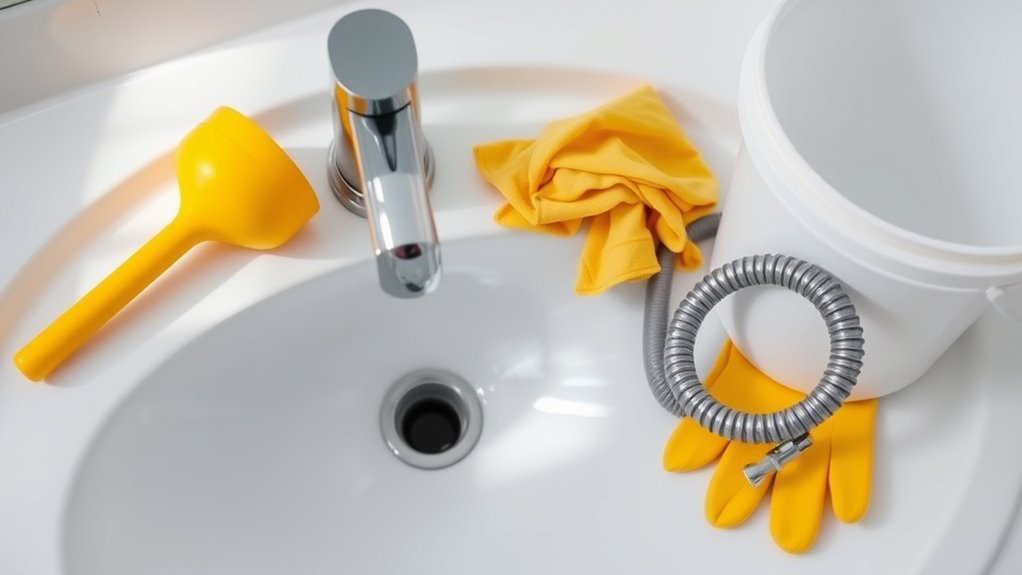
Before you plunge into unclogging your bathroom sink, gather the necessary tools to make the job easier. You’ll need a plunger, a bucket, an adjustable wrench, and a pair of gloves to protect your hands. Having these on hand ensures you tackle the clog efficiently without interruptions.
Gather essential tools like a plunger, bucket, wrench, and gloves before unclogging your bathroom sink.
Since your bathroom sink plays a significant role in personal hygiene, keeping it functional is essential.
Next, prep your sink area by clearing out any items around it to avoid water damage or mess. Place the bucket under the P-trap to catch any water or debris when you loosen the pipes.
Turn off the water supply valves beneath the sink to prevent leaks during plumbing maintenance. By organizing your workspace and assembling the right tools, you set yourself up for a smoother unclogging process, maintaining both cleanliness and hygiene in your bathroom.
Clear Your Bathroom Sink Drain With Easy DIY Tricks
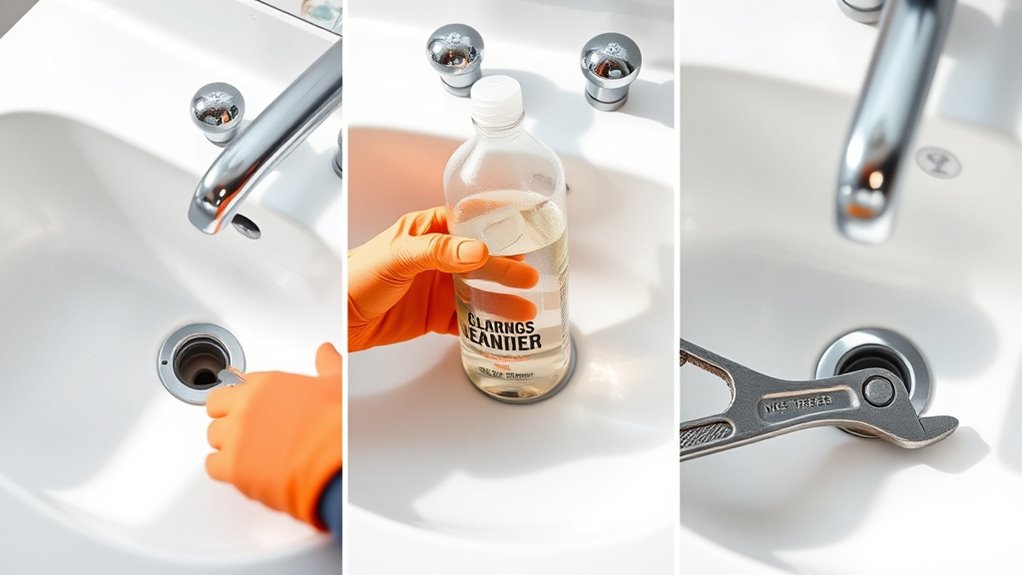
With your tools ready and the area prepped, you can start tackling the clog using simple DIY methods. First, identify common clog causes like hair, soap scum, and toothpaste buildup. Begin by pouring a mixture of baking soda and vinegar down the drain; this natural reaction helps break down debris.
Let it sit for 15 minutes, then flush with hot water to clear loosened gunk. If that doesn’t work, try using a plunger to create suction and dislodge the blockage. For stubborn clogs, a drain snake or wire hanger can be gently inserted to pull out trapped material.
Regular drain maintenance is key to preventing future issues. Avoid letting hair and large particles go down the drain, and run hot water regularly to keep it clear. By using these easy DIY tricks, you can quickly clear your bathroom sink drain and maintain smooth water flow without costly plumber visits.
Test Your Sink and Prevent Future Clogs
After clearing the clog, you’ll want to test your sink to make sure water drains smoothly and no blockages remain. Run the faucet for a few minutes, watching closely for any slow drainage or gurgling sounds. If the water flows freely, you’ve successfully removed the clog. If not, you might need to repeat the process or consider a more thorough plumbing inspection to identify hidden issues.
To prevent future clogs, establish a regular drain maintenance routine. Avoid flushing hair, soap scum, and other debris down the drain. Use a drain strainer to catch particles before they enter the pipes. Periodically flush your drain with hot water or a mixture of baking soda and vinegar to break down buildup.
Scheduling a professional plumbing inspection annually can also catch problems early, ensuring your bathroom sink stays clog-free. By testing your sink and maintaining your drains, you’ll save time and avoid costly repairs down the line.
Frequently Asked Questions
Can Chemical Drain Cleaners Damage My Bathroom Pipes?
Yes, chemical drain cleaners can damage your bathroom pipes if you’re not careful. These products use harsh chemicals that can cause pipe corrosion over time, especially in older or metal plumbing.
To protect your pipes, always follow chemical safety instructions and avoid frequent use. Instead, try safer alternatives like natural cleaners or mechanical methods to keep your drains clear without risking costly pipe damage.
How Do I Know if My Clog Requires a Plumber?
You might think a simple clog calls for a quick fix, but if your bathroom sink remains stubborn after basic attempts, it signals a deeper issue. When water drains slowly or backs up repeatedly, it’s time for a professional plumbing inspection.
A thorough clog diagnosis will reveal hidden problems like pipe damage or severe blockages, which you can’t safely handle alone. Don’t hesitate. Calling a plumber can save you costly repairs later.
Are There Natural Alternatives to Prevent Sink Clogs?
Yes, you can use eco-friendly solutions to prevent sink clogs effectively. Try pouring a mixture of baking soda and vinegar down your drain weekly; it breaks down buildup naturally.
Also, regularly flushing your sink with hot water helps clear grease before it hardens. These preventative measures not only keep your pipes clear but also reduce the need for harsh chemicals, making your home safer and more environmentally friendly.
What Causes Recurring Bathroom Sink Clogs?
Imagine you keep clearing your sink, but it clogs again within days. Recurring bathroom sink clogs often happen because hair, soap scum, and debris build up inside the pipes over time.
If you skip regular drain maintenance and neglect pipe inspection, blockages will return. By staying on top of cleaning and checking your pipes, you can prevent stubborn clogs and keep your sink draining smoothly without constant hassle.
Can Hair Traps Help Reduce Bathroom Sink Blockages?
Yes, hair traps can definitely help reduce bathroom sink blockages. They catch hair accumulation before it goes down the drain, preventing buildup that causes clogs.
However, you’ll need to do regular trap maintenance by cleaning out the collected hair to keep it effective. If you skip this step, hair traps can get clogged themselves, so staying on top of maintenance guarantees your sink stays clear and drains smoothly.
Conclusion
By following these simple steps, you can easily unclog your bathroom sink without calling a plumber. Imagine Sarah, who quickly cleared her stubborn drain using baking soda and vinegar, saving time and money.
After testing her sink to make sure it was draining properly, she added a weekly rinse to prevent future clogs. With just a little effort and the right tools, you can keep your bathroom sink flowing smoothly and avoid messy backups.
Remember, using these easy methods will help you maintain a clear and free-flowing bathroom sink.