10 Tips to Make Your Home Energy Efficient
Struggling to keep your energy bills down while making your home more comfortable? You’re not alone. Many people want to create an energy-efficient living space but don’t know where to start. The good news is there are simple, effective ways to boost your home’s efficiency without a huge hassle.
You can cut energy bills and boost comfort by sealing leaks around windows, doors, and vents with weatherstripping or caulk. Upgrade to energy-efficient windows and insulated doors to reduce drafts. Maximize natural light with skylights and vents for fresh air.
Improve insulation in walls and attics, switch to LED lighting, and choose Energy Star appliances. Insulate water heater pipes and consider solar panels for clean power. Keep exploring for more ways to improve your home’s efficiency.
Key Takeaways
- Seal air leaks around windows, doors, and vents using weatherstripping or caulk. This helps prevent drafts and improves insulation.
- Upgrade to energy-efficient windows and insulated exterior doors. Doing this reduces heat loss and lowers your energy bills.
- Switch to LED lighting and smart controls to maximize energy savings. Plus, LED bulbs last a lot longer.
- Use programmable thermostats to optimize heating and cooling schedules. This simple step reduces energy consumption.
- Install solar panels and take advantage of tax incentives. You can generate renewable energy and save on utility costs.
Why Making Your Home Energy Efficient Matters
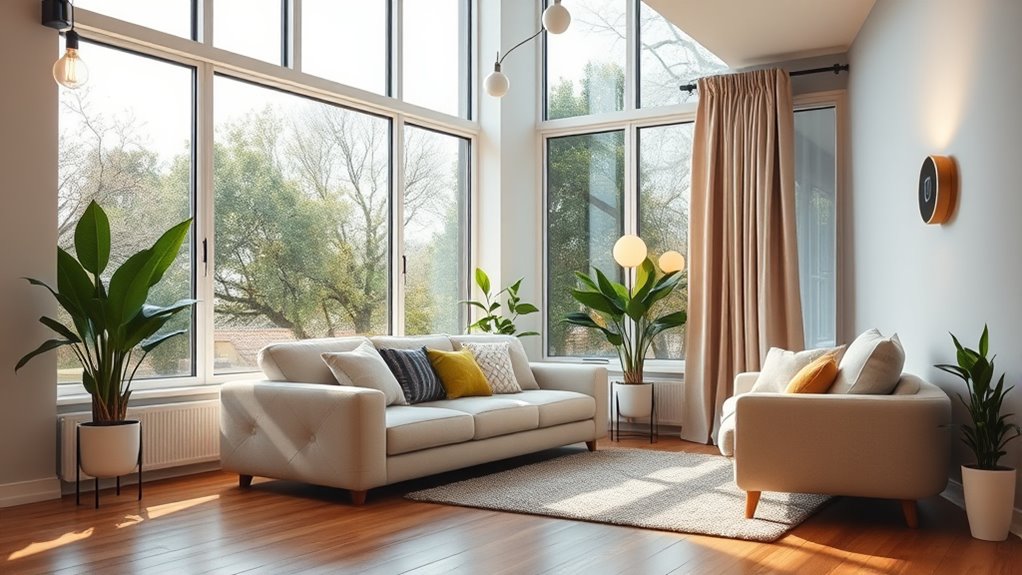
Because energy costs continue to rise, making your home energy efficient saves you money on utility bills. When you focus on energy conservation, you’re not just cutting expenses, you’re also reducing your carbon footprint.
Saving energy at home cuts costs and lowers your carbon footprint, benefiting both you and the planet.
Using renewable sources like solar or wind power can further lower your dependence on fossil fuels and contribute to a cleaner environment. By upgrading to energy-efficient appliances and lighting, you reduce wasted energy and improve your home’s overall performance.
You’ll also feel more comfortable living in a space that’s designed to maintain temperature without overworking your heating or cooling systems. Plus, investing in energy efficiency increases your home’s value, making it a smart long-term decision.
When you make these changes, you play a direct role in protecting natural resources and promoting sustainability. Overall, prioritizing energy efficiency benefits both your wallet and the planet, making it an essential step toward a greener lifestyle.
Seal Air Leaks to Keep Warmth Inside
You can save a lot of energy by sealing air leaks around your home, especially near windows, doors, and vents. It’s a good idea to look for cracks or gaps where warm air might sneak out. Once you find them, you can use weatherstripping or caulk to close those openings up.
Choosing the right sealing materials makes all the difference. That way, you keep the warmth inside without wasting energy. It’s a simple step that really helps make your home cozier and more efficient.
Identify Common Leak Areas
When drafts sneak into your home through cracks and gaps, they can quickly sap your warmth and increase energy bills. To stop this, start with a thorough insulation inspection, focusing on areas where your home meets the outside air.
Check around windows, doors, baseboards, and attic hatches for any visible gaps. Use draft detection tools like a smoke pencil or an infrared thermometer to spot hidden leaks. Don’t forget common leak spots such as electrical outlets, plumbing penetrations, and recessed lighting fixtures.
Identifying these common leak areas helps you target your efforts effectively, ensuring you seal them properly later. Regularly performing draft detection and insulation inspection keeps your home cozy and energy-efficient throughout the colder months.
Effective Sealing Materials
Although finding leaks is essential, choosing the right sealing materials makes all the difference in keeping warmth inside your home. You’ll want weather resistant barriers for exterior gaps to block moisture and drafts effectively.
Inside, acoustic sealing products help reduce noise and prevent air leaks around doors and windows. Use caulks, foams, and weatherstrips tailored for each spot. Here’s a quick guide:
| Material | Best Use | Key Benefit |
|---|---|---|
| Weather Resistant Barrier | Exterior walls, roofs | Blocks moisture, drafts |
| Acoustic Sealing | Interior doors, windows | Reduces noise, air leaks |
| Expanding Foam | Gaps around pipes | Fills irregular spaces |
| Silicone Caulk | Window frames | Flexible, durable seal |
| Weatherstripping | Doors, movable parts | Easy to install, reusable |
Select materials based on location and exposure for maximum energy efficiency.
Upgrade Windows and Doors to Energy-Efficient Models
Because windows and doors are major sources of heat loss and gain, upgrading to energy-efficient models can substantially reduce your energy bills. Start by considering window replacement with options that feature double or triple glazing and low-emissivity coatings. These windows minimize heat transfer, keeping your home warmer in winter and cooler in summer.
When selecting new windows, look for ENERGY STAR ratings to ensure top performance. Don’t overlook door insulation either. Installing insulated exterior doors or adding weatherstripping around existing ones helps prevent drafts and air leaks.
Materials like fiberglass or steel with foam cores provide excellent thermal resistance, improving your home’s overall efficiency. Properly insulated doors create a tighter seal, reducing the workload on your heating and cooling systems. By investing in quality window replacement and door insulation, you’ll create a more comfortable living space while reducing energy costs year-round.
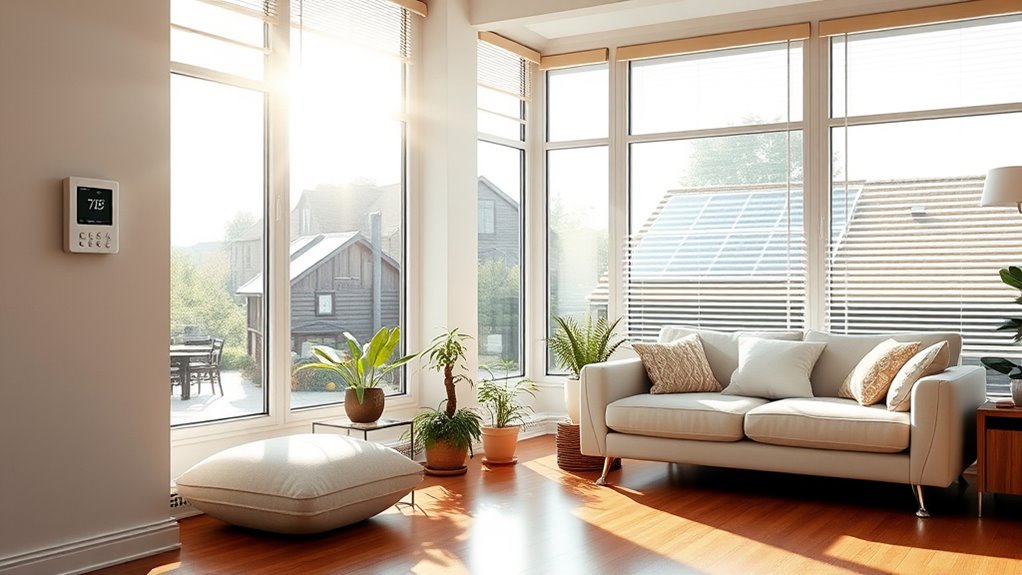
Use Natural Light and Fresh Air to Save Energy
Upgrading your windows and doors not only improves insulation but also opens opportunities to harness natural light and fresh air more effectively. You can reduce your reliance on artificial lighting and air conditioning by maximizing daylight utilization and natural ventilation. Here’s how to make the most of these benefits:
- Position furniture to allow sunlight to brighten key areas during the day.
- Use light-colored curtains or blinds that diffuse light without blocking it.
- Open windows strategically to create cross-ventilation, promoting natural airflow and cooling.
- Consider installing skylights or solar tubes to bring more daylight into dark spaces.
Improve Wall and Attic Insulation
When you improve wall and attic insulation, you create a more comfortable home that uses less energy for heating and cooling. Proper insulation acts as a thermal barrier, slowing heat transfer and maintaining your home’s temperature year-round.
Start by checking your current insulation materials to see if they meet recommended levels. You can choose from options like fiberglass batts, spray foam, or cellulose, each offering different benefits and price points.
Focus on sealing gaps and adding insulation where it’s thin or missing, especially in your attic, which is a major source of heat loss. Upgrading your insulation not only reduces energy bills but also minimizes drafts and noise.
Install a Programmable Thermostat to Control Heating
Although heating systems work hard to keep your home comfortable, you can take control by installing a programmable thermostat. This device lets you tailor your heating schedule for maximum efficiency, saving energy without sacrificing comfort.
Take control of your home’s comfort and energy use with a programmable thermostat tailored to your schedule.
Here’s how a programmable thermostat helps:
- Smart scheduling: Set different temperatures for when you’re home, away, or asleep, so you’re not heating an empty house.
- Temperature optimization: Automatically adjusts settings to maintain ideal warmth without wasting energy.
- Reduced energy bills: Avoid overheating by heating only when needed, lowering your monthly costs.
- User-friendly control: Easily program and adjust settings via touchscreen or smartphone apps.
Cut Water Heating Costs With Efficient Fixtures
You can lower your water heating bills by installing low-flow showerheads. They use less hot water but don’t sacrifice pressure, so you still get a good shower. Plus, insulating your water heater pipes helps keep the heat from escaping. This means your water stays warmer for longer. These simple changes really add up, helping you save energy and cut costs quickly.
Low-Flow Showerheads Benefits
Because low-flow showerheads reduce the amount of water used without sacrificing pressure, you’ll see noticeable savings on your water heating bills. These fixtures boost shower efficiency while promoting water conservation, making them a smart choice for any home. Here’s why you should switch:
- Cuts water usage by up to 50%, lowering your monthly water bill.
- Reduces the energy needed to heat water, shrinking your energy costs.
- Maintains strong water pressure, so your shower feels just as invigorating.
- Supports environmental sustainability by conserving precious water resources.
Insulating Water Heater Pipes
When you insulate your water heater pipes, you keep heat from escaping as hot water travels to your faucets. This simple step boosts water heater efficiency, reduces energy waste, and lowers your utility bills.
Pipe insulation also helps your water heater maintain consistent temperatures, so you get hot water faster without running the tap.
Here’s a quick guide to pipe insulation materials and their benefits:
| Material | Benefits |
|---|---|
| Foam Tubing | Easy to install, cost-effective |
| Fiberglass Wrap | High heat resistance |
| Rubber Insulation | Flexible, durable |
| Reflective Wrap | Reflects heat, moisture resistant |
| Pre-slit Foam | Quick application, good for bends |
Switch to Energy-Efficient LED Lighting
How much energy could you save by switching to LED lighting? Quite a lot, actually. LEDs use up to 75% less energy than traditional bulbs and last considerably longer. This means fewer replacements and lower costs.
Plus, with smart lighting options, you can control brightness and schedules remotely, making it easy to maximize energy savings.
Here’s why switching to LED lighting is a smart move:
- Energy efficiency: LEDs consume less power for the same brightness.
- Bulb longevity: They last 15-25 times longer than incandescent bulbs.
- Smart lighting compatibility: Integrate with smart home systems to optimize usage.
- Reduced heat output: LEDs emit minimal heat, lowering cooling costs.
Choose Energy-Efficient Appliances and Electronics
When you’re shopping for appliances and electronics, try to look for the Energy Star label. This label guarantees that the product is energy-efficient. Not only will you save money, but you’ll also reduce your carbon footprint by choosing these certified products. Plus, it’s a good idea to prioritize smart technology—these devices help you monitor and control your energy use easily. It’s a simple way to be more eco-friendly without much extra effort.
Look for Energy Star
Millions of appliances and electronics carry the Energy Star label, making it easier for you to identify products that use less energy without sacrificing performance. When you choose items with Energy Star certification, you’re making eco friendly choices that reduce your utility bills and environmental footprint.
Here’s why you should prioritize Energy Star products:
- They meet strict energy efficiency guidelines set by the EPA.
- They help lower greenhouse gas emissions.
- They often come with rebates or incentives.
- They maintain high quality and durability standards.
Prioritize Smart Technology
Although smart technology might seem like a luxury, choosing energy-efficient appliances and electronics can considerably cut your energy use and costs. By prioritizing smart home integration, you can control devices remotely and optimize their operation to reduce wasted energy.
Look for appliances with automated energy management features that adjust settings based on your usage patterns, ensuring efficiency without sacrificing convenience. Smart thermostats, lighting, and even kitchen appliances can adapt to your schedule, lowering consumption when you’re away or asleep.
Investing in these technologies not only saves money but also simplifies managing your home’s energy. Embracing smart technology is a practical step that aligns comfort with sustainability, making your home more energy-efficient in an easy, effective way.
Install Solar Panels to Generate Your Own Power
By installing solar panels, you can substantially reduce your reliance on traditional energy sources and lower your utility bills. Solar energy offers a clean, renewable power source that benefits both your wallet and the environment. Before committing, consider these key points:
- Photovoltaic system costs: Initial expenses vary, but incentives and tax credits can offset them.
- Solar panel maintenance: Panels require minimal upkeep, mostly cleaning and occasional inspections to ensure peak performance.
- Energy independence: Generating your own power shields you from rising energy prices and outages.
- Long-term savings: Though upfront costs exist, your investment pays off through reduced monthly bills over time.
Frequently Asked Questions
How Does Energy Efficiency Impact My Home’s Resale Value?
Energy efficiency can considerably boost your home’s resale value by attracting buyers who want lower utility bills and a comfortable living space. When you invest in home insulation and conduct energy audits, you identify and fix energy waste, making your home more appealing.
Buyers appreciate these upgrades because they promise long-term savings and environmental benefits, helping your property stand out in a competitive market and potentially increasing its selling price.
What Government Incentives Exist for Energy-Efficient Home Upgrades?
You can take advantage of government rebates and tax credits to offset the cost of energy-efficient home upgrades. Many programs offer rebates for installing things like solar panels, efficient HVAC systems, or insulation.
Furthermore, tax credits can reduce your annual tax bill when you invest in qualifying improvements. Be sure to check federal, state, and local incentives, as they vary widely. These perks make upgrading more affordable and boost your home’s value.
Can Energy-Efficient Homes Improve Indoor Air Quality?
Yes, energy-efficient homes can improve indoor air quality. When you upgrade your ventilation systems, you reduce pollutants and moisture buildup inside your home.
Proper ventilation helps circulate fresh air, preventing stuffiness and reducing allergens. Furthermore, energy-efficient homes often use materials and technologies that minimize harmful emissions.
How Often Should I Maintain Energy-Efficient Appliances?
You should follow the maintenance schedule recommended by your appliance’s manufacturer to keep it running efficiently and extend its appliance lifespan. Generally, checking and servicing energy-efficient appliances every 6 to 12 months works well.
Regular maintenance helps spot issues early, preventing costly repairs and ensuring ideal performance. Don’t skip routine cleanings, filter changes, or inspections, as these small steps can greatly boost your appliance’s durability and efficiency.
What Is the Average Payback Period for Solar Panel Installation?
The average payback period for solar panel installation usually ranges from 6 to 10 years. Solar panel costs and your location’s sunlight play big roles here.
The installation timeline typically takes a few weeks, but savings start as soon as your system’s up and running. You’ll recoup your investment through lower energy bills, especially if you take advantage of local incentives or tax credits that can reduce those upfront costs.
Conclusion
By making your home energy efficient, you’re not just sealing leaks or swapping bulbs. You’re lighting a path to a brighter future.
Each small change is a seed planted for your family’s comfort and the planet’s health. Think of your home as a sturdy shield, protecting you while gently caring for the world outside.
Adopt these steps, and watch your energy savings grow into a powerful symbol of hope and responsibility. Making your home energy efficient truly makes a difference for today and tomorrow.