5 Tips to Improve Home Insulation
If you’ve ever felt a chilly draft sneaking into your home or noticed your energy bills creeping up, you’re not alone. Many people struggle with keeping their homes comfortable and energy-efficient because of poor insulation. The good news is, improving home insulation doesn’t have to be overwhelming.
With the right products and a few smart strategies, you can create a cozier, more efficient living space.
To improve your home insulation, start by identifying drafts and thin insulation in areas like the attic and walls using thermal imaging or simple checks. Choose materials suited for each room, such as spray foam for tight spaces or rigid foam in moist areas. Seal air leaks around windows, doors, and outlets with caulk or weatherstripping.
Add insulation to attics, walls, and floors, and boost protection with thermal curtains and door draft stoppers. Keep examining to uncover even more ways to improve your home’s comfort and efficiency.
Key Takeaways
- Identify and seal air leaks around windows, doors, and outlets to prevent drafts and energy loss.
- Add or upgrade insulation in attics, walls, and floors. Focus on areas with thin or compressed insulation.
- Use appropriate insulation materials like spray foam for tight spaces and rigid foam in moisture-prone areas.
- Install weatherstripping and thermal curtains on windows and doors to enhance insulation and block drafts.
- Ensure proper attic ventilation to prevent moisture buildup and keep insulation effective.
How to Spot Where Your Home Needs More Insulation
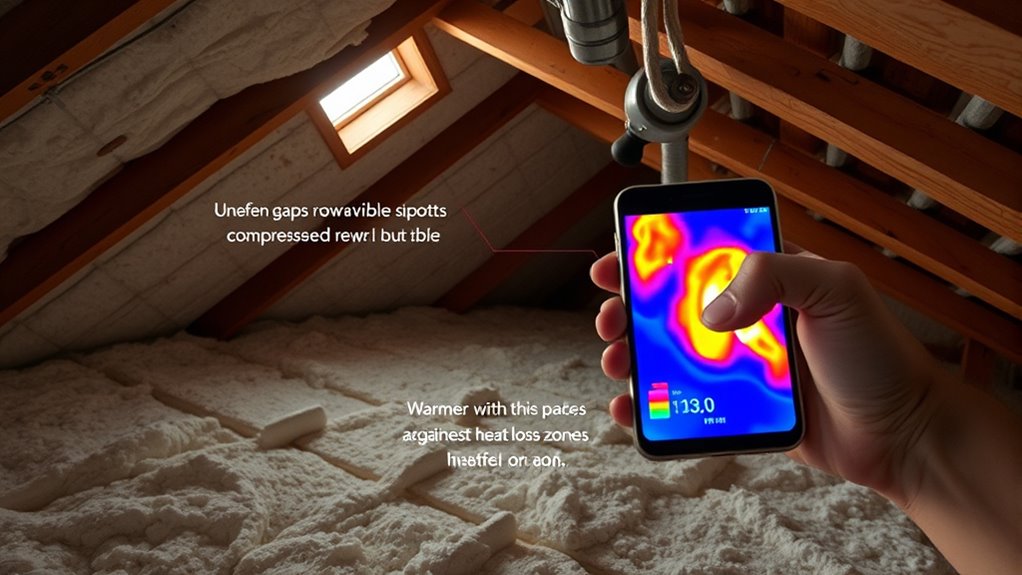
Before adding insulation, you need to identify the problem areas in your home. Start by checking common spots like attic floors, walls, and around windows for drafts or uneven temperatures.
Using thermal imaging can make this process much easier. It visually highlights heat loss areas, showing you exactly where insulation is lacking or where insulation thickness is inconsistent. You can rent or hire a professional to perform a thermal scan, which detects cold spots invisible to the naked eye.
Next, measure the insulation thickness in your attic or crawl spaces to see if it meets recommended levels for your climate. Thin or compressed insulation won’t perform well, so pinpointing these areas helps you prioritize your efforts.
Picking the Best Insulation Materials for Every Room
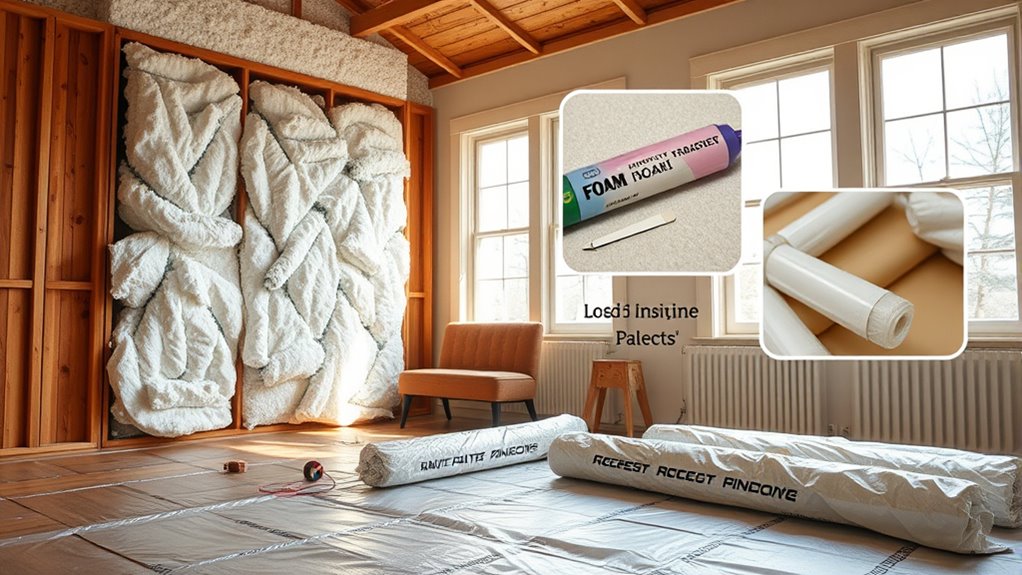
When choosing insulation materials, consider each room’s unique needs and conditions to maximize effectiveness. Different insulation types work better depending on moisture levels, temperature, and usage. For example, fiberglass batts are great for walls and ceilings in dry areas, offering good thermal resistance at an affordable price.
Tailor insulation choices to each room’s conditions for optimal efficiency and comfort.
Spray foam works well in tight spaces and rooms prone to drafts. It seals gaps while providing high R-values. In basements or bathrooms, moisture-resistant materials like rigid foam boards help prevent mold.
Material comparison is key: weigh factors like cost, R-value, ease of installation, and durability. Some materials, like cellulose, provide eco-friendly options but may require professional installation.
You’ll also want to consider fire resistance and soundproofing qualities depending on the room’s purpose. By matching insulation types to each room’s demands, you’ll boost energy efficiency and comfort throughout your home without overspending or compromising quality.
Seal Air Leaks by Fixing Gaps and Cracks
Although choosing the right insulation materials is vital, you’ll lose much of their effectiveness if you don’t seal air leaks by fixing gaps and cracks. Start by inspecting common trouble spots like window frames, door edges, baseboards, and around plumbing or electrical outlets. Use weatherstripping or caulk to close small gaps, and expandable foam for larger cracks.
This straightforward step prevents drafts, reduces energy loss, and improves comfort.
Keep in mind that sealing air leaks works hand in hand with ventilation improvements. While you want to block unwanted airflow, proper ventilation ensures good indoor air quality and prevents moisture buildup that can damage insulation.
Regular insulation maintenance is essential. Periodically check for new cracks or deteriorations and seal them promptly. By addressing air leaks consistently, you’ll maximize your home’s energy efficiency, reduce heating and cooling costs, and maintain a cozy living environment year-round.
Add Insulation to Attics, Walls, and Floors for Best Results
To boost your home’s energy efficiency, adding insulation to key areas like attics, walls, and floors is essential. Proper attic ventilation helps prevent moisture buildup, protecting your insulation and extending its life.
Choosing the right insulation types, such as fiberglass, cellulose, or spray foam, can make a significant difference in thermal performance and cost-effectiveness.
Here’s a quick guide to insulation types and their best applications:
| Area | Recommended Insulation Type |
|---|---|
| Attics | Blown-in cellulose or fiberglass |
| Walls | Spray foam or rigid foam boards |
| Floors | Fiberglass batts or spray foam |
| Crawl Spaces | Rigid foam boards |
Boost Insulation With Window Treatments and Door Draft Stoppers
Improving insulation in your attics, walls, and floors sets a solid foundation, but you can further reduce heat loss by focusing on windows and doors. Windows often let cold air seep in, so using thermal curtains can trap warmth inside and block drafts effectively.
Alongside this, door draft stoppers, like draft snakes, help seal gaps at the bottom of doors to prevent chilly air from sneaking in.
Here’s how you can boost insulation around windows and doors:
- Install thermal curtains to maintain indoor temperature.
- Use draft snakes or door draft stoppers to block air leaks.
- Apply weatherstripping around window frames and door edges.
- Seal cracks with caulk for a tighter barrier.
- Add double-glazed or storm windows for extra protection.
Frequently Asked Questions
How Often Should Home Insulation Be Replaced?
You should consider replacing your home insulation every 15 to 25 years, depending on the insulation lifespan specific to the material used. Replacement recommendations vary, so inspect for damage, moisture, or pest issues regularly.
If you notice drafts, higher energy bills, or visible wear, it’s time to act. Staying proactive guarantees your home stays energy-efficient and comfortable, saving you money in the long run.
Can Insulation Improve Indoor Air Quality?
Insulation can totally transform your indoor air quality! It acts like a superhero barrier, blocking dust, allergens, and pollutants from sneaking inside.
When combined with proper air filtration and efficient ventilation systems, your home’s air becomes fresh and breathable. You’ll notice fewer sneezes and less dust settling everywhere.
What Are the Environmental Benefits of Home Insulation?
You’ll reduce your carbon footprint by using home insulation made from eco friendly materials, which lowers energy consumption. Insulation keeps your home temperature stable, so your heating and cooling systems don’t have to work as hard, cutting greenhouse gas emissions.
Plus, choosing sustainable insulation options helps conserve natural resources. Overall, you’ll contribute to a healthier planet while saving money on energy bills.
Are There Insulation Options Safe for Pets and Children?
Yes, you can choose pet safe materials and child friendly insulation like cellulose, cotton, or sheep’s wool. These options are non-toxic, reducing risks for your kids and pets.
Avoid fiberglass or spray foam, which can irritate skin and lungs. You’ll want to guarantee proper installation to prevent exposure.
Using safe insulation helps keep your home cozy without compromising your family’s health or safety.
How Does Insulation Affect Home Resale Value?
Sure, your home’s resale value skyrockets if buyers adore paying sky-high energy bills, said no one ever. You’ll actually boost your home’s market appeal by investing in quality insulation installation.
The insulation cost might seem like a splurge, but potential buyers love knowing they’ll save on heating and cooling. So, by upgrading your insulation, you’re not just keeping cozy—you’re making your home way more attractive when it’s time to sell.
Conclusion
By spotting sneaky spots, selecting smart solutions, and sealing stubborn seams, you’ll save significant energy and stay snug. Adding ample attic, wall, and floor insulation fortifies your fortress, while window treatments and door draft stoppers deliver delightful drafts defense.
Don’t delay. Dedicate yourself to these dynamic details and enjoy a cozy, cost-effective castle all year round. Your home’s comfort and your wallet will thank you tremendously for improving home insulation!