10 Essential Tips for Efficiently Cleaning Your Home
Cleaning your home efficiently can feel overwhelming, and you’re definitely not alone if you struggle to keep up with it. Many people find themselves stuck in a cycle of endless chores without seeing the results they want.
If you’re looking for ways to make your cleaning routine smoother and less stressful, 10 Essential Tips for Efficiently Cleaning Your Home can help you get there.
Start by creating a clear cleaning plan that schedules daily, weekly, and monthly tasks focusing on high-traffic areas first. Gather and organize your supplies beforehand for quick access.
Declutter each room to make cleaning easier, then prioritize tasks to work smarter, not harder.
Use a timer to keep sessions focused and involve your family with age-appropriate chores to speed things up.
Choose eco-friendly, time-saving tools to boost efficiency. Keep going and you’ll uncover even better ways to shine your space.
Key Takeaways
- Create a cleaning schedule prioritizing high-traffic areas and balance daily, weekly, and monthly tasks for consistent efficiency. This helps keep your cleaning routine manageable and effective.
- Gather and organize eco-friendly supplies beforehand. Using multifunctional tools and automated devices can save you time and reduce clutter around the house.
- Use appropriate cleaning products by reading labels carefully. Match cleaners to specific surfaces to ensure safety and get the best results.
- Declutter rooms regularly and implement storage solutions. This keeps your space organized and makes cleaning sessions faster and less stressful.
- Clean systematically from top to bottom. Involve family members with age-appropriate tasks, and use timers to stay focused and motivated throughout.
Start With a Clear Cleaning Plan for Your Home
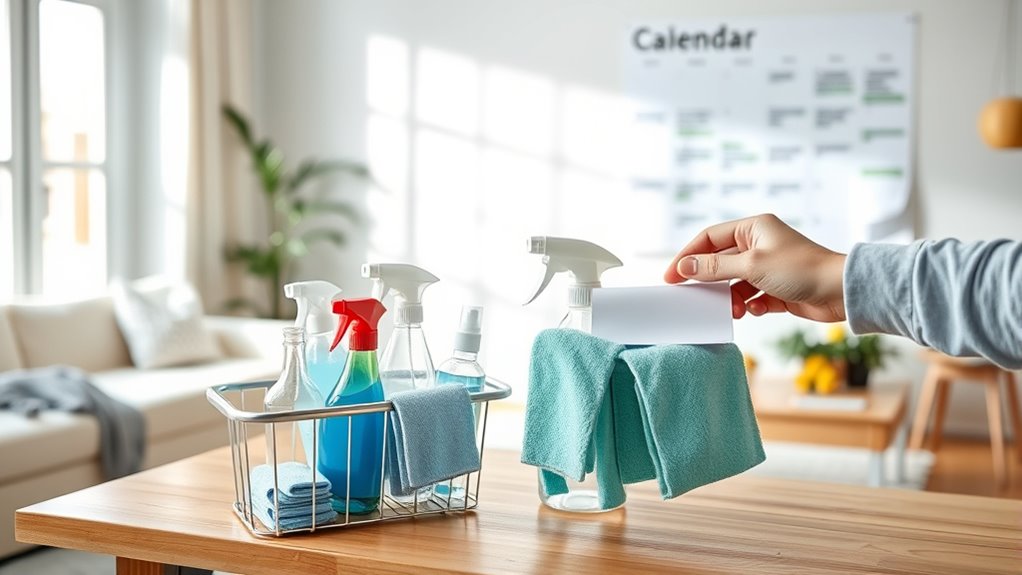
Before you plunge into scrubbing and dusting, create a clear cleaning plan for your home. Starting with a well-structured cleaning schedule helps you stay organized and guarantees no area gets overlooked.
Begin with a clear cleaning plan to stay organized and ensure every corner is attended to.
Break down tasks by daily, weekly, and monthly chores to avoid feeling overwhelmed. Prioritize high-traffic spaces but don’t forget less-used rooms.
When planning, consider incorporating eco friendly products. They not only protect your health but also reduce environmental impact. Choose biodegradable cleaners and reusable tools to maintain a sustainable routine.
Scheduling specific days for different tasks lets you tackle cleaning efficiently without burnout. You’ll find it easier to maintain a consistently clean home when you have a plan that balances thoroughness with practicality.
Grab Your Cleaning Supplies Before You Start
Before you get started, make sure to gather all the cleaning tools and products you’ll need. This way, you won’t have to stop midway to look for something. It’s helpful to organize your supplies by task so you can easily move from one area to the next without any hassle. And hey, don’t forget to check the product labels to make sure they’re safe for the surfaces you’re cleaning.
Gather All Necessary Tools
Although it might be tempting to start cleaning right away, gathering all your necessary tools first will save you time and frustration. Before you jump in, make sure you have your essential cleaning gadgets and consider storage solutions to keep things tidy. Being prepared means you won’t waste time searching for items mid-clean.
Here’s a quick checklist to help you gather what you need:
| Tool Type | Examples | Purpose |
|---|---|---|
| Cleaning Gadgets | Vacuum, microfiber cloth | Efficient dirt removal |
| Cleaning Agents | All-purpose cleaner, disinfectant | Surface sanitation |
| Accessories | Gloves, scrub brushes | Protect hands, tough spots |
| Storage Solutions | Caddy, baskets | Organize and carry tools |
Gathering these tools upfront keeps your cleaning process smooth and efficient.
Organize Supplies By Task
Once you’ve gathered all your cleaning tools, it’s helpful to organize your supplies by the tasks you’ll be tackling. This approach saves time and keeps you focused, especially when following a cleaning schedule.
Group similar items together, like dusters, glass cleaners, and microfiber cloths for dusting. Place heavier products like floor cleaners in a separate section. Use clear bins or labeled baskets for efficient supply storage.
This makes it easy to grab what you need without searching. Organizing by task also helps you track which supplies need replenishing before you start.
When your supplies are tidy and ready, you’ll move smoothly through your cleaning routine, completing jobs faster and with less frustration. This simple step sets a strong foundation for efficient home cleaning.
Check Cleaning Product Labels
Since cleaning products vary in their ingredients and uses, you should always check labels carefully before starting. Label reading is essential to guarantee you use each product safely and effectively.
Before grabbing your supplies, take a moment for ingredient verification to avoid mixing chemicals that could be harmful or less effective. This step also helps you identify any allergens or irritants, protecting your health and that of others in your home.
Checking labels lets you match the right cleaner to the surface or task, saving time and effort. Don’t overlook expiration dates or special instructions either.
Declutter Each Room to Make Cleaning Easier
When you declutter each room, you create a cleaner, more organized space that makes the actual cleaning much faster and less stressful. Start by sorting through items and deciding what to keep, donate, or toss. This reduces the amount of stuff you need to clean around and helps you focus on what’s truly important.
Implementing effective organizational systems is key. Use labeled bins, shelves, and drawer dividers to keep everything in its place. Storage solutions like under-bed containers or wall-mounted racks maximize space and prevent clutter from piling up again.
Prioritize Tasks to Clean Smarter, Not Harder
Although cleaning every corner of your home can feel overwhelming, prioritizing tasks helps you work smarter and save time. Start by identifying areas that need deep cleaning versus those that only require spot cleaning. Focus on high-traffic spaces like the kitchen and bathroom first, as they tend to accumulate more dirt and germs.
Then, tackle less-used rooms or surfaces with spot cleaning to maintain freshness without spending unnecessary effort. Create a flexible cleaning schedule based on your home’s needs, alternating between deep cleaning sessions and quick spot cleanings. This approach prevents buildup and keeps your space consistently tidy.
Best Cleaning Methods for Floors, Counters, and Fabrics
You’ll want to use the right techniques to keep your floors spotless, counters germ-free, and fabrics fresh. It’s really about simple habits—like sweeping regularly, wiping down surfaces with the right cleaners, and treating stains as soon as they happen. These small steps can make a big difference. So, let’s take a closer look at the best ways to keep each surface in great shape.
Floor Cleaning Techniques
Because floors, counters, and fabrics each require different care, choosing the right cleaning method can save you time and effort.
Regarding floors, start by mastering vacuuming methods. Use a vacuum with adjustable settings for carpets and hard floors to effectively remove dust and debris.
For mopping techniques, choose the right mop for your floor type. Microfiber mops work well on hardwood and tile. Always mop in a figure-eight motion to cover all areas evenly and avoid streaks.
Don’t soak floors; instead, use a damp mop to prevent water damage. Regularly change your mop water to keep floors clean without spreading dirt.
Countertop Maintenance Tips
When maintaining countertops, selecting the right cleaning products and techniques prevents damage and keeps surfaces looking fresh. Start by wiping spills immediately to avoid stubborn stains.
For stain removal, use a gentle, non-abrasive cleaner suited for your countertop material, whether granite, quartz, or laminate. Avoid harsh chemicals that can dull or etch surfaces.
After cleaning, apply surface polishing products designed for your countertop type to restore shine and protect against future wear. Use a soft cloth to buff the surface evenly, enhancing its appearance without scratching.
Regularly maintaining your countertops with these methods not only extends their lifespan but also guarantees a hygienic and inviting kitchen environment. By being consistent and careful, you’ll keep your counters spotless and polished effortlessly.
Fabric Care Strategies
Three key fabric care strategies can transform how you clean floors, counters, and fabrics, making maintenance faster and more effective. Prioritize upholstery maintenance by vacuuming regularly and treating stains immediately.
For fabric stain removal, always test cleaning solutions on hidden spots to avoid damage. When cleaning floors and counters, use appropriate cleaners that won’t harm nearby textiles.
| Surface Type | Cleaning Method | Key Tip |
|---|---|---|
| Upholstery | Vacuum + Spot Clean | Use mild detergent for stains |
| Fabric Stains | Blot + Gentle Cleaner | Test solution first |
| Floors | Mop with Neutral Cleaner | Avoid harsh chemicals |
| Counters | Wipe with Damp Cloth | Prevent fabric contamination |
Applying these strategies will keep your home fresh and extend fabric life.
Clean From Top to Bottom to Avoid Re-Cleaning
Though it might seem simple, cleaning from top to bottom saves you time and effort by preventing dust and debris from settling on already cleaned surfaces. Start with ceiling fans, light fixtures, and shelves using effective dusting techniques like microfiber cloths or electrostatic dusters. These tools trap dust without spreading it around.
When tackling tougher grime, choose appropriate cleaning chemicals to avoid damaging walls or furniture. Spray them on cloths first, not directly on surfaces, to control application and prevent streaks.
As you move downward, dust window sills, countertops, and finally floors. This order ensures that any particles falling during dusting won’t dirty areas you’ve already cleaned.
Target High-Traffic Areas First
Since these spots see the most foot traffic, focusing your cleaning efforts on high-traffic areas first keeps your home looking fresh and prevents dirt from spreading elsewhere. High traffic areas like entryways, hallways, and kitchens tend to accumulate dust, mud, and scuff marks faster than other parts of your home.
You’ll tackle the biggest cleaning challenges upfront by prioritizing these zones. Pay special attention to floors, doormats, and frequently touched surfaces, as they can harbor germs and grime. Using the right tools, like a vacuum with strong suction or a microfiber mop, makes the job quicker and more effective.
Use a Timer to Keep Cleaning Quick and Easy
When you set a timer for your cleaning sessions, you’ll stay focused and avoid letting tasks drag on longer than necessary. Using a timer helps you stick to your cleaning schedules by creating clear time limits, making each session feel manageable. This technique keeps you motivated, as seeing the clock count down encourages you to work efficiently and avoid distractions.
You’ll quickly notice that tasks don’t take as long as you might have thought.
Incorporate this motivation technique by breaking your cleaning into short, timed intervals, say 15 or 20 minutes per area. Once the timer goes off, take a brief break or move on to the next task. This approach prevents burnout and keeps momentum high.
Get Family Members Involved in Cleaning Tasks
You can speed up cleaning by getting everyone involved and assigning tasks that fit their age and abilities. It really helps to make it fun—try turning chores into games or setting little challenges to keep everyone’s spirits up. When everyone pitches in, the job doesn’t feel as heavy and it gets done a lot faster.
Assign Age-Appropriate Tasks
How can you make cleaning less overwhelming and more manageable? Start by assigning age-appropriate tasks to each family member. When everyone knows exactly what to do, the workload feels lighter and gets done faster.
For kids, focus on child-friendly cleaning jobs like dusting low surfaces, sorting laundry, or tidying toys. These age-appropriate chores teach responsibility without causing frustration.
Tailor tasks to your family’s ages and abilities. Older kids can handle vacuuming or wiping counters, while little ones can help put away shoes or match socks.
Make Cleaning Fun
Why not turn cleaning into a fun activity that everyone looks forward to? Getting your family involved transforms chores into shared moments. Start by playing motivational music to boost energy and keep spirits high.
Create simple games or challenges, like who can dust the fastest or find the most items to put away. This approach makes fun cleaning feel less like work and more like teamwork. Assign tasks based on interests and skills to keep everyone engaged.
Celebrate small victories together to maintain enthusiasm. When you make cleaning enjoyable, your family pitches in willingly, cutting your workload and strengthening bonds. So, grab that playlist, rally your crew, and watch how effortless and even enjoyable your cleaning routine becomes.
Choose Time-Saving Tools for Faster Cleaning
Although cleaning can feel overwhelming, choosing the right tools can cut your effort in half. Start by investing in automated cleaning devices like robot vacuums or self-cleaning mops. These gadgets handle routine tasks efficiently, saving you time and energy.
Don’t overlook eco-friendly options either; microfiber cloths, reusable mop pads, and natural cleaning sprays reduce waste and protect the environment. When selecting tools, prioritize those that combine effectiveness with sustainability.
For example, cordless vacuum cleaners offer mobility and power without the hassle of cords, speeding up the process. Using multifunctional tools also minimizes clutter and switching between devices.
Frequently Asked Questions
How Often Should I Deep Clean My Home?
You should deep clean your home every three to six months to keep it fresh and healthy. Sticking to a cleaning schedule helps you stay on track and avoid overwhelming tasks.
Focus on deep cleaning tips like tackling carpets, upholstery, and hard-to-reach spots during these sessions. Regularly updating your schedule based on your lifestyle guarantees your home stays spotless without taking up too much of your time.
What Natural Cleaning Products Are Safe for Pets?
You probably didn’t think your cleaning spray could double as a pet hazard, did you? Luckily, you can switch to pet safe solutions like vinegar, baking soda, and lemon juice. They’re natural disinfectants that clean effectively without toxic risks.
These ingredients tackle grime while keeping your cuddly companion safe. So, ditch harsh chemicals and adopt nature’s own cleaners. Your pets will thank you with fewer vet visits and more tail wags.
How Do I Remove Stubborn Stains From Upholstery?
To remove stubborn upholstery stains, first blot the area with a clean cloth to absorb excess liquid. Use stain removal techniques like applying a mixture of water and mild detergent or white vinegar.
Gently scrub with a soft brush, then blot again to lift the stain. For tougher stains, consider a specialized upholstery cleaner. Always test any solution on a hidden spot first to avoid damage.
Repeat as needed until the stain disappears.
Can Air Purifiers Reduce Dust Buildup in My Home?
Yes, air purifiers can reduce dust buildup in your home by improving air quality. They trap dust particles, allergens, and other pollutants, preventing them from settling on surfaces.
You’ll notice less frequent dusting is needed, which is one of the key purifier advantages. To maximize benefits, place the purifier in high-traffic areas and replace filters regularly. This helps keep your home cleaner and your air fresher every day.
What’s the Best Way to Clean and Maintain Carpets?
You might think scrubbing carpets hard is best, but gentle care actually preserves carpet fiber longer. To clean and maintain your carpets, vacuum regularly to remove dirt before it settles deep.
Act quickly on spills for effective stain prevention by blotting, not rubbing. Use a mild carpet cleaner for tough spots, and schedule professional deep cleans yearly. This balanced approach keeps your carpets fresh and durable without damage.
Conclusion
By following these 10 essential tips, you’ll transform cleaning from a dreaded chore into a breeze! With a clear plan, the right tools, and a bit of teamwork, your home will sparkle like a palace in no time.
Remember, tackling high-traffic areas first and using timers can save you hours. So grab your supplies, get everyone involved, and watch your cleaning routine shrink from a mountain to a molehill!
You’ve got this! With these 10 essential tips for efficiently cleaning your home, success is just a few steps away.