7 Essential Tips to Maintain Your Deck
Maintaining a deck can feel overwhelming, especially when dirt, mold, and wear start to take their toll. You’re not alone—many people struggle with keeping their outdoor space safe and looking great. The good news is, with the right care and attention, your deck can stay beautiful and sturdy for years to come.
To keep your deck safe and looking great, clean it regularly to remove dirt and debris. Inspect for rot, cracks, and loose boards, and fix any issues quickly. Remove stains and mold promptly, and apply sealers or stains to protect the wood.
Tighten or replace hardware as needed, and trim nearby plants to reduce moisture damage. Plan deep seasonal cleanings to catch hidden problems early. Follow these tips, and you’ll be ready to maintain your deck like a pro.
Key Takeaways
- Inspect and tighten deck fasteners yearly. Replace any rusted or damaged hardware to keep the structure safe.
- Clean the deck regularly by removing debris, washing surfaces, and treating mold or stains promptly.
- Apply sealers or stains every few years to protect the wood from moisture, UV damage, and wear.
- Trim nearby plants to improve airflow and reduce moisture. This helps prevent mold growth and wood rot.
- Rearrange furniture periodically and do seasonal deep cleanings. This helps you spot hidden damage and keeps your deck durable.
Clean Your Deck Regularly to Prevent Damage
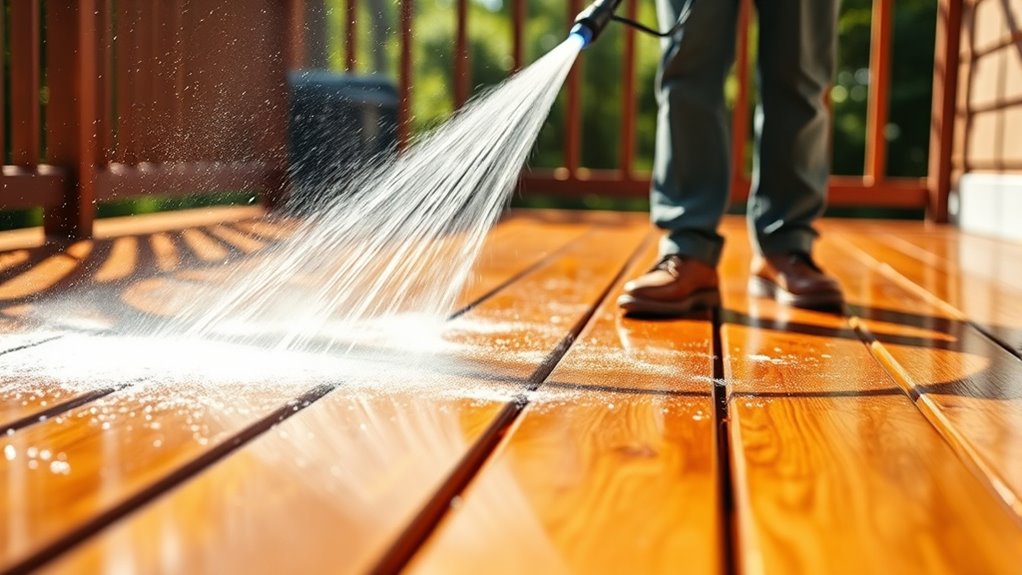
Although it might seem like a simple chore, cleaning your deck regularly plays an essential role in preventing damage. You should start by removing deck furniture and any outdoor lighting fixtures to access every corner.
Dirt, leaves, and debris can trap moisture, which leads to mold and mildew growth that weakens the wood over time. Use a broom or leaf blower to clear away loose debris before washing the surface with a gentle deck cleaner and a soft brush.
Avoid harsh chemicals that can strip the wood’s natural oils. After cleaning, rinse thoroughly with water to remove residue. Don’t forget to clean your deck furniture and outdoor lighting separately to prevent dirt buildup and maintain their appearance.
Keeping your deck free of grime will help preserve its structural integrity and keep it looking great for years. Regular cleaning saves you from costly repairs later on.
Inspect Your Deck for Rot, Cracks, and Loose Boards
You should regularly check your deck for signs of wood rot. This often shows up as soft or discolored spots. It’s a good idea to also look out for cracks because they can weaken the boards and cause safety issues. And don’t forget to tighten any loose boards—keeping everything secure helps make your deck stable and safe.
Identifying Wood Rot
How can you tell if your deck is suffering from wood rot? Start by closely examining the wood for soft spots or areas that feel spongy when you press them. Wood decay often causes this weakened texture.
Look for discoloration or dark stains, which can indicate fungal growth, the main culprit behind rot. Peeling or cracking paint may also signal moisture has infiltrated the wood.
Check hidden spots, like under railings or near posts, where water tends to collect. If you notice any crumbling wood fibers or small holes, these are clear signs the wood’s integrity is compromised.
Catching wood rot early helps you prevent costly repairs and ensures your deck stays safe and sturdy. Regular inspections keep your deck in top shape.
Checking For Cracks
After spotting signs of wood rot, the next step is to carefully check for cracks and loose boards that can weaken your deck’s structure. Walk over every section and look closely for any splits or gaps in the wood.
Small cracks might seem harmless, but they can grow and cause serious damage if left untreated. For effective crack prevention, address these early by cleaning the cracks and applying a quality crack sealing product designed for decks.
This seals out moisture and stops the cracks from expanding. Regular inspections help you catch issues before they worsen. By staying proactive with crack prevention and prompt crack sealing, you’ll protect your deck’s integrity and extend its lifespan, keeping it safe and sturdy for years to come.
Securing Loose Boards
Since loose boards can pose safety hazards and accelerate deck damage, it’s essential to secure them promptly. Start by thoroughly inspecting your deck for any boards that shift or creak underfoot.
Loose boards compromise board stability, which affects the overall deck security. Tighten any screws or nails that have loosened over time, and replace any damaged fasteners to restore firmness.
If a board is warped or severely damaged, consider replacing it entirely to maintain safety and appearance. Using deck screws instead of nails can improve long-term stability.
Regularly checking and securing loose boards not only prevents accidents but also extends your deck’s lifespan. Prioritize these repairs to keep your deck safe, stable, and enjoyable all year round.
Remove Stains and Mold From Your Deck
Why let stains and mold ruin the look of your deck? Act quickly with effective stain removal techniques to keep your deck looking fresh. Start by scrubbing the affected areas with a mixture of water and mild detergent or a specialized deck cleaner.
Use a stiff brush to lift stubborn stains without damaging the wood. For mold prevention, make sure your deck stays dry by trimming nearby plants and improving airflow. Regular cleaning helps prevent mold buildup, so don’t wait for visible growth before you act.
If mold has set in, apply a solution of diluted bleach or a commercial mold remover, then rinse thoroughly. Remember, removing stains and mold promptly not only improves your deck’s appearance but also extends its lifespan.
Seal or Stain Your Deck to Protect the Wood
Although regular cleaning keeps your deck in good shape, sealing or staining it provides essential protection against weather damage and wear. When you apply a sealant or stain, you improve the wood grain’s natural beauty while adding a durable layer that repels moisture, UV rays, and dirt. This increases your deck’s weather resistance, preventing cracks, warping, and fading caused by sun and rain exposure.
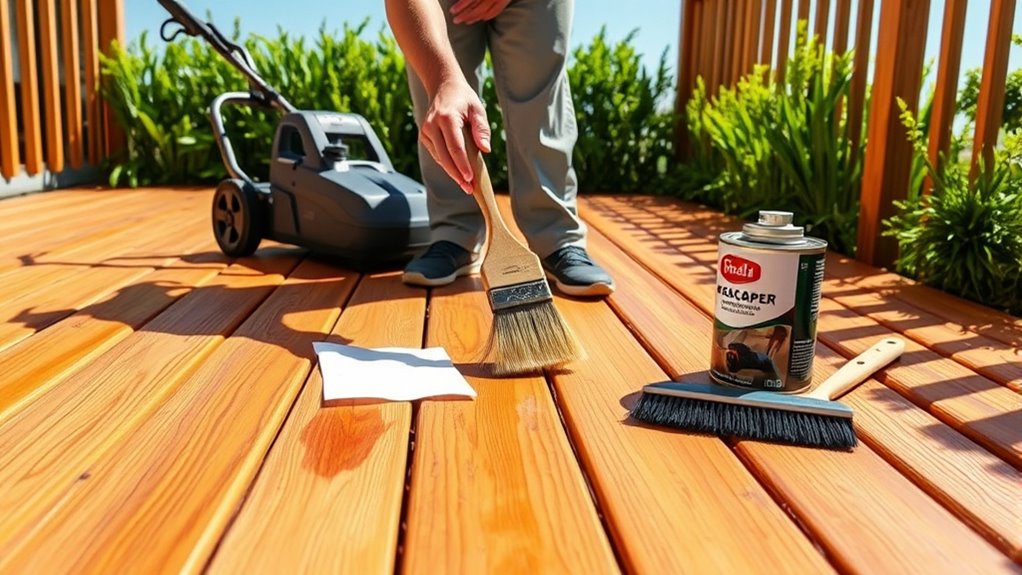
Choose a product that suits your deck’s wood type and the look you want, whether clear sealers that highlight the wood grain or tinted stains that add color and extra protection. Apply your chosen coating evenly with a brush or sprayer, working along the grain to ensure proper absorption. Reapply every couple of years or as needed, depending on your climate and deck usage.
Check and Tighten Deck Hardware and Fasteners
You should regularly check your deck for any loose screws or nails to keep it sturdy. Just grab the right tools and tighten up any hardware securely, making sure not to damage the wood. And if you notice any rusted fasteners, go ahead and replace them right away to prevent any further damage.
Inspect for Loose Screws
When maintaining your deck, inspecting for loose screws is essential to guarantee its stability and safety. Start by carefully examining all the deck’s hardware during your routine hardware inspection. Look for screws that have backed out or show signs of rust and wear.
Loose screws can cause boards to shift, creating hazards and accelerating deck damage. If you spot any loose screws, tighten them promptly to keep everything secure. In cases where screws are stripped or corroded, don’t hesitate to perform a screw replacement to maintain integrity.
Regularly checking and addressing these issues helps prevent costly repairs and prolongs your deck’s life. Staying proactive with screw inspection ensures a safe, sturdy deck you can enjoy without worry.
Use Proper Tools
Tightening loose screws is only effective if you use the right tools to do the job properly. Grab a quality power drill with the correct bit to quickly and securely fasten deck hardware. This guarantees screws go in straight and tight, preventing damage and prolonging your deck’s stability.
Avoid using worn-out or mismatched tools. They can strip screws or weaken connections. After tightening, use paint brushes to clean debris and apply sealant or stain around the fasteners, protecting them from moisture and rust.
Proper tools not only make the job easier but also improve the longevity of your deck’s structure. So, invest in reliable power drills and clean your deck carefully to keep everything in top shape.
Replace Rusted Fasteners
Three key steps help keep your deck secure: checking, tightening, and replacing rusted fasteners. Over time, exposure to moisture causes rusted fasteners to weaken, which can compromise your deck’s stability.
You should regularly inspect nails, screws, and bolts for signs of corrosion. When you spot rusted fasteners, replace them promptly with corrosion-resistant alternatives like stainless steel or coated fasteners. This simple action improves corrosion prevention and extends your deck’s lifespan.
Tighten any loose hardware to maintain structural integrity and prevent safety hazards. By staying proactive about rusted fasteners, you protect your deck from damage and costly repairs.
Make it a habit to inspect and replace fasteners at least once a year, especially after harsh weather, to keep your deck safe and sturdy.
Trim Nearby Plants to Prevent Moisture Damage on Your Deck
Because plants close to your deck can trap moisture, you should regularly trim them to keep air flowing freely. Proper plant pruning not only improves your yard’s appearance but also plays a vital role in moisture prevention.
Overgrown branches and leaves create shaded, damp environments where water lingers, increasing the risk of wood rot and mold on your deck. By trimming back shrubs, vines, and tree limbs, you reduce moisture buildup and improve sunlight exposure, which naturally dries the deck surface.
Make it a habit to inspect the area around your deck monthly during the growing season and prune any encroaching foliage. This simple step helps extend your deck’s lifespan and keeps it safe and visually appealing.
Plan Seasonal Deep Cleaning and Repairs for Your Deck
Keeping plants trimmed not only protects your deck from moisture but also sets the stage for thorough seasonal maintenance. Once you’ve cleared the area, schedule a deep cleaning to remove dirt, mildew, and debris that accumulate over time. Use a deck cleaner and a stiff brush or power washer, but be careful not to damage the wood.
After cleaning, inspect your deck closely for any loose boards, nails, or signs of rot that need immediate repair.
While you’re at it, check your deck lighting to verify all fixtures work properly and replace any burnt-out bulbs. This not only improves safety but also elevates your deck’s ambiance.
Finally, reconsider your furniture arrangement; moving items around can reveal hidden damage and prevent uneven wear. Planning these seasonal tasks helps you maintain your deck’s durability and keeps it inviting all year round.
Frequently Asked Questions
What Type of Wood Is Best for Building a Durable Deck?
The best wood for building a durable deck is pressure-treated lumber or naturally resistant woods like cedar and redwood. You’ll want to choose wood that handles weather well and resists rot.
Applying wood treatment regularly boosts deck longevity by protecting it from moisture and pests. If you’re aiming for long-term durability, don’t skip sealing and staining. These steps keep your deck looking great and standing strong through the years.
How Often Should I Replace My Deck Boards Entirely?
You might think deck staining alone can extend your board replacement frequency indefinitely, but that’s not true. Typically, you should replace your deck boards every 10 to 15 years, depending on wear and weather exposure.
Regular deck staining helps protect the wood and delay damage, but once boards show significant rot, warping, or splintering, it’s time to replace them. Keep an eye on your deck’s condition to know when it’s necessary.
Can I Use a Pressure Washer on All Types of Deck Wood?
You shouldn’t use a pressure washer on all types of deck wood because it can damage softer woods like cedar or pine. For pressure washer safety, always use a low-pressure setting and keep the nozzle moving to avoid gouging the wood.
If you have delicate wood, opt for soft cleaning methods like gentle scrubbing with a mild detergent and a soft brush. This protects your deck while keeping it clean and looking great.
What Are the Safest Cleaning Products for Pets and Children?
You might think all cleaning products are harsh, but pet-friendly cleaners and child-safe disinfectants are widely available and effective. You can choose natural options like vinegar and baking soda or commercial products labeled non-toxic and biodegradable.
These keep your deck clean without risking your pets’ or kids’ health. Always check labels for safety certifications and rinse surfaces well. That way, you can maintain a sparkling deck that’s safe for everyone.
How Do I Prevent Insect Infestations in My Deck Wood?
To prevent insect infestations in your deck wood, you should apply pest resistant treatments regularly. These treatments create a barrier insects can’t penetrate, keeping your deck safe.
Furthermore, use insect proof coatings that seal the wood and deter bugs from nesting or feeding. Make sure to inspect your deck often for signs of pests and address any moisture issues, since damp wood attracts insects. Doing this keeps your deck durable and pest-free.
Conclusion
Maintaining your deck is easier than you think, and it pays off big. Did you know that regular deck maintenance can extend its life by up to 15 years?
By cleaning, inspecting, sealing, and tightening hardware, you protect your investment and keep your outdoor space safe and beautiful. Don’t forget to trim plants and plan seasonal deep cleanings.
With these simple steps, your deck will stay in great shape for years to come. Keeping up with deck maintenance is the key to enjoying your outdoor space longer!