5 Tips to Organize Kitchen Cabinets Efficiently
If you’ve ever opened your kitchen cabinets only to be met with clutter and chaos, you’re not alone. Many people struggle with keeping their kitchen organized in a way that’s both functional and visually appealing. The good news? With a few smart strategies, you can transform your cabinets into a tidy, efficient space that makes cooking and cleaning a breeze.
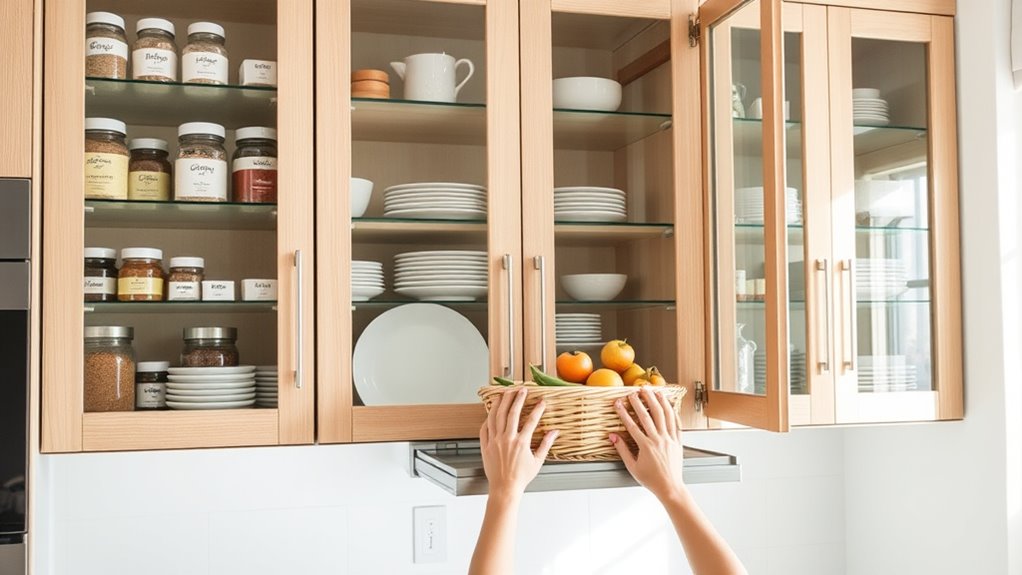
To organize your kitchen cabinets efficiently, start by clearing out everything and sorting items into categories, tossing what you don’t need. Arrange items by how often you use them, placing daily essentials at eye level and seasonal items higher up.
Use space-saving organizers like pull-out racks and tiered shelves to maximize space. Store oversized pots with vertical dividers or sliding drawers, and maintain order with quick habits like wiping shelves and labeling containers. Keep going to uncover more practical tips and tricks.
Key Takeaways
- Remove all items, sort by category, and discard expired goods to start with a clean, organized cabinet space.
- Arrange frequently used items at eye level and group similar-function items together for easy access.
- Use adjustable shelving, pull-out racks, and stackable bins to maximize vertical and horizontal storage space.
- Store oversized pots and pans in deep drawers or use vertical dividers to keep bulky items organized and accessible.
- Maintain organization by regularly cleaning, labeling containers, and returning items to their designated spots promptly.
Clear Out and Categorize Kitchen Cabinets
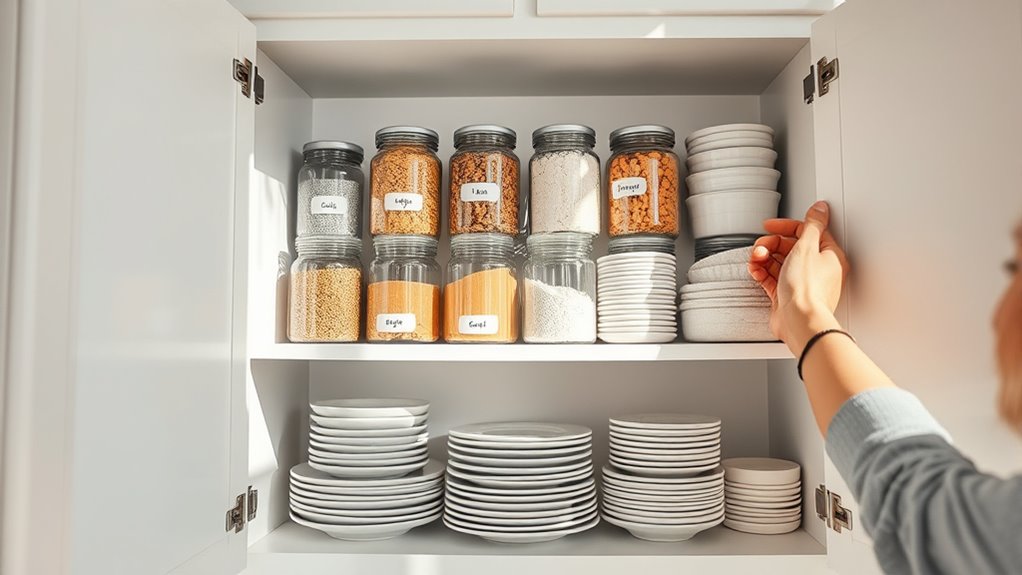
Before you can organize your kitchen cabinets effectively, you need to clear out everything inside them. Take everything out and sort items into categories like baking supplies, canned goods, and snacks. This way, you’ll know exactly what you have and what you need to toss or donate.
Once you’ve cleared and categorized, consider installing shelf lighting to brighten dark corners and make it easier to find items quickly. Good lighting can transform your pantry space, making it more functional and inviting.
After sorting, use pantry labeling to clearly mark containers and shelves. Labels help you maintain order and let everyone in your household know where things belong.
Arrange Items by Frequency and Function
Once you’ve cleared, categorized, and labeled your kitchen cabinets, it’s time to think about how you arrange the items. Organizing by frequency and function helps you access what you need quickly and keeps your kitchen efficient.
Start by placing everyday essentials in the most accessible spots. Use adjustable shelving to customize heights, so items fit perfectly and remain easy to reach.
Here’s a simple way to arrange your cabinets:
- Store daily-use items like plates and cups at eye level.
- Place cooking tools and ingredients near your stove for convenience.
- Reserve higher or lower shelves for seasonal or rarely used items.
- Group similar-function items together, enhancing kitchen labeling clarity.
Use Space-Saving Organizers Effectively in Kitchen Cabinets
Although organizing your kitchen cabinets by frequency and function lays a solid foundation, using space-saving organizers can dramatically increase your storage capacity and keep everything neat. Start by adjusting cabinet height to fit tiered shelves or stackable bins, maximizing vertical space.
Choosing sleek storage solutions like pull-out racks or lazy Susans helps you access items without clutter.
Here’s a quick guide to effective organizers:
| Organizer Type | Best Use | Space Benefit |
|---|---|---|
| Adjustable Shelves | Customize vertical spacing | Utilize full cabinet height |
| Pull-Out Drawers | Small jars and utensils | Easy access, less clutter |
| Lazy Susan | Corner cabinets | Maximizes awkward spaces |
| Stackable Bins | Dry goods and snacks | Creates layers, saves room |
| Door Racks | Spices and bottles | Frees up shelf space |
Store Oversized Pots and Odd Shapes in Kitchen Cabinets
Maximizing cabinet space with organizers works well for most items, but oversized pots and oddly shaped cookware often demand a different approach. You’ll need smart storage solutions that focus on space optimization without sacrificing accessibility. Here’s how to tackle these bulky items:
- Use deep, pull-out drawers or sliding shelves to easily access large pots without stacking.
- Install vertical dividers in a lower cabinet to separate oversized lids and pans, preventing damage.
- Consider corner cabinets with rotating lazy Susans to store oddly shaped cookware efficiently.
- Utilize wall-mounted racks or hooks inside cabinet doors for hanging large utensils or pots with handles.
Maintain Your Organized Kitchen Cabinets With Easy Habits
Keeping your kitchen cabinets organized requires consistent effort, but adopting simple daily habits can make a big difference. Start by incorporating quick cleaning routines after meal prep. Wiping down shelves and checking for expired items right after cooking keeps your cabinets tidy and prevents clutter buildup.
Make it a habit to return items to their designated spots immediately after use. This saves you time searching later and maintains order effortlessly.
Use clear containers or labels to help you quickly identify contents, speeding up meal prep and minimizing mess. Regularly assess your cabinets weekly or biweekly to remove anything you no longer need. This prevents overcrowding and keeps your space functional.
Frequently Asked Questions
What Materials Are Best for Kitchen Cabinet Shelves?
You’ll want durable materials like plywood or solid wood for kitchen cabinet shelves because they hold up well over time. MDF is budget-friendly but less sturdy.
Including adjustable shelving lets you customize space for different items, maximizing efficiency. Metal or wire shelves can work for ventilation and easy cleaning, but they might not suit every style.
Choose materials that balance durability and flexibility to keep your cabinets functional and organized.
How Can I Childproof Kitchen Cabinets Effectively?
Like putting a fortress around your treasures, you can childproof kitchen cabinets effectively by installing child lock systems. These locks create a barrier, ensuring cabinet safety and keeping curious little hands away from dangerous items.
Choose from magnetic locks, adhesive straps, or sliding locks depending on your cabinet type. Regularly check and maintain the locks to keep them secure.
This way, you’ll protect your child while maintaining easy access for yourself.
What Lighting Options Improve Cabinet Visibility?
You can improve cabinet visibility by installing under cabinet lighting, which casts direct light onto your workspace and inside cabinets. LED strip lights are a popular choice because they’re energy-efficient, easy to install, and provide even, bright illumination.
You’ll love how they highlight cabinet contents clearly, making it easier to find what you need. Plus, many LED strips come with dimmable and color temperature options, so you can customize the lighting to suit your kitchen vibe.
How Do I Prevent Mold Inside Kitchen Cabinets?
Did you know that mold can grow within 24-48 hours in damp conditions? To prevent mold inside kitchen cabinets, maintain excellent kitchen hygiene by keeping cabinets dry and well-ventilated.
Use moisture absorbers or silica gel packs to reduce humidity. Regularly clean cabinets with vinegar or a mild bleach solution to kill mold spores. Fix any leaks promptly and avoid storing damp items inside. These steps guarantee your cabinets stay mold-free and hygienic.
Can I Safely Store Cleaning Supplies in Kitchen Cabinets?
Yes, you can safely store cleaning supplies in kitchen cabinets if you prioritize cleaning product safety. Keep them in a well-ventilated, childproof cabinet away from food items to prevent contamination.
Use cabinet deodorizer options like activated charcoal or baking soda to absorb odors and keep the area fresh. Regularly check for leaks or spills to maintain a clean environment and reduce any risk of harmful fumes or accidents in your kitchen.
Conclusion
Now that you’ve got these tips, isn’t it time your kitchen cabinets worked for you, not against you? By clearing out clutter, grouping items by use, and using smart organizers, you’ll save time and reduce stress.
Don’t forget to find a spot for those bulky pots and keep up simple habits to maintain order. With a little effort, your kitchen can become a space you actually enjoy working in every day.
Efficient kitchen cabinet organization makes all the difference in creating a functional and pleasant cooking environment.