7 Essential Steps to Grow a Vegetable Garden
If you’ve ever dreamed of growing your own fresh veggies but felt overwhelmed by where to start, you’re not alone. Many people struggle with finding the right spot, preparing the soil, and keeping plants healthy. The good news? With the right approach, anyone can cultivate a thriving vegetable garden.
To grow a thriving vegetable garden, start by choosing a sunny, well-ventilated spot with good soil drainage. Test and enrich your soil with compost for healthy plants. Pick seeds suited to your climate, plant them at the right depth, and space them properly.
Water consistently using gentle methods and mulch to retain moisture. Use natural pest control and pull weeds regularly. Harvest veggies at their peak for best flavor. Keep following to uncover detailed tips for success.
Key Takeaways
- Choose a garden site with 6-8 hours of direct sunlight and good air circulation. Avoid shaded or low-lying areas.
- Test and amend soil with compost to improve texture, drainage, and nutrient availability before planting.
- Select vegetable seeds suited to your climate. Follow recommended planting depths and spacing guidelines.
- Water seedlings consistently with gentle, soil-focused irrigation. Apply mulch to retain moisture and reduce evaporation.
- Control pests and weeds naturally using companion planting, organic sprays, and regular hand weeding. Harvest vegetables at peak ripeness.
Find the Best Spot for Your Vegetable Garden
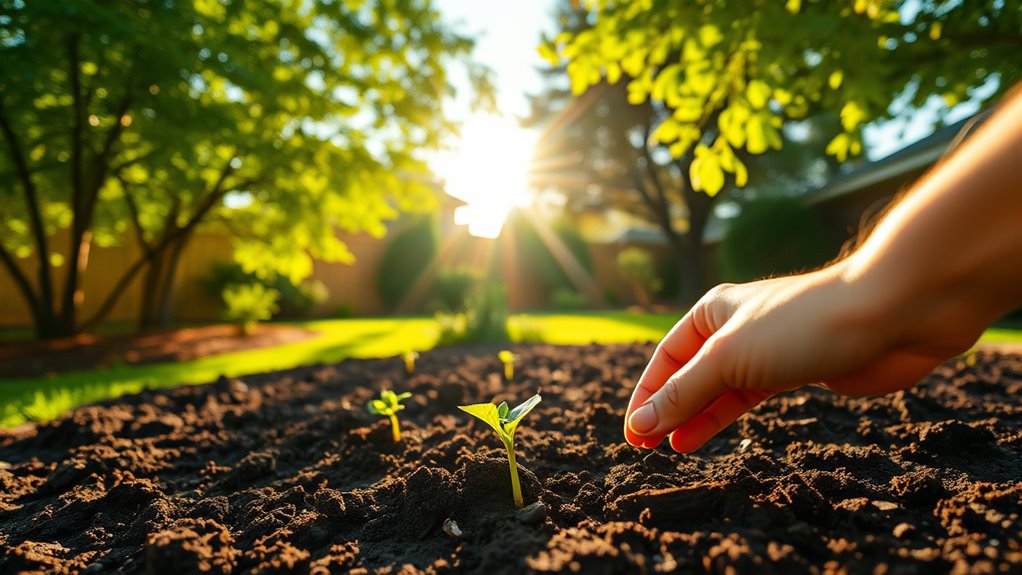
Where should you plant your vegetable garden to guarantee it thrives? Start by evaluating sunlight exposure because most vegetables need at least 6 to 8 hours of direct sunlight daily. Choose a spot that gets ample morning sun and avoid areas shaded by trees, buildings, or fences, which can stunt growth.
Keep shade considerations in mind; some vegetables tolerate partial shade, but the majority flourish with full sun. Make sure the location isn’t shaded during peak sunlight hours, as that reduces photosynthesis and yield.
You’ll also want a site with good air circulation to prevent fungal diseases. Avoid low-lying spots where cold air or water might settle, causing frost damage or soggy soil.
Prepare Your Soil for Healthy Vegetable Growth
Before planting, you need to prepare your soil to guarantee your vegetables get the nutrients and structure they need to grow strong. Start by conducting soil testing to understand its pH and nutrient levels. This step helps you identify any deficiencies or imbalances that could hinder plant growth.
Once you have the results, amend your soil accordingly.
Next, focus on compost addition. Incorporate well-decomposed compost into the soil to improve its texture, drainage, and fertility. Compost supplies essential nutrients and encourages beneficial microbial activity, which supports healthy root development.
Mix it thoroughly into the top 6 to 8 inches of soil.
Finally, loosen the soil to break compacted layers, allowing roots to penetrate easily and access moisture. By preparing your soil with these steps, you create an ideal environment that supports vigorous vegetable growth and maximizes your garden’s productivity.
Choose the Right Vegetables and Seeds to Grow
Although selecting vegetables might seem straightforward, choosing the right varieties and seeds is essential to guarantee a thriving garden. You’ll want to take into account your climate, soil, and the vegetables you enjoy most.
Also, think about companion planting. Some plants, like tomatoes and basil, grow better together and can improve yields. When buying seeds, choose high-quality ones from reputable sources and practice proper seed storage to keep them viable for future seasons.
Here’s a quick guide to help you pick vegetables suited for different growing conditions:
| Vegetable | Best Companion Planting Partner |
|---|---|
| Tomatoes | Basil |
| Carrots | Onions |
| Beans | Corn |
| Cabbage | Dill |
Plant Your Seeds and Seedlings Correctly
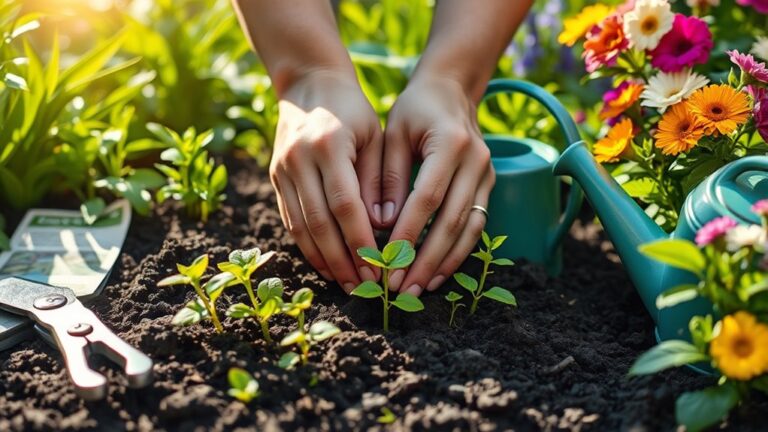
Now that you’ve picked your seeds, it’s important to plant them at the right depth. Make sure you give your seedlings enough space to grow, too. You’ll also want to water them gently right after planting—that helps them settle in nicely. Following these steps will really set your garden up for success.
Seed Depth Guidelines
When you plant seeds at the right depth, you’ll give them the best chance to sprout and thrive. Seed depth is essential because planting too shallow or too deep can hinder germination and growth.
Follow these planting guidelines to guarantee success:
- Plant small seeds just beneath the soil surface, about 1/8 to 1/4 inch deep.
- Medium seeds need about 1/2 to 1 inch of soil coverage.
- Large seeds, like beans and peas, require 1 to 2 inches of depth.
- Always check seed packets for specific seed depth recommendations.
- Avoid compacting the soil too much over the seeds to allow airflow and root growth.
Spacing for Seedlings
Two key factors determine how well your seedlings grow: proper spacing and correct planting depth. When spacing your seedlings, follow the recommended distances on seed packets to avoid overcrowding. Overcrowding can stunt growth and increase disease risk.
Remember, spacing isn’t just about leaving room; it also supports air circulation and sunlight exposure. Use companion planting techniques to place compatible plants close together. This maximizes space and boosts growth by naturally deterring pests.
Also, plan your garden with crop rotation in mind to maintain soil health and reduce pests over time. By considering spacing alongside companion planting and crop rotation, you set your seedlings up for strong roots, healthy development, and a more productive vegetable garden.
Watering After Planting
How often should you water your newly planted seeds and seedlings to give them the best start? Keeping the soil consistently moist is key, but avoid overwatering. Using drip irrigation helps deliver water directly to the roots without waste, ensuring efficient hydration.
Collecting and using rainwater through rainwater harvesting systems can provide your garden with natural, chemical-free water. Here’s what you should do:
Water gently right after planting to settle the soil. Maintain moisture by watering daily or every other day. Adjust frequency based on weather and soil type.
Use mulch to retain moisture and reduce evaporation. Avoid watering leaves to prevent disease.
Water and Fertilize Your Vegetable Garden Properly
Why does watering and fertilizing your vegetable garden properly matter so much? Proper watering guarantees your plants get the moisture they need without drowning their roots. At the same time, correct fertilizing supplies essential nutrients for healthy growth.
To nourish your garden effectively, use composting techniques to enrich the soil naturally. Compost adds organic matter that improves soil structure and retains moisture. This reduces the need for frequent watering.
Incorporate organic fertilizers like bone meal, fish emulsion, or seaweed extracts to provide balanced nutrients without harmful chemicals. Apply fertilizers according to your plants’ growth stages—lighter doses early on, then increased amounts as they mature.
Water deeply but less often to encourage strong root systems, ideally in the morning to minimize evaporation. Avoid overhead watering to reduce disease risk. Instead, use drip irrigation or soaker hoses.
Control Garden Pests and Weeds Using Natural Methods
Although pests and weeds can quickly overrun your vegetable garden, you can keep them in check using natural methods that protect your plants without harmful chemicals. Embracing organic pest control techniques helps maintain a healthy ecosystem while avoiding toxic residues.
Companion planting is a smart way to deter pests by growing certain plants together that repel insects or attract beneficial predators. Furthermore, regular hand weeding and mulching suppress weed growth effectively.
Here are five natural strategies to control pests and weeds:
- Use companion planting to naturally repel pests and boost plant health.
- Introduce beneficial insects like ladybugs and lacewings to reduce harmful pests.
- Apply organic pest control sprays made from neem oil or garlic extract.
- Mulch around plants to block weeds and retain soil moisture.
- Hand-pull weeds regularly to prevent them from spreading.
Harvest Your Vegetable Garden Crops at the Right Time
When do you know it’s the perfect moment to harvest your vegetables? Timing considerations are key to enjoying fresh, flavorful produce. Each vegetable has its ideal harvest window, which depends on factors like maturity, size, and color.
Pay attention to these signs to avoid overripe or underripe crops. Also, plan your harvest around crop rotation to keep your garden healthy and productive year after year.
Here’s a quick guide to help you:
| Vegetable | Harvest Indicator | Best Timing |
|---|---|---|
| Tomatoes | Firm, deep color | When fully colored |
| Carrots | ¾ inch diameter | 60-80 days after sow |
| Beans | Pods firm, crisp | Before seeds bulge |
Frequently Asked Questions
How Do I Start a Vegetable Garden in a Small Urban Space?
You can start a vegetable garden in a small urban space by choosing container gardening. Pick containers with good drainage and fill them with high-quality soil prepared for maximum nutrient retention.
Focus on soil preparation by mixing compost or organic matter to boost fertility. Place your containers where they get plenty of sunlight, and water regularly.
This way, even limited space can yield fresh, homegrown veggies right at your doorstep.
What Tools Are Essential for Beginner Vegetable Gardeners?
To hit the ground running, your garden tool essentials should include a trowel, hand fork, watering can, and pruning shears. These tools help you dig, aerate soil, water, and trim plants efficiently.
For beginner gardening tips, don’t forget gloves to protect your hands and a garden kneeler to ease strain. With these basics, you’ll be well-equipped to nurture your veggies and watch your garden flourish.
How Can I Extend My Vegetable Growing Season?
You can extend your vegetable growing season by using season extension techniques like row covers, cold frames, and hoop houses to protect plants from frost and chilly temperatures. Planting winter crops such as kale, spinach, and carrots also helps you keep harvesting when it’s colder.
These methods let you enjoy fresh veggies longer, even after the official growing season ends, giving you more time to nurture your garden and reap its rewards.
What Are Common Diseases Affecting Vegetable Plants?
Imagine you’re fighting a medieval battle against blight and mildew invading your veggies. Common diseases include powdery mildew, blight, and root rot.
You’ll want to focus on pest management and maintaining soil health to keep plants strong and resilient. Healthy soil boosts immunity, reducing disease risks.
Regularly inspect plants, remove infected leaves, and rotate crops. By staying vigilant and nurturing your soil, you’ll win this garden war with fewer chemical skirmishes.
How Do I Save Seeds From My Vegetable Crops for Next Year?
To save seeds from your vegetable crops, start by choosing healthy, disease-free plants for seed preservation. Harvest mature seeds when the fruit or pods are fully ripe.
Dry the seeds thoroughly to prevent mold. Use genetic selection by saving seeds from plants with the best traits, like size and flavor. This helps ensure stronger crops next year.
Store seeds in a cool, dry place, properly labeled, to keep them viable for planting later.
Conclusion
By following these seven essential steps, you’ll nurture a thriving vegetable garden that rewards your hard work. Remember, “a garden is a friend you can visit anytime.”
With the right spot, healthy soil, careful planting, and natural care, your garden will flourish. Keep watering, weeding, and harvesting at the perfect times, and you’ll enjoy fresh, homegrown veggies all season long.
Your green thumb is just a few steps away from growing a vegetable garden that truly thrives!