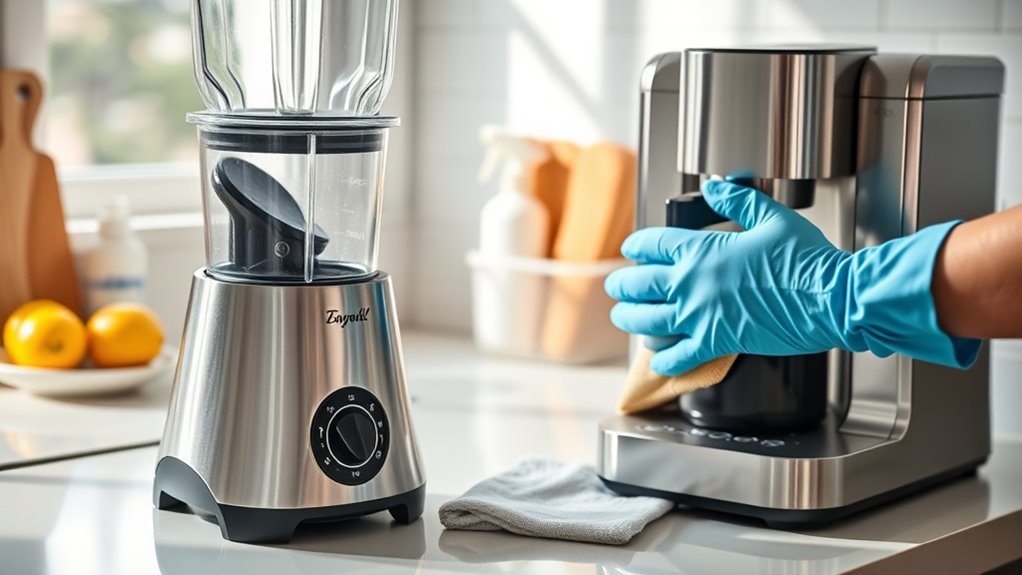
5 Essential Tips to Maintain Kitchen Appliances
Keeping your kitchen appliances in top shape can feel overwhelming, especially when life gets busy and maintenance slips down the priority list. You’re not alone—many people struggle with knowing how to properly care for their appliances to avoid costly repairs or replacements.
If you want your kitchen tools to last longer and work better, understanding some simple care tips can make all the difference.
To keep your kitchen appliances running smoothly, use them as the manufacturer suggests and avoid overloading or using the wrong utensils.
Clean them regularly, wiping surfaces after use and deep cleaning monthly to prevent build-up.
Watch for signs of wear like leaks or strange noises, and replace parts promptly.
Schedule professional servicing yearly to catch issues early.
Store and handle appliances carefully to avoid damage.
By following these tips, you’ll guarantee your appliances last longer and perform better.
Key Takeaways
- Follow manufacturer instructions and avoid overloading to ensure safe and effective appliance use. This helps your appliances last longer and work better.
- Clean appliances regularly, including deep cleaning monthly, to maintain hygiene and performance. A clean appliance is a happy appliance!
- Inspect and replace worn parts like seals and cords promptly to prevent damage and ensure safety. Don’t wait until a small issue turns into a big problem.
- Schedule professional servicing annually or as recommended to detect issues early and maintain appliance efficiency. A yearly check-up keeps everything running smoothly.
- Store and handle appliances properly, avoiding extreme conditions and using original packaging for protection. Taking care when storing can save you headaches later.
Use Kitchen Appliances Properly to Prevent Damage
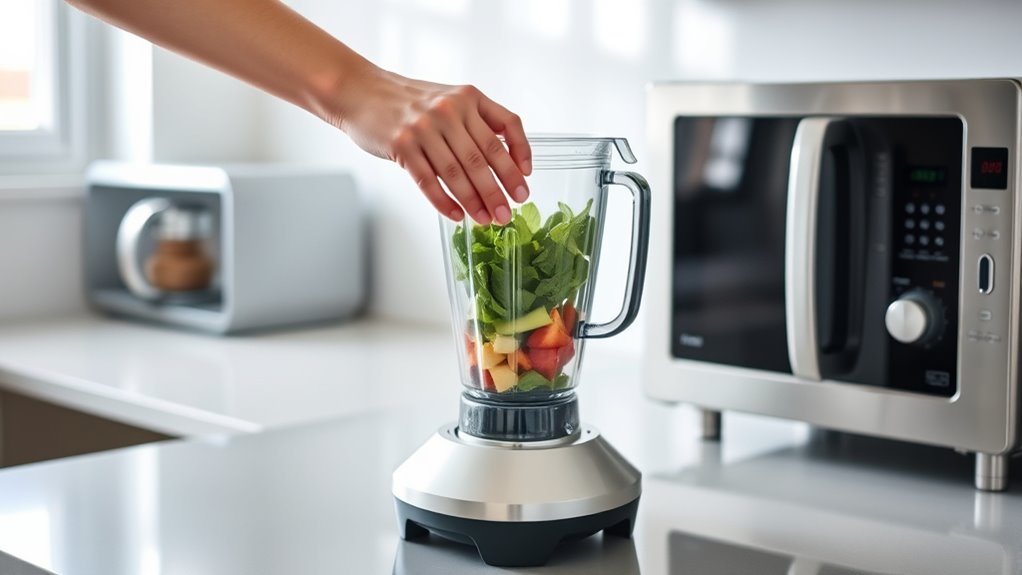
Although kitchen appliances are designed for convenience, you need to use them correctly to avoid damage. Proper usage is key to extending the life of your appliances and ensuring appliance safety. For instance, always follow the manufacturer’s instructions carefully.
Overloading appliances like dishwashers or microwaves can cause malfunctions or even hazards. Avoid using metal utensils in non-stick pans or putting unsuitable containers in the microwave. These simple actions prevent scratches, overheating, or electrical issues.
You should also plug appliances into appropriate outlets and avoid using damaged cords to reduce fire risks. Unplug appliances when not in use to protect them from power surges.
Clean Your Kitchen Appliances Regularly to Avoid Build-Up
When you clean your kitchen appliances regularly, you prevent the build-up of grease, food particles, and grime that can affect their performance and hygiene. Keeping your appliances clean not only maintains appliance aesthetics but also ensures user safety by reducing the risk of contamination and electrical hazards.
To keep your kitchen appliances in top shape, follow these three essential cleaning tips:
- Wipe down surfaces after every use with a damp cloth and mild detergent to avoid residue accumulation.
- Deep clean appliances like ovens, microwaves, and refrigerators monthly, paying attention to hard-to-reach areas.
- Use manufacturer-recommended cleaning tools and solutions to prevent damage and maintain warranty coverage.
Spot Signs of Wear and Replace Parts on Time
If you want your kitchen appliances to run smoothly, you need to spot signs of wear early and replace parts promptly. Regular wear and tear monitoring helps you catch issues before they escalate. Keep an eye out for unusual noises, leaks, or inconsistent performance, as these often signal that a component is failing. When you notice these warning signs, don’t wait. Act quickly to prevent further damage.
Use appliance troubleshooting techniques like checking seals, cords, and filters to identify worn parts. For example, cracked door gaskets on refrigerators or frayed power cords on mixers should be replaced immediately. Timely replacement not only extends your appliance’s lifespan but also ensures safety and efficiency. Staying proactive with wear and tear monitoring saves you money and headaches down the road, keeping your kitchen running without interruption.
Schedule Professional Appliance Servicing for Peace of Mind
Because kitchen appliances handle daily heavy use, scheduling professional servicing guarantees they stay in top condition. Regular service scheduling helps prevent unexpected breakdowns and secures appliance safety by addressing potential issues before they escalate.
When you book a professional checkup, you benefit from expert inspection and cleaning that keeps components running efficiently. You also get early detection of wear and tear, which reduces costly repairs. Plus, there’s the assurance that your appliances meet safety standards, protecting your home.
You shouldn’t wait for a malfunction to call a technician. Setting up routine servicing creates peace of mind, knowing your kitchen runs smoothly and safely. Keep a calendar reminder to schedule these appointments annually or as recommended by the manufacturer.
This proactive approach safeguards your investment and promotes a safer kitchen environment.
Store and Handle Appliances Properly to Extend Lifespan
Keeping your appliances in top shape goes beyond regular servicing; how you store and handle them plays a big role in their longevity. Proper appliance storage protects your devices from dust, moisture, and accidental damage. Always store appliances in a clean, dry area away from direct sunlight or extreme temperatures.
When packing appliances for storage, use original boxes or padded materials to cushion sensitive parts. Adopt careful handling techniques to avoid unnecessary wear and tear. Lift appliances securely rather than dragging them to prevent damage to cords and components.
When unplugging, grip the plug itself instead of pulling the cord. For heavier appliances, ask for help to avoid dropping or straining them.
Frequently Asked Questions
Can I Use Homemade Cleaning Solutions on My Kitchen Appliances?
Yes, you can use homemade cleaning solutions on your kitchen appliances, as long as you choose the right DIY cleaning recipes. Natural solutions like vinegar, baking soda, and lemon work great for most surfaces and help avoid harsh chemicals.
Just make sure to test a small area first and avoid abrasive scrubbing. Using these natural solutions regularly keeps your appliances clean and running smoothly without damaging them.
How Do Appliance Warranties Affect Maintenance Responsibilities?
Think of your appliance warranty coverage as a safety net woven with fine threads of protection. It shields you from costly repairs but doesn’t catch every responsibility.
You still need to tend to maintenance obligations like cleaning and regular check-ups to keep your appliances running smoothly. If you neglect these duties, the warranty might not cover damage caused by poor upkeep.
Are Energy-Efficient Appliances Easier to Maintain?
Yes, energy-efficient appliances are generally easier to maintain. They’re designed with advanced technology that often reduces wear and tear, helping you enjoy energy savings over time.
What Safety Precautions Should I Take When Repairing Appliances Myself?
Imagine fixing a toaster like defusing a tiny bomb. You have to respect the danger. When repairing appliances yourself, always unplug them first to guarantee electrical safety.
Use insulated tools and check they’re in good condition to avoid shocks. Don’t rush; tool safety matters just as much as electrical safety.
If you’re unsure, it’s smarter to call a pro than risk injury or damage. Safety isn’t optional—it’s essential.
How Can I Recycle or Dispose of Old Kitchen Appliances Responsibly?
You can recycle or dispose of old kitchen appliances responsibly by finding local appliance recycling centers or municipal waste programs that accept them. Many retailers offer appliance recycling when you buy new ones, so take advantage of that.
Avoid tossing appliances in regular trash to prevent harmful materials from polluting the environment. Always unplug and clean your appliances before dropping them off, and check for any special disposal instructions to guarantee responsible disposal.
Conclusion
You might think maintaining kitchen appliances takes too much time, but a little effort goes a long way. By using them properly, cleaning regularly, spotting wear early, scheduling professional check-ups, and storing them right, you’ll save money and avoid headaches down the road.
Taking these simple steps guarantees your appliances work efficiently and last longer, making your kitchen a hassle-free zone. It’s easier than you think! Remember, regular care is the key to keeping your kitchen appliances in top shape.