
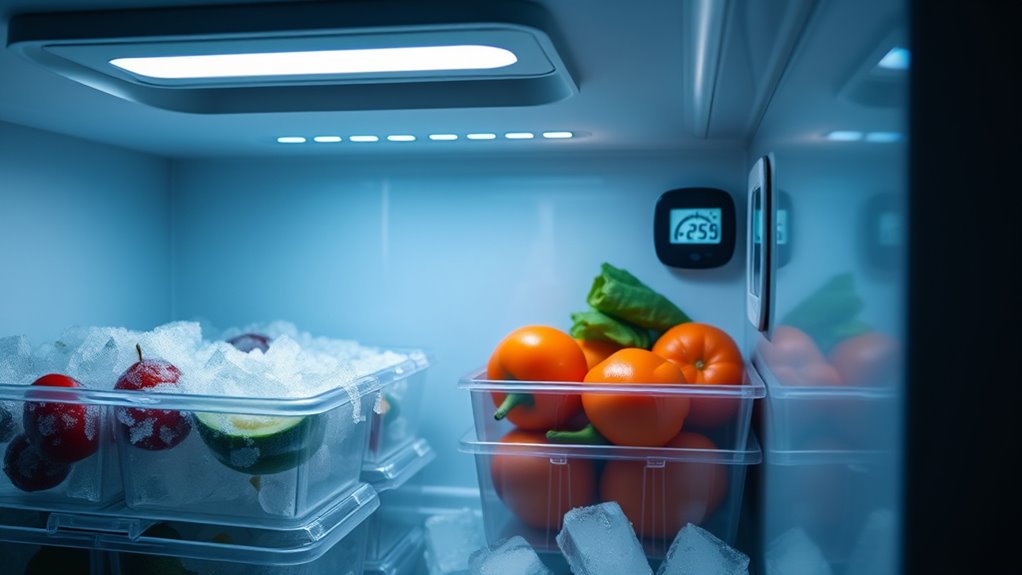
What Temp Should a Freezer Be?
Many people struggle with keeping their freezer at the right temperature, and if you’re one of them, you’re not alone. It can be frustrating to find out your frozen food has lost its quality or even gone bad because the freezer wasn’t cold enough. That’s why knowing the ideal freezer temperature is key to preserving your food’s freshness and safety.
Set your freezer to 0°F (-18°C) or lower to keep food safe and preserve its flavor, texture, color, and nutrients. Check the actual temperature with an appliance thermometer, since the control setting may not be accurate.
Place the thermometer near the center and wait several hours for a reliable reading. Keep the door closed, avoid overloading, seal food tightly, and discard thawed items left above 40°F for over two hours.
You’ll also find tips for troubleshooting temperature problems below.
Key Takeaways
- Set your freezer to 0°F (-18°C) or lower for safe, long-term frozen-food storage.
- Use an appliance thermometer to verify the actual temperature, since built-in controls may show only settings.
- Keep the temperature steady by limiting door openings and avoiding frequent control adjustments.
- Allow 12 to 24 hours for a new or heavily loaded freezer to reach 0°F.
- If the freezer cannot maintain 0°F, inspect seals, vents, and airflow. You might want to consider professional repair or replacement.
What Temperature Should a Freezer Be?
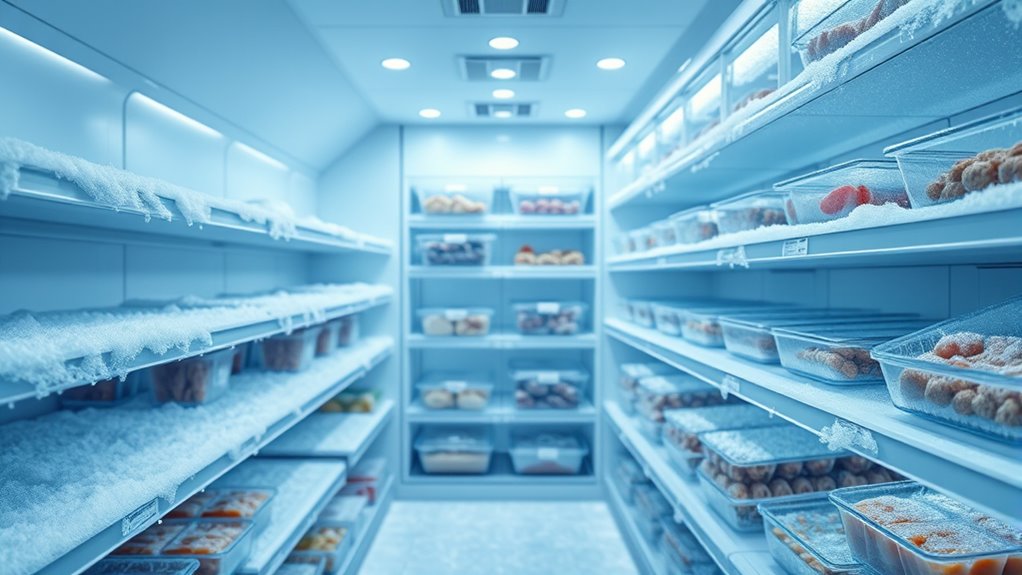
Keep the setting steady rather than frequently adjusting it. Place the thermometer in a central location, away from the door, and check it after the freezer has run through a complete cooling cycle.
If you store frozen desserts, confirm that their texture remains firm and smooth. Excessive warming and refreezing can create an ice crystal buildup that affects quality.
Avoid packing items so tightly that cold air can’t circulate. Leave space around containers, and close the door promptly after each use.
If your freezer can’t maintain 0°F (-18°C), have it inspected or replace it.
Why Keep Your Freezer at 0°F?
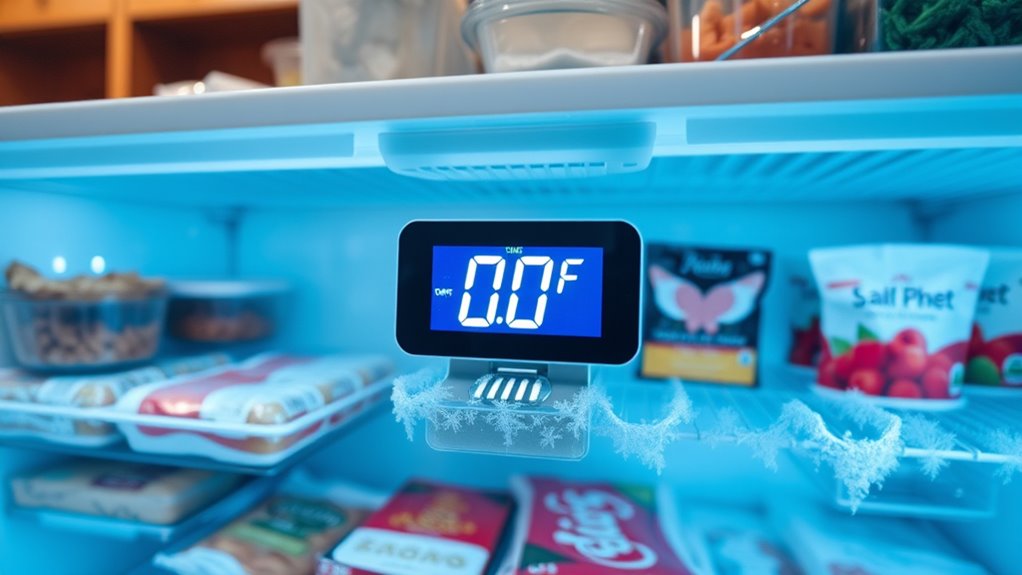
Keeping your freezer at 0°F is a smart move because it helps protect you from foodborne illnesses by slowing down bacterial growth. Plus, it does a great job preserving your food’s texture, flavor, and nutritional value.
When you stick to this temperature, your frozen items stay safe and maintain their best quality for longer. So, it’s definitely worth keeping your freezer set at 0°F!
Food Safety
Why should your freezer stay at 0°F? This temperature keeps frozen food safely solid and slows the growth of harmful microorganisms. Although freezing doesn’t kill every bacterium, it pauses bacterial activity, helping protect you when you store food correctly.
Your freezer must reach 0°F or colder throughout its compartment, so use an appliance thermometer to verify its performance. Check the reading regularly, especially after a power outage or when you add many unfrozen items.
Keep the door closed during outages, and discard food that has thawed and remained above 40°F for over two hours. Energy efficiency also supports safety: a well-maintained freezer holds its temperature more reliably.
Storage organization helps you find items quickly, limiting door-open time. Label packages with dates, seal them tightly, and follow safe thawing practices in the refrigerator, cold water, or microwave.
Optimal Food Quality
At 0°F, your freezer preserves food’s flavor, texture, color, and nutrients more effectively. This temperature slows chemical changes and limits ice-crystal growth, helping meats stay juicy, vegetables retain their color, and prepared meals taste fresher after thawing.
You’ll also reduce freezer burn, which causes dry, tough patches and dull flavors. Seal food in airtight packaging, press out excess air, and label each package with its contents and date. Good storage organization helps you rotate older items first, preventing quality loss and waste.
Avoid overloading the freezer, but keep it sufficiently full to maintain a steady temperature. Although colder settings may seem beneficial, they usually offer little extra quality and can increase energy use. Maintaining 0°F supports consistent results, practical energy efficiency, and better-tasting food.
How to Check Your Freezer Temperature
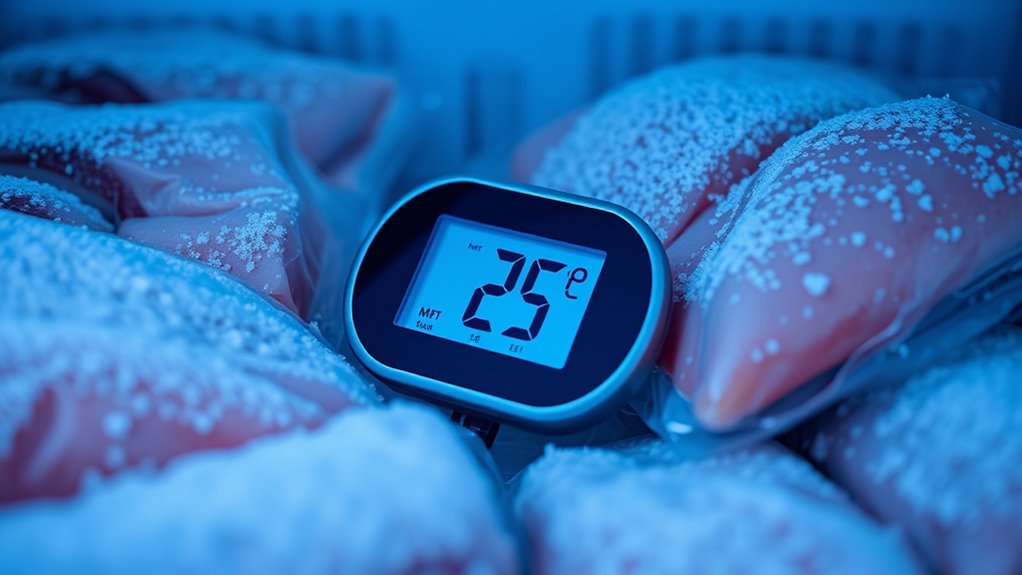
You can check your freezer’s temperature with a freezer thermometer for the most accurate reading. If your model has a built-in display, you can use that to quickly see the current temperature. It’s a good idea to keep an eye on temperature changes regularly so you can catch any problems before your food spoils.
Use a Freezer Thermometer
A freezer thermometer gives you an accurate reading of your appliance’s internal temperature, which may differ from the setting on its control dial. Place the thermometer in the center of the freezer, away from the door, walls, vents, and food.
Leave it undisturbed for several hours, preferably overnight, so it can measure a stable temperature. Check the reading while you open the door briefly, then compare it with the recommended 0°F (-18°C).
If the temperature runs warm, lower the control setting gradually and allow several hours before checking again. If it runs too cold, raise the setting slightly to support energy efficiency without risking food quality.
Replace the thermometer if it’s damaged or inaccurate. Proper temperature calibration helps you trust each reading and identify temperature changes promptly.
Check Built-In Displays
Many freezers show the current internal temperature on a digital display, making it easy to check whether the appliance is near the recommended 0°F (-18°C). Locate the panel on the door or control area, then read the number while the freezer remains closed.
Built-in displays may show the set temperature instead of the actual interior temperature, so check your manual to confirm what the reading means.
| Display reading | What it means | Your action |
|---|---|---|
| 0°F (-18°C) | Recommended setting | Keep the setting |
| Above 0°F | Too warm | Adjust colder |
| Below 0°F | Colder than needed | Adjust warmer |
If the reading seems inaccurate, review the manufacturer’s instructions for temperature calibration. Some models require a button sequence, while others don’t offer user calibration.
Follow those directions carefully, and verify the display afterward.
Monitor Temperature Changes
Track temperature changes with an appliance thermometer placed inside the freezer, since built-in displays may show only the set temperature. Position it near the center, away from walls, vents, and the door. Then wait several hours before reading it.
Check the thermometer at the same time each day and record results for a week. You’ll spot temperature fluctuations more easily when you compare readings after opening the door, adding groceries, or defrosting.
Keep the freezer at 0°F (-18°C) or colder, and investigate readings above that level. Make sure the door gasket seals tightly, minimize door openings, and avoid overloading airflow paths.
Although humidity control matters mainly for frost prevention, reducing moisture entering the freezer helps maintain stable conditions. Replace or recalibrate the thermometer if readings seem inconsistent.
Where to Put a Freezer Thermometer
Place the freezer thermometer in the center of the compartment, away from the walls, vents, door, and frozen food. This location gives you the best reading of the average air temperature, rather than a misleading spot influenced by cold surfaces or warm air entering through the door.
For reliable freezer placement, hang or stand the thermometer where you can read it without moving food. Use a model designed for freezer temperatures, and secure it so it won’t shift or become buried. If your freezer has several shelves, place the thermometer on the middle shelf. This spot usually reflects conditions throughout the compartment more accurately than the top or bottom.
Check the display after keeping the door closed for a while, then record the reading. Temperature accuracy improves when you take readings consistently under similar conditions. If the thermometer shows a warmer temperature than recommended, adjust the freezer’s setting and keep monitoring it. Don’t place it against packages or the liner.
How Long Does a Freezer Take to Cool?
A freezer typically takes 12 to 24 hours to reach 0°F (-18°C), although a newly installed or heavily loaded model may need up to 24 hours. You’ll usually get the best results when you start with an empty appliance, set the control correctly, and keep the door closed.
Adding several warm items can extend the cooling period because the freezer must remove their heat. After a power interruption, allow several hours for temperatures to stabilize before restocking.
Your freezer’s design also affects timing. A compact model may cool faster than a large chest freezer, while frequent door openings slow progress.
You can check the temperature with a freezer thermometer rather than relying on the display alone. Wait until the interior reaches its target temperature before storing frozen desserts or expecting reliable ice production.
If the freezer still hasn’t cooled after 24 hours, check the door seal, ventilation, and power connection, then contact a qualified technician if necessary.
Is 0°F Cold Enough for Frozen Food?
Yes, 0°F (-18°C) is cold enough to keep frozen food safely stored and maintain its quality. Set your freezer to this temperature or lower, then use an appliance thermometer to verify the actual reading. Built-in controls may show a setting rather than the compartment’s true temperature.
At 0°F, you can safely store packaged meats, vegetables, prepared meals, and frozen desserts, provided you follow each package’s storage instructions. Keep the door closed as much as possible because frequent opening lets warm air enter and can raise the temperature. Don’t overload the freezer; leave enough space for cold air to circulate.
Place newly purchased items inside promptly and freeze leftovers in shallow, sealed containers. Check that packages remain solidly frozen and that seals stay intact. If your freezer rises above 0°F during a brief power interruption, food may remain safe while it still contains ice crystals.
Move food to another freezer if the temperature continues rising, and discard anything that has thawed completely and remained warm.
How Temperature Affects Frozen Food Quality
Keeping your freezer at 0°F (-18°C) or lower protects more than food safety. It also helps preserve flavor, texture, and nutritional value. Consistent cold temperatures slow chemical reactions that cause freezer burn, fading flavors, and nutrient loss.
When temperatures rise, ice crystals melt partially, then refreeze. This cycle creates larger crystals that rupture food cells, leaving meat dry, vegetables limp, and ice cream grainy.
Temperature stability matters throughout your frozen food storage routine. A steady freezer helps retain the moisture and structure foods had when you packed them. Even brief warming can reduce quality, especially in delicate foods like berries, seafood, and prepared meals.
Foods may remain safe if they stay frozen, yet their taste and texture can decline noticeably.
You’ll also protect packaging quality by limiting temperature swings. Repeated thawing and refreezing can loosen seals, encourage crystallization, and increase freezer burn. For best results, treat stable freezing as essential to preserving the quality you expect from every stored item.
How to Keep Your Freezer at 0°F
How can you keep your freezer at 0°F? Start by placing an appliance thermometer inside, since the built-in control may not show the actual temperature. Set the dial gradually, then wait 24 hours before checking the reading again.
Keep the freezer reasonably full, but leave space around packages so cold air can circulate. Store food in airtight containers or tightly sealed freezer bags to limit moisture and prevent freezer burn.
Arrange items neatly, and label older packages so you use them first. Avoid placing warm food inside; cool leftovers in the refrigerator before freezing them.
Defrost food in the refrigerator rather than at room temperature, and return it promptly after use. Keep the door closed while you decide what to remove, supporting energy efficiency and steady performance.
Maintaining 0°F slows ice crystal formation, helping preserve texture and quality. Check the thermometer regularly, and adjust the setting only in small increments when needed.
Why Your Freezer Temperature Keeps Rising
Your freezer temperature might start rising if you open the door a lot because that lets warm air inside. Also, if the air vents get blocked, it can stop cold air from circulating properly. On top of that, if the door seals aren’t working right, chilled air can leak out.
Frequent Door Opening
Every time you open the freezer, warm, humid air enters and forces the appliance to work harder to restore its temperature. Frequent door opening can raise the internal temperature, especially when you search for items with the door open.
Decide what you need before opening it, then close the door promptly. Organize commonly used foods where you can find them quickly, and label containers to reduce searching time.
Check the door seal regularly for cracks, gaps, or frost that prevents a tight closure. Good door insulation helps keep cold air inside and warm air outside.
If your freezer has freezer lighting, replace dim bulbs or use brighter settings so you can locate food faster. Avoid placing hot items inside since they add heat and prolong recovery.
Monitor the temperature afterward to confirm it returns to 0°F (-18°C).
Blocked Air Vents
Blocked air vents can prevent cold air from circulating, causing some areas of the freezer to warm while others stay cold. If food, containers, or ice buildup covers an opening, you’ll restrict air circulation and make the compressor work harder. This vent blockage can create uneven temperatures and leave your freezer warmer than its recommended 0°F setting.
Check the following areas:
- Move packages away from interior vents, leaving space for air to flow.
- Remove excess frost around vents according to your freezer’s instructions.
- Avoid overpacking shelves, drawers, and compartments so cold air can circulate.
After clearing obstructions, wait several hours before checking the temperature again. Keep items arranged loosely and don’t push large containers against the rear wall. If temperatures still rise, inspect the evaporator fan and consider professional service for the problem.
Failing Door Seals
If air vents are clear but your freezer temperature keeps rising, a failing door seal may be letting warm, moist air inside. Check the gasket around the door for cracks, gaps, stiffness, or flattened areas.
Close the door on a sheet of paper; if you can pull it out easily, the seal may not grip tightly enough. Clean the gasket and its contact surface with warm, soapy water, then dry both completely.
Make sure nothing inside prevents the door from closing fully. A damaged gasket lets cold air escape, forces the compressor to work harder, and reduces energy efficiency. It can also create frost buildup that worsens the leak.
Replace worn door seals promptly, and confirm the freezer returns to about 0°F (-18°C) after the repair. Monitor its temperature for 24 hours.
When to Repair or Replace Your Freezer
Repair your freezer when it has a minor issue, such as a worn door seal, faulty thermostat, or damaged fan, especially if it still holds a steady temperature. A qualified technician can diagnose the problem and restore reliable cooling without the cost of a new appliance.
Consider replacement when:
- Repairs cost nearly half as much as a new freezer.
- The unit repeatedly fails, leaks refrigerant, or can’t maintain 0°F (-18°C).
- Its age causes poor energy efficiency and high power consumption.
Older freezers may run constantly, raising utility bills and warming food unevenly. Compare the estimated repair, future maintenance, and electricity costs with a modern model’s purchase price.
Replace the freezer if corrosion affects the cabinet, insulation has deteriorated, or compatible parts are unavailable. You should also replace it if repeated breakdowns threaten food safety.
Before deciding, check the warranty, obtain a repair quote, and measure your available space. Choose an Energy Star-certified replacement to reduce power consumption and improve long-term reliability.
Frequently Asked Questions
Can I Safely Refreeze Food After It Has Thawed?
Yes, you can safely refreeze food if it thawed in the refrigerator and stayed at 40°F (4°C) or below. You may notice changes in texture or quality, but the food should remain safe.
Don’t refreeze food that thawed on the counter or sat above 40°F for over two hours. Follow reliable thawing guidelines and prioritize food safety.
If you thawed food in cold water or the microwave, cook it first before refreezing.
How Should I Organize Food Inside My Freezer?
Organize your freezer like a tiny, perfectly managed warehouse, not a frozen avalanche. Keep frequently used items near the front and store less-used foods toward the back or bottom.
Group similar items together, such as meats, vegetables, meals, and desserts. Use airtight containers or freezer bags, remove excess air, and leave space for cold air to circulate.
Add clear food labeling with dates, then rotate items using first-in, first-out freezer storage.
What Foods Should Never Be Frozen?
You shouldn’t freeze raw eggs in their shells, soft cheeses, mayonnaise, custards, cream-based sauces, or watery vegetables such as lettuce and cucumbers because freezing damages their texture. Carbonated drinks and canned foods can burst as they expand.
However, many freezing myths exaggerate restrictions; you can freeze milk, hard cheese, and cooked pasta with good results. Check temperature accuracy with a freezer thermometer, and package foods tightly to prevent freezer burn and odors.
How Do I Prevent Freezer Burn?
You can keep your frozen treasures looking and tasting fresh by limiting air exposure. Use proper storage: wrap food tightly in plastic wrap, foil, or freezer paper, then place it in airtight containers or freezer bags. Press out excess air before sealing, and label items with dates.
Avoid overloading your freezer because it restricts airflow. Regular freezer maintenance, including checking seals and temperature, also helps prevent icy, dry patches from developing over time.
How Often Should I Clean and Defrost My Freezer?
Clean your freezer every three to six months, or sooner if you notice spills, odors, or heavy frost. Defrost it when ice exceeds about ¼ inch because excess buildup reduces efficiency and storage space.
For effective freezer maintenance, remove food, unplug the appliance, and let ice melt naturally. Don’t chip it with sharp tools. Wipe surfaces with mild soap, dry thoroughly, and return food promptly.
These food storage tips help preserve quality and prevent freezer burn.
Conclusion
Set your freezer to 0°F to keep food safe, preserve quality, and reduce waste. Check the temperature with a reliable thermometer and place it where readings stay accurate. Give the appliance time to cool.
Keep the door closed and avoid overloading it. If you notice rising temperatures, address them quickly. If your freezer can’t maintain 0°F after basic troubleshooting, don’t risk your food. Call a technician or replace the appliance.
Keep it cold, keep it steady, and keep your food protected by knowing what temp a freezer should be.