3 Easy Steps to Repair Your Washing Machine
Dealing with a washing machine that won’t work right can be incredibly frustrating. If you’ve ever faced strange noises, leaks, or clothes not coming out clean, you’re not alone. Many people struggle with keeping their machines in top shape, but the good news is that fixing common issues doesn’t have to be complicated.
You can fix your washing machine in three easy steps. First, spot early signs like strange noises, excessive shaking, or detergent buildup to catch issues early.
Next, clear clogs by checking and cleaning the drain hose, soap dispenser, and filter areas to guarantee proper water flow.
Finally, replace or tighten worn parts like belts or pumps, matching replacements with your model.
Stick with these simple actions, and you’ll keep your machine running smoothly. There’s more helpful advice ahead.
Key Takeaways
- Unplug the washing machine before inspecting any components for safety.
- Check and clear the drain hose and filter for clogs or debris.
- Clean the soap dispenser regularly to remove detergent residue buildup.
- Identify and replace worn or damaged parts like belts and pumps.
- Perform routine maintenance to prevent future issues and extend your machine’s lifespan.
How to Spot Common Washing Machine Problems
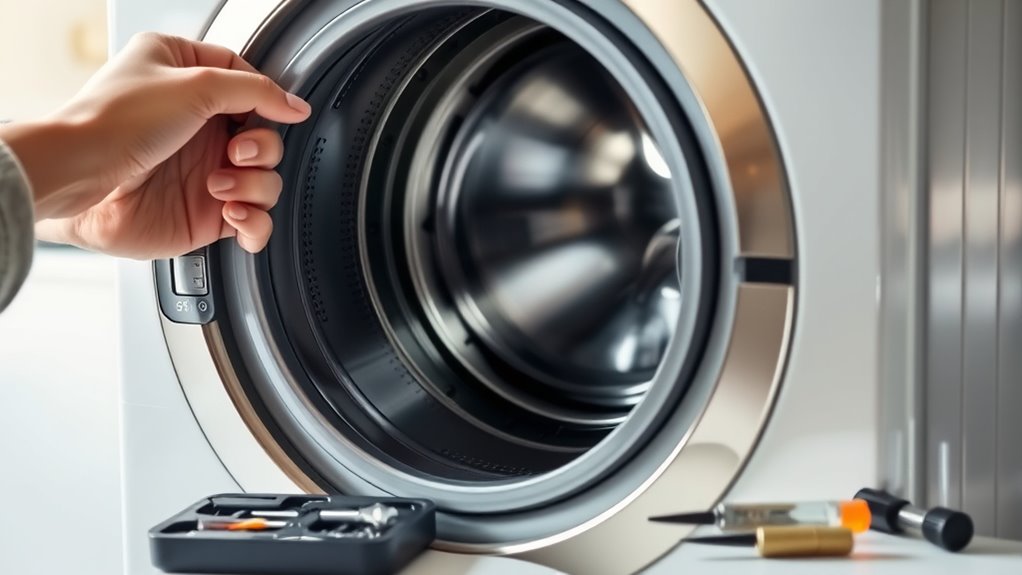
Before you plunge into repairs, you need to recognize the signs your washing machine is acting up. One common indicator is detergent residue buildup inside the drum or on clothes. This residue means your machine isn’t rinsing properly, which can stem from clogged dispensers or incorrect detergent use.
Another clear warning sign is strange noises during operation. Grinding, banging, or squealing sounds usually point to worn-out parts like belts, bearings, or loose components. If your washer starts shaking excessively or stops mid-cycle, these are red flags too.
Paying attention to these symptoms helps you pinpoint issues early, preventing bigger problems later. By spotting detergent residue and strange noises promptly, you’ll save time and money on repairs. So, keep an eye and ear out for these signs before diving into any fixes. They’re your washing machine’s way of asking for attention.
Clear Washing Machine Clogs and Drainage Issues
If your washing machine struggles to drain or leaves water standing in the drum, clogs are often the culprit. Start by checking the drain hose for any kinks, blockages, or buildup. Regular drain hose maintenance is essential. Disconnect it and flush out any debris to restore proper water flow.
Clogs often cause drainage issues—check and clean your washing machine’s drain hose regularly to keep water flowing freely.
Next, inspect the soap dispenser. Residue from detergent and fabric softener can accumulate, restricting water flow and causing drainage issues. Remove the soap dispenser and clean it thoroughly with warm water and a brush.
Also, clear the filter or pump area if accessible, as lint and small objects can cause clogs. By performing these simple tasks, you’ll improve drainage and prevent water from pooling.
Keeping the drain hose and soap dispenser clean not only solves current clogs but helps avoid future drainage problems. Follow these steps regularly to keep your washing machine running smoothly without frustrating interruptions.
Replace or Repair Faulty Washing Machine Parts
Clearing clogs and ensuring proper drainage can solve many common washing machine problems, but sometimes worn or damaged parts cause persistent issues. When you notice unusual noises, leaks, or poor washing performance, it’s time to contemplate replacing or repairing faulty parts.
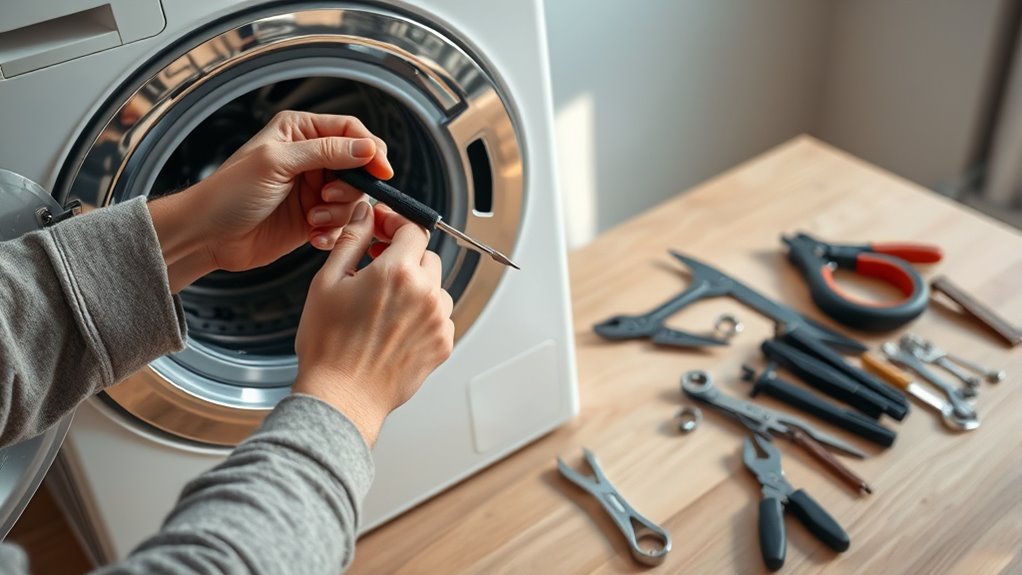
Start with basic appliance maintenance by unplugging the machine and accessing components like belts, hoses, or the pump. Use DIY troubleshooting guides to identify the exact part causing the problem.
Replacement parts are often affordable and available online or at hardware stores. Make sure you match the model number to get the right fit.
When repairing, clean connections and tighten loose fittings to prevent future failures. If a part looks severely damaged or worn, replace it rather than repair it to avoid repeated issues.
Taking these steps ensures your washing machine runs efficiently and extends its lifespan without costly professional repairs. Regular appliance maintenance saves you time and money in the long run.
Frequently Asked Questions
How Often Should I Perform Maintenance on My Washing Machine?
You should perform maintenance on your washing machine every three to six months. Regularly cleaning filters prevents blockages, while checking hoses helps you spot leaks or cracks early. Doing this keeps your machine running smoothly and extends its lifespan.
Don’t wait for problems to show up. Staying proactive with these simple tasks saves you time and money on repairs. Make a habit of inspecting and cleaning to avoid unexpected breakdowns.
What Are the Best Detergents for Different Washing Machines?
For front-loaders, use low-sudsing, high-efficiency detergent types. For top-loaders, choose standard detergent types with strong cleaning agents.
For delicate fabrics, pick gentle detergent types with mild cleaning agents. For heavily soiled clothes, opt for powerful detergent types with concentrated cleaning agents.
You’ll want to match detergent types and cleaning agents to your machine and laundry needs to get the best cleaning results without damaging your washer or clothes.
Can I Use a Washing Machine on a Septic System?
Yes, you can use a washing machine on a septic system, but you need to be careful. Make sure you use septic-safe detergents that won’t harm the beneficial bacteria in your septic tank.
Avoid harsh chemicals, bleach, and too much detergent, as they can disrupt the system’s balance. Also, spread out your laundry loads to prevent overwhelming the septic system.
Taking these steps helps keep your septic system working efficiently while using your washing machine.
How Do I Extend the Lifespan of My Washing Machine?
You don’t want your washing machine to quit on you like it’s auditioning for a drama! To extend its lifespan, make sure you keep the drum lubrication smooth, like butter, not sandpaper.
Check the belt regularly. A worn-out belt can cause chaos, so timely belt replacement is key. Also, avoid overloading and use the right detergent.
These simple steps will keep your machine humming happily for years.
Are Energy-Efficient Washing Machines Worth the Investment?
Yes, energy-efficient washing machines are worth the investment because they offer significant energy savings, which lower your utility bills over time. You’ll enjoy cost benefits not just from reduced electricity use but also from water savings.
While the upfront price might be higher, the long-term savings and environmental impact make it a smart choice. Plus, many models perform better and protect your clothes, giving you more value for your money.
Conclusion
By spotting common washing machine problems early, you save time and avoid bigger headaches. When you clear clogs and fix drainage issues, you’re not just improving your wash—you’re preventing future messes.
And when you replace or repair faulty parts, you’re giving your machine a fresh start, just when it seemed ready to quit. Each step you take brings your washing machine and your laundry routine back to life seamlessly.
Taking these simple steps keeps your washing machine running smoothly and helps you avoid costly repairs down the line.