How Does an Induction Hot Plate Work?
Struggling to find a cooking surface that heats up quickly and safely? You’re not alone. Many people get frustrated waiting for their stove to warm up or worry about uneven heating that can ruin a meal. If you’ve been searching for a smarter, faster way to cook, an induction hot plate might be exactly what you need.
An induction hot plate heats your pan directly with a magnetic field rather than warming the cooking surface first. An electronic circuit sends alternating current through a copper coil beneath the ceramic top, creating a changing magnetic field.
When you place magnetic cookware, such as cast iron or magnetic stainless steel, on the zone, electrical currents form inside its base and produce heat. Sensors control power and detect cookware for safer, faster cooking.
You’ll learn more about its parts, benefits, and use below.
Key Takeaways
- An induction hot plate uses alternating current in a copper coil to create a changing magnetic field. This magnetic field induces electrical currents in compatible cookware, producing heat through the pan’s resistance.
- Cookware must have a magnetic base, like cast iron or magnetic stainless steel, to heat effectively. Sensors detect suitable cookware and regulate power, automatically stopping operation when cookware is absent.
- Direct heating improves efficiency. Plus, ceramic surfaces, automatic shutoff, and other controls make it safer to use.
How Does an Induction Hot Plate Work?
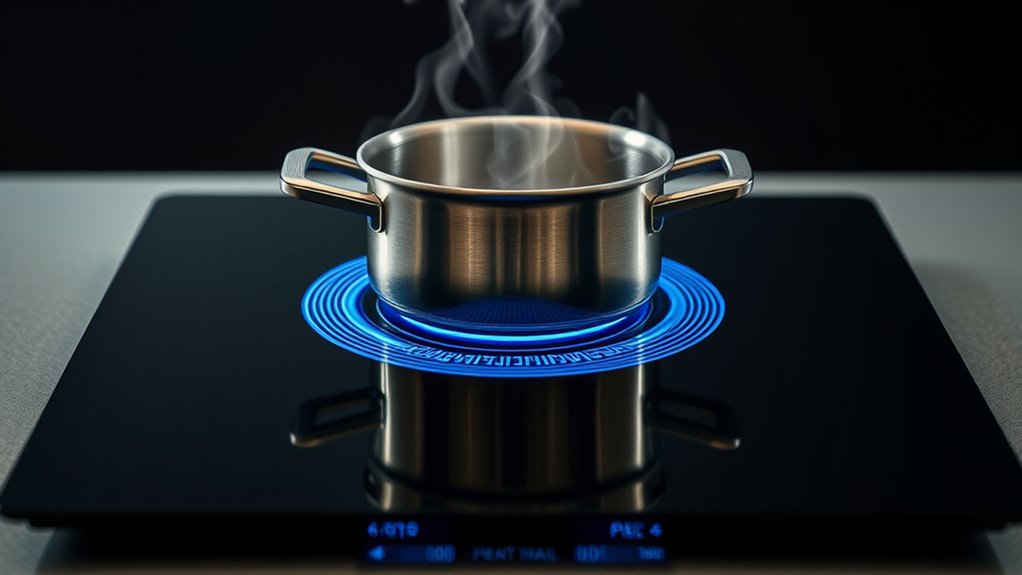
An induction hot plate uses electromagnetic energy to heat your cookware directly. When you place a compatible pan on the cooking surface, the unit detects it and begins transferring heat into the pan’s base. The pan then heats the food, rather than relying on a hot surface to warm the cookware gradually.
You control the process through digital settings, selecting a power level or target temperature. The appliance adjusts energy delivery as you change that setting, helping you cook quickly and accurately. Because the surrounding surface stays relatively cooler, spills are less likely to burn immediately, which supports better cooking safety and easier cleanup.
Many models also stop heating when you remove the pan or when they detect unsuitable cookware. Temperature stability helps you simmer sauces, melt ingredients, or maintain steady frying heat without constant manual adjustment. You’ll still need induction-compatible cookware and careful handling, but the responsive controls make everyday cooking efficient, precise, and convenient.
Which Parts Create Induction Heat?

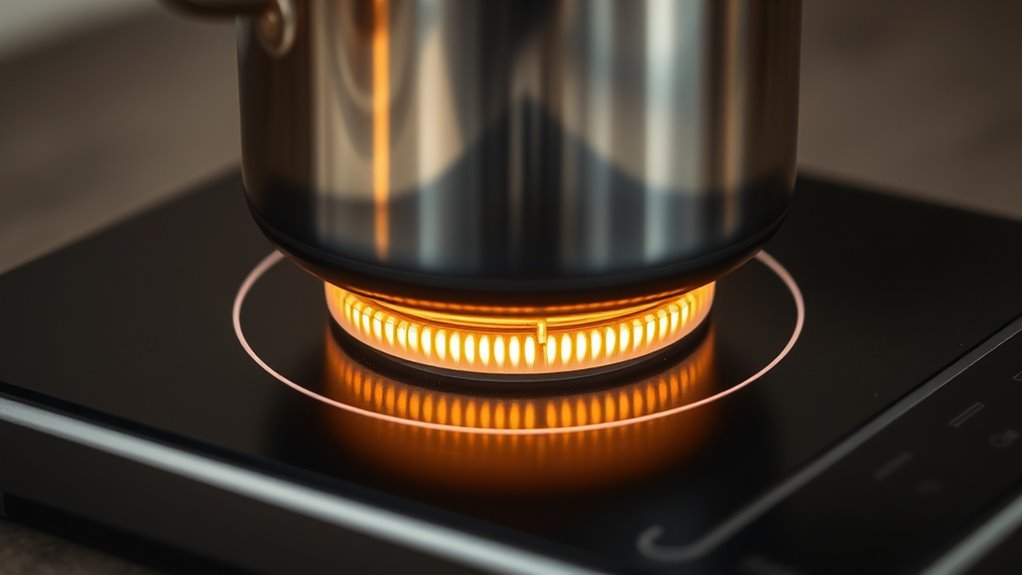
Several key components work together to create induction heat: a copper coil beneath the cooking surface, an alternating electrical current, and compatible cookware. Your induction coil serves as the system’s primary energy-transfer component. When electricity flows through it, the current continually changes direction, producing a changing magnetic field above the surface.
A copper coil and alternating current create the magnetic field that transfers energy directly to compatible cookware.
The ceramic cooktop covers and protects the coil while allowing this field to pass through. Beneath the surface, electronic controls regulate the current’s frequency and strength, so you can adjust the appliance’s power. Sensors may also monitor cookware placement, temperature, and operating conditions.
If you remove the pan or use unsuitable cookware, the controls can reduce or stop power for safety. The cookware must contain a magnetic material, such as iron or magnetic stainless steel, for the system to function properly. Together, these components create and direct the electromagnetic energy your hot plate requires.
Each part has a specific role, from generating the field to controlling safe operation.
How Does the Pan Heat Up Directly?
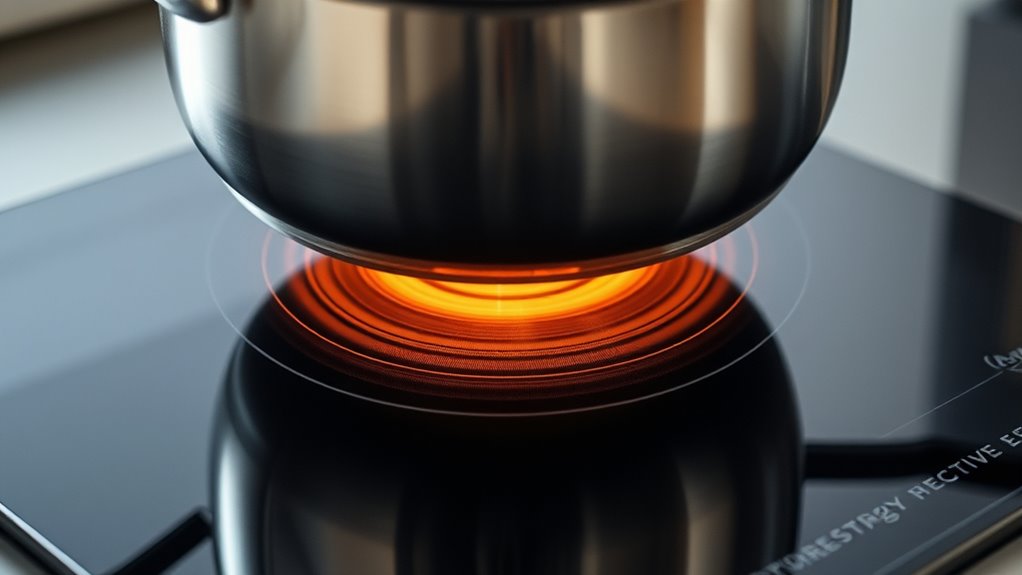
When alternating current flows through the coil, it creates a changing magnetic field that passes through the cooktop and into the pan’s magnetic base. As this field changes rapidly, it induces electrical currents within the pan’s bottom.
The pan’s resistance opposes those currents, converting their electrical energy into heat. Because this process occurs inside the pan itself, you don’t need a glowing burner or an intermediate heating element. The heat starts at the base and spreads upward through the cookware, warming your food efficiently and responsively.
When you adjust the power setting, the hot plate changes the field’s strength, so the pan reacts quickly to your command. Quality induction cookware transfers this energy evenly when its base has suitable magnetic properties.
You’ll notice less wasted heat around the pan because the cooking surface remains relatively cool. A flat, well-fitted base also helps maintain consistent contact and steadier heating across the cooking area.
Why Must Induction Cookware Be Magnetic?
The pan must be magnetic because induction relies on its base responding to the cooktop’s changing magnetic field. When you place suitable cookware on the surface, that field creates electrical currents in the metal. Resistance then converts those currents into heat inside the pan, rather than warming the glass directly.
Your cookware’s magnetic properties determine whether this process works. Iron and magnetic stainless steel usually perform well, while aluminum, copper, glass, and nonmagnetic stainless steel generally don’t unless they include a magnetic layer. Check for an induction symbol or test the base with a magnet before buying.
| Material | Magnetic properties | Expected result |
|---|---|---|
| Cast iron | Strongly magnetic | Heats effectively |
| Magnetic stainless steel | Magnetic base | Compatible |
| Aluminum or copper | Usually nonmagnetic | Won’t heat directly |
A flat, sturdy base also improves cookware compatibility and transfers heat more evenly. You’ll get the best results with pans labeled “induction-ready,” designed with a magnetic bottom that matches the cooktop’s energy-transfer requirements.
How Do Hot Plates Detect Cookware?
Induction hot plates detect cookware by sensing how a pan changes their magnetic field. Beneath the glass surface, a sensor monitors the induction coil’s electrical response. When you place a magnetic pan over the coil, the pan interacts with the field and alters the coil’s behavior.
The appliance recognizes this change as a suitable cooking vessel and allows operation. If you lift the pan, use incompatible cookware, or leave the area empty, the sensor detects little or no magnetic response. The plate then prevents activation or stops producing an induction field, depending on its design.
This detection system supports cooking safety because it helps prevent accidental heating when nothing suitable sits on the surface. It also reduces wasted energy and protects the appliance from operating without a load.
For kitchen design, the technology enables sleek, flat glass surfaces without exposed burners or bulky supports. You can wipe the surface clean easily, while clear indicators show when cookware is detected or required.
How Does an Induction Hot Plate Control Heat?
By adjusting the coil’s electrical power, an induction hot plate controls how much heat your cookware receives. When you select a setting, the control board changes the current flowing through the induction coil. More power creates a stronger magnetic field, causing compatible cookware to heat faster. Lower power reduces the field’s strength, helping you simmer sauces or keep food warm without direct flame.
Many models regulate temperature in short pulses rather than delivering constant power. The coil switches on and off rapidly, while sensors monitor the cookware and adjust output as needed. You’ll get steadier results by choosing a pan with a flat, magnetic base and matching the setting to its size.
This cookware compatibility affects how evenly heat spreads and how quickly your food responds. For practical cooking tips, preheat briefly, stir delicate foods, and reduce the setting before contents boil. Use the controls gradually, because induction cookware can react quickly to changes.
Why Do Induction Hot Plates Save Energy?
Induction hot plates save energy because they heat your cookware much faster. This means you spend less time cooking overall. Plus, they transfer heat directly to the pan, which cuts down on heat lost to the air and the surface around it. So, not only do you cook quicker, but you also use energy more efficiently.
Faster Heating Times
One key reason induction hot plates save energy is that they heat cookware directly, transferring power quickly with minimal heat loss. You’ll notice water boils sooner because electromagnetic energy activates the pan’s metal base almost instantly. This speed shortens cooking times, so your hot plate draws power for fewer minutes while preparing each meal.
You can also adjust temperatures rapidly, giving you precise control during delicate tasks such as simmering, melting, or sautéing. These cooking techniques become more efficient when you match the setting to the recipe instead of waiting for slow temperature changes.
Before cooking, check cookware compatibility: your pots and pans need a magnetic base, such as cast iron or magnetic stainless steel. With suitable cookware, you’ll spend less time waiting and more time cooking, helping reduce overall energy use.
Reduced Heat Loss
Faster cooking is only part of the energy savings; induction hot plates also limit heat loss. Instead of warming a burner and the surrounding air, the appliance creates a magnetic field that heats your compatible cookware directly.
More of the electrical energy becomes useful cooking heat, so you’ll waste less energy and keep your kitchen cooler. Because the surface itself stays relatively cool, spills are less likely to bake onto it, making cleanup easier and supporting better cooking safety.
You can also adjust the temperature quickly, preventing excess heat when your food reaches the desired simmer. This precise control improves energy efficiency, especially during long cooking sessions.
Although some heat still escapes from the pan, induction transfers energy more directly than conventional electric or gas cooking methods, helping you reduce consumption.
Why Are Induction Hot Plates Safer?
Why are induction hot plates safer than conventional electric or gas burners? You get fewer burn and fire risks because induction heats the cookware directly instead of producing an exposed flame or glowing heating element.
Induction hot plates reduce burn and fire risks by heating cookware directly, without exposed flames or glowing heating elements.
The cooking surface stays relatively cool, warming mainly from contact with the hot pan. So you’re less likely to burn yourself after removing cookware. Induction also stops transferring energy when you lift the pan or turn the power off, reducing unattended heating and accidental ignition.
Since no flame burns fuel, you avoid gas leaks, combustion byproducts, and carbon monoxide from normal operation. Many models include automatic shutoff, overheating protection, child locks, and pan-detection sensors, adding useful layers of induction safety.
These features help limit common hot plate hazards, including empty-pan heating and forgotten burners. However, the cookware can become extremely hot, and spills may still cause burns, so you should remain attentive and keep the appliance away from children.
How to Use an Induction Hot Plate
To use an induction hot plate, place compatible cookware on the center of the cooking zone. Connect the unit to power, and select your desired temperature or heat setting. Add ingredients after the pan warms, then adjust the controls as needed for simmering, sautéing, or boiling.
Use cookware with a flat, magnetic base, and keep the pan centered for even heating.
For cooking safety, use dry hands, keep cords away from hot surfaces, and never leave the appliance unattended while it’s operating. Don’t touch the cooking surface immediately after use because it may remain hot from the pan.
Turn off the unit, unplug it, and let it cool before moving or cleaning it. Wipe spills with a soft, damp cloth, and avoid abrasive cleaners or immersing the appliance in water.
These maintenance tips help preserve the glass surface and controls. Follow the manufacturer’s instructions for cookware limits, operating times, and safe storage.
Common Induction Hot Plate Problems
You might run into power supply issues that prevent your induction hot plate from turning on. It can be really frustrating when that happens. Uneven heating is another common problem—it can mess with your cooking results and leave your food not quite right. Plus, sometimes your hot plate may show error codes or alerts, which are there to tell you something specific is wrong. In the next part, you’ll find out how to spot these issues and what you can do to fix them.
Power Supply Issues
Power supply issues can prevent an induction hot plate from heating, responding to controls, or turning on at all. First, check that you’ve plugged the unit firmly into a working outlet. Test that outlet with another appliance, and reset the circuit breaker or ground-fault interrupter if necessary.
Avoid using an overloaded extension cord or power strip, since inadequate current can trigger shutdowns. Power fluctuations may also cause error messages, unexpected resets, or intermittent operation.
If your home’s voltage doesn’t match the hot plate’s requirements, electrical compatibility becomes a safety concern. Check the rating label and manual before connecting the appliance.
You shouldn’t bypass a damaged plug, frayed cord, or recurring breaker trip. Disconnect the hot plate and contact a qualified technician when basic checks don’t solve the problem. Never open the housing yourself.
Uneven Heating Problems
Uneven heating usually occurs when the cookware doesn’t sit flat, doesn’t match the induction zone’s size, or isn’t centered correctly. If you notice hot spots, rotate the pan occasionally and keep its base fully aligned with the marked cooking area.
A warped, thin, or poorly constructed pan can also distribute heat inconsistently, even when the surface looks level. Check cookware compatibility by using a flat, magnetic base that matches the hot plate’s recommended diameter.
Avoid lifting the pan repeatedly, since the unit may reduce power whenever contact changes. Temperature fluctuations can also result from using very low settings, overcrowding the pan, or adding cold ingredients too quickly.
Preheat gradually, stir food regularly, and select a pan size that suits each portion. These steps help you achieve steadier, more even cooking results.
Error Codes And Alerts
When an induction hot plate displays an error code or warning, it usually signals a problem with cookware, temperature, airflow, or electrical power. Check your manual first, since symbols and codes vary by model.
If the unit shows a pan or compatibility alert, center a flat, magnetic pot on the cooking zone and confirm its size meets the manufacturer’s requirements. Cookware compatibility affects both performance and safety.
A temperature warning may mean the surface, pan, or internal sensor is too hot. Turn off the plate, remove the cookware, and let everything cool. Keep ventilation openings clear to prevent overheating.
For power alerts, inspect the outlet, plug, and circuit, but don’t use a damaged cord. Reset the unit only as directed. Clean spills after cooling; proper maintenance supports reliable operation and energy efficiency.
Frequently Asked Questions
Can Induction Hot Plates Be Used With Aluminum or Copper Cookware?
Usually, you can’t use aluminum or copper cookware directly on an induction hot plate because these metals aren’t magnetic. For aluminum compatibility, choose pans with a magnetic stainless-steel base or an induction-ready bonded layer.
Copper cookware suitability depends on its construction; many copper pans need a magnetic bottom to function. You can also place an induction interface disk beneath compatible cookware, though it may heat less efficiently and respond more slowly.
How Much Electricity Does an Induction Hot Plate Consume?
You’ll typically use 1,200 to 1,800 watts when an induction hot plate runs at full power. Actual energy consumption depends on cooking time, temperature, and cycling. For example, one hour at 1,500 watts uses about 1.5 kilowatt-hours.
Because induction transfers heat directly into compatible cookware, its power efficiency often exceeds traditional electric resistance burners. You can reduce usage by choosing appropriate settings, covering pans, and switching the unit off once cooking finishes rather than leaving it heating unnecessarily.
Are Induction Hot Plates Suitable for Outdoor Cooking?
About 90% of induction hot plates’ energy heats your cookware, making them efficient for outdoor cooking. You can use one outside for camping, patios, or tailgating when you have a reliable power source and a level, dry surface.
However, most models lack strong outdoor durability and weather resistance. So, keep the unit sheltered from rain, wind, and splashes, and store it indoors after use.
Also, check the manufacturer’s outdoor-use instructions before plugging in.
How Do You Clean and Maintain an Induction Hot Plate?
You can clean and maintain your induction hot plate with simple daily care. Let it cool completely, then wipe the glass surface with a damp, soft cloth and mild dish soap.
For stubborn residue, use a cooktop scraper gently. Don’t use steel wool or abrasive cleaners.
Cleaning tips: wipe spills promptly and dry the surface. Maintenance routines: inspect the cord, keep vents clear, and store the unit safely when you’re finished.
Do Induction Hot Plates Make Noise While Operating?
Yes, you may hear some noise while an induction hot plate operates, though noise levels typically remain low. You might notice a soft hum, buzzing, clicking, or fan sound as the unit regulates heat and cools its components.
Lightweight or uneven cookware can amplify operational sounds, especially at higher settings. If you hear loud rattling, harsh grinding, or sudden changes, turn the appliance off and inspect the cookware, ventilation, and surface for problems.
Conclusion
Induction hot plates turn invisible magnetic fields into fast, focused heat. Instead of warming a burner and waiting, you heat the cookware itself, saving energy and time.
That direct control also brings greater safety, though it requires compatible magnetic pans and proper use. When you understand how induction works, you can cook with confidence.
There’s less wasted heat, fewer hazards, and more precise results. The technology may seem complex, but your everyday cooking becomes remarkably simple with an induction hot plate.