10 Best Tips for Dryer Maintenance and Optimal Performance
If you’ve ever dealt with a dryer that just doesn’t dry clothes properly or seems to take forever, you’re not alone. Many people struggle with keeping their dryers in top shape, which can lead to higher energy bills and even safety risks. The good news is, with a few simple maintenance habits, you can boost your dryer’s performance and extend its lifespan.
To keep your dryer running efficiently and safely, clean the lint trap after every load and inspect the vent regularly to prevent blockages. Check the drum for tears and foreign objects, and wipe the drum and door seal monthly. Use the right heat setting for different fabrics and avoid overloading.
Watch for unusual noises or slow drying times as warning signs. Schedule annual professional maintenance to replace worn parts and guarantee proper venting. Stay tuned for more expert tips to optimize your dryer’s performance.
Key Takeaways
- Clean the lint trap after every load to prevent blockages and improve dryer efficiency and safety.
- Regularly inspect and clean dryer vents to avoid fire hazards and ensure proper airflow.
- Check and clean the dryer drum and door seals monthly to prevent residue buildup and odors.
- Avoid overloading and distribute clothes evenly to promote efficient drying and prevent damage.
- Schedule annual professional maintenance to detect hidden issues and replace worn parts for longevity.
Clean Your Dryer’s Lint Trap After Every Load
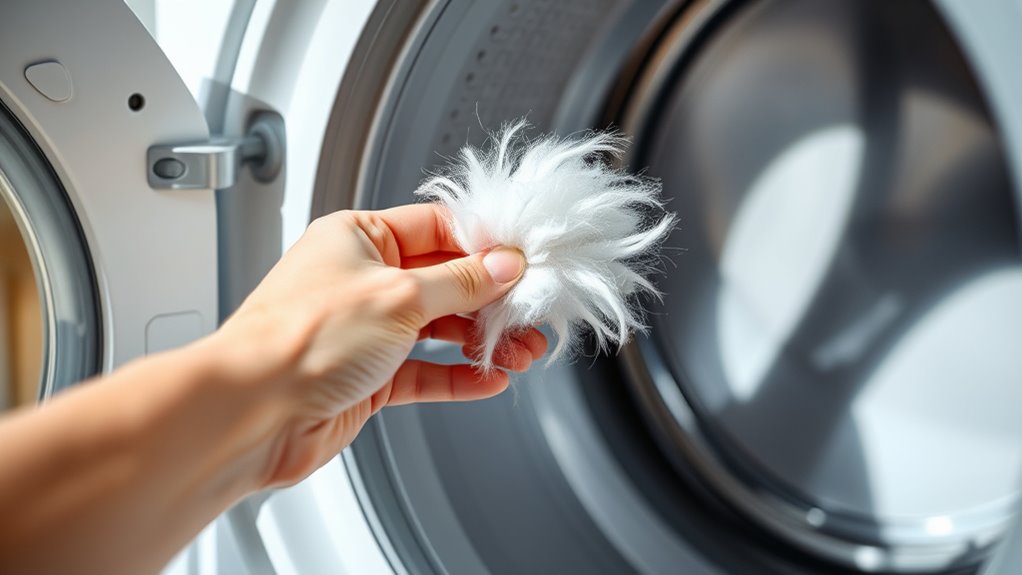
Although it might seem like a small task, cleaning your dryer’s lint trap after every load is essential for safety and efficiency. You should make this a habit because the lint trap catches fibers that come off your clothes, preventing them from clogging the dryer vent.
If you skip this step, lint buildup can reduce airflow, making your dryer work harder and increasing the risk of overheating or even a fire.
Inspect and Clean Your Dryer Vent Regularly
You should inspect and clean your dryer vent regularly to prevent lint buildup that can block airflow. Keeping the vent clear helps your dryer run more efficiently and lowers the risk of fire. So, make it a habit to check the vent for any obstructions or damage every now and then. It’s a simple step that can really make a difference in keeping your dryer safe and working well.
Prevent Lint Buildup
How often do you check your dryer vent for lint buildup? Regularly cleaning the lint trap and inspecting your dryer vent helps prevent blockages that reduce efficiency. Removing lint not only keeps your dryer running smoothly but also supports airflow optimization. This is vital for both performance and safety.
Here’s a simple checklist to prevent lint buildup:
| Task | Frequency |
|---|---|
| Clean lint trap | After every use |
| Inspect vent hose | Monthly |
| Vacuum vent duct | Every 3 months |
| Professional cleaning | Annually |
Ensure Proper Airflow
Since proper airflow is essential for your dryer’s efficiency and safety, regularly inspecting and cleaning the dryer vent should be a top priority. Airflow blockage can cause your dryer to overheat, increase drying times, and even pose a fire risk.
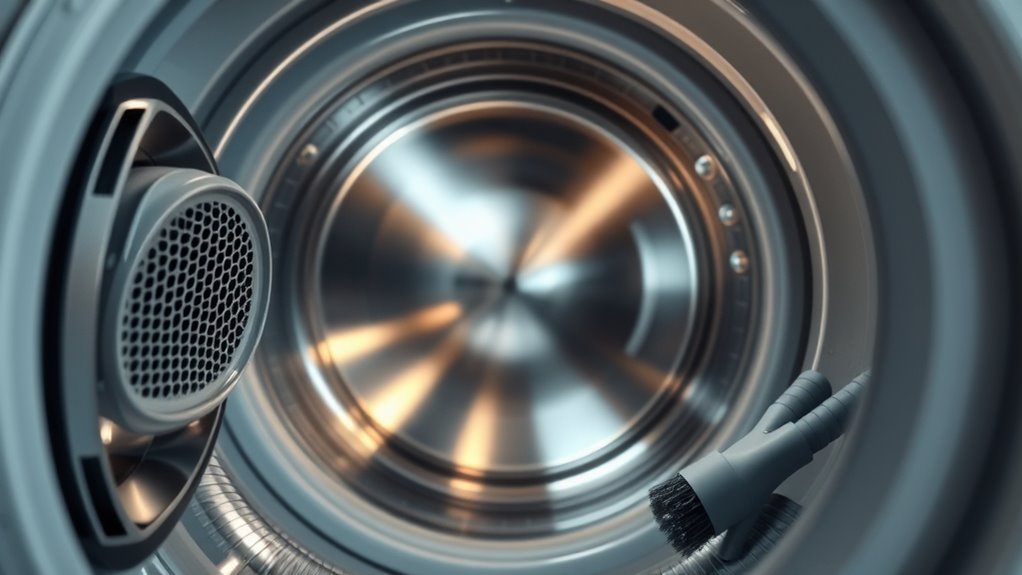
Check the vent installation to verify it’s secure and free from kinks or crushed sections that restrict airflow. Use a vent brush or vacuum attachment to remove lint buildup inside the vent pipe and around the exterior vent hood.
You should clean the vent at least once a year, or more often if you notice longer drying cycles or a hot dryer exterior. Keeping your dryer vent clear not only improves performance but also extends your dryer’s lifespan and reduces energy costs.
Check the Dryer Drum for Tears, Dents, and Foreign Objects
You should regularly check the dryer drum for any tears, dents, or foreign objects that might harm your clothes or the machine. If you spot any debris or objects, be sure to remove them right away to avoid further problems. And if you notice any damage to the drum, it’s best to take care of it promptly so your dryer keeps running smoothly.
Inspect Drum Surface Regularly
Why should you inspect your dryer drum regularly? Because a thorough surface inspection helps you catch issues early, preventing damage to your clothes and your dryer.
Take time to carefully examine the drum surface for any tears, dents, or scratches that could snag fabrics or indicate underlying problems. Look closely for rough spots or areas where the coating might be wearing off.
Addressing these signs promptly keeps the drum smooth and functioning at its most effective, ensuring even drying and avoiding unnecessary repairs.
Regular surface inspection also helps you spot foreign objects that might cause damage if left unnoticed. By making this a routine part of your dryer maintenance, you’ll extend your appliance’s lifespan and maintain its performance at peak levels.
Remove Foreign Objects Promptly
Although foreign objects may seem harmless at first, leaving them in the dryer drum can cause serious damage to both your clothes and the appliance. Regular foreign object removal helps prevent blockages and keeps your dryer running smoothly.
Before each use, check the drum carefully for small items like coins, buttons, or paper clips that slipped past pockets. Removing these promptly avoids costly repairs and protects your laundry.
| Common Foreign Objects | Possible Damage | Prevention Tips |
|---|---|---|
| Coins | Drum scratches, noise | Empty pockets thoroughly |
| Paper clips | Obstruction, mechanical issues | Inspect drum before drying |
| Buttons | Fabric damage, jams | Use garment bags |
| Small toys | Drum imbalance, damage | Check clothes before washing |
Stay proactive with foreign object removal to ensure superior dryer performance.
Address Tears And Dents
Keeping foreign objects out of the dryer drum protects both your clothes and the machine, but inspecting the drum itself for tears and dents is just as important. Check the drum regularly for any signs of damage that could snag clothing or reduce efficiency.
If you spot any tears, prompt tears repair will prevent further damage and ensure your dryer runs smoothly. Likewise, dents can cause uneven tumbling, so addressing dents removal quickly helps maintain peak performance.
You can often fix minor dents yourself using simple tools, but more serious damage may require professional help. Staying proactive with tears repair and dents removal not only prolongs your dryer’s lifespan but also keeps your laundry safe and looking great every time.
Clean the Dryer Drum and Door Seal Monthly
Since lint and residue can build up over time, you should clean the dryer drum and door seal monthly to maintain the best performance. Start by wiping the dryer drum with a soft cloth dampened with a mild detergent solution. This removes any fabric softener buildup or lint that can cause odors or reduce drying efficiency.
Pay close attention to corners and crevices where debris tends to accumulate.
Next, inspect the door seal carefully. Dirt and lint often collect here, preventing the door from closing properly and reducing your dryer’s efficiency. Use a damp cloth to clean the rubber door seal thoroughly, making sure to get into the folds. Avoid harsh chemicals that might damage the seal’s flexibility.
Choose the Best Heat Setting for Different Fabrics
When you select the right heat setting for your dryer, you protect your clothes from damage and guarantee they dry efficiently. Different fabrics need different temperatures; for example, delicate fabrics like silk or lace require low heat to prevent shrinking or weakening fibers, while cotton and towels can handle higher heat for thorough drying. Paying attention to fabric care labels helps you choose the perfect setting every time.
Using the correct heat setting doesn’t just preserve your garments. It also improves energy efficiency. Drying clothes on unnecessarily high heat wastes energy and risks wear and tear. Conversely, too low heat might prolong drying times, increasing energy use. By matching heat settings to fabric types, you optimize drying cycles, save on electricity, and extend your dryer’s lifespan. Take a moment before each load to adjust the heat, and you’ll enjoy better results and lower energy bills.
Avoid Overloading to Improve Drying Efficiency
Although it might be tempting to fit as many clothes as possible into one load, overloading your dryer can seriously reduce its efficiency. When you exceed the recommended load capacity, clothes won’t tumble freely, leading to uneven drying and longer cycle times.
To keep your dryer running smoothly, follow these stacking tips:
- Know your dryer’s load capacity: Check the user manual to avoid filling beyond the limit. Overstuffing restricts airflow, making your dryer work harder.
- Distribute clothes evenly: Don’t pile items in one spot. Spread them out to ensure proper tumbling and heat circulation.
- Separate bulky items: Wash and dry heavy fabrics like towels or blankets separately to prevent imbalance and improve drying speed.
Spot Signs of Dryer Performance Problems Early
You’ll want to keep an ear out for unusual noises and pay attention if your dryer takes longer than usual to dry clothes. Also, watch for any signs of overheating or strange odors. Catching these issues early can save you from bigger problems later on. So, let’s take a look at how to spot these warning signs before they cause any damage.
Unusual Noises Detection
If your dryer starts making strange noises, it’s a clear sign that something needs your attention. Unusual noises often signal worn-out parts or blockages. Using sound diagnostics helps you pinpoint the problem early, preventing costly repairs.
Listen closely for these common sounds:
- Grinding or squealing could mean a faulty drum bearing or worn belt.
- Rattling might be caused by loose objects inside the drum or a damaged blower wheel.
- Banging or thumping is often due to an unbalanced load or broken drum support rollers.
Inconsistent Drying Times
Strange noises in your dryer often hint at mechanical issues, but inconsistent drying times can be just as telling about your machine’s health. If your clothes take longer than usual or come out damp, it’s a sign something’s off.
Start by checking the lint filter and vent for blockages. These can restrict airflow and reduce efficiency. Using energy-efficient cycles helps optimize drying time while saving power, but if times still vary, it could mean sensor problems or heating element issues.
Also, keep in mind that switching to eco-friendly detergents can reduce residue buildup, which affects drying performance. Catching these signs early prevents bigger repairs and keeps your dryer running smoothly. Keep an eye on drying times to maintain efficiency and avoid unexpected breakdowns.
Overheating And Odors
When your dryer starts to overheat or emit unusual odors, it signals that something’s wrong beneath the surface. Proper thermal regulation is vital for your dryer’s safety and efficiency. Ignoring these signs can lead to costly repairs or even fire hazards.
To keep your dryer running smoothly and guarantee odor control, watch for these early warning signs:
- Check the lint filter and vent. Clogged vents restrict airflow, causing overheating and musty smells.
- Inspect the drum seals and belts. Worn parts may produce burning odors or cause overheating.
- Monitor the thermal fuse and thermostat. Faulty components disrupt thermal regulation, leading to excessive heat.
Addressing these issues promptly keeps your dryer safe, efficient, and odor-free.
Check Your Dryer’s Moisture Sensor to Avoid Overdrying
Although many people overlook it, your dryer’s moisture sensor plays an essential role in preventing overdrying and saving energy. Moisture sensors detect the dampness level in your clothes and signal the dryer to stop when they’re dry enough. This feature not only protects your fabrics from damage but also reduces unnecessary energy use.
To keep moisture sensors working effectively, clean them regularly with a soft cloth and a little rubbing alcohol. Residue from fabric softeners or lint buildup can interfere with their accuracy, causing your dryer to run longer than needed. If you notice your clothes feel overly dry or the dryer runs excessively, check the sensors for dirt or wear.
Keep Your Dryer Well Ventilated for Safety and Efficiency
Keeping your dryer’s moisture sensor clean helps prevent overdrying. But another key factor in efficient drying is proper ventilation. Ensuring your dryer has well-maintained ventilation systems promotes safety and improves performance by allowing hot, moist air to escape easily. Without proper airflow, your dryer works harder, increasing energy use and risks.
Proper ventilation is essential for dryer safety, efficiency, and preventing energy waste by allowing moisture to escape.
To keep your dryer well ventilated, follow these steps:
- Inspect and clean the vent regularly. Remove lint buildup from the duct and vent cap to maintain clear airflow.
- Use rigid or semi-rigid ducting. These materials reduce airflow resistance compared to flexible plastic ducts, which helps optimize airflow.
- Ensure the vent exhausts outdoors. Venting inside can cause moisture problems and reduce drying efficiency.
Get Professional Dryer Maintenance Once a Year and Replace Worn Parts
To guarantee your dryer runs smoothly and safely, you should schedule professional maintenance at least once a year and replace any worn parts promptly. A professional tune-up helps identify hidden issues that could affect performance or cause hazards.
Technicians thoroughly inspect components like belts, rollers, and heating elements, ensuring everything works efficiently. Worn part replacement during these visits is crucial. Parts that show signs of wear can lead to breakdowns or decreased drying effectiveness.
By addressing these early, you avoid costly repairs and extend your dryer’s lifespan. Plus, a well-maintained dryer uses energy more efficiently, saving you money. Don’t wait for your dryer to show problems.
Scheduling an annual professional tune-up and replacing worn parts keeps your appliance running at its best and protects your home from potential fire risks. Make this a yearly habit to enjoy reliable, safe drying every time.
Frequently Asked Questions
Can I Use Dryer Balls to Reduce Drying Time?
Yes, you can use dryer balls to reduce drying time. They help separate clothes, improving air circulation and speeding up the drying process.
Dryer balls are an eco friendly alternative to dryer sheets, cutting down on waste and chemicals. Plus, they’re a simple DIY maintenance tip that keeps your dryer running efficiently.
Just toss a few in with your laundry, and you’ll notice shorter drying cycles and softer clothes.
How Do I Know if My Dryer Needs a New Belt?
You’ll know your dryer needs a new dryer belt if the drum isn’t spinning or you hear a squealing noise during operation. Also, if the dryer stops mid-cycle or won’t start, the belt could be broken or worn out.
Replacement cost is generally affordable, usually between $20 and $50, depending on the model. Checking the belt yourself or calling a technician can help you confirm if it’s time for a replacement.
Is It Safe to Run the Dryer Overnight?
You shouldn’t run your dryer overnight because it poses safety risks like fire hazards if lint buildup or mechanical issues exist. While it might seem energy efficient to do so during off-peak hours, safety precautions always come first.
Instead, use your dryer when you’re awake to monitor it. Regular cleaning and maintenance will boost energy efficiency and reduce risks, letting you dry clothes safely without worry.
What Causes My Clothes to Have a Musty Smell After Drying?
If you notice a musty smell just as you finish drying your clothes, it’s probably because a clogged vent or mold buildup inside your dryer is trapping moisture. You might think your clothes are dry, but hidden dampness causes that odor.
To fix this, clean out the vent regularly and check for mold. Doing this keeps your dryer fresh and your clothes smelling clean every time.
Can Using Fabric Softener Sheets Affect Dryer Performance?
Yes, using fabric softener sheets can affect your dryer’s performance. They often leave fabric residue inside the dryer drum and lint trap, which can build up over time. This residue reduces dryer efficiency by blocking airflow and causing longer drying times.
To keep your dryer running smoothly, clean the lint trap and wipe down the drum regularly to remove any leftover residue from the sheets.
Conclusion
By following these dryer maintenance tips, you’ll keep your appliance running efficiently and safely. Imagine Sarah, who ignored her vent’s buildup. Her dryer overheated and broke down.
After regular cleaning and yearly professional check-ups, she now enjoys faster drying times and lower energy bills. Don’t wait for problems to start. Stay proactive, clean your lint trap, inspect vents, and catch issues early.
Your dryer—and your clothes—will thank you for proper dryer maintenance and optimal performance!