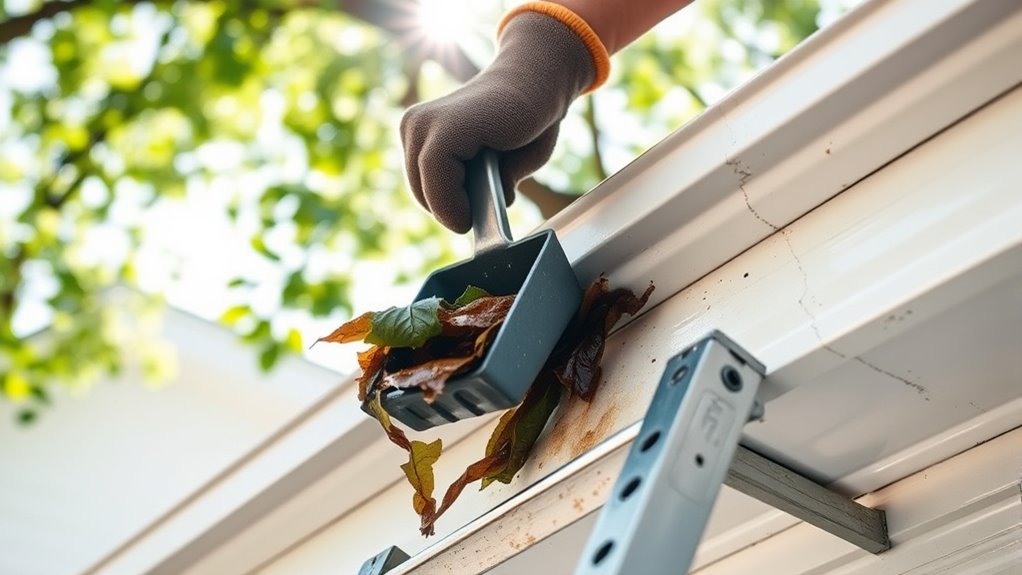
7 Essential Steps to Clean Gutters Effectively
Dealing with clogged gutters can be frustrating, and you’re definitely not alone. Many homeowners struggle to keep their gutters clean and free of debris, which can lead to water damage and costly repairs. That’s why we’ve put together a helpful guide to cleaning gutters effectively, so you can protect your home without the hassle.
To clean your gutters effectively, first gather essential tools and safety gear like gloves and a ladder. Inspect your gutters for debris and damage, then safely remove leaves and dirt using a scoop or your hands.
Flush gutters and downspouts with water to clear blockages. Repair any found cracks or loose fasteners promptly.
Consider simple upgrades like gutter guards to prevent clogs, and set a regular cleaning schedule to keep everything flowing smoothly. You’ll find even more helpful tips ahead.
Key Takeaways
- Gather safety gear and tools like gloves, goggles, a sturdy ladder, gutter scoop, bucket, and garden hose before starting.
- Inspect gutters for debris, damage, and loose fasteners to identify areas needing repair.
- Remove debris carefully using gloves and a scoop, then flush gutters and downspouts with water to clear blockages.
- Repair cracks, rust, and loose brackets promptly during cleaning to maintain gutter integrity.
- Install gutter guards and schedule routine cleanings twice a year to prevent clogs and extend gutter lifespan.
Gather Tools and Safety Gear for Gutter Cleaning

Before you begin cleaning your gutters, make sure you gather all the necessary tools and safety gear. Prioritizing gutter safety is vital to avoid accidents while working at heights. Start with a sturdy ladder that reaches your gutters comfortably and place it on stable, level ground.
Wear gloves to protect your hands from sharp debris and potential pests. Safety goggles will shield your eyes from dirt and splashes.
Next, assemble your cleaning tools. A small garden trowel or gutter scoop helps you remove leaves and debris efficiently. A bucket or trash bag attached to the ladder keeps your workspace tidy. You might also want a garden hose with a spray nozzle to flush out remaining dirt after scooping.
Having all these cleaning tools ready guarantees you work smoothly and safely, reducing the risk of injury or damage. Taking these simple steps sets you up for a successful gutter cleaning session.
Inspect Gutters for Debris and Damage
Before you start cleaning, take a good look at your gutters. Check for leaves, twigs, and any other debris that might be clogging things up. You’ll also want to keep an eye out for damage like cracks, rust, or any loose sections. Catching these problems early on helps your gutters work properly and can save you from bigger headaches down the road.
Identify Common Debris
You’ll often find three main types of debris clogging your gutters: leaves, twigs, and accumulated dirt. Leaf accumulation is the most common, especially in autumn, and can quickly block water flow.
Twigs usually come from nearby trees. Dirt settles over time, which reduces how well your gutters work. Bird nests are another issue. They can block gutters and attract pests.
| Debris Type | Impact on Gutters |
|---|---|
| Leaves | Cause blockages, hold moisture |
| Twigs | Create partial obstructions |
| Dirt | Leads to slow drainage |
| Bird Nests | Block water flow, attract pests |
Identifying these helps you target your cleaning efforts and keep your gutters draining efficiently.
Check For Gutter Damage
Although clearing debris is essential, inspecting your gutters for damage guarantees they function properly over time. After removing leaves and dirt, carefully examine the gutter material for any cracks, rust, or warping.
Different materials, like aluminum or vinyl, show wear differently, so know what to look for based on your gutter type. Don’t forget to check the seams and joints where leaks commonly occur. Also, look for signs of historical damage, such as old patches, sagging sections, or loose hangers, that may need repair.
Addressing these issues early prevents water damage to your home’s foundation and landscaping. By thoroughly checking for damage during each cleaning, you’ll extend your gutters’ lifespan and keep your drainage system efficient year-round.
Remove Debris From Gutters Safely and Efficiently
Before you start removing debris, make sure you’re wearing proper safety gear to protect yourself. It’s important to have gloves, safety glasses, and maybe even a sturdy ladder to keep things safe.
You’ll want to use the right tools designed for gutter cleaning—these make the job easier and help avoid any accidental damage.
Take your time clearing the debris methodically. That way, you won’t miss any spots, and your gutters will work just as they should.
Wear Proper Safety Gear
How can you guarantee your safety while cleaning gutters? Wearing proper safety gear is essential. Using the right protective equipment helps prevent injuries and assures you follow critical safety precautions.
Gloves protect your hands from sharp debris, goggles shield your eyes from dirt, and sturdy shoes offer stability on ladders.
| Protective Equipment | Purpose | Safety Precautions |
|---|---|---|
| Gloves | Protect hands from cuts | Inspect for holes before use |
| Goggles | Shield eyes from debris | Ensure a snug fit |
| Sturdy Shoes | Prevent slips and falls | Wear non-slip soles |
Use Effective Cleaning Tools
When you clean gutters, using the right tools makes the job safer and more efficient. Start with essential gutter cleaning tools like a sturdy ladder, a scoop or small trowel, and a garden hose with a spray nozzle. These help you remove debris without damaging the gutters or risking injury.
Don’t forget safety gear essentials: gloves to protect your hands from sharp debris, safety glasses to shield your eyes, and slip-resistant shoes for stable footing. A gutter scoop lets you clear leaves and dirt quickly, while a hose flushes out remaining particles, ensuring smooth water flow.
Choosing effective gutter cleaning tools along with your safety gear essentials lets you work confidently and finish the job faster, minimizing risks and keeping your gutters in top shape.
Clear Debris Methodically
Although clearing gutters can seem tedious, tackling debris methodically guarantees you work safely and efficiently. Start by removing leaves, twigs, and dirt in small sections to prevent overreaching and accidents.
Clearing debris prevents soil erosion around your home and stops root intrusion that can damage your gutters. Follow these steps to clear debris effectively:
- Use a sturdy scoop or gloved hands for safe debris removal
- Place debris in a bucket to avoid mess on the ground
- Flush gutters with water to clear remaining soil and small particles
- Check downspouts for blockages to ensure proper water flow
- Inspect gutters for damage or sagging after cleaning
This approach keeps your gutters functional and protects your property from costly damage.
Flush Gutters and Downspouts to Ensure Proper Flow
Once you’ve removed debris from your gutters, you’ll want to flush them and the downspouts to check for blockages and verify water flows freely. Start gutter flushing by using a garden hose with a spray nozzle, directing water into the gutters from one end.
Watch closely to see if water pools or overflows, which signals clogs. Next, focus on downspout clearing by spraying water directly into each downspout. If water backs up or drains slowly, you’ll need to investigate further with a plumber’s snake or specialized tool to dislodge stubborn debris.
Flushing also helps remove smaller dirt particles that brushing missed. By thoroughly flushing gutters and clearing downspouts, you prevent water damage caused by overflow or improper drainage. This step guarantees your gutter system functions as intended, protecting your home’s foundation and walls.
Don’t skip this vital flushing process after clearing debris. It’s key to maintaining proper flow and avoiding costly repairs later.
Repair Damage Found During Cleaning
If you spot any damage while cleaning your gutters, don’t delay in addressing it. Performing a thorough damage assessment helps you identify issues like cracks, rust, or loose fasteners that could worsen over time. Prompt gutter repair prevents leaks and protects your home’s foundation from water damage.
Address gutter damage promptly to prevent leaks and safeguard your home’s foundation from water damage.
Start by inspecting the entire gutter length for visible signs of wear. Then, check for sagging sections or areas where water pools. These are common indicators that repair is needed. Use sealant for small cracks, replace damaged sections, and tighten loose brackets to restore gutter functionality.
Here are key steps for effective gutter repair:
- Identify and mark damaged spots during your damage assessment
- Clean the affected area before applying repair materials
- Use appropriate sealants or patch kits for minor cracks
- Replace severely damaged gutter sections promptly
- Secure loose fasteners and brackets to prevent future issues
Taking care of repairs as you clean ensures your gutters stay in top shape longer.
Prevent Future Gutter Clogs With Simple Upgrades
To keep your gutters flowing freely and reduce maintenance, you can install simple upgrades that prevent clogs before they start. One of the most effective solutions is adding a gutter guard. This mesh or screen cover sits over your gutters, blocking leaves and debris while letting water pass through. It minimizes the need for frequent cleaning and keeps your gutters clear even during heavy foliage seasons.
Another helpful upgrade is a downspout extension. By directing water further away from your home’s foundation, it prevents pooling and potential damage. Extensions also reduce the chance of debris buildup near downspouts, which often causes blockages.
Installing these upgrades is straightforward and offers long-term benefits. Gutter guards and downspout extensions work together to maintain proper water flow, protect your home, and save you time on maintenance. By taking these simple steps, you’re investing in a hassle-free gutter system that stays clear and functional year-round.
Plan a Regular Gutter Cleaning Schedule
While gutter guards and downspout extensions reduce debris buildup, they don’t eliminate the need for regular cleaning. To keep your gutters functioning well, plan a regular gutter cleaning schedule.
Consistent gutter maintenance prevents clogs, water damage, and costly repairs. Seasonal scheduling is key. Different weather brings different debris types, so adjust your cleaning frequency accordingly.
Here’s how to stay on track:
- Inspect gutters after heavy storms or high winds
- Clean gutters at least twice a year, ideally spring and fall
- Remove leaves and debris before winter to avoid ice dams
- Check for signs of damage or leaks during each cleaning
- Schedule extra cleanings if you have many trees nearby
Frequently Asked Questions
How Often Should Gutters Be Cleaned in Rainy Climates?
In rainy climates, you should clean your gutters at least twice a year to guarantee effective rainwater diversion. However, if you live in an area with heavy rainfall or lots of trees, you might need to increase your gutter maintenance schedules to three or four times annually.
Regular cleaning prevents blockages that cause water damage, so staying on top of this helps protect your home’s foundation and landscaping. Don’t wait until you see issues; stay proactive!
Can Clogged Gutters Cause Foundation Damage?
Clogged gutters can damage your foundation like a slow leak wearing down a dam. When water can’t flow freely, it pools near your home’s base, leading to cracks and erosion.
Staying on top of gutter maintenance not only prevents costly foundation repairs but also helps with pest prevention by eliminating standing water where insects breed. You’ll protect your home’s structure and keep unwanted critters at bay by cleaning gutters regularly.
What Are the Best Plants to Avoid Near Gutters?
You should avoid planting invasive species with aggressive roots near gutters to prevent root interference that can damage your foundation or underground pipes. Also, steer clear of plants with high toxicity, like oleander or certain ivy types, which can harm pets or children if they fall into the gutters.
Opt for shallow-rooted, non-toxic plants like lavender or ornamental grasses to keep your gutters clear and your yard safe.
Are Gutter Guards Worth the Investment?
Yes, gutter guards are worth the investment if you want to reduce maintenance and prevent clogs. When you weigh the cost benefit analysis, gutter guard installation saves time and money on frequent cleanings and potential water damage repairs.
Though the upfront cost might seem high, you’ll appreciate fewer blockages and less debris buildup over time. In the long run, they protect your home and make gutter upkeep much easier.
How Does Gutter Cleaning Impact Home Insurance?
Cleaning your gutters regularly can help you avoid insurance claims related to water damage or structural issues. When you keep gutters clear, you reduce the risk of leaks and flooding that might lead to costly repairs.
Some insurance companies even offer premium discounts if you maintain your home well, including gutter upkeep. So, staying on top of gutter cleaning not only protects your home but can also save you money on your insurance.
Conclusion
By following these seven essential steps, you’ll keep your gutters flowing smoothly and avoid costly repairs down the road. Don’t let debris pile up and cause trouble. Nip it in the bud with regular cleanings and simple upgrades.
Remember, a little effort now saves you a world of headaches later. So grab your tools, stay safe, and tackle your gutters like a pro. It’s better to be safe than sorry when it comes to protecting your home.
Keeping your gutters clean is key to maintaining your home’s health and safety.