
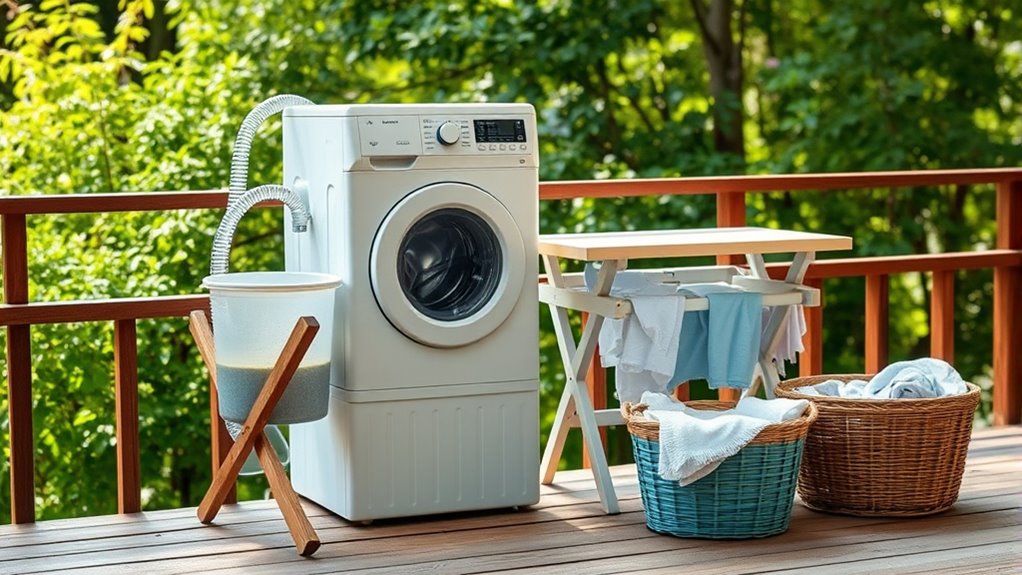
How to Use a Washer and Dryer Without Hookups
Laundry without standard hookups can feel like a major hassle, especially in apartments, dorms, or older homes. You’re not alone—many people struggle to wash and dry clothes without permanent connections.
The good news is that learning how to use a washer and dryer without hookups can make laundry much easier.
You can use a portable washer by placing it near a sink, grounded outlet, and suitable drain. Attach its faucet adapter and secure the drain hose over a sink, container, or standpipe.
Check for leaks and stay nearby while it fills and drains.
For drying, choose a ventless dryer with proper clearance, empty its reservoir, and clean the lint filter.
If you don’t have a dryer, air-dry clothes on racks in a ventilated space.
The steps below cover safer setup, operation, and troubleshooting.
Key Takeaways
- Choose a portable washer and ventless dryer suited to your load size, electrical circuit, available space, and clearance requirements.
- Connect the washer’s inlet hose to a compatible sink faucet using a secure adapter, then place its drain hose safely in the sink or container.
- Use a grounded outlet without extension cords, keep appliances level, and inspect connections for leaks before and during operation.
- Run a spin cycle, balance loads, transfer clothes promptly, and avoid overloading either appliance for effective washing and drying.
- Empty drain containers or dryer reservoirs, clean filters regularly, and unplug, drain, and secure hoses before moving equipment.
Compare Laundry Options Without Hookups
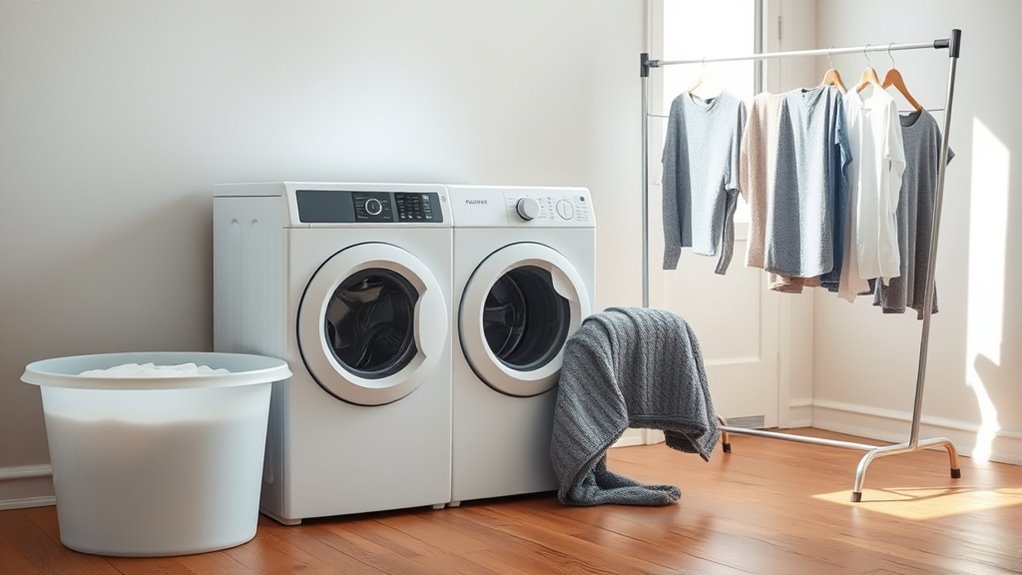
If your home lacks washer and dryer hookups, you can choose among several practical laundry solutions. A portable washing machine offers convenience and handles regular loads, while a compact spin dryer removes much of the water before air-drying. You’ll save space, but you may need to wash smaller batches.
Portable washers and spin dryers save space while handling everyday laundry in homes without hookups.
A manual washer, such as a plunger-style tub, costs less and works without complex equipment. However, you’ll spend more time filling, agitating, rinsing, and wringing clothes.
A laundromat gives you larger machines and faster results, making it useful for bedding, towels, or weekly family laundry. Pickup-and-delivery services provide the greatest convenience, though recurring fees can add up.
Consider your budget, available storage, laundry volume, and schedule before choosing. Use concentrated Laundry detergents to reduce storage needs and rinsing time.
Fabric softeners can improve texture and scent, but they’re optional. Compare each method’s effort, capacity, drying time, and long-term cost to find the best fit for your routine.
Plan Water, Drainage, and Electrical Needs
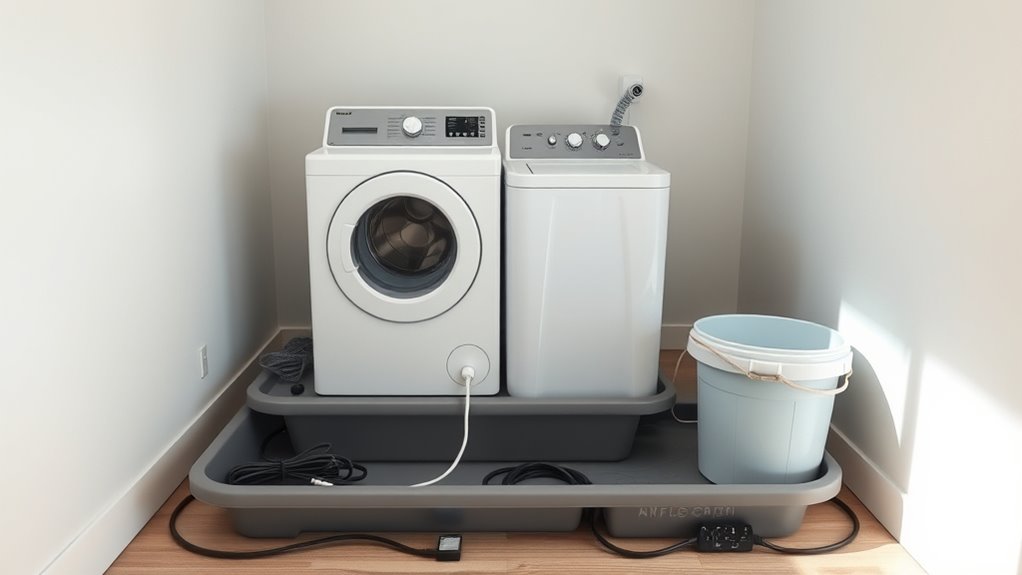
Start by locating nearby water sources, such as a sink or utility faucet, so your washer can connect easily. Decide where the drain hose will empty, and make sure the setup won’t cause spills or backups. Then, check your dryer’s power requirements and confirm that you have a safe, suitable outlet.
Map Water Sources
Before bringing in a washer or dryer, map where fresh water, wastewater, and electricity will come from. Focus first on identifying a dependable water source and confirming that it can support each load without disrupting household use.
You’ll also want to assess the route from the source to the machine, especially if you’re considering temporary plumbing installation. Keep these points in mind:
- Locate the nearest cold-water tap or utility sink.
- Measure hose distance and note obstacles.
- Check water pressure before choosing equipment.
- Identify shutoff valves for quick response.
- Plan refill methods that support water conservation.
If no dedicated supply exists, consider a portable washer with a manual-fill reservoir. Record measurements, access limits, and seasonal concerns before buying adapters or hoses.
Don’t assume a convenient faucet can handle constant use. Verify its connection type and condition first. This map will guide later decisions without committing you to permanent changes.
Arrange Drainage and Power
Plan both the drain route and electrical connection before operating the machines. Choose drainage solutions that keep wastewater contained, such as a utility sink, standpipe, or large drain pan.
Secure the hose so it won’t jump out during pumping, and confirm the drain can handle the washer’s flow. Don’t send water into a bathtub or sink without checking that the fixture drains quickly.
Identify safe Power sources for each appliance. Plug the washer and dryer directly into grounded outlets that match their voltage and amperage requirements.
Avoid extension cords, power strips, and overloaded circuits, which can overheat and cause fires. If you’re using a compact dryer, verify whether it needs a dedicated circuit.
Keep plugs and connections away from splashes, and stop using any cord that feels hot, looks damaged, or shows loose connections.
Install a Portable Washer
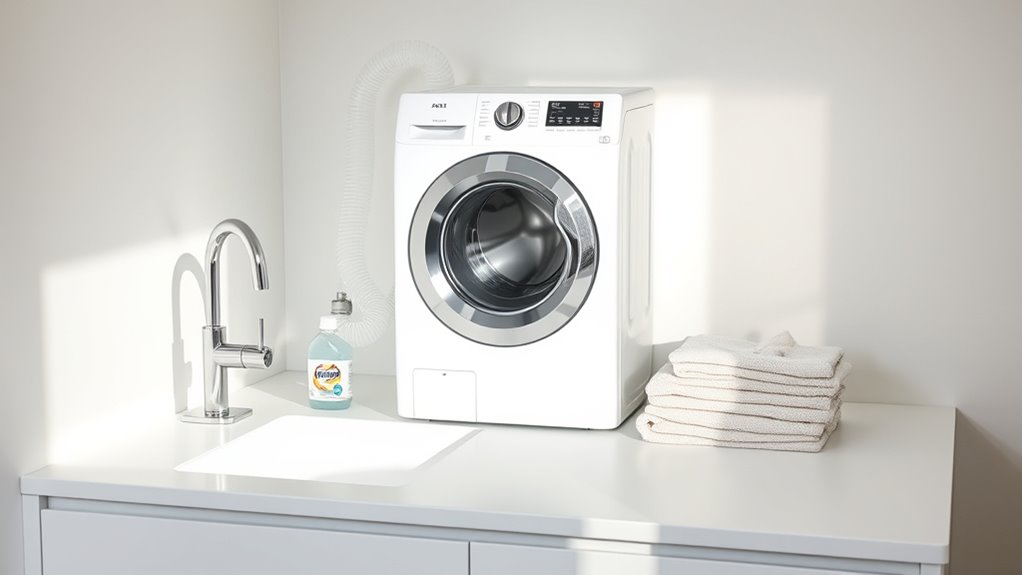
Choose a spot near a sink, a grounded electrical outlet, and a drain, then roll the portable washer into place and lock its casters if it has them. Before loading clothes, inspect the machine and confirm that its lid, controls, and power cord work properly.
Keep the washer level so it won’t vibrate or walk during a cycle. Use these installation tips:
> Keep the washer level and follow these installation tips to prevent vibration, movement, and maintenance problems.
- Remove all packing materials and shipping braces.
- Leave clearance around the cabinet for airflow and maintenance.
- Place a shallow tray beneath the washer to catch minor leaks.
- Keep the power cord away from standing water and walkways.
- Check that the drum spins freely before starting laundry.
Read the manufacturer’s instructions for weight limits, detergent amounts, and cycle settings. Don’t overload the tub, since excess weight can strain the motor and create severe movement.
Keep children and pets away while you position the appliance. Once the portable washer sits securely, you’re ready to prepare its water supply and drainage connections in the next step.
Connect the Washer to a Sink
Before you connect the washer, make sure your sink and faucet are compatible. Securely attach the faucet adapter, then connect the washer’s inlet hose. Finally, place the drain hose firmly in the sink to keep it from slipping out during operation.
Check Sink Compatibility
Check whether your sink can handle the washer’s water flow and drainage before connecting anything. Confirm the basin, faucet, and drain are sturdy, accessible, and free from leaks.
Sink compatibility matters because a small or fragile sink could overflow, loosen, or drain too slowly during a wash cycle. Your water source should provide steady pressure and reach the machine without stretching the hose.
- Choose a deep basin that can contain sudden discharge.
- Inspect the drain opening for clogs or slow flow.
- Verify the sink and counter can tolerate vibration.
- Keep nearby outlets and cords away from splashing.
- Test the drain with several gallons of water.
Check your washer’s manual for minimum flow, temperature, and drainage requirements. If the sink drains slowly, use a different basin or clear the blockage first.
Don’t proceed until the setup can manage the washer’s full discharge safely.
Attach the Faucet Adapter
Once the sink passes your compatibility test, attach the washer’s faucet adapter to the threaded faucet outlet. Remove the faucet’s aerator first, then check the threads for debris or damage.
If needed, use the adapter’s included washers or fittings to match the outlet size. Hand-tighten the faucet adapter onto the faucet, keeping it straight to prevent cross-threading.
Then connect the washer’s inlet hose to the adapter’s remaining port. Tighten the hose coupling by hand, followed by a slight turn with pliers if the instructions allow. Don’t overtighten, because you could damage the seal.
Confirm that every washer, gasket, and threaded connection sits evenly. This plumbing connection should feel secure without forcing any part.
Turn on the faucet slowly and inspect the adapter and hose joints for leaks before starting a cycle.
Secure the Drain Hose
Secure the washer’s drain hose over the sink’s rim, positioning the end several inches below the basin’s edge so it won’t spray or slip out during the cycle. A loose hose can flood your floor, so prioritize water security before starting the washer.
- Fasten the hose with a clamp, strap, or sink-hook attachment.
- Keep the hose opening above the drain strainer to prevent backflow.
- Confirm the sink can hold the washer’s discharge volume.
- Remove kinks that could restrict drainage or force water backward.
- Stay nearby during the first cycle and watch for leaks.
Don’t push the drain hose deep into the drain, where suction can interrupt proper flow. Check that the faucet adapter and hose connections remain tight.
After the cycle ends, inspect the sink, floor, and hose for standing water. Reposition or secure everything before running another load.
Fill, Drain, and Move the Washer Safely
Fill the washer with a clean bucket or hose connected to a faucet, and don’t exceed the marked water level. Add Laundry detergent according to the load size and product instructions. Keep the lid closed during operation, and watch for leaks around temporary connections. When the wash finishes, select the Spin cycle to remove as much water as possible before draining.
Position the drain hose securely inside a bathtub, sink, or large container, and keep its end below the washer’s outlet. Stay nearby while water flows so the container doesn’t overflow. Empty it as needed, or direct the hose into an approved drain. Never pull the hose free while water remains inside.
Before you move the washer, unplug it and disconnect the water supply. Let the drum stop completely, then drain residual water through the hose. Use both hands, keep your back straight, and get help with heavy units. Roll the machine slowly, avoid thresholds, and reconnect everything securely before the next load.
Choose a Dryer Without an Exterior Vent
Choose a ventless dryer if you want to avoid installing an exterior exhaust duct. Compare condensation models based on drying performance, capacity, and maintenance needs. Before buying, check your outlet and electrical requirements to make sure the dryer is compatible.
Consider Ventless Dryers
When your space lacks an exterior vent, a ventless dryer can simplify installation by condensing moisture inside the unit instead of exhausting hot air outdoors. You’ll avoid cutting through walls, making this choice practical for apartments, closets, and temporary laundry areas.
Before buying, check the machine’s electrical requirements, capacity, and clearance needs. You should also confirm that you can access its water container or drain connection for routine maintenance.
- Choose a model sized for your weekly laundry.
- Measure doorways, hallways, and the installation space.
- Leave room for airflow around the cabinet.
- Empty the reservoir if you don’t use a drain hose.
- Clean the lint filter after every load.
Ventless designs offer Eco friendly options and Energy efficient appliances that can reduce energy waste and installation demands. Although cycles may take longer, you’ll gain flexible placement without an exterior duct.
Read the manual to understand upkeep and safety requirements.
Compare Condensation Models
Condensation dryers collect moisture from warm air in an internal reservoir or drain, so you won’t need an exterior vent. Compare models by checking how effectively they separate water from heated air and how quickly they finish each load.
Strong condensation efficiency can reduce lingering dampness and help protect your laundry area from excess humidity. Look for adjustable programs, because lower temperatures suit delicate fabrics while timed cycles handle towels and bedding.
A removable reservoir works well if you can’t position a drain hose, but you’ll need to empty it after use. For easier moisture control, choose a model with a full-tank alert, automatic shutoff, and a clear water container.
Read user reviews for drying consistency, noise, and cleaning demands. Clean the lint filter and condenser regularly to preserve performance.
Check Electrical Requirements
Check the dryer’s electrical requirements before bringing it home, since ventless models may need a standard 120-volt outlet or a dedicated 240-volt circuit. Read the installation guide and confirm your laundry area can support the appliance safely.
For electrical safety, don’t use an extension cord, power strip, or adapter. Ask an electrician to inspect older wiring or install a suitable outlet when necessary.
- Verify the dryer’s voltage and amperage.
- Match the plug to your wall outlet.
- Check circuit requirements on the product label.
- Keep the outlet grounded and accessible.
- Leave space around the appliance for airflow.
A compact heat-pump dryer often uses less electricity, but it still needs proper grounding and a compatible circuit. If your home’s panel lacks capacity, arrange an upgrade before delivery.
Following these steps helps prevent tripped breakers, overheating, and installation delays.
Set Up a Ventless or Portable Dryer
If you don’t have an exterior vent, choose a ventless or portable dryer designed for indoor use. Place it on a level, sturdy surface near a grounded outlet, leaving clearance around every side for airflow.
Keep the unit away from sinks, tubs, and other water sources unless the manufacturer specifically permits that location. For a ventless model, connect the condensate hose or empty its water reservoir after each cycle.
If you use a portable dryer with an indoor exhaust kit, attach the kit exactly as directed and route moisture safely into its collection container. Don’t block intake or exhaust openings, and never operate the dryer unattended.
Clean the lint filter before and after loads to improve Laundry efficiency and reduce fire risk. Check hoses, seals, and the reservoir regularly as part of appliance maintenance.
Follow the capacity limits, cycle settings, and installation instructions in your owner’s manual for reliable drying and safe operation.
Air-Dry Clothes Without a Dryer
Air-dry clothes by removing excess water in the washer’s spin cycle, then hang them on a drying rack, sturdy hangers, or a clean clothesline with space between items for airflow. Choose a bright, well-ventilated room, and open a window when weather permits.
Remove excess water first, then hang clothes with plenty of airflow in a bright, well-ventilated space.
Turn garments inside out to protect colors, and shake each item before hanging to reduce wrinkles.
- Place heavy items on lower rack levels.
- Hang shirts from sturdy hangers to preserve their shape.
- Drape towels loosely so air reaches both sides.
- Rotate garments halfway through drying.
- Check pockets and remove lint before hanging.
Use laundry detergents sparingly because excess residue can make fabric stiff and slow drying. Leave doors and drawers open on damp items until they’re completely dry.
A fan can improve circulation, but don’t aim intense heat directly at delicate fabrics.
Once clothes feel dry, practice Clothing folding immediately to limit wrinkles. Fold knits flat, hang structured pieces, and store everything only after checking for lingering dampness or musty odors.
This method keeps laundry fresh without requiring a dryer.
Prevent Leaks, Overloads, and Dryer Fires
Prevent leaks, overloads, and dryer fires by following your appliance’s capacity limits and safety instructions. With portable units, secure every hose connection, use a suitable container, and never leave a running cycle unattended.
Don’t pack the washer tightly; clothes need room to move and rinse. Balance each load to reduce shaking, and keep the machine on a level, stable surface.
| Risk | Prevention | Check |
|---|---|---|
| Leaks | Tighten fittings | Inspect seals |
| Overloads | Weigh loads | Leave space |
| Fires | Clean lint screens | Clear vents |
For laundry safety, empty pockets, fasten drawstrings, and keep flammable liquids away from heat. Dry only items approved for your machine, and don’t mix fabrics that require different temperatures.
Clean the lint filter before every load, and periodically vacuum around the dryer and vent opening. Unplug portable appliances when you’re finished, especially if children or pets can reach them.
Include cord inspection, filter cleaning, and hose checks in your appliance maintenance routine. Replace cracked cords, swollen hoses, or damaged plugs immediately, and stop using equipment that smells hot or scorched.
Fix Leaks, Drainage, and Drying Problems
When your washer leaks, drains slowly, or leaves clothes too wet, stop the cycle and find the problem before running another load. Unplug it, wipe the floor, and inspect hoses, adapters, the pump filter, and the portable drain container. Careful leak detection helps you spot loose connections, cracked tubing, or an overfilled bucket.
Try these practical drainage solutions:
- Straighten the drain hose and secure its end.
- Empty the container before it reaches capacity.
- Clean lint, coins, and hair from the filter.
- Check that the washer sits level.
- Use a larger container or a proper standpipe.
If water still backs up, reduce the load size and confirm the pump runs during draining. Don’t force a blocked hose or keep using a leaking machine. Arrange repairs instead.
For clothes that remain wet, run a spin cycle, balance the load, and clean the drain filter. Transfer items promptly to the dryer, avoid overloading it, and clean its lint screen before every load.
Frequently Asked Questions
Can I Use a Washer and Dryer in an Apartment Without Landlord Permission?
You can use a washer and dryer without landlord permission only if your lease and local rules allow it. Check your lease restrictions first, because portable or ventless models may still require landlord approval.
Appliances can overload circuits, cause leaks, create noise, or violate plumbing and ventilation requirements. Ask your landlord in writing before installation, especially for full-size machines.
Getting permission protects your deposit, tenancy, and liability if damage occurs later.
How Much Does Laundry Without Hookups Typically Cost Each Month?
You’ll typically spend $30–$80 monthly on laundry without hookups, depending on load frequency, local laundromat prices, and household size. A laundromat may cost $40–$80, while a portable washer paired with air-drying can reduce expenses to roughly $15–$35 for water, electricity, detergent, and occasional laundromat drying.
Compare your costs carefully, and consider alternatives such as hand-washing, drying racks, or shared laundry facilities to lower recurring expenses further.
What Detergent Works Best in Portable and Compact Washing Machines?
Like choosing the right fuel for a small engine, you’ll get the best results with a low-sudsing, high-efficiency (HE) liquid detergent. Check detergent compatibility first, because portable and compact machines need formulas that rinse easily and won’t create excess foam.
Use a small amount, often half the standard dose. For sensitive skin, choose fragrance-free options. Eco-friendly options, including plant-based concentrates, work well when labeled HE-compatible. Avoid powder in cold, quick cycles.
Can Washing Machines Without Hookups Clean Bulky Blankets and Comforters?
Yes, many washing machines without hookups can clean bulky blankets and comforters, but you’ll need enough drum space and water capacity. Check the manufacturer’s weight limit before loading bulky laundry, and wash one item at a time.
Use a small amount of low-sudsing detergent, select a gentle cycle, and balance the load carefully. For effective portable cleaning, avoid overpacking; take oversized comforters to a laundromat with commercial machines instead. Dry them completely to prevent mildew.
How Noisy Are Portable Washers and Ventless Dryers in Small Spaces?
Portable washers usually produce moderate noise levels, similar to a loud conversation, while ventless dryers often hum more quietly but run longer.
In a small space, you’ll notice vibration issues most during spin cycles, especially on uneven flooring. You can reduce movement by leveling the machine, using anti-vibration pads, and leaving clearance around it.
Close doors when possible, and avoid running loads during sleeping hours. Compact models generally work best on sturdy floors.
Conclusion
You can do laundry without permanent hookups by choosing the right setup, planning water and drainage, and following basic safety practices.
A portable washer paired with a sink and a ventless dryer often works well in an apartment. For example, if you rent a studio, you might fill the washer from the kitchen faucet, drain it into the sink, and dry small loads on a rack.
Don’t overload machines, secure hoses, and unplug appliances when you’re finished. These steps can help you use a washer and dryer without hookups safely and efficiently.