
Induction Vs Electric Range: 7 Key Differences
Choosing the right cooking range can feel overwhelming—whether you want faster meal prep, better energy efficiency, or easier cleanup. You’re not alone; many people struggle to decide between induction and electric ranges. Understanding the key differences can help you find the perfect fit for your kitchen and lifestyle.
Induction ranges heat magnetic cookware directly, so you’ll get faster boiling, quicker temperature changes, and better energy efficiency than with electric ranges. Electric models heat elements first, making them slower but generally cheaper and compatible with more cookware.
Induction cooktops stay cooler, offer useful safety features, and clean up more easily, while electric surfaces may require extra scrubbing. You’ll need suitable wiring and pans for induction, but its long-term savings may offset the higher price.
Keep comparing to find your best fit.
Key Takeaways
- Heating speed: Induction heats cookware directly, boiling water and responding to temperature changes faster than electric ranges.
- Energy efficiency: Induction wastes less energy. Electric ranges lose heat through elements and cooking surfaces.
- Safety: Induction surfaces stay relatively cooler and often include features like automatic shutoff, child locks, and residual-heat indicators.
- Cookware and cleaning: Induction requires magnetic cookware but offers easier cleanup. Electric ranges accept more cookware types but may have harder-to-clean coils.
- Cost and installation: Electric ranges cost less initially and install more easily. Induction costs more but may save energy in the long run.
Induction Vs Electric Range: How They Heat
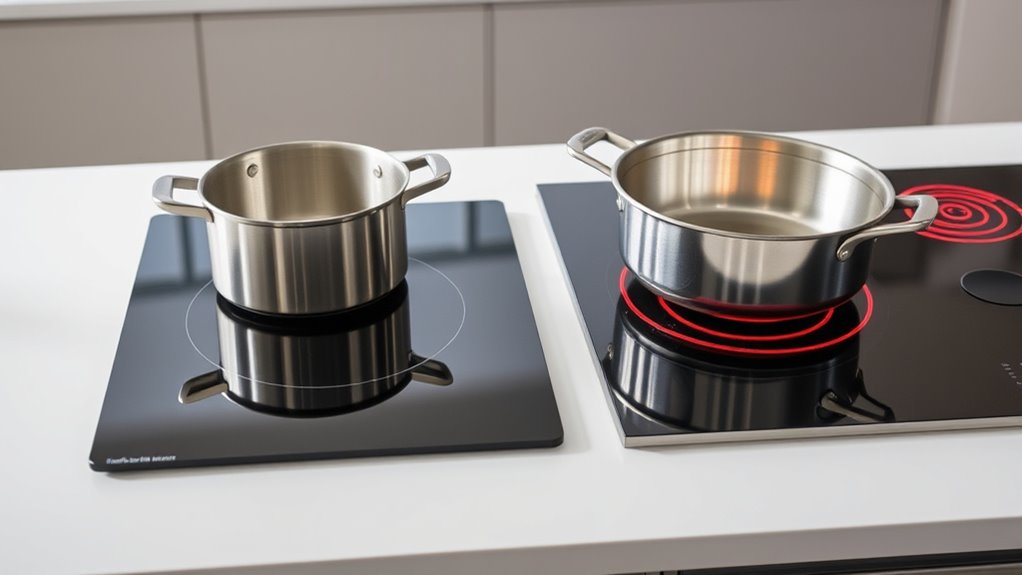
Induction cooktops use electromagnetic energy to heat the cookware directly, while electric ranges first heat a coil or radiant element and then transfer that heat to the pan. When you choose induction, the burner creates a magnetic field that excites compatible cookware, so the pan itself becomes the heat source. The glass surface stays relatively cooler, although residual heat can remain after cooking.
With an electric range, electricity flows through a metal coil or beneath a radiant glass surface. That element glows or warms, then passes heat into your cookware through contact. You’ll need flat-bottomed pans that sit evenly on the surface for consistent heating.
Induction offers precise temperature control because the field responds quickly when you adjust the setting. Electric elements retain heat after you lower the control, so changes feel more gradual. Both options support cooking versatility, but induction requires magnetic cookware, while electric ranges work with nearly any pan material. Check your cookware before choosing either model.
Which Range Cooks Faster?

When speed matters, induction usually boils water and heats pans faster than a traditional electric range because it transfers energy directly into the cookware. You’ll notice the difference when you’re searing meat, heating soup, or bringing pasta water to a boil. Induction pans respond almost immediately, while electric coils and smooth-top elements need time to heat up before transferring that heat.
You’ll also get faster recovery after adding cold ingredients to an induction pan. Its responsive surface helps you maintain steady heat, so cooking moves along without long pauses. Traditional electric ranges can still cook efficiently, but their elements cycle on and off and often leave you waiting for the pan to adjust.
With better temperature control, induction gives you cooking precision during quick tasks, from simmering sauces to sautéing vegetables. If you frequently prepare meals in a hurry, you’ll likely appreciate induction’s rapid response. Electric works well for everyday cooking, but induction generally wins whenever speed matters most.
Which Range Uses Less Energy?
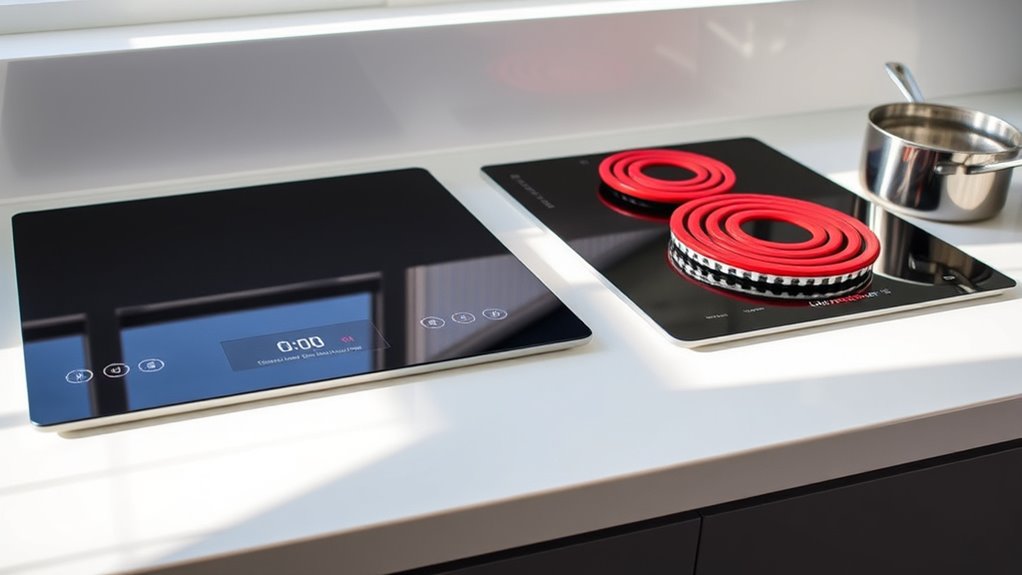
For lower energy use, induction generally has the advantage because it transfers heat directly to compatible cookware instead of heating the surrounding surface first. That focused transfer means less electricity becomes wasted heat, so you’ll typically use less power during everyday cooking.
Induction can also reach your target temperature efficiently and respond quickly when you adjust the controls, reducing unnecessary energy consumption.
Induction reaches desired temperatures quickly and adjusts efficiently, helping reduce unnecessary energy use during cooking.
Traditional electric ranges rely on radiant or coil elements that heat the cookware indirectly. Although modern electric models have improved, some energy escapes into the glass surface, air, and surrounding components before reaching your pan.
Your actual results will depend on cookware quality, pan size, cooking habits, and electricity rates.
For energy efficiency, induction usually wins, particularly if you cook often. Lower electricity use can also reduce your environmental impact, especially when your grid includes renewable power.
Compare the range’s energy ratings and choose compatible, flat-bottomed cookware to maximize savings.
Are Induction Ranges Safer?
Because the cooking surface doesn’t heat directly, induction ranges are generally safer than traditional electric models. You’ll still need to use care, but the reduced residual heat lowers burn risks, especially for curious children or busy households. The surface heats your pan, not the entire cooktop, so spills are less likely to bake onto hot glass and create smoke.
Look for these safety features when comparing models:
- Child lock: You can disable controls to prevent accidental activation or temperature changes.
- Automatic shutoff: The range can stop heating when you remove a pan, detect overheating, or reach a preset limit.
- Residual-heat indicators: You’ll see a warning when an area remains warm after cooking.
Induction also avoids exposed glowing elements, reducing direct contact hazards. However, the cookware and food can become extremely hot, and the glass surface may retain warmth. Keep handles turned inward, wipe spills carefully, and follow the manufacturer’s instructions. A properly installed range, attentive habits, and functional controls give you the strongest protection.
What Cookware Works With Each Range?
Cookware compatibility is the biggest practical difference between induction and electric ranges. With an induction range, you’ll need pots and pans containing magnetic material, such as cast iron or magnetic stainless steel. Test a pan by holding a magnet to its base; if it sticks firmly, the pan should work. Flat bottoms also help maintain consistent contact with the cooking surface. Copper, glass, aluminum, and nonmagnetic stainless steel won’t heat on induction unless they include a magnetic layer.
Electric ranges offer broader cookware compatibility. You can use aluminum, stainless steel, copper, glass, ceramic, cast iron, and enameled cookware, provided each piece is rated for the selected burner and temperature. For coil or smooth-top electric models, choose flat-bottomed pans that sit steadily and transfer heat evenly.
Review your cookware’s labels before replacing anything, because material requirements vary by manufacturer. If you’re switching to induction, you may need a few compatible pans, while an electric range usually works with most cookware already in your kitchen.
Which Range Is Easier to Clean?
You’ll find an induction range easier to clean since its smooth surface doesn’t give spills many places to hide. On the other hand, electric ranges might need a bit more scrubbing, especially when food burns onto the hot coils or glass. Either way, staying on top of maintenance and cleaning up spills quickly will help keep your cooking surface in great shape.
Smooth Induction Surface
A smooth induction surface is generally easier to clean because it stays cooler than a traditional electric cooktop. Spills are less likely to bake onto the glass. You’ll also appreciate the uninterrupted glass panel, which has no raised coils or burner grates to trap crumbs.
Its sleek design supports quick daily wiping and gives your kitchen a polished appearance. Consider these practical advantages:
- You can move cookware across one level surface without steering heating elements.
- You’ll find that cookware compatibility matters since only magnetic pots and pans activate the induction zone.
- You should check surface durability before buying because heavy cookware or abrasive cleaners can scratch the glass.
Electric cooktops may offer broader cookware compatibility, but their exposed elements and textured drip areas often require more careful attention. Choose induction if you value a streamlined cooking area and simple routine maintenance.
Spill Cleanup Differences
When spills happen, induction ranges are usually easier to clean because the glass surface stays relatively cool around the cookware. Food splatters and sugary sauces are less likely to bake onto the surface immediately, so you can wipe them away with less effort once cooking stops.
This spill resistant design gives you greater cleaning convenience during busy meals. Electric ranges can require more attention after a spill, especially when food lands near or beneath a hot coil. Residue may harden as the element remains hot, making the mess tougher to remove safely right away.
Smooth electric glass tops offer a similar wiping surface, but their heat can continue spreading across the cooktop after you move the pan. For quick spill cleanup, induction generally gives you the simpler experience.
Maintenance And Care
Beyond wiping up spills, ongoing maintenance also affects which range fits your kitchen routine. Induction cooktops generally clean faster because their smooth glass surfaces have no grates or heating coils. Since the surface stays relatively cooler, splatters are less likely to bake on. You’ll still need a soft cloth and nonabrasive cleaner to prevent scratches.
Electric ranges require more effort, especially models with exposed coils or raised drip pans. Removable parts help, but grease can collect around burners and beneath the cooktop. Consider these care differences:
- Wipe induction surfaces after cooking, once they’re safe to touch.
- Remove and wash electric drip pans regularly.
- Inspect cords, seals, and controls for damage.
Your kitchen aesthetics may favor induction’s sleek finish, while cost considerations include replacement glass and specialized cookware. Overall, induction usually offers easier day-to-day care.
Which Range Offers Better Value?
Induction ranges usually offer better long-term value because they heat faster, use less energy, and provide more precise temperature control than conventional electric ranges. You’ll typically pay more upfront, but lower utility bills and faster cooking can offset that difference over time.
A careful cost comparison should include purchase price, cookware compatibility, electricity use, and expected lifespan.
Electric ranges generally cost less initially, making them attractive if you’re replacing an appliance on a tight budget. You can also use existing pots and pans, which eliminates an added expense.
However, slower heating and residual heat may increase energy use and cooking time.
Consider installation requirements before deciding. Both options need a suitable electrical connection, but an induction model may require upgraded wiring or a dedicated circuit.
If your kitchen already supports the needed power, installation costs may stay manageable.
Choose induction for long-term savings and performance; choose electric for the lowest upfront investment and simpler progression.
Frequently Asked Questions
Do Induction Ranges Make Noise During Operation?
Yes, you may hear induction noise during operation. Your cooktop can produce a soft hum, buzz, clicking, or faint whirring as its electromagnetic coils adjust power and cool internal components.
You’ll often notice louder sounds with high heat, certain cookware, or pans with uneven, layered bases. These operation sounds are normal, though they shouldn’t be excessively loud.
If you hear grinding, sparking, or unusual cracking, stop using the range and contact the manufacturer.
Are Induction Ranges Compatible With Pacemakers?
Yes, but don’t treat pacemaker safety like a minor detail. Induction ranges create electromagnetic fields that may cause interference with some implanted devices, though modern pacemakers are generally well shielded.
Keep your device at least two feet from the cooktop and avoid leaning over active burners. Also, follow your cardiologist’s guidance.
Check your pacemaker manufacturer’s recommendations, especially if you notice dizziness, palpitations, or unusual symptoms while cooking.
How Long Do Induction and Electric Ranges Typically Last?
You can typically expect an induction range to last about 10 to 15 years, while an electric range usually lasts 13 to 15 years. Your results depend on usage, maintenance, and component quality.
Induction models may need specialized repairs, but their smooth surfaces make cleaning easier. Electric ranges often cost less to fix.
Energy efficiency and cooking speed favor induction, though neither advantage guarantees a longer life. Follow the manufacturer’s care instructions to get the most out of your range.
Do These Ranges Require Special Electrical Installation?
You’ll usually need a dedicated 240-volt circuit for either range, so your kitchen may need a little electrical attention. Induction models typically draw similar power to electric smooth-top ranges, though requirements vary by wattage and manufacturer.
Check the installation manual for electrical wiring, breaker size, and outlet requirements before buying. If your home lacks the right circuit, don’t improvise; hire a licensed electrician to upgrade the connection safely and correctly.
Can Both Range Types Be Used During Power Outages?
Neither range works normally during a power outage because both need electricity for heating and controls. For power outage compatibility, you’ll need a generator, battery backup, or another power source rated for the range’s substantial electrical demand.
An induction cooktop also requires compatible cookware and stable power, while an electric range uses heated elements. For emergency cooking solutions, consider a gas camp stove, portable butane burner, or outdoor grill. Always operate fuel-burning appliances safely outdoors.
Conclusion
Choosing between an induction and electric range comes down to your cooking style, budget, and priorities. You’ll get faster, more precise heating and easier cleanup with induction, while electric ranges offer lower upfront costs and broader cookware compatibility.
Both options can serve you well, so weigh energy use, safety, and long-term value before deciding. Think of your kitchen as a stage: choose the range that helps your cooking take center stage and fits your everyday routine.
In the end, the best choice depends on what matters most to you. When making your decision, keep the key differences of an induction vs electric range in mind to find the perfect fit for your kitchen.