Induction Cooktop vs. Electric: 10 Key Differences
Choosing the right cooktop can be overwhelming, especially when you want something efficient, safe, and easy to use. If you’ve ever stood in front of a stove wondering whether to go for an induction cooktop or an electric one, you’re not alone. Many people struggle to decide which option fits their cooking style and kitchen needs best.
Induction cooktops heat magnetic cookware directly, so you’ll get faster boiling, precise temperature control, better energy efficiency, and a cooler surface than with electric models.
Electric cooktops usually cost less upfront, work with more cookware, and provide steady, familiar heating. However, they respond more slowly and retain heat longer.
You’ll also want to compare safety, cleaning, installation, maintenance, noise, and cooking style before choosing.
The key differences below can help you find the right fit.
Key Takeaways
- Heating speed: Induction heats cookware directly, boiling water faster and responding more quickly than electric radiant or coil cooktops.
- Energy efficiency: Induction transfers more energy into the pan, reducing heat loss, energy use, and excess kitchen heat.
- Temperature control: Induction provides precise, rapid adjustments and consistent simmering, while electric elements retain residual heat.
- Cost and installation: Electric cooktops typically cost less upfront, whereas induction may require compatible wiring and professional installation.
- Safety and cookware: Induction surfaces cool faster and require magnetic cookware. Electric models accommodate more cookware but remain hot longer.
Induction vs. Electric: How Each Cooktop Heats
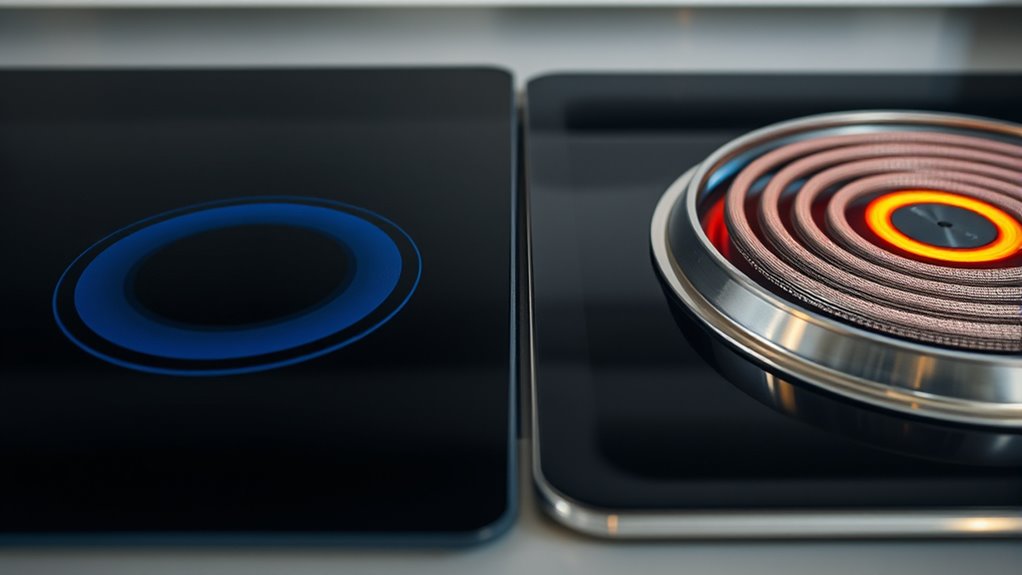
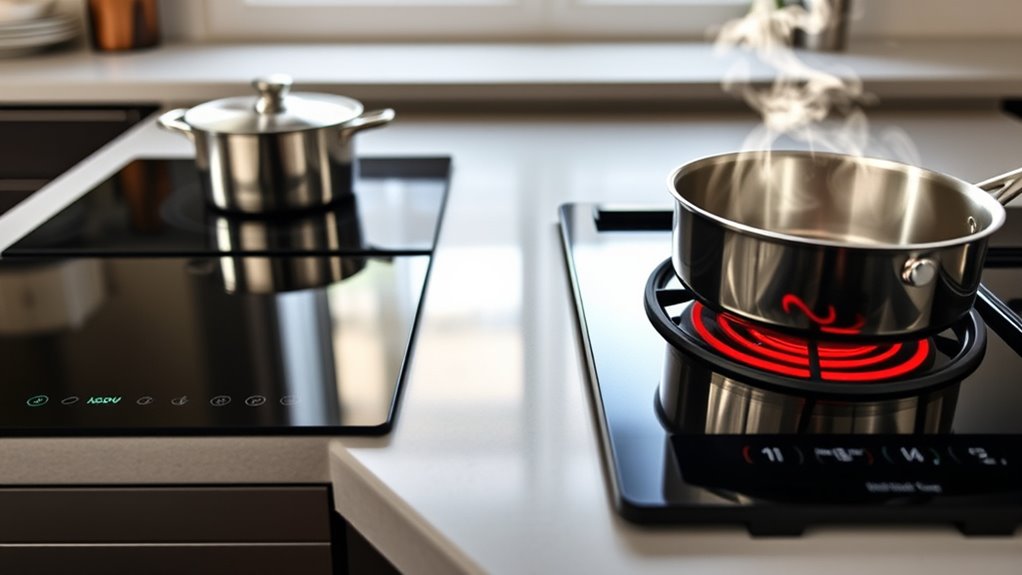
Induction cooktops heat cookware through electromagnetic energy. A magnetic field creates currents in compatible pots and pans, so the cookware itself becomes the heat source. You’ll notice the cooking surface stays relatively cooler because it transfers little direct heat to the glass.
Your pan responds quickly when you adjust the controls, giving you strong cooking precision and consistent control during delicate tasks.
Electric cooktops use a different process. Electricity passes through a metal heating element, which glows or warms beneath, within, or above the ceramic surface. The element transfers heat to your cookware through direct contact, then continues radiating warmth after you lower or switch off the setting.
Because the surface and surrounding area retain heat, you’ll need to account for that lingering warmth while cooking.
Modern models may add safety features such as automatic shutoff, pan detection, residual-heat indicators, and child locks. However, induction requires compatible magnetic cookware, while electric models generally accept more pan materials.
Which Cooktop Boils Water Faster?
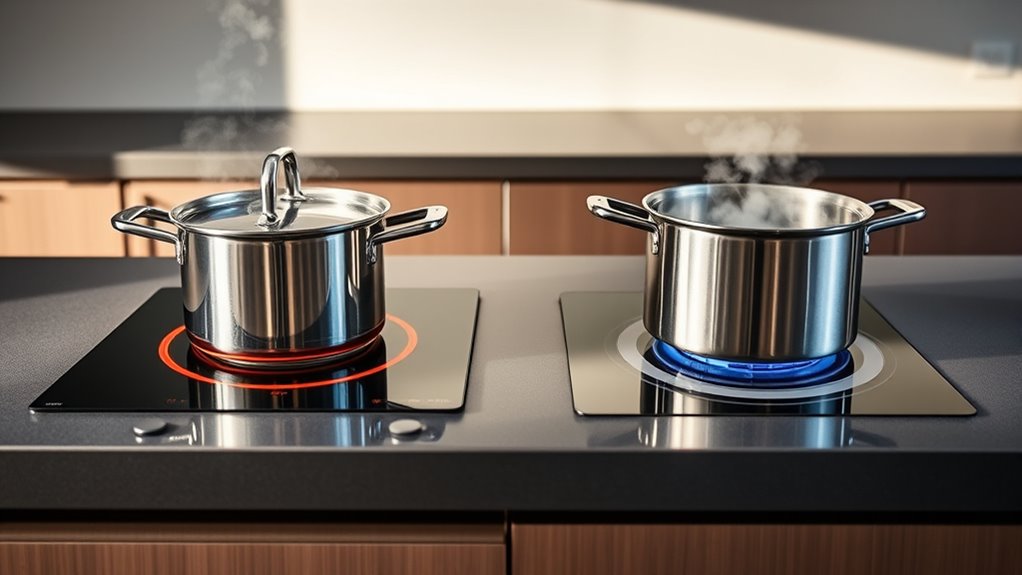
When speed matters, induction usually boils water faster than a standard electric cooktop because it transfers energy directly into the pan, minimizing heat loss. You’ll notice the difference when heating a pot for pasta, tea, or blanching vegetables. Induction responds immediately, so you can reach a rolling boil sooner and adjust the setting with precision.
Its boiling speed depends on wattage, cookware size, and the amount of water, but it commonly outpaces conventional electric models. A standard electric cooktop must first heat its coil or radiant surface, then transfer that heat through the pan. That extra step can make the wait longer, especially with a full pot or heavy cookware.
For the clearest comparison, use identical pans, the same water volume, and the same starting water temperature. Keep a lid on each pot if you want a faster test, and compare the time each cooktop takes to produce steady bubbles.
Are Induction Cooktops More Energy-Efficient?
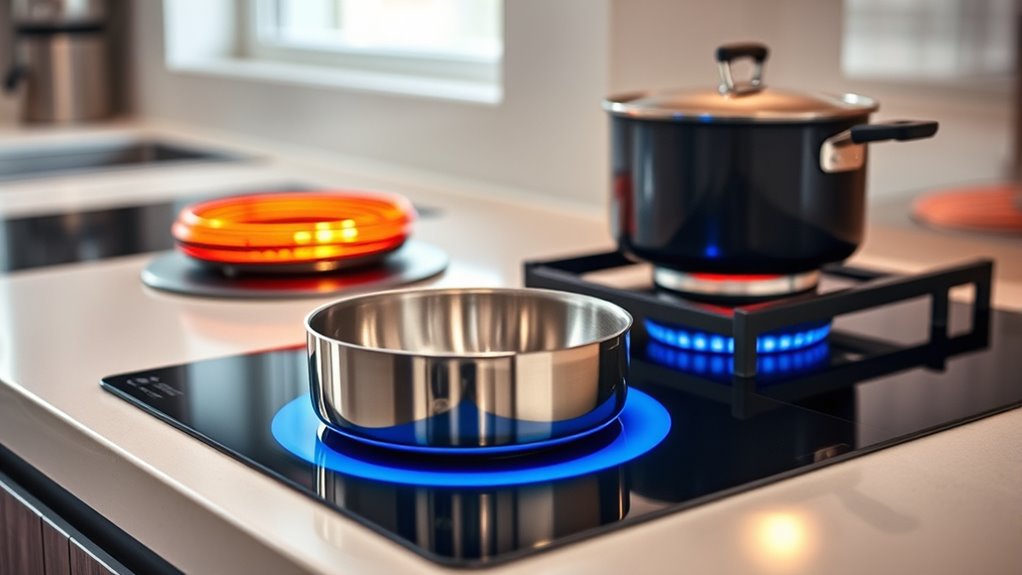
Yes, induction cooktops are generally more energy-efficient than standard electric models because they transfer heat directly to compatible cookware. Instead of heating a glowing element and letting warmth escape around the pan, induction creates a magnetic field that heats the pan itself. You’ll typically use less energy for boiling, simmering, and everyday cooking because more of the electricity becomes usable heat.
This improved power efficiency can also make your kitchen feel cooler. Standard electric cooktops release substantial residual heat from their elements and surrounding surfaces, while induction surfaces usually stay cooler except where the pan transfers heat back. Your actual energy consumption depends on cooking habits, pan size, settings, and whether your cookware works with induction. Covering pots, matching burner sizes, and lowering the setting after reaching a boil can improve efficiency on either type. Induction won’t eliminate energy loss, but it generally delivers more heat with less wasted electricity than conventional electric cooking.
What Does Each Cooktop Cost?
When you’re comparing induction and electric cooktops, it’s important to look beyond just the upfront purchase price. You’ll want to factor in installation and setup costs as well. Plus, don’t forget about the long-term operating expenses for each option.
Taking this broader view will help you figure out which cooktop is the better fit for your budget.
Upfront Purchase Price
Induction cooktops typically cost more upfront than standard electric models, though prices vary by size, features, and brand. You’ll often pay a premium for induction because its magnetic cooking technology requires specialized components.
Basic electric cooktops usually offer the lowest purchase price, making them attractive if you’re furnishing a kitchen on a tight budget. However, prices rise for larger surfaces, sleek glass designs, touch controls, bridge elements, and smart features.
When you compare models, review the number of cooking zones, wattage, control layout, warranty, and included features rather than focusing only on the sticker price. Pricing trends show that induction costs have gradually become more accessible as competition grows.
Still, brand comparisons can reveal substantial differences, so you should check several retailers and manufacturers before choosing your cooktop.
Installation And Setup
Installation costs can vary widely, but induction cooktops often require a dedicated electrical circuit and professional installation, which may increase the total price. You’ll need an electrician to confirm your panel can support the unit and to install the correct outlet. If your kitchen already has compatible wiring, setup may cost less.
Electric cooktops usually connect to existing circuits, so replacement installation tends to be simpler and more affordable. However, you may still pay for countertop adjustments, removal of the old appliance, or updated wiring.
Measure your opening carefully before ordering, since different models vary in size and ventilation requirements. Consider power consumption specifications when checking circuit capacity, and weigh each cooktop’s aesthetic appeal against any remodeling expenses. A qualified installer can provide an accurate estimate.
Long-Term Operating Costs
Once your cooktop is installed, its daily energy use becomes the bigger cost factor. Induction models typically transfer more heat directly to your cookware, so they can reduce energy consumption and shorten cooking times. You’ll still notice savings depend on electricity rates, cooking habits, and pan compatibility.
Electric radiant cooktops usually cost less upfront, but their slower heating and lingering surface heat may increase electricity use over time. Both options avoid gas purchases, ventilation demands, and combustion-related servicing.
Maintenance costs remain fairly low for each, though induction units may require pricier electronic repairs if the control board or power components fail. Electric models use simpler technology, but their exposed heating elements or glass surfaces can eventually need replacement.
Compare purchase price, expected lifespan, utility rates, and warranty coverage before choosing.
Which Cooktop Is Safer?
When it comes to safety, induction cooktops generally have the edge over traditional electric models because they heat the pan, not the surrounding surface. You’ll reduce burn risks from hot glass, though the cookware itself remains hot. Induction also cools quickly after you remove the pan, while electric elements can stay hot longer.
| Safety factor | Better choice |
|---|---|
| Surface burns | Induction |
| Child safety | Induction |
| Residual heat | Induction |
| Electrical safety | Tie |
| Spill response | Induction |
For child safety, induction’s cooler surrounding surface offers extra protection, but you should still use control locks and supervise children. Both types require proper installation, dry hands, and undamaged cords for electrical safety. Electric cooktops don’t create magnetic fields, yet their exposed heating areas can glow and remain hot.
Induction models may shut off when you remove cookware or detect overheating, adding another safeguard. Ultimately, you’ll get the lowest everyday burn risk with induction, while careful habits and manufacturer instructions keep either option safe. Avoid touching either surface until its indicator confirms it’s cool.
Will Your Cookware Work on Induction?
Before switching to induction, you’ll want to check if your cookware is compatible. It’s pretty simple—just look for induction-ready labels on your pots and pans. If you don’t see any, you can test them yourself with a magnet.
Here’s the trick: if the magnet sticks firmly to the base of the pan, then it should work just fine on your induction cooktop. Easy, right? This way, you won’t have any surprises when you start cooking!
Checking Cookware Compatibility
Will your cookware work on induction? Start by reviewing each pan’s material and construction. Induction burners create heat through a magnetic field, so your cookware needs magnetic compatibility to function.
Stainless steel may work, but only if its base includes a responsive metal. Cast iron and enameled cast iron usually suit induction, while aluminum, copper, glass, and ceramic cookware generally don’t unless manufacturers add a compatible layer.
Use these details to narrow your options:
- Check the label: Look for an induction symbol or clear manufacturer statement.
- Review the base: A flat, substantial base promotes efficient contact and heating.
- Confirm the size: Match the pan’s bottom diameter to your burner’s recommended range.
- Inspect condition: Avoid warped, cracked, or severely scratched cookware.
Your cookware’s design matters as much as its material. Always consult the manufacturer’s compatibility guide before replacing pans.
Testing for Magnetic Bases
A simple magnet test can tell you whether your cookware has the magnetic base induction requires. Hold a refrigerator magnet against the pan’s bottom. If it sticks firmly, the pan will likely work on an induction cooktop.
A weak attraction may produce uneven heating, while no attraction means the cookware isn’t induction-compatible.
This quick magnetic testing method works best on clean, dry cookware. Test the actual cooking surface rather than the handle or sides, which may contain different metals.
For a reliable compatibility check, look for an induction symbol, such as a coil or series of loops, on the pan or packaging. Stainless steel cookware can vary, so don’t assume it works automatically.
Cast iron and many enameled cast-iron pans usually pass the magnet test, though they may scratch glass surfaces.
Which Cooktop Offers Better Temperature Control?
Electric cooktops transfer heat through a radiant element, so the surface and cookware take longer to warm. After you lower the setting, residual heat can continue cooking your food, making delicate tasks harder. You can still achieve reliable results with practice, but you’ll need to anticipate these delays.
- Choose induction for rapid adjustments during sautéing.
- Select induction for consistent low-temperature simmering.
- Use electric when gradual heating suits your cooking style.
- Watch electric pans closely after lowering the setting.
Your choice depends on your priorities, yet induction gives you finer control, faster corrections, and more predictable results across everyday recipes. That control can help you protect fragile ingredients and avoid scorching.
Which Cooktop Is Easier to Clean?
Once temperature control is settled, cleanup becomes another key difference between these cooktops. If you choose induction, you’ll usually find the smooth glass surface quick to wipe. Because the pan heats directly, spills are less likely to bake onto the cooktop, so you can clean messes with a damp microfiber cloth after the surface cools. Use a manufacturer-approved cleaner for stubborn residue, and avoid abrasive pads that could scratch the glass.
Electric smooth-top cooktops also offer straightforward cleaning methods. However, their heating elements transfer more heat through the glass, which can leave sugary or greasy spills firmly stuck. You may need a cooktop scraper and specialized cream to remove them safely. Coil-style electric models require more effort because you must clean around and beneath raised burners, where crumbs collect.
Ultimately, induction generally wins for convenience. Its consistent, flat surface materials and cooler surrounding area help you wipe away spills before they harden, keeping daily cleanup simpler.
What About Installation, Noise, and Maintenance?
Installation requirements vary by model, but induction cooktops typically need compatible magnetic cookware and a properly sized electrical circuit. Electric units usually work with standard pots and pans. Before buying, check your counter opening, ventilation needs, wiring, and installation considerations with a qualified professional.
Check cookware compatibility, counter dimensions, ventilation, wiring, and professional installation requirements before purchasing a cooktop.
Induction models may produce low humming, clicking, or fan sounds as they regulate power, so compare noise levels if you value a quiet kitchen. Electric cooktops generally operate more quietly, though their heating elements can cycle on and off.
For dependable upkeep, remember these four points:
- Keep controls and surfaces free of spills.
- Let the cooktop cool before wiping it.
- Inspect cords, connections, and surrounding seals periodically.
- Follow the manufacturer’s guidance for cookware and cleaners.
Induction units often require less effort to maintain because their surfaces stay relatively cooler, reducing baked-on residue. However, electronic controls and cooling fans can require specialized service. Electric models use simpler heating components, but damaged elements or glass tops still need prompt replacement. Always disconnect power before any repair.
Which Cooktop Is Best for Your Cooking Style?
Your cooking habits should guide the choice: induction suits you if you want rapid, precise heat and often prepare sauces, stir-fries, or temperature-sensitive dishes. Electric works well for steady simmering, baking, and everyday meals with fewer cookware restrictions. Consider how each surface supports your routine, cookware, and kitchen priorities.
| Cooking priority | Best choice | Why it fits |
|---|---|---|
| Fast, controlled meals | Induction | Responds quickly and delivers precise adjustments |
| Gentle, steady cooking | Electric | Maintains consistent heat for simmering and baking |
Induction can improve your user experience with cooler surfaces, easier wipe-downs, and responsive controls. You’ll need compatible magnetic cookware, however. Electric models accept nearly any flat-bottomed pan and often cost less, making them practical for flexible, budget-conscious cooking.
Your cooking aesthetics matter, too. Induction offers a sleek, minimalist appearance, while electric cooktops provide familiar, straightforward operation. Choose induction if performance and precision excite you. Choose electric if versatility, simplicity, and traditional cooking feel more important. Either option can serve you well when its strengths match your everyday menu.
Frequently Asked Questions
How Long Do Induction and Electric Cooktops Typically Last?
You can typically expect an induction cooktop to last 10 to 15 years, while an electric cooktop often lasts 10 to 13 years. Your actual cooktop durability depends on build quality, usage, installation, and care.
You’ll extend either appliance’s life by cleaning spills promptly, avoiding heavy impacts, and using compatible cookware. Maintenance frequency usually stays low, although induction models may require electronic repairs. Electric units might need replacement burners, switches, or heating elements over time.
Can Induction or Electric Cooktops Operate During a Power Outage?
When the grid’s river stops flowing, both induction and electric cooktops fall silent. You can’t use either during a power outage unless you connect one to a properly sized generator or battery power station. Induction models need electricity to create their magnetic field, while electric units need it to heat their elements.
For emergency cooking, use approved backup equipment and follow ventilation guidance. Never operate a fuel-burning appliance indoors or connect devices unsafely.
Are Induction Cooktops Available in Portable Countertop Models?
Yes, you can buy induction cooktops in portable countertop models. You’ll find compact units with one or two cooking zones, making them easy to store, transport, and use in apartments, dorms, RVs, or temporary kitchens.
Their portable versatility lets you cook wherever you have a compatible magnetic pan and electrical outlet. You’ll also appreciate countertop convenience, precise temperature control, quick heating, and simpler cleanup compared with many traditional electric burners.
Do Induction Cooktops Emit Electromagnetic Radiation?
Yes, induction cooktops emit electromagnetic fields, but they don’t produce ionizing radiation like X-rays. Think of the field as an invisible ripple contained mostly near the cooking zone.
For strong electromagnetic safety, keep the proper distance from the active surface, follow the manufacturer’s instructions, and use compatible cookware. Radiation levels drop quickly as you move away.
If you have a pacemaker or implanted device, ask your doctor before using one.
Can You Use a Griddle or Pressure Cooker on Either Cooktop?
Yes, you can use a griddle or pressure cooker on either cooktop, but check compatibility first. For Griddle compatibility, choose a flat-bottomed model that matches your surface. Induction requires magnetic cookware, like cast iron or stainless steel.
For Pressure cooker usage, confirm the cooker’s base works with induction or electric heating, then follow its instructions. Don’t slide heavy cookware across glass surfaces, and keep burners appropriately sized for even heating.
Conclusion
Ultimately, choosing between induction and electric comes down to how you cook, what you value, and what your budget allows. Induction heats faster, wastes less energy, offers precise control, and cleans up easily. But it requires compatible cookware and costs more.
Electric cooktops are affordable, familiar, and versatile, though they’re slower and stay hot longer. Ironically, the simpler option may demand more patience.
Choose induction cooktops for performance and efficiency. Choose electric cooktops for practicality and ease of use.